17 Elegant Dining Room Ideas for a Quietly Luxurious Space
An elegant dining room isn’t the fanciest room in the house it’s the one that makes people sit up a little straighter without even noticing they’re doing it. Ahead, 17 ideas for building that kind of quiet polish, from lighting layers to the one material swap most people skip.
Candlelight catches the edge of a marble tabletop. Linen napkins hold a crease they shouldn’t be able to hold. The room smells faintly of beeswax and cut greenery, and nobody’s phone comes out at the table. That’s the feeling we’re chasing here.
Quick Navigation
- Why Elegant Dining Rooms Work So Well
- 17 Elegant Dining Room Ideas
- How to Start Your Elegant Dining Room Transformation
- Ready to Create Your Dream Elegant Dining Room?
Why Elegant Dining Rooms Work So Well
Elegant dining room style pulls from classic European interiors and softens them for how people live now less gilt, more warmth. Think warm greige walls, waxed walnut, brushed brass, and linen with a visible weave.
It’s having a moment because open-plan homes need at least one room that feels intentional and separate, not another extension of the kitchen. It works in small spaces too, as long as you prioritize one thing first: light, layered properly.
Style at a Glance
| Element | Classic Elegance | Modern Refinement |
|---|---|---|
| Philosophy | Formal without stiffness | Warmth over polish |
| Materials | Walnut, marble, brass | Linen, plaster, blackened iron |
| Color palette | Warm greige, ivory, walnut brown | Deep emerald, ink navy, terracotta blush |
17 Elegant Dining Room Ideas
1. A Table With Real Presence Solid Walnut Over Veneer
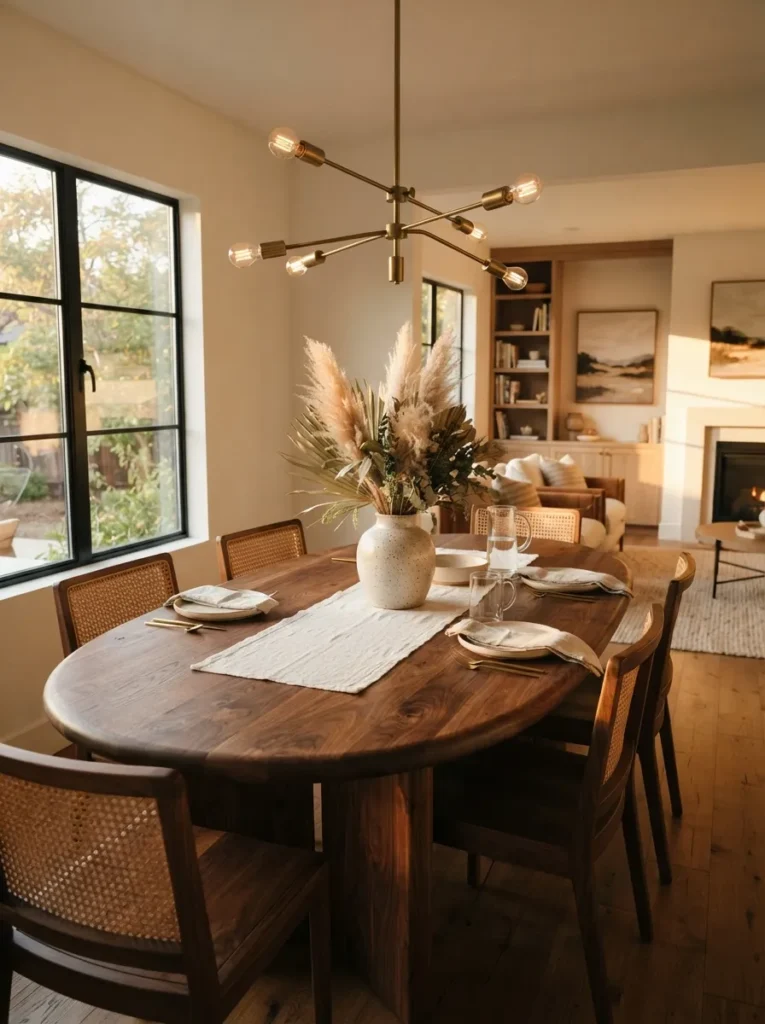
Grain running the length of the table like it was cut yesterday, sun-warmed and a little uneven where the wood was left to breathe. Solid walnut carries visual weight that veneer can’t fake the grain reads differently from every angle, and that variation is what tricks the eye into reading “elegant” instead of “matched set.” An oval shape also softens a room full of hard angles.
Look for solid walnut or a walnut veneer over solid hardwood, not MDF check the edge for a visible seam. A table 76–80 inches long seats six comfortably without crowding a standard 12×14 room. This one suits homeowners ready to invest in one anchor piece rather than a full matching set.
Pro Tip: Ask for the table’s finish in matte or satin, not high-gloss gloss photographs well but shows every water ring and elbow print within a week.
Shop This Look
| Product |
|---|
| Solid walnut oval dining table |
| Brass table runner weights |
| Linen table runner in ivory |
| Ceramic bud vase set |
| Woven rattan placemats |
2. Layer Light Instead of Relying on One Fixture
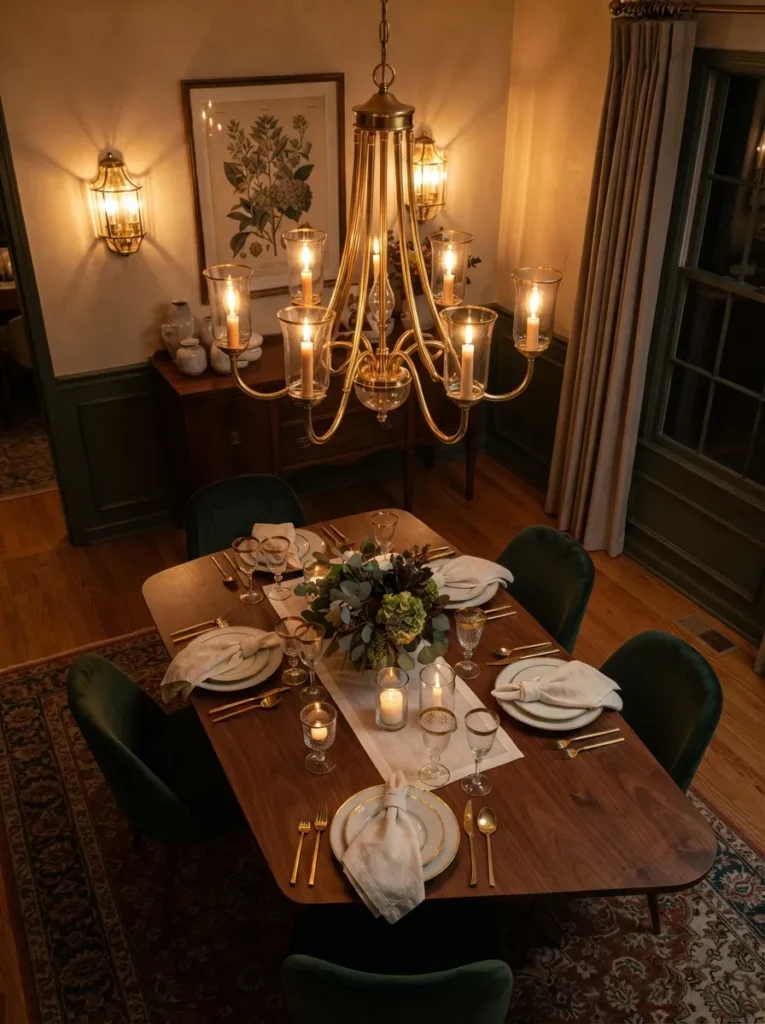
Hushed pools of light instead of one flat wash from a single overhead fixture. Layered lighting three sources at different heights (ceiling, wall, table) creates depth a single flush-mount never can, and dimmable bulbs let the same room read bright for homework and dim for dinner.
Add two wall sconces at 60 inches from the floor flanking a sideboard, plus a dimmer switch on the main fixture. That’s the whole system. This one suits anyone stuck with a single overhead light and a rented space that won’t allow rewiring.
Styling Note: Warm-white bulbs (2700K) read as candlelight; anything higher on the Kelvin scale flattens the room.
3. Commit to One Deep, Saturated Wall Color
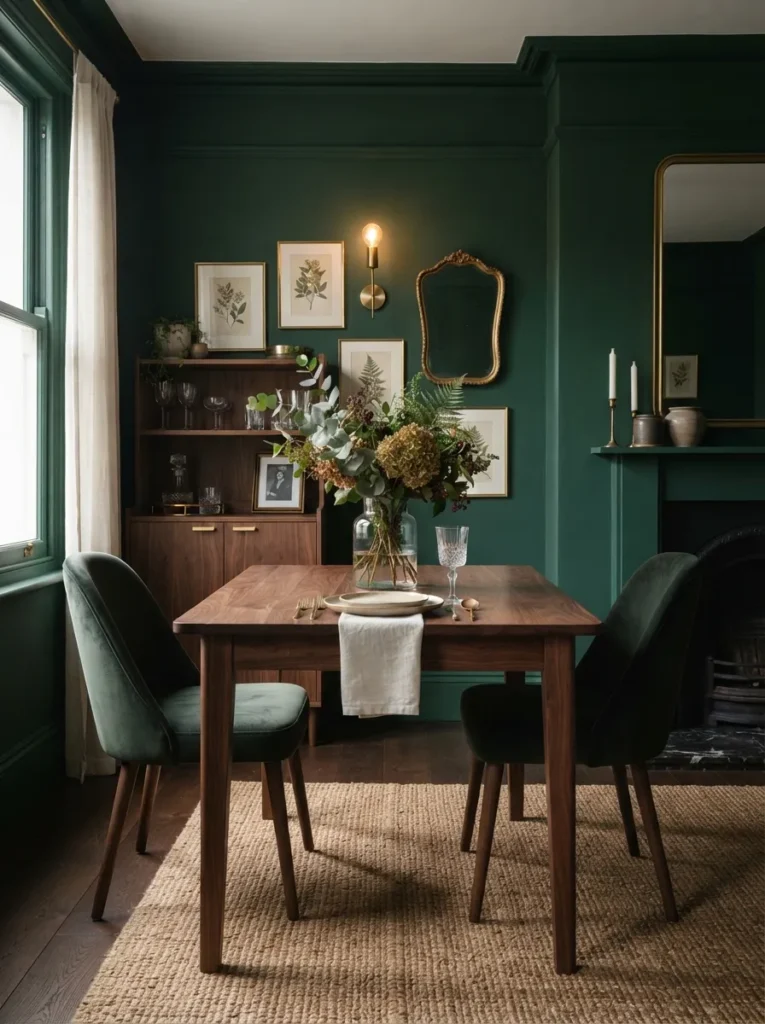
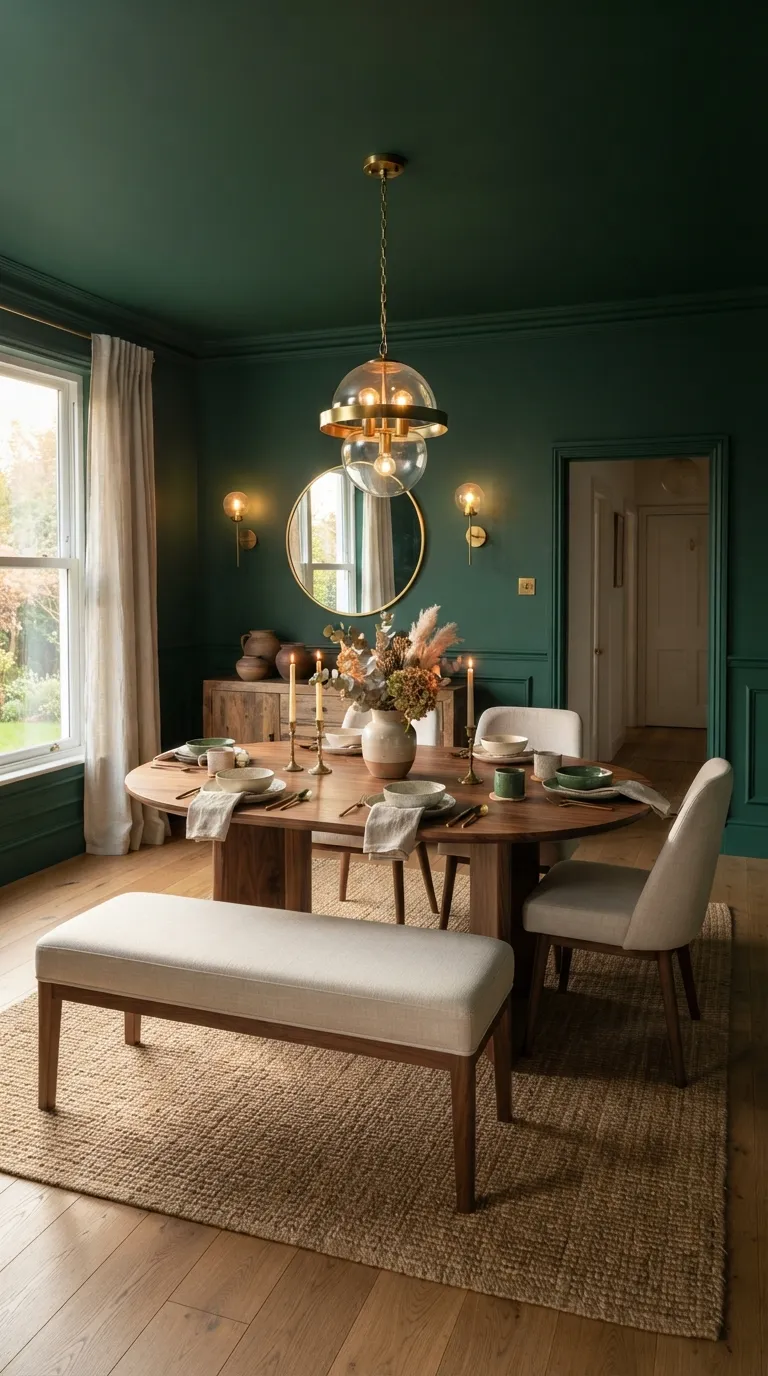
Walls that seem to absorb light rather than bounce it, giving the whole room a hushed, cocooned feel. Deep, saturated color reduces visual noise and makes a small dining room feel intentional rather than cramped the trick is using it on all four walls, not just one accent wall, so the eye has nowhere to compare.
Try a warm-based emerald, paint the trim the same color for a cocooned effect, and keep furniture pale to contrast against it if you’re still narrowing down a palette, this breakdown of modern color combinations is worth a look. This one suits people bored of gray who want a room that photographs beautifully year-round.
Important: Most people assume dark walls shrink a room. In a dining room used mostly at night, the opposite happens the walls disappear under artificial light and the table becomes the visual focus.
The next idea is the layout mistake almost every dining room makes and the fix takes ten minutes.
4. Swap Hard Seats for Linen Upholstery
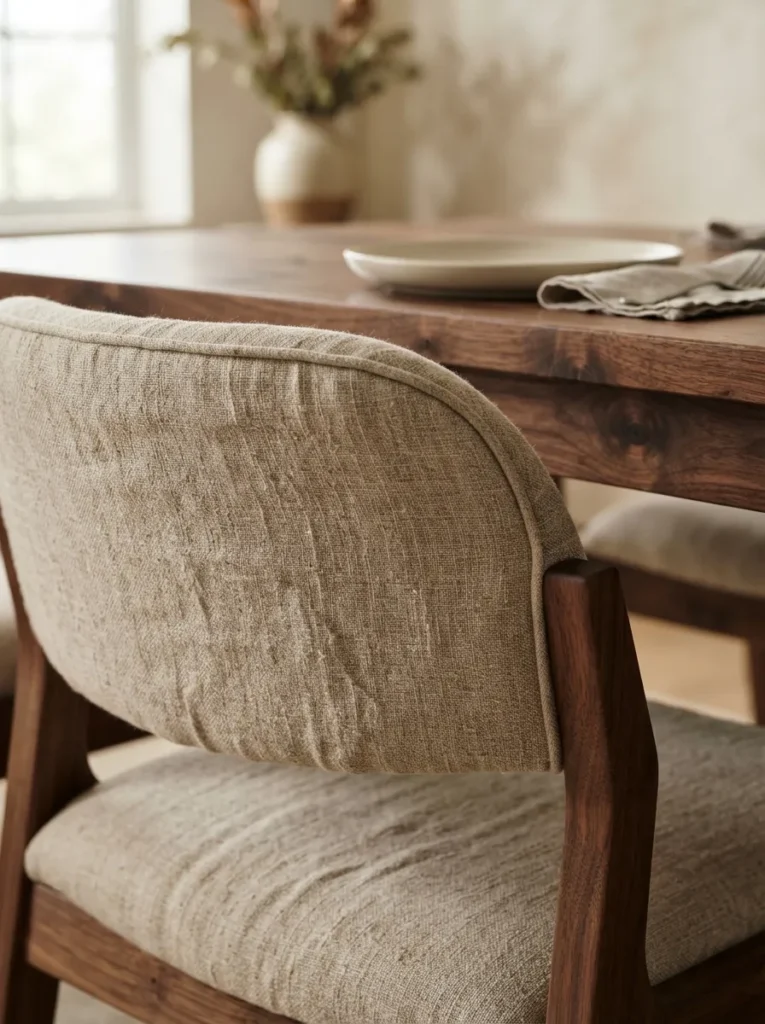
Loosely woven linen with a slightly rumpled texture, not the stiff, shiny upholstery that reads more hotel lobby than home. Pairing a hard material like walnut with something soft and imperfect keeps a room from feeling like a showroom. Linen also ages well, developing a slight sheen instead of looking worn.
Look for a linen blend with at least 55% linen content in oatmeal, dove gray, or dusty sage, and choose a slipcovered style if you have kids or pets. This one suits households that eat at the table daily and need comfort as much as style.
Budget Version: Slipcover existing chairs in linen fabric for under $30 per chair rather than replacing the frames.
Shop This Look
| Product |
|---|
| Linen slipcovered dining chairs (set of 2) |
| Removable linen chair covers |
| Chair cushion pads in natural cotton |
| Brass chair nailhead trim |
| Anti-slip chair pads |
5. Build a Tablescape That Doesn’t Look Staged
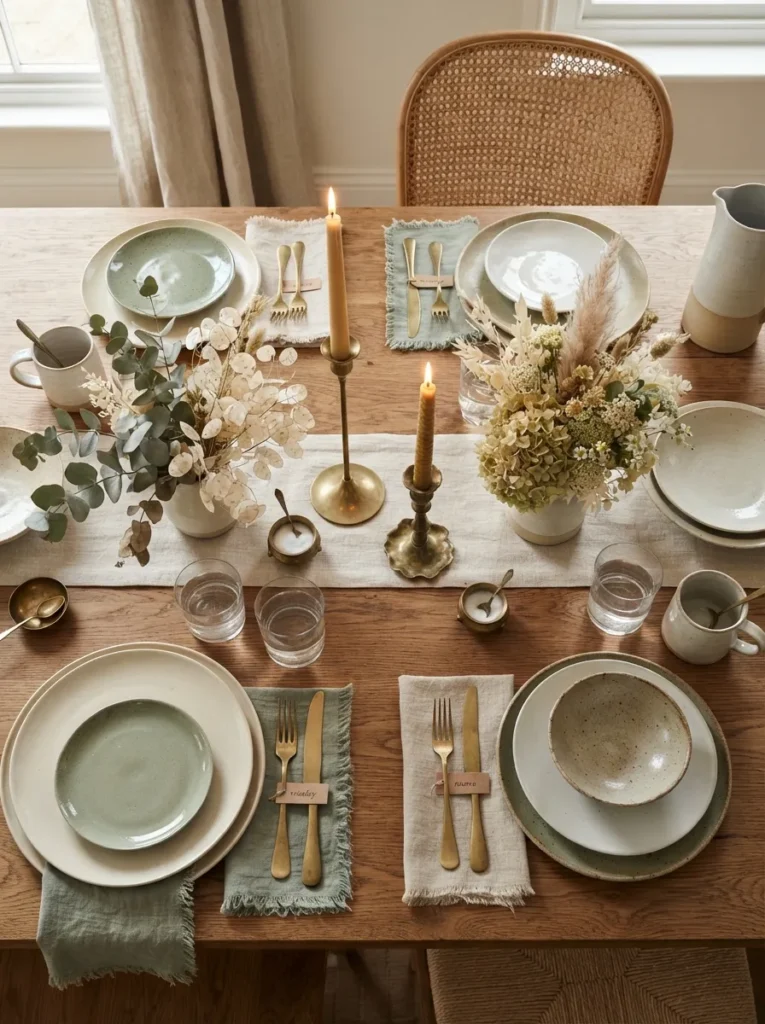
A table set with things that don’t quite match mismatched ceramic plates in the same tonal family, a candlestick that’s slightly too tall. A perfectly matched, centered setting reads as staged, while intentional variation in height and shape reads as collected over time which is what elegant means.
Mix two dinnerware finishes (matte and glossy) in the same color family, add one tall element like a candlestick, and skip centerpiece flowers in favor of a single low bowl. This one suits people who already own mismatched dinnerware and don’t want to buy a matching set.
Warning: Buying an entire matching dinnerware set is the single most common budget mistake in this style it looks expensive on the box and flat on the table. Mix pieces instead, and save the money for lighting.
6. Center the Table, Then Build Symmetry Around It
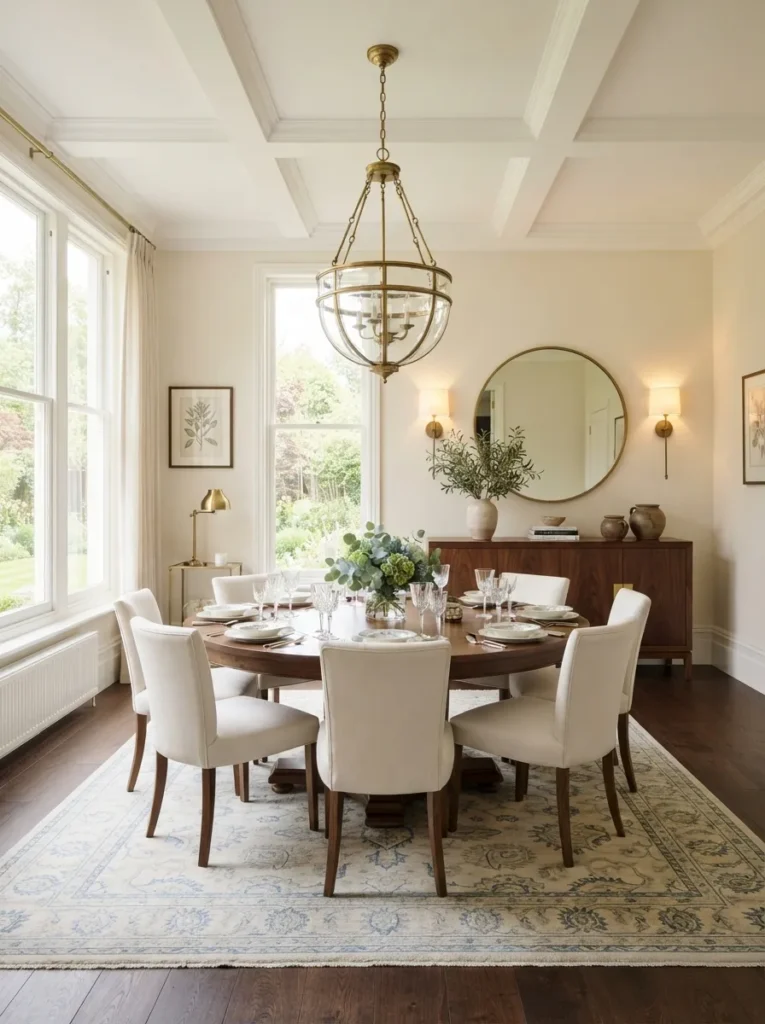
A room where your eye doesn’t have to hunt for a focal point table centered under the light fixture, sideboard centered on the wall across from it. Symmetry lowers visual tension in a room people already associate with formality; it’s the same principle used in traditional dining rooms for centuries, just with fewer rules about matching everything else.
Measure the room’s true center, not the doorway center, and align the table, light fixture, and any wall art to that line. Off by more than six inches and the eye catches it. This one suits rectangular rooms with a clear focal wall less useful in awkward or angled layouts.
Quick Win: No time to remeasure? Just center the light fixture over the table that single fix does most of the visual work.
The next idea is the one people always assume needs a big budget. It doesn’t.
7. Add One Stone Surface Marble, Soapstone, or Travertine
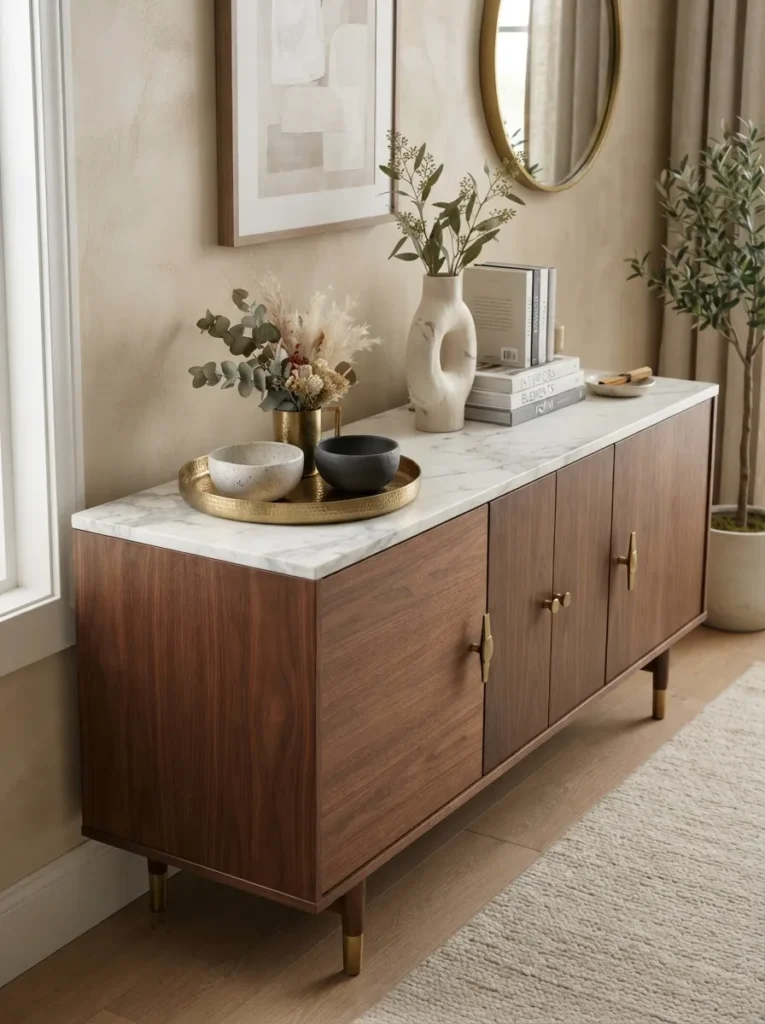
Cool, veined stone catching light differently than every warm wood surface around it. A single stone surface breaks up an all-wood room and adds the kind of textural friction that reads as considered rather than accidental marble’s veining creates natural movement without adding pattern.
A marble or honed travertine sideboard top, or even a cutting-board-sized marble slab used as a serving tray, does the job without a full stone install. This one suits renters and small-budget decorators who can’t renovate a countertop.
Pro Tip: A honed (matte) marble finish hides etching from acidic spills far better than polished marble worth the slightly higher price if the piece sees daily use.
Shop This Look
| Product |
|---|
| Marble-top sideboard or console |
| Marble serving tray |
| Brass drawer pulls |
| Marble coaster set |
| Marble cheese board |
8. Ground the Room in Warm Neutrals, Not Cool Gray
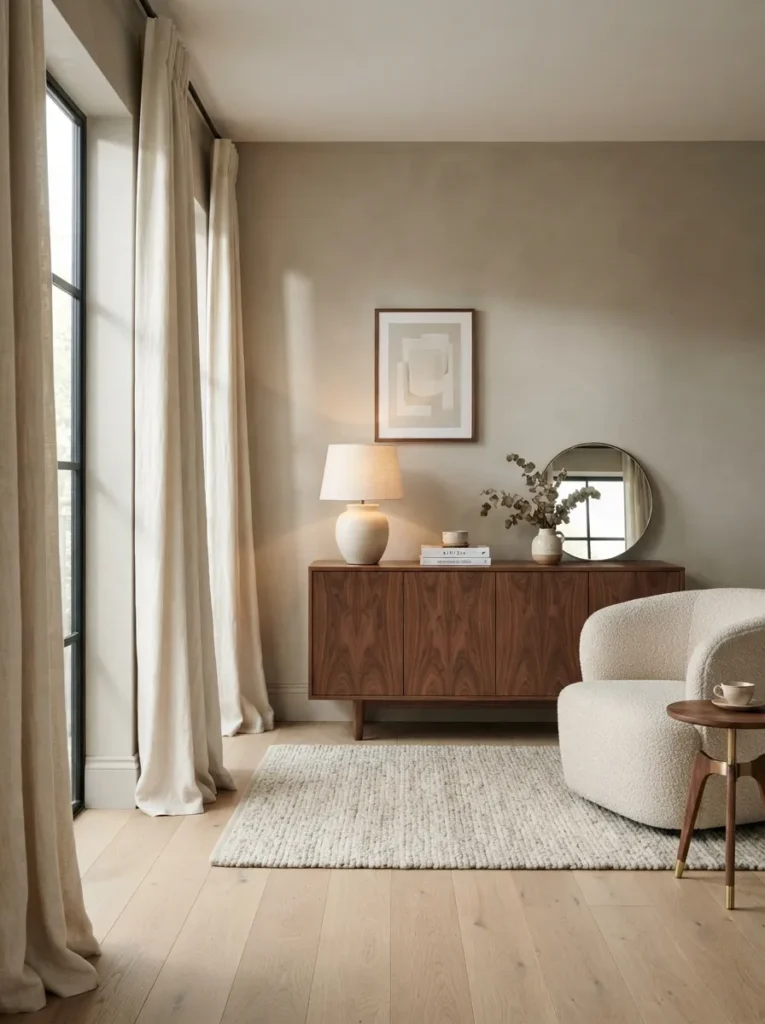
Walls the color of wet sand instead of the flat, cool gray that dominated the last decade. A warm neutral reflects skin tones and candlelight more flatteringly than a cool gray, which is part of why so many gray dining rooms feel sterile under evening light.
Test warm greige, oat, or clay-based neutrals against your existing floor color before committing cool floors need a warmer wall to balance, and vice versa. The same warm-neutral logic carries over if you’re refreshing exterior paint colors at the same time. This one suits anyone repainting a room that currently reads cold or clinical.
Mistake to Avoid: Picking a wall color under fluorescent store lighting and skipping a home test undertones shift dramatically under warm bulbs versus daylight.
9. Make Candlelight Part of the Everyday Plan, Not Just Special Occasions
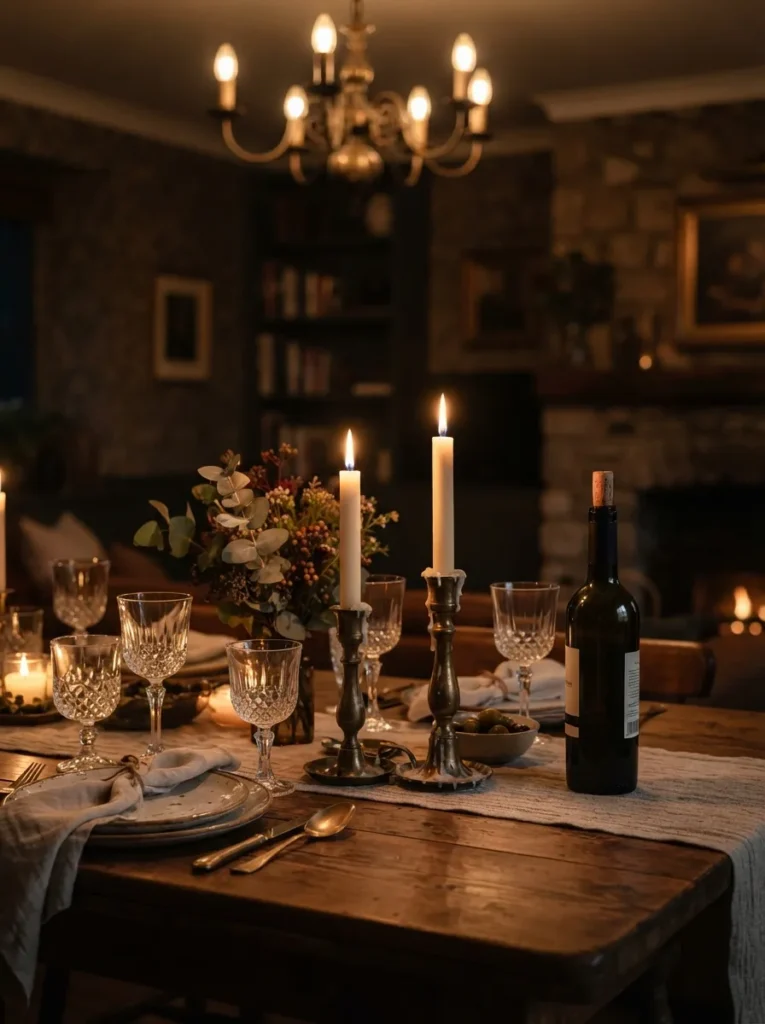
A table lit mostly by flame, with the overhead fixture dimmed low enough that it’s barely doing any work. Candlelight flickers and casts warm, moving shadows that no bulb fully replicates that movement is part of what makes a room feel alive instead of staged for a photo.
Keep a set of unscented taper or pillar candles on hand specifically for weeknight dinners, not just holidays, and pair with a dimmer on the main fixture set to 30%. This one suits anyone who only breaks out candles for guests and wants the room to feel special more often.
Important: Most people assume scented candles add ambiance at the table. They actually compete with food smell and taste save fragrance for other rooms.
Up next: the seating choice that quietly solves a small-space problem most people don’t see coming.
10. Trade One Side of Chairs for an Upholstered Bench
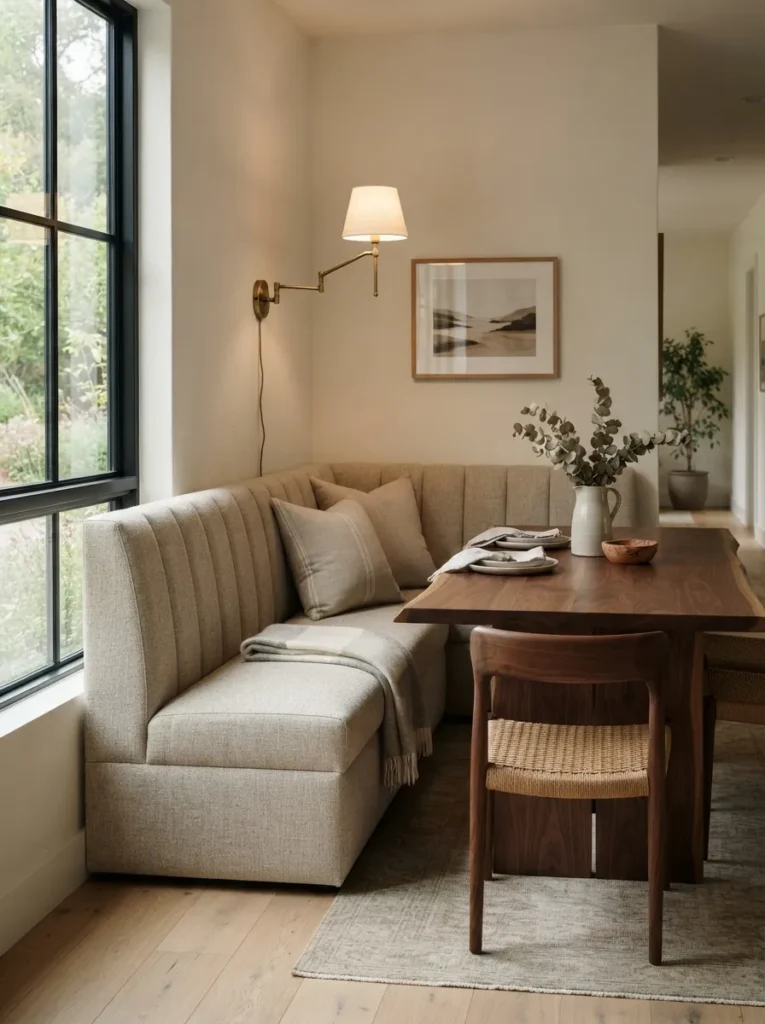
A long, low bench tucked against the wall instead of a full run of matching chairs. A bench visually lightens one side of the table by removing chair-leg clutter, and it physically seats more people than chairs in the same footprint which matters most in a narrow room.
Measure for a bench about 6 inches shorter than the table edge, upholster in a durable linen-look performance fabric, and pair with chairs only on the opposite side and ends. This one suits families with kids who need flexible seating, or narrow rooms where chair arms eat up walking space.
✅ Before You Buy a Dining Bench:
- [ ] Measure the table length and subtract 6 inches for bench length
- [ ] Confirm seat height matches your table’s clearance (18–19 inches is standard)
- [ ] Choose a performance fabric if kids or pets use the space daily
- [ ] Test that the bench slides fully under the table when not in use
Shop This Look
| Product |
|---|
| Upholstered dining bench |
| Performance linen fabric bench cushion |
| Bench-to-wall anchor brackets |
| Throw pillows for bench styling |
| Wall-mounted coat hooks above bench |
11. Build a Small Gallery Wall Instead of One Big Piece
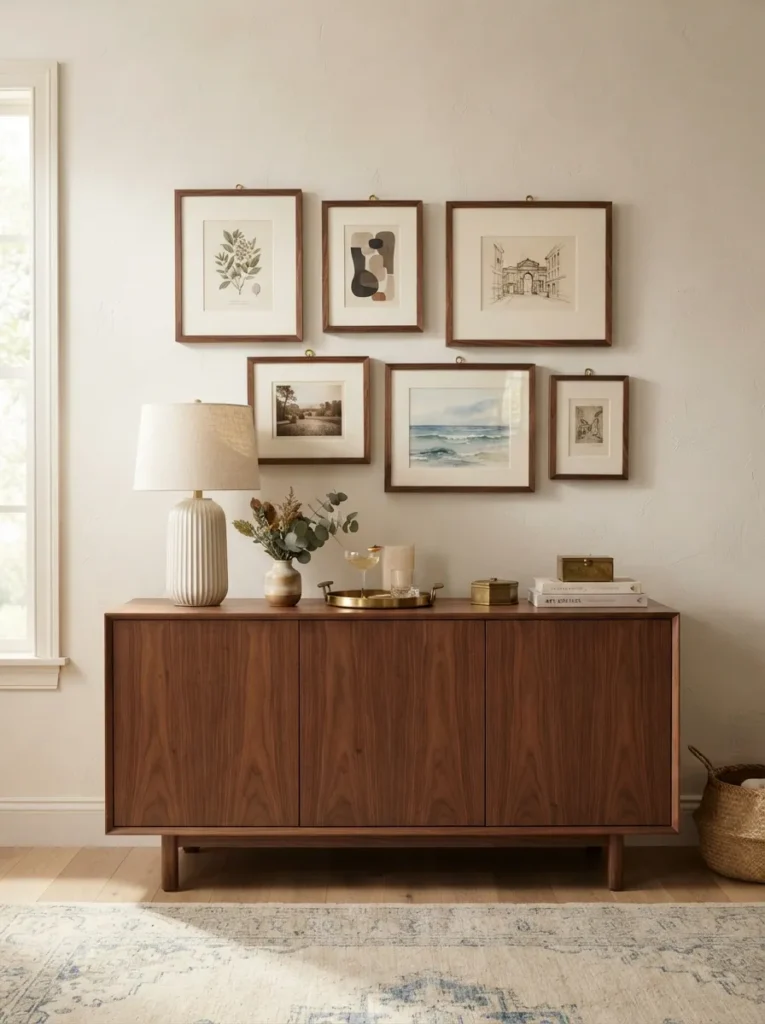
Four or five smaller framed pieces grouped tightly, instead of one oversized statement print. Visual weight distributed across several small anchors reads as collected and personal, the opposite of a single big-box art print that can feel pre-approved.
Keep frames in one wood tone, vary the mat width slightly, and hang the group with 2–3 inches between frames, centered above the sideboard, not the table. This one suits people with existing art or prints who don’t want to spend on one large piece.
Small-Space Tip: In a tight room, hang the gallery slightly higher than eye level it draws the eye up and makes the ceiling feel taller.
12. Swap Chrome or Nickel Hardware for Brass
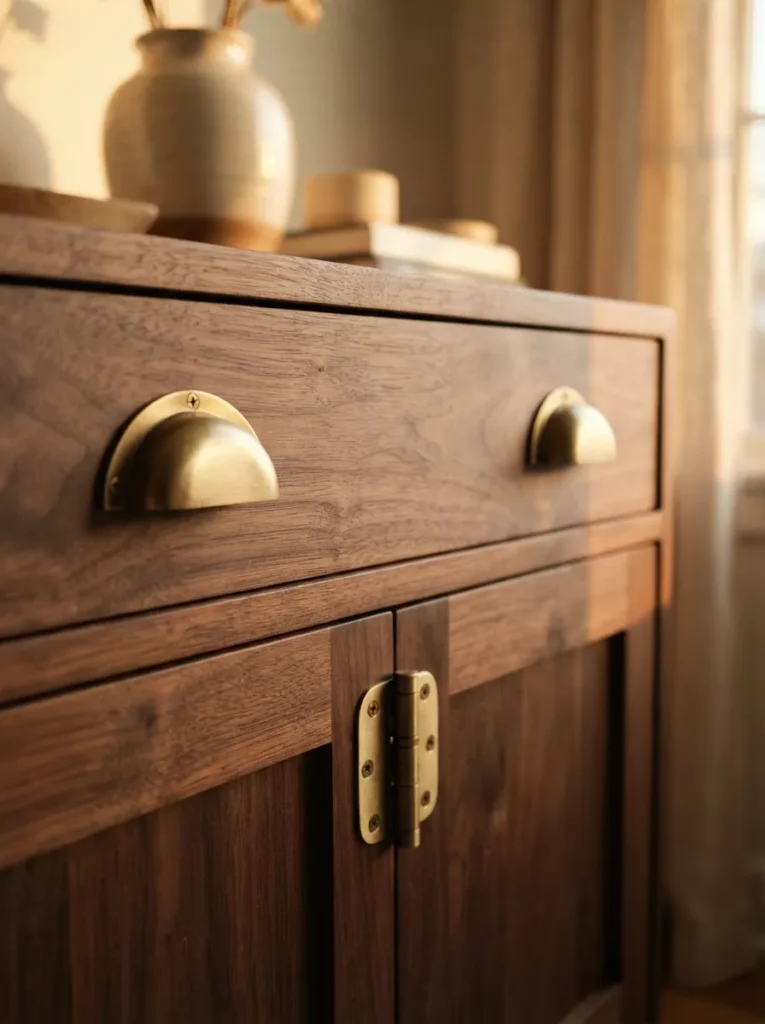
Small brass pulls catching warm light instead of the cool flash of chrome. Brass echoes the warmth of walnut and candlelight in a way chrome and brushed nickel actively fight against, and hardware is one of the cheapest details to change in the whole room.
Unlacquered or satin brass ages into a warmer patina over time, while lacquered brass stays shiny pick based on how much maintenance you want, and swap sideboard, cabinet, and even light switch plates to match. This one suits renters, since hardware swaps are reversible and take under an hour.
Pro Tip: Keep the original hardware in a labeled bag swapping back before a move-out inspection takes ten minutes.
13. Hang a Mirror Where It Doubles the Light Source
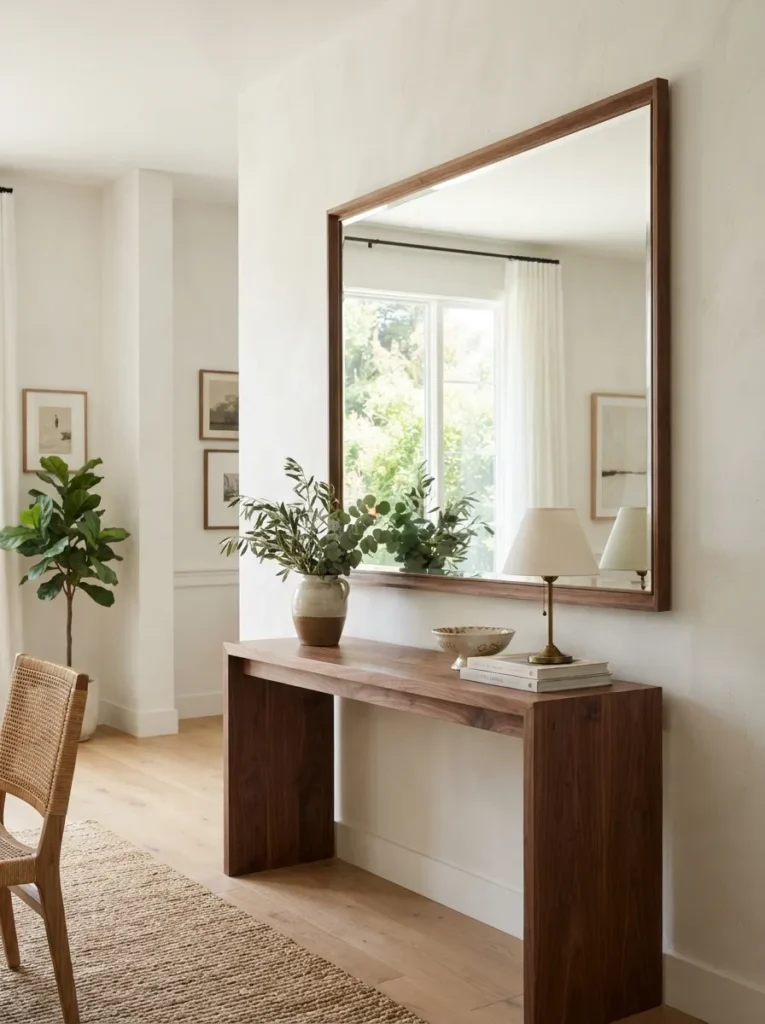
A mirror placed directly across from the room’s main window instead of centered for symmetry’s sake. A mirror opposite a window doubles the perceived light source and depth, while a mirror on a blank interior wall mostly just reflects more wall.
Position a large mirror, at least 30 inches wide, directly facing the window wall, angled slightly if the window is high, and skip a heavily beveled edge for a cleaner reflection. The same light-bouncing principle works well in a small bathroom mirror setup, too. This one suits small or windowless-feeling dining rooms that need more perceived space without a renovation.
Quick Win: Even a smaller 20-inch mirror leaned on a sideboard instead of hung achieves most of the same light-bouncing effect.
14. Add Drapery in a Rich, Saturated Color
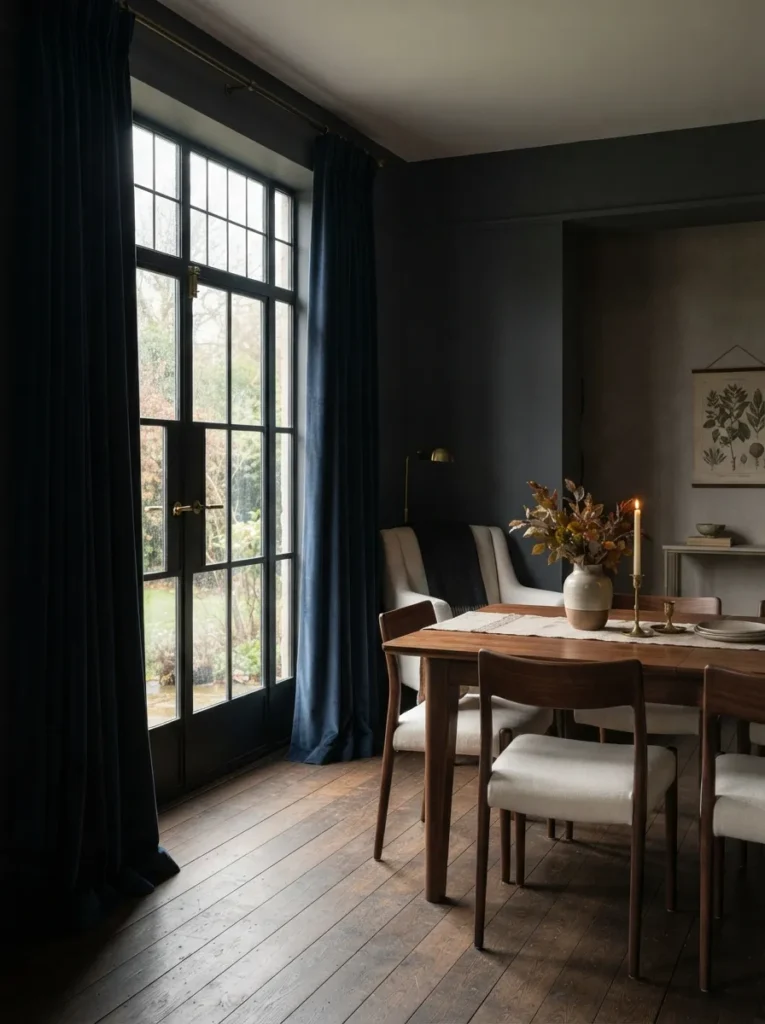
Floor-length curtains in a color deep enough to read as fabric, not just window dressing. Drapery in a saturated tone adds softness and sound absorption to a room full of hard surfaces wood floor, wood table, stone which is a functional reason elegant dining rooms feel quieter, not just prettier.
Hang panels at ceiling height rather than window-frame height to add perceived room height, and choose a heavier fabric like velvet or lined linen for proper drape. This one suits rooms with hard flooring and no soft surfaces currently absorbing sound.
MY Views:
What I’ve seen in actual projects: drapery hung at standard window-frame height is the single most common thing that makes an otherwise well-designed dining room look unfinished. Panels should start at least 4–6 inches above the window frame and end just grazing the floor anywhere shorter and the whole wall reads smaller than it is.
15. Style a Bar Cart or Sideboard Like It’s Meant to Be Used
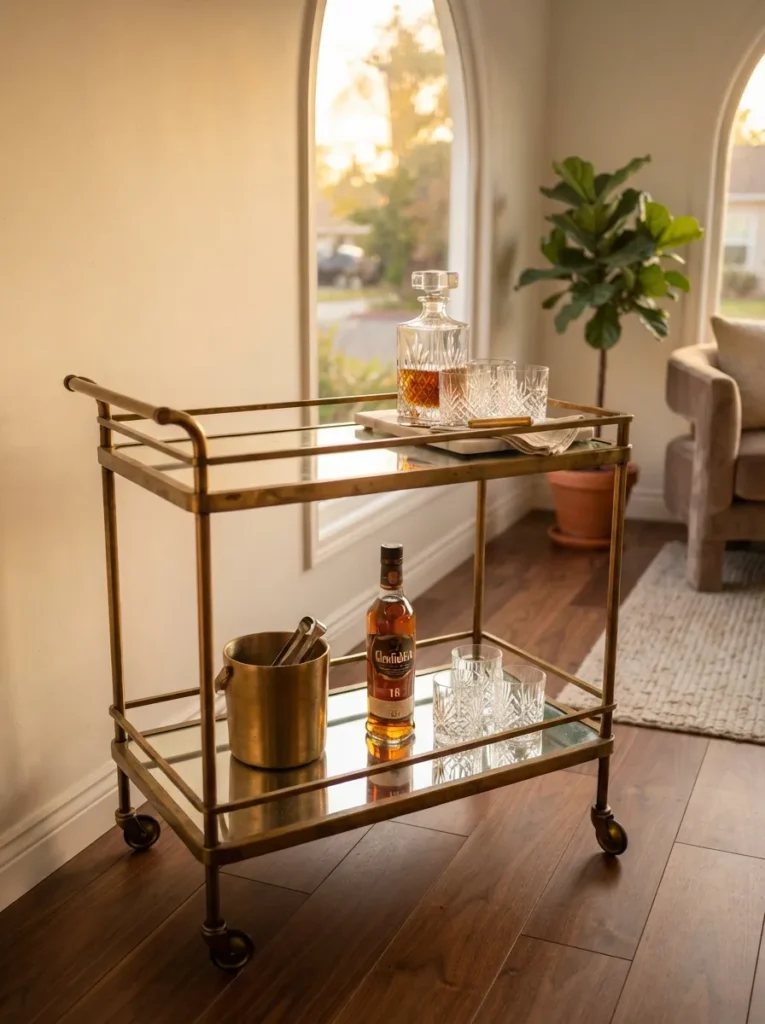
Glassware arranged for use decanter within reach, not lined up like a museum display. A styled bar cart or sideboard signals the room is lived in, not just photographed, which is the difference between elegant and stiff; visual weight stays low and grouped rather than spread evenly across the surface.
Group items in odd numbers, vary height with a tall decanter and short glasses, and leave a third of the surface empty for negative space the same grouped, odd-number styling trick works on a styled Kallax shelf if you’re tackling other rooms next. This one suits people who host regularly and want the room to double as a small entertaining station.
Budget Version: A secondhand brass tray from a thrift store, styled with two glasses and one bottle, achieves the same effect for under $40.
Two ideas left, and the last one solves a problem almost every small dining room has.
16. Anchor the Table With a Textured, Low-Pile Rug
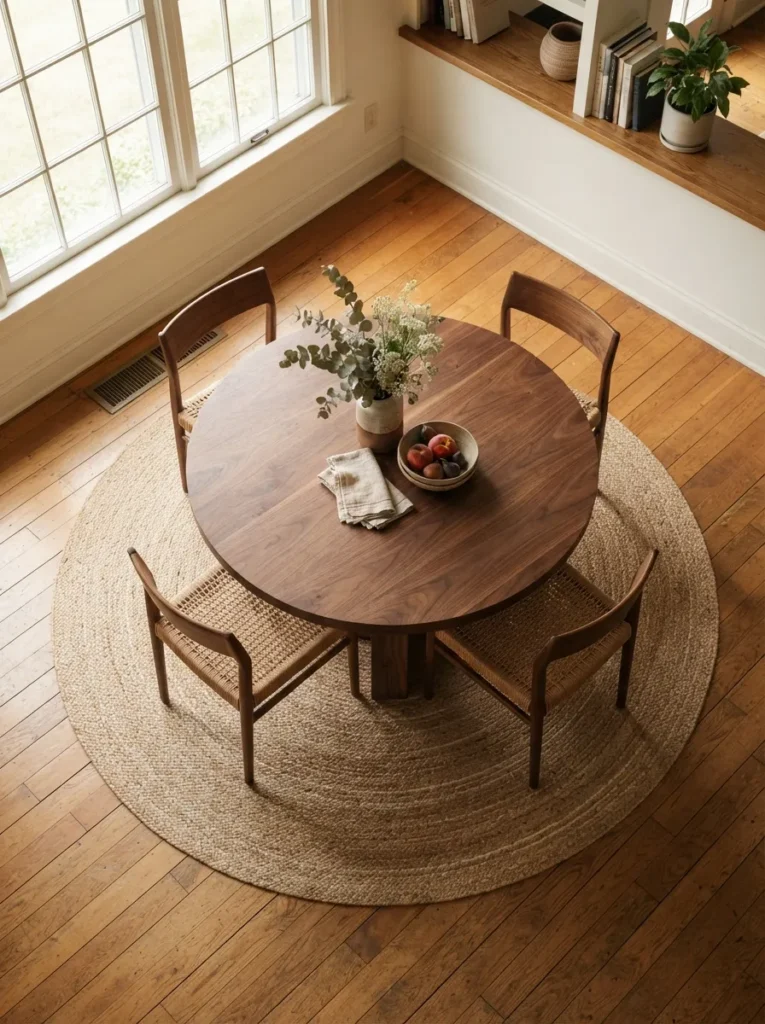
A rug with visible texture underfoot instead of a flat, printed pattern. A textured neutral rug grounds the table without competing with a patterned drape or saturated wall color, giving the eye one less thing to process in an already busy room.
Size the rug so all four chair legs stay on it even when pulled out usually 8×10 for a standard six-seat table and choose a low pile under half an inch so chairs don’t drag. This one suits rooms that already have a bold wall color or drapery and need the floor to stay quiet.
Pro Tip: A rug pad isn’t optional under a dining table it stops the rug from creeping every time a chair gets pushed back.
Shop This Look
| Product |
|---|
| Low-pile jute or wool blend rug (8×10) |
| Non-slip rug pad |
| Rug edge tape |
| Chair leg floor protectors |
| Handheld vacuum attachment for rugs |
17. Choose Round Over Rectangular in a Tight Footprint
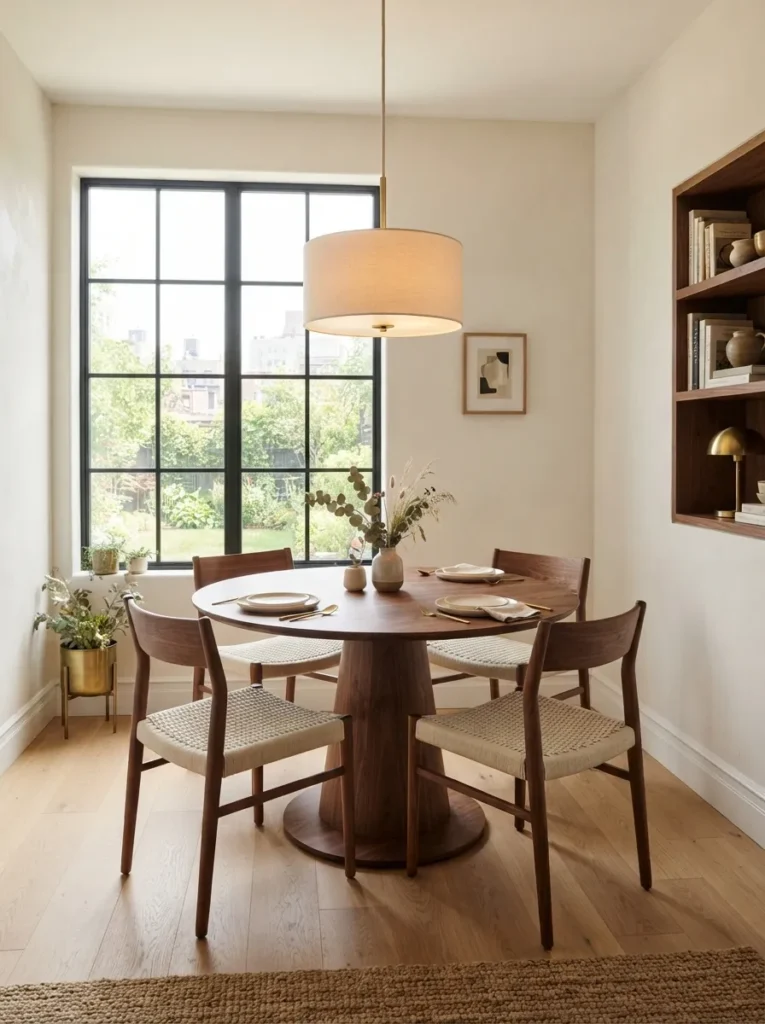
A round table where every seat feels equally close to the center nobody stuck at the far end. A round table has no sharp corners to navigate around in tight walkways, and it seats the same number of people in less overall footprint than a rectangle, which matters most in rooms under 120 square feet.
A 42–48 inch round table seats four comfortably, and a pedestal base instead of four legs frees up legroom in a room where chairs need to tuck close to the wall. It’s the same space-stretching logic behind these small-room ideas for tight footprints. This one suits small or oddly shaped dining spaces, apartments, and open-plan rooms doing double duty.
Styling Note: A round table pairs especially well with a single statement pendant directly overhead it echoes the shape and finishes the room without extra effort.
Common mistake to avoid: Choosing a table that crowds the room. Leave enough space to pull chairs out and walk around the table, and measure the room before you buy.
Frequently Asked Questions
How much clearance should a dining table have?
A commonly cited guide is roughly 36 inches between the table edge and the wall or furniture so chairs can move comfortably. Measure your room to be sure.
How high should a dining light hang?
Many designers suggest about 30 to 36 inches above the table, adjusted for ceiling height and fixture size.
What size rug works under a dining table?
The rug should be large enough that chair legs stay on it when the chairs are pulled out, which usually means extending about 24 inches past the table on each side.
How to Start Your Elegant Dining Room Transformation
What I’ve found with real spaces is that the wall color decision should come before furniture, not after repainting around a table you already bought is far more expensive than the reverse. Start with a warm greige or deep jewel-tone sample painted directly on the wall, live with it for a few days in both daylight and lamp light, then build the room around whichever one still feels right by day three.
The most common fixable mistake is matching every wood tone in the room exactly table, chairs, floor, and sideboard all in the same honey oak. It flattens the whole space into one note. Mixing two wood tones, like a walnut table with a lighter oak floor, or pairing wood with a painted or upholstered piece, adds the contrast elegant rooms need.
Three items under $50 that shift the room fast: a set of brass taper candle holders, a linen table runner in ivory or oatmeal, and a low ceramic bowl for a simple centerpiece instead of a tall floral arrangement. None require a big commitment, and all three photograph well for Pinterest.
A full elegant dining room transformation, done in stages, typically takes two to four months and runs $800–$3,000 depending on whether the table and chairs are new or refreshed. A weekend budget under $150 paint, hardware swap, and a rug pad gets the room 70% of the way there before any furniture changes.
Ready to Create Your Dream Elegant Dining Room?
Between the color choices, the material swaps, and the lighting layers, these seventeen ideas cover more ground than a single dining room usually needs at once pick three or four and let the room evolve from there.
Elegant doesn’t happen overnight, and a room built piece by piece over a few months almost always looks more collected than one furnished in a single weekend sprint. Tonight’s easiest move: swap one lightbulb for a warm 2700K bulb and light two candles at dinner.
The philosophy behind this style is really about slowing down one meal a day, and that’s exactly how the room should feel to sit in unhurried, warm, a little indulgent. Save your favorite ideas now, especially if you’re still deciding between walnut and a painted finish for that first big piece.
You Might Also Like
- 12 Small Dining Room Ideas That Make Every Square Foot Work Harder
- 9 Elegant Living Room Ideas That Borrow From Classic European Design
- 15 Dining Room Lighting Ideas for Every Ceiling Height and Budget