11 Cat-Proof IKEA Christmas Hacks for Owners of Tree-Climbing Cats
A cat-proof Christmas tree comes down to three moves: nothing nearby to jump from, a line holding the trunk, and nothing dangling at paw height. These 11 cat-proof IKEA Christmas hacks walk owners of tree-climbing cats through all three, with layout fixes, lighting swaps, ornament materials and a few IKEA pieces that work as barriers or decoys.
Picture the room on a December evening: warm white lights steady on a trunk that doesn’t sway, matte ornaments hanging still, the cat asleep on a perch of their own across the room. No crash at 3 a.m. A tree that holds its ground. Finally.
Quick Navigation
- Why Cat-Proof IKEA Christmas Hacks Make Such a Difference
- Fix the Mistakes First, Then Style Around Them
- How to Start Your Cat-Proof Christmas Transformation
- Ready to Create Your Dream Cat-Proof Christmas Corner?
Why Cat-Proof IKEA Christmas Hacks Make Such a Difference
Cat-proofing a tree is mostly geometry and materials: where the tree stands, what holds the trunk, and what hangs within reach. IKEA suits the job because modular shelving, glass-door cabinets and pegboards adapt easily to jobs they weren’t sold for.
Small rooms benefit most: fix the launch pads and the anchor line before buying a single ornament.
| Best starting point | Clear four feet of floor around the tree spot |
| Biggest impact area | Anchoring the upper third of the trunk |
| Budget to start | Roughly $30–$100 (approximate) |
| Time to complete | About one afternoon, plus a few days of watching |
Fix the Mistakes First, Then Style Around Them
1. Clear the Launch Pads Before You Choose the Spot
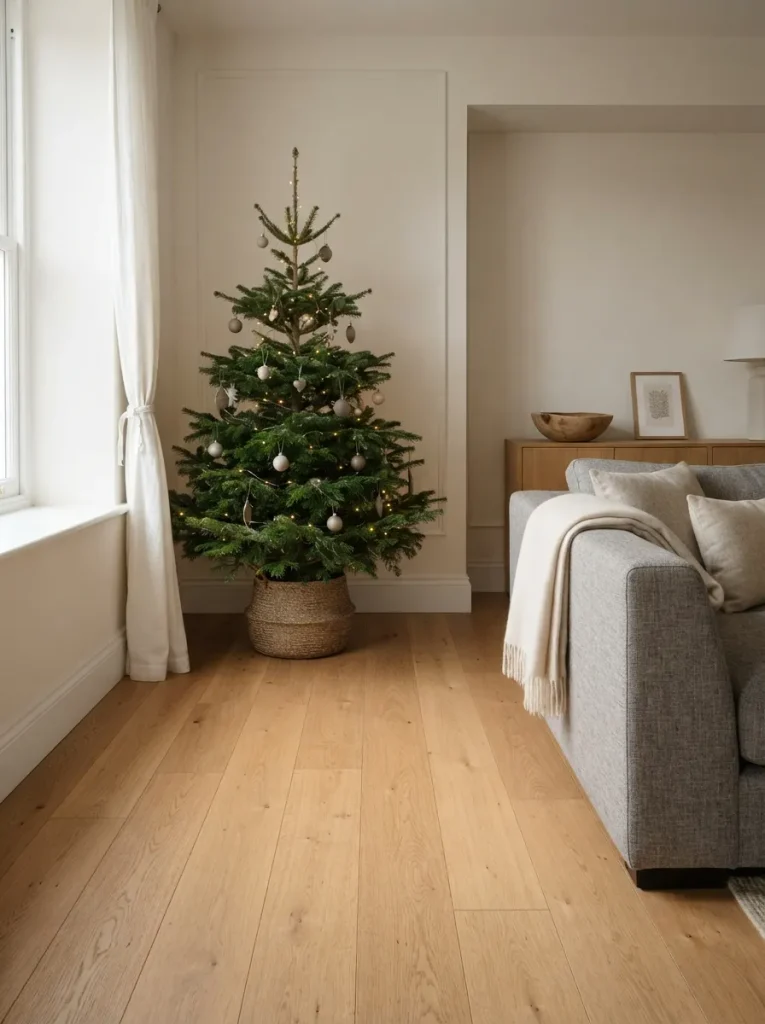
Most owners pick the tree’s spot for the look, usually that bare corner by the window, and only later notice the sofa arm sitting a short hop away.
Launch pads matter more than the tree itself. A running leap from a sofa arm, shelf or sill lands high on the trunk, exactly where the tip-over force is greatest. As a practical recommendation, keep about four feet of open floor between the trunk and anything your cat can stand on.
Push the sofa back, move the side table, or pick another wall. A windowsill beside the tree behaves like a shelf, so it counts. Long-legged, athletic cats may clear more than four feet, so treat it as a minimum and adjust after watching yours.
Pro Tip: Mark a four-foot ring around the trunk spot with painter’s tape, then crouch at cat height and look across it. Any sofa arm, sill or shelf inside the ring either moves or gets covered.
2. Anchor the Upper Third of the Trunk
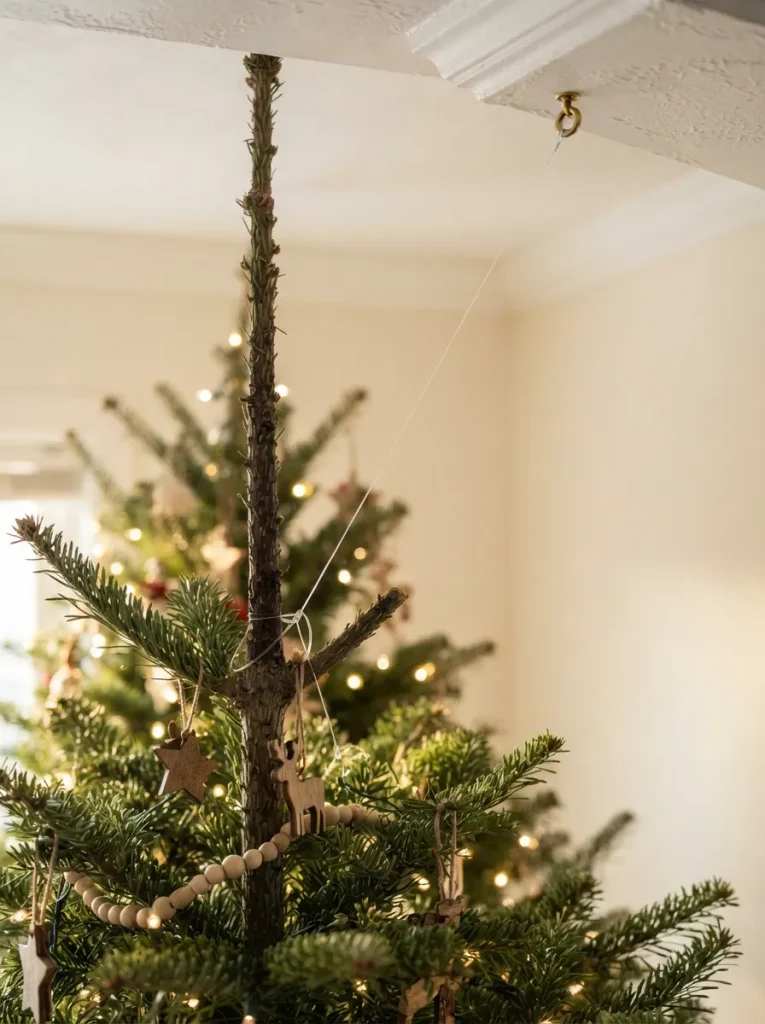
Run clear fishing line from a screw hook set in a wall stud or ceiling joist to the trunk, about two-thirds of the way up. Loop it just above a branch junction so it can’t slide, and tension it until the tree can’t tilt more than an inch or two.
Why high? A leaping cat hits the upper trunk, and a heavy base alone won’t stop that lever effect. Most people skip the anchor and regret it at 3 a.m. Adhesive hooks aren’t built for sudden jerks, while a small screw hole is easy to fill at move-out. Keep the line taut and above paw height so nobody tangles in slack.
✅ Anchor Checklist:
- [ ] Find a wall stud or ceiling joist with a stud finder
- [ ] Screw in a sturdy eye hook and tug it hard
- [ ] Loop clear line around the trunk above a branch junction
- [ ] Tension the line, then push the tree to test it
3. Choose a Slim, Flat-Backed Tree for a Corner
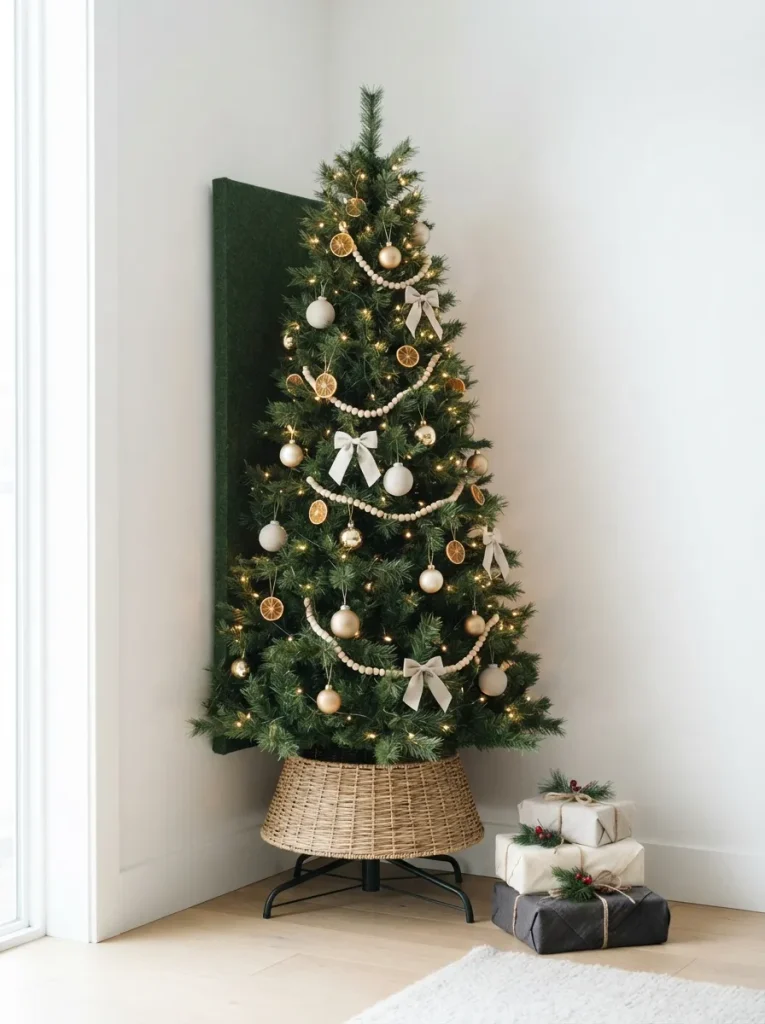
Small living room, athletic cat, and a habit of circling the tree looking for the easiest way up? A slim, flat-backed artificial tree, often sold as a half tree, sits flush against the wall and removes the entire back half of the climbing surface.
What remains is a front-facing cone that’s far easier to guard. Set it in a corner where two walls meet, and it’s blocked on a second side too. Pair it with a wide-footprint metal stand for stability and a rigid collar at the base. The four-foot ring from idea 1 still applies to sofas and shelves. Walls don’t need clearance, furniture does.
Shop This Look
| Product |
|---|
| Slim flat-backed artificial Christmas tree |
| Wide-footprint metal tree stand |
| Rigid woven tree collar |
Next up: a lighting swap that removes the one cord a cat is most likely to find, plus a battery detail worth checking before you buy.
4. Swap Plug-In Strings for Battery-Powered Warm-White Lights
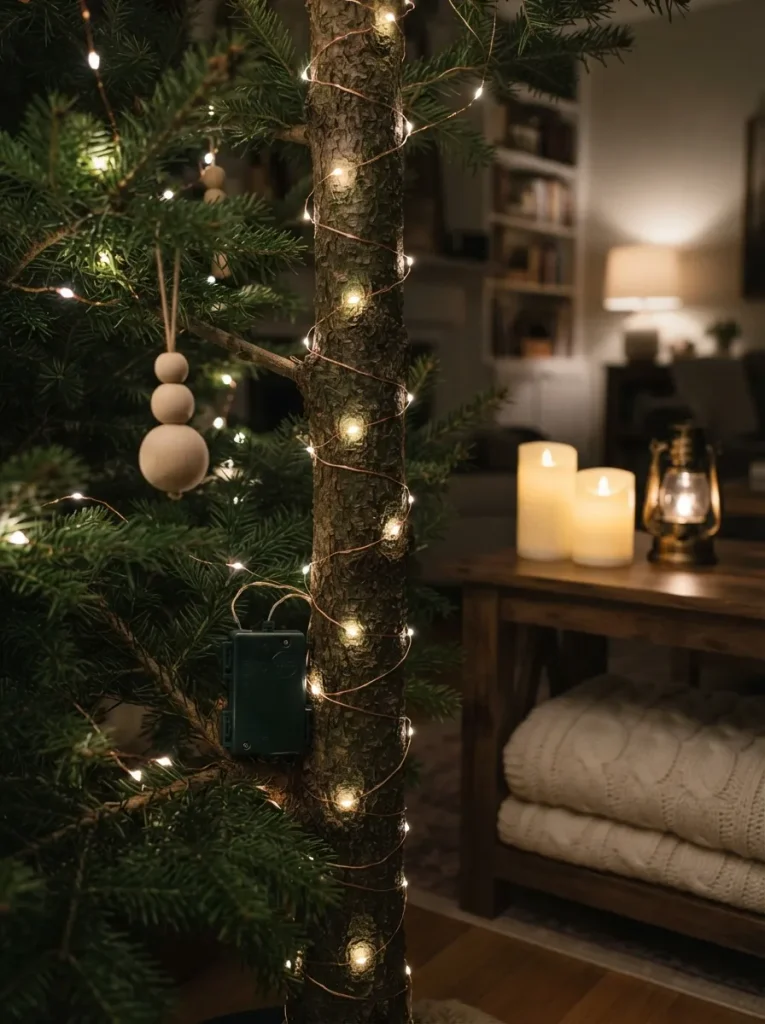
Cats chew thin, warm things, and a plugged-in cord carries mains current, so a nibbled cord can mean a shock or burn. Battery-powered strings remove that risk. Spiral them in toward the trunk instead of running them to the branch tips, where a swatting paw finds them first.
Tuck the battery box high, behind a branch at the trunk, never on the floor. A built-in timer switches the lights off overnight, which takes away a glowing target during the hours cats tend to be most restless. Flameless candles and battery lanterns can carry the mantel or side table the same way.
Important: Cordless isn’t the same as chew-proof. The wire between bulbs is still thin enough to bite through, so tuck it toward the trunk and pick a battery box that closes with a screw or a sturdy latch.
Shop This Look
| Product |
|---|
| Battery-operated warm-white LED string lights with timer |
| Flameless LED pillar candles |
| Small battery-operated LED lantern |
5. Hang Only Felt, Wool and Wood Where Paws Can Reach
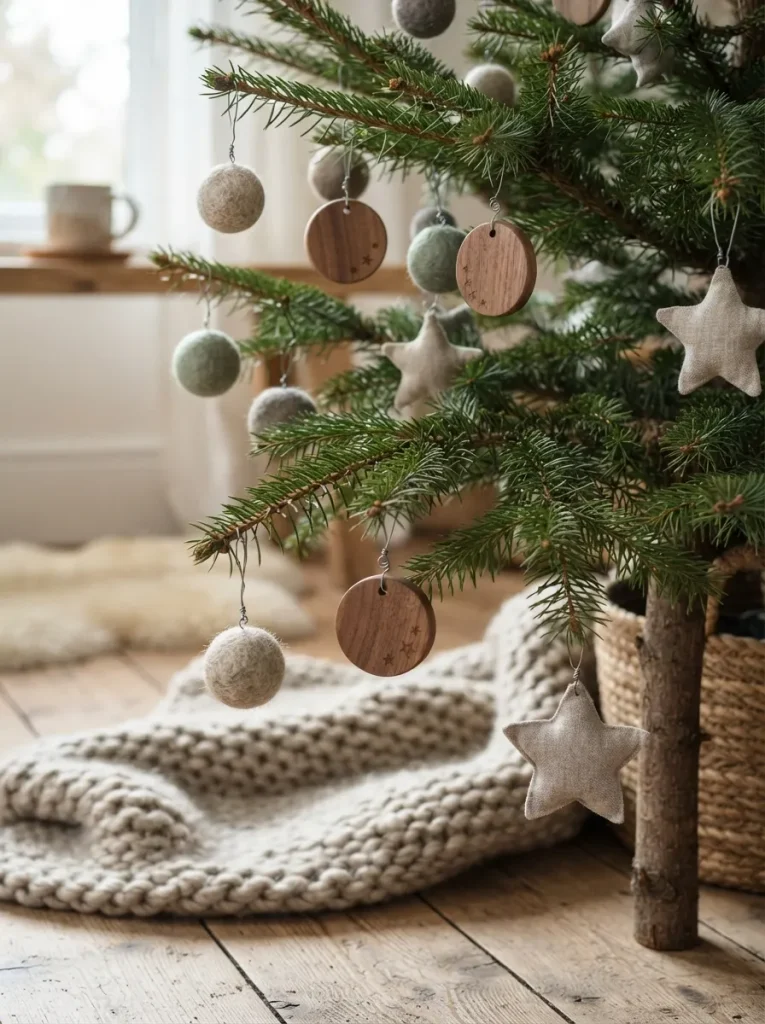
Low branches wearing felted wool balls, plain wood discs and linen stars look soft and tactile, closer to a Scandinavian cabin than a shop window.
The function comes first: none of them shatters into shards on a hard floor, and none flashes light to spark a swat. Keep this material set for the lowest two feet of the tree, the zone a cat reaches without effort. Secure each piece with a wire loop twisted shut rather than an open metal hook that a claw can flick free.
Styling Note: Hang the heaviest ornaments closest to the trunk. Shorter leverage means less swing, and a swinging ornament is what gets batted.
Shop This Look
| Product |
|---|
| Felted wool ball ornaments |
| Plain wooden disc ornaments |
| Stuffed linen star ornaments |
6. Keep the Bottom Two Feet Tonal and Quiet

The default is to scatter sparkle evenly from top to bottom, which offers a cat something shiny to stalk at every height. Reverse it. Cats track movement and glints, so keep the lowest two feet in one tonal family, such as sage, oatmeal and walnut, and let contrast and shine live above that line.
A quiet base has a bonus: when an ornament gets batted away, the gap doesn’t show. Put brass and mirrored finishes in the upper two-thirds, and keep them tucked toward the trunk where a paw can’t hook them from below.
Pro Tip: Photograph the tree from the floor at your cat’s eye level. Anything that glints from down there moves higher.
Idea 7 puts the tree behind glass, along with the trick that keeps the cabinet itself from becoming the new climbing frame.
7. Put a Mini Tree Behind Glass
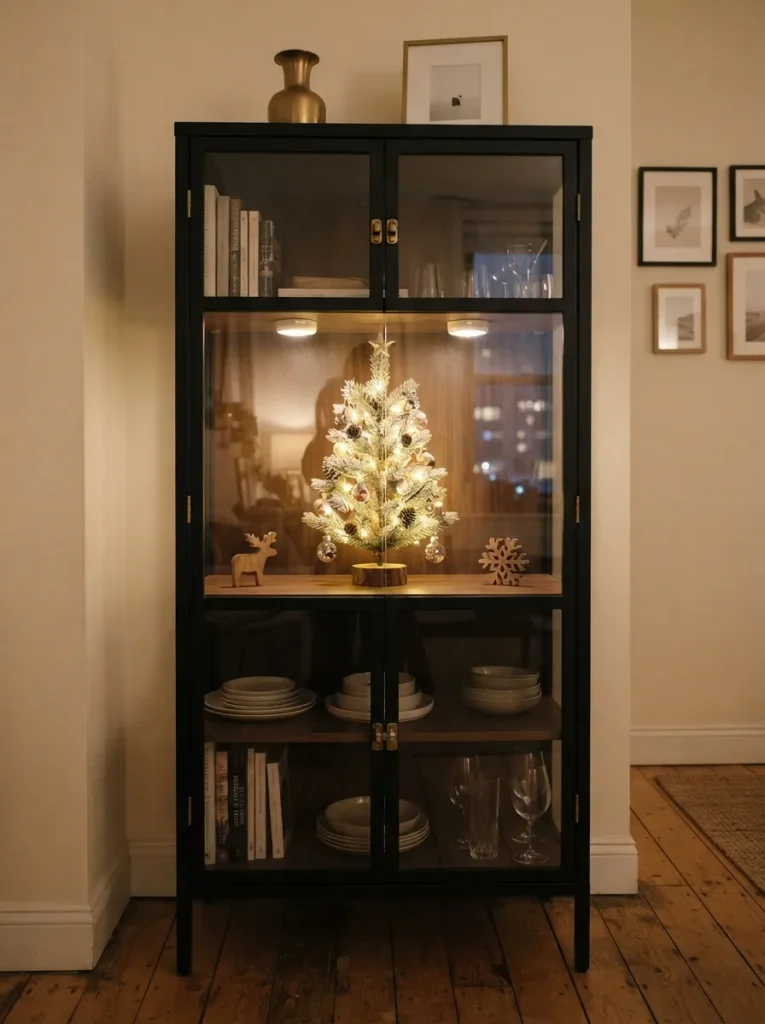
For studios and small living rooms where four feet of clearance is impossible, take the tree out of the equation. A glass-door display cabinet, a staple of IKEA’s storage range, turns a tabletop tree into an exhibit (see more Kallax Christmas display ideas) the cat can watch but never touch.
Choose a model whose doors latch shut, and check that a determined paw can’t pop them. Fix the cabinet to the wall with the fittings that come with it, since tall furniture is another thing a jumping cat can topple. Leave the top clear. A cabinet top makes a fine perch, and cats that land there will look for the next thing to reach.
Shop This Look
| Product |
|---|
| Glass-door display cabinet with latching doors |
| Tabletop artificial Christmas tree |
| Battery-operated LED puck lights |
8. Build a Decoy Climbing Station Beyond the Four-Foot Ring
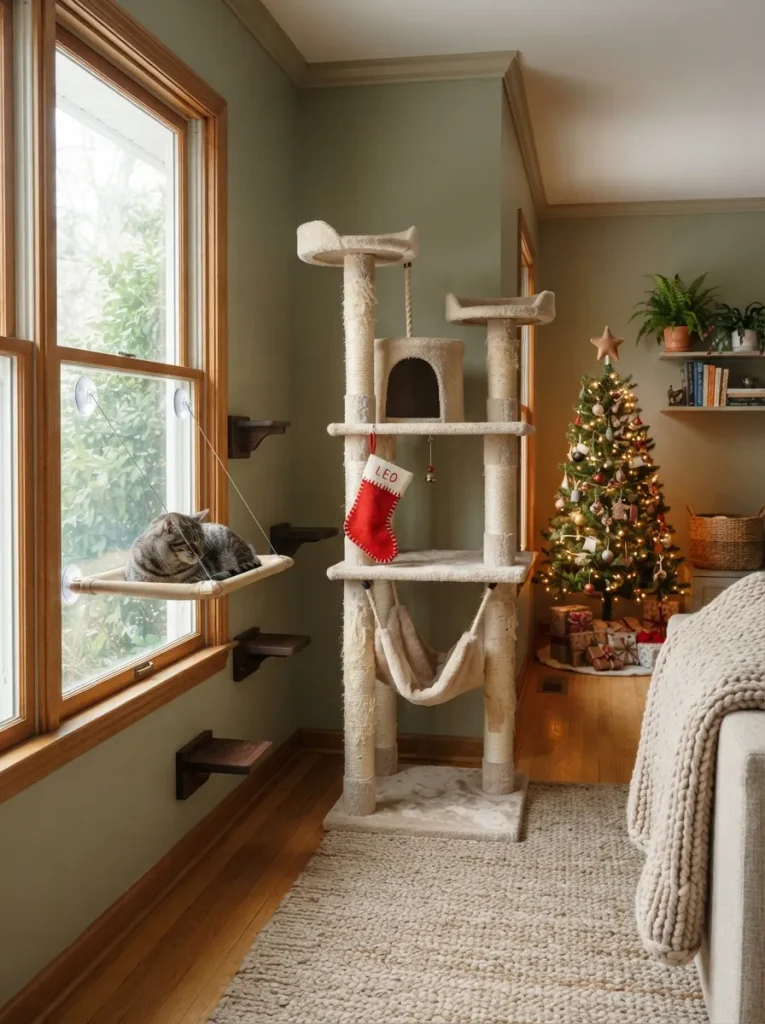
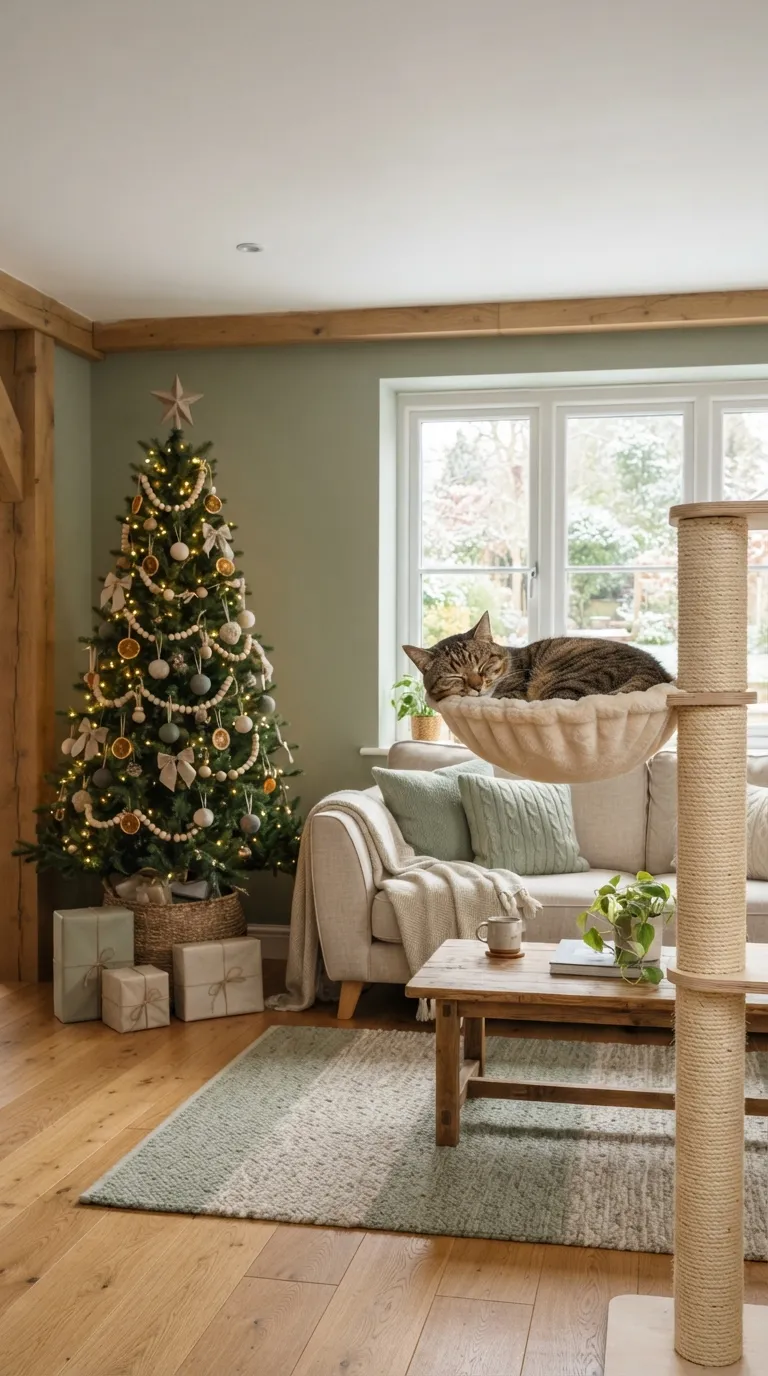
Set a tall cat tree (or one of these IKEA Kallax cat furniture hacks) within sight of the Christmas tree but outside the four-foot ring, roughly matching the tree’s height. A cat that wants a high vantage point will choose the easy climb over the tricky one, as long as the easy one is more rewarding.
Add a window perch on the same side of the room, and rotate a few toys onto the station so it stays interesting. Reward use with treats and attention; punish nothing. If the decoy is farther from the action than the tree, the tree still wins.
Budget Version: Under $100, a sturdy sisal scratching post beside one solid wall shelf gets you a climb-and-perch pair. Check any used cat tree for a wobble-free base first.
Shop This Look
| Product |
|---|
| Tall sisal-wrapped cat tree |
| Window-mounted cat perch |
| Wall-mounted cat steps |
9. Swap the Fabric Skirt for a Rigid Collar
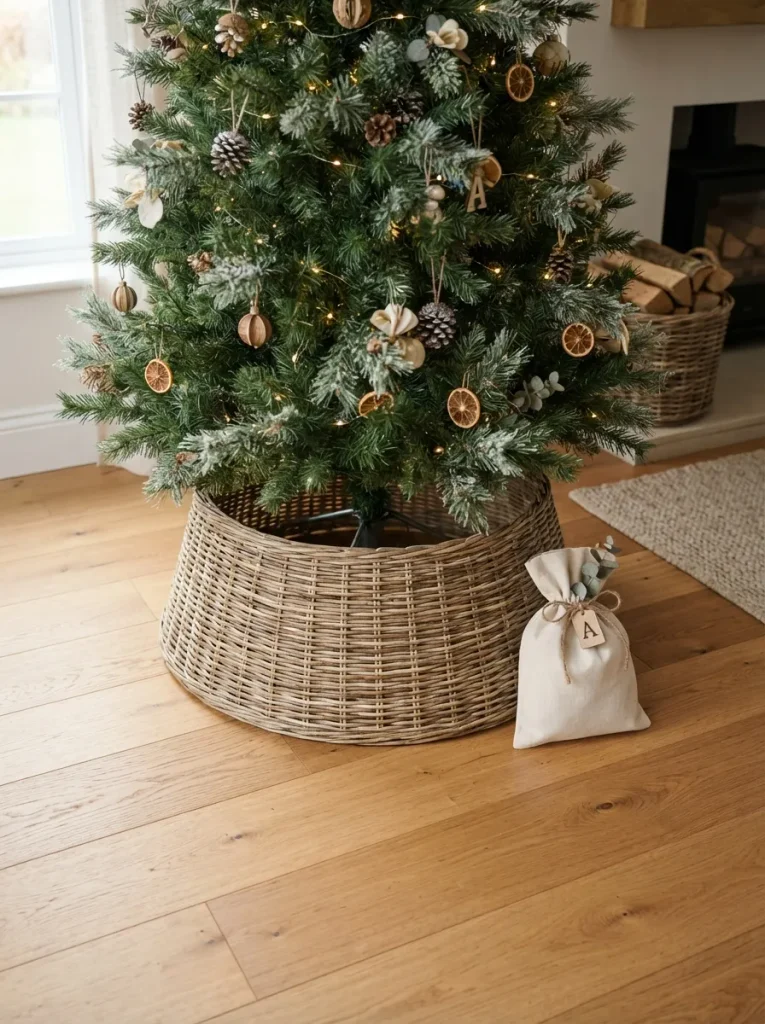
A woven or metal collar looks tidy around the stand. Fabric tree skirts, by contrast, are soft, warm and inviting for a nap or a dig. The collar closes off that cozy spot and hides the stand’s water reservoir and legs.
If you use a real tree, cover the reservoir fully, keep the water plain, and skip additives, since stagnant water and preservatives can upset a cat’s stomach. Not sure about a product? Ask your vet before using it.
Important: Tree-stand water isn’t a harmless bowl. Cover the reservoir completely, or choose an artificial tree and skip the question.
Observation
The counterintuitive part: decorate later, not sooner. Put the tree up bare, with the anchor line already in place, for several days before adding lights and ornaments. First-day curiosity tends to be the strongest, and a bare green shape is far less interesting to test than a glittering one. Cats that have already inspected the tree are less likely to treat each new ornament as a new toy.
Idea 10 covers the one material on your gift table that a cat can swallow without meaning to, and it isn’t an ornament.
10. Wrap Gifts in Fabric Bags, Not Ribbon
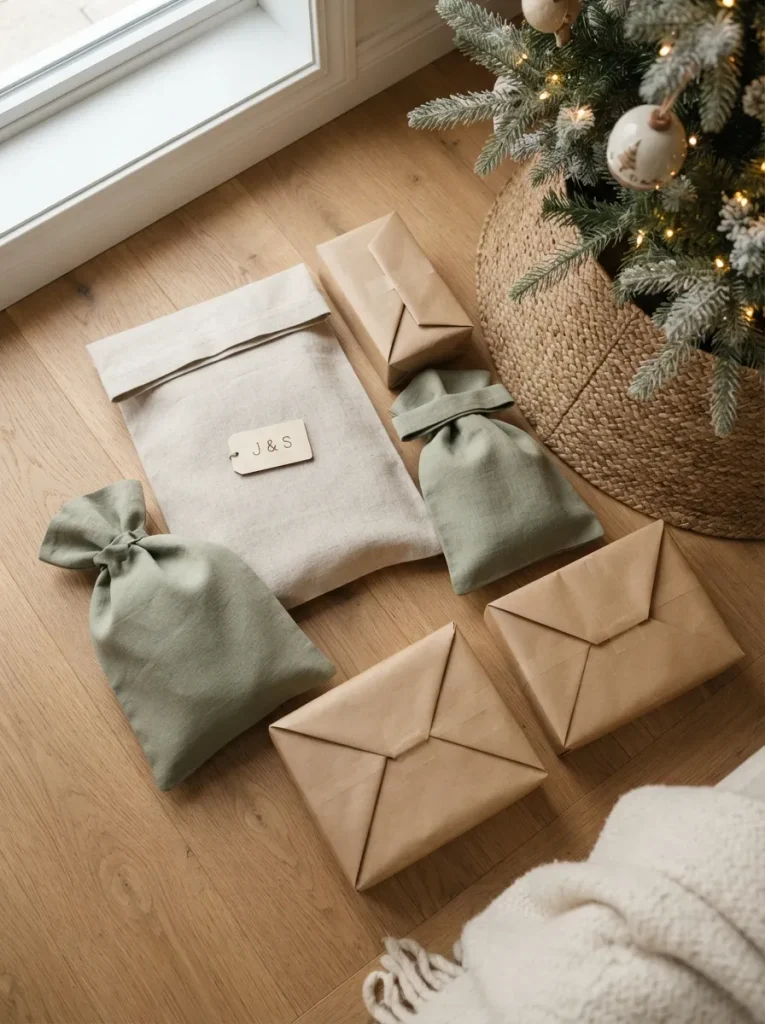
Ribbon, tinsel and thread are the strands vets commonly warn about, because a swallowed length can cause serious intestinal damage. Dangling, moving strands also attract cats more than almost any ornament does.
Solid-tone fabric bags with fold-over tops look cleaner under a tree and leave nothing loose to chew. For paper wrapping, seal the flap and skip the bow. Keep gift tags flat and tape-fixed rather than hanging on string.
Warning: If a cat has swallowed ribbon or thread and you can see some hanging from the mouth, don’t pull it. Call a vet right away.
11. Hang a Pegboard Tree Above Paw Height
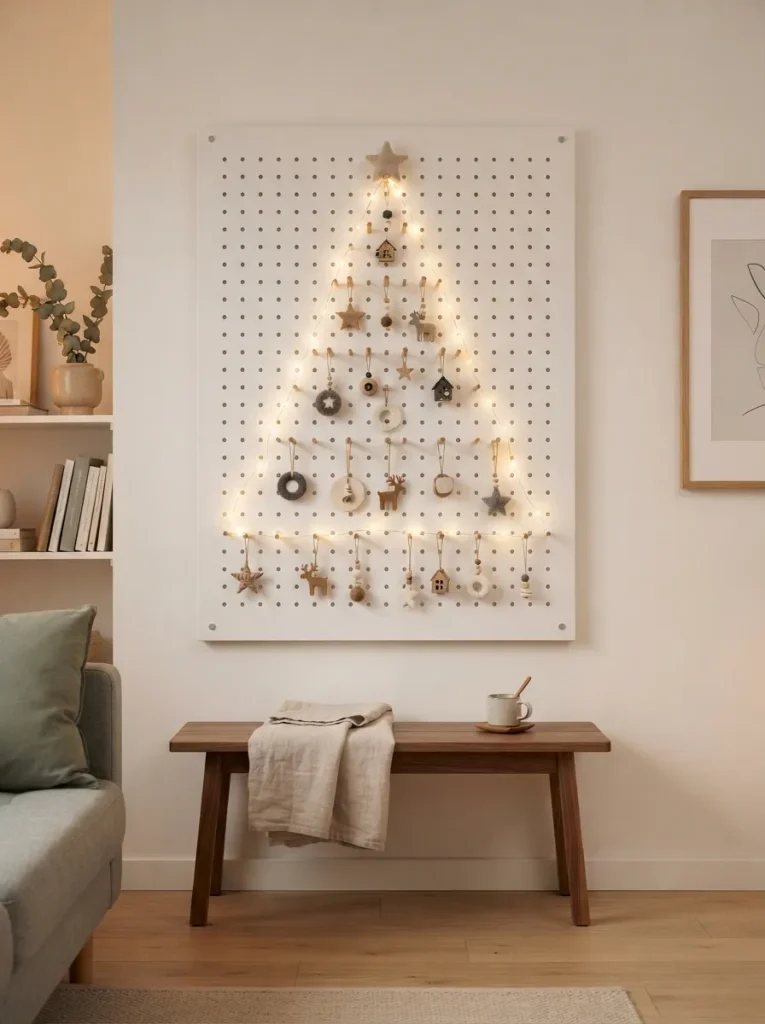
A triangle of small hooks on a wall-mounted pegboard, outlined in warm white lights and hung with light wood and felt ornaments, reads as a tree without a single climbable branch, one of several IKEA Christmas hacks that look surprisingly luxe.
IKEA’s SKÅDIS pegboard is the obvious starting point, and it screws into the wall. Mount the lowest hook well above the highest point you’ve ever seen your cat reach from the floor, then check that no shelf or table sits beneath it. Cats can leap higher than owners expect, so confirm the wall stays out of reach before you hang anything breakable.
Quick Win: Trace the tree shape on kraft paper, tape it to the wall, and mark hook positions through it. You’ll drill once.
How to Start Your Cat-Proof Christmas Transformation
Start here: find the stud or ceiling joist before you choose where the tree goes. That one point decides both the tree’s spot and where the anchor line runs, and everything else, from the clearance ring to the decoy station, builds outward from it.
Before anything else, move your best ornaments. The most common mistake is hanging the showpieces at eye level because they look best there, which puts glossy, dangling pieces right where a paw lives. Shift them into the upper two-thirds and fill the low zone with matte felt, wool and wood.
Three small buys, each typically well under $50: a flat sisal scratching mat to redirect claw urges, reusable fabric gift bags for ribbon-free wrapping, and a treat puzzle feeder to keep the cat busy while you’re out.
Plan one afternoon for the anchor, clearance ring and tree setup, then a few days of watching before decorating. A starter setup costs roughly $30–$100 (approximate). A full transformation with a slim tree, cabinet or pegboard can run $150–$400 (approximate). Anchoring and clearing are weekend jobs. The cabinet and pegboard installs are the ones that stretch into a second weekend.
Ready to Create Your Dream Cat-Proof Christmas Corner?
These 11 cat-proof IKEA Christmas hacks span layout, anchoring, lighting, ornament materials, color and clever furniture, from clearing the launch pads to hanging a tree above paw height. Nobody needs all eleven. Anchoring the trunk and clearing four feet already covers the biggest risks, and starting small is a perfectly valid way to begin.
Today, measure four feet from where the tree will stand and move whatever your cat uses to jump. By December evening you’ll sit under steady warm white lights while the cat naps on their own perch. Save this pin for the weekend you unbox the tree.
Keep Exploring
- 9 Cat-Safe Christmas Mantel Ideas for Homes With High Jumpers
- 8 Cat-Proof Christmas Window Decor Ideas That Stay Put
- 7 Pet-Safe Faux Holiday Greenery Swaps for Cat Owners