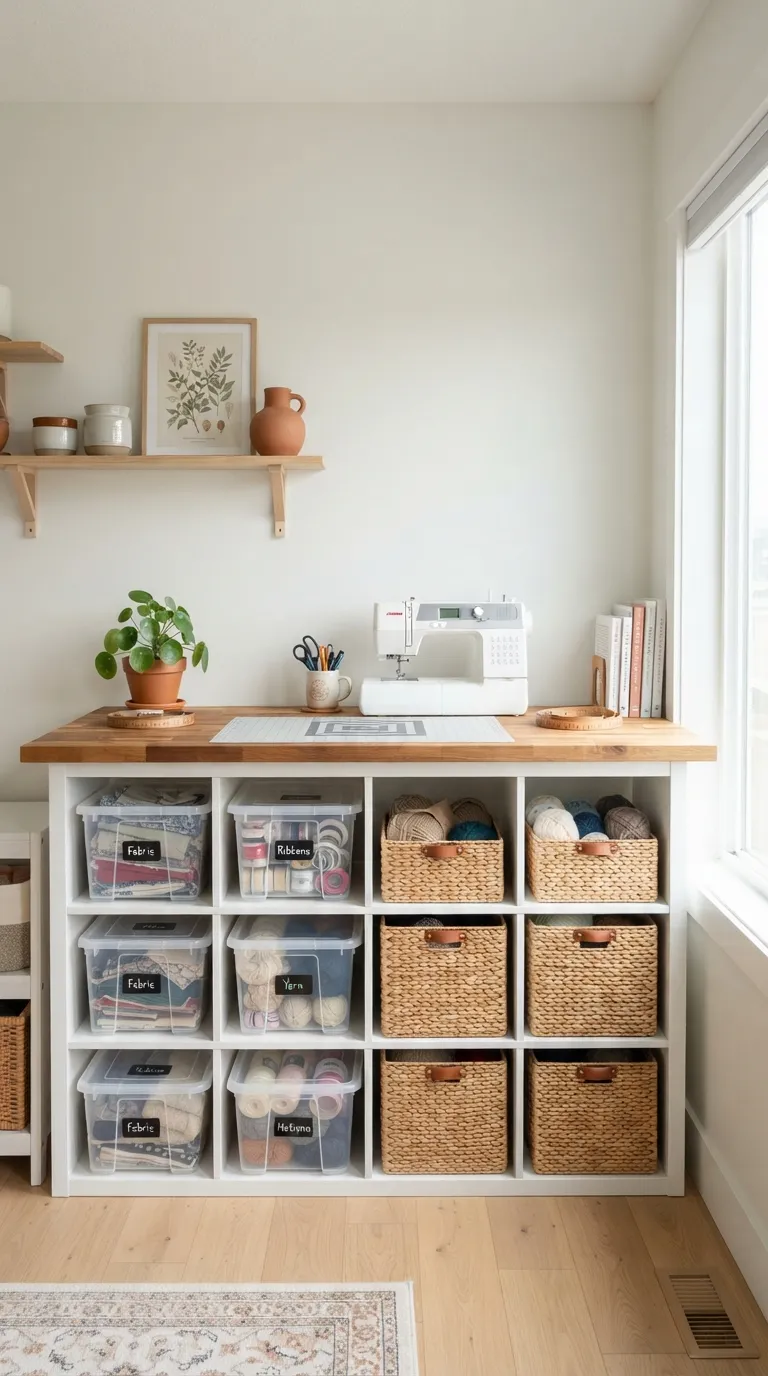
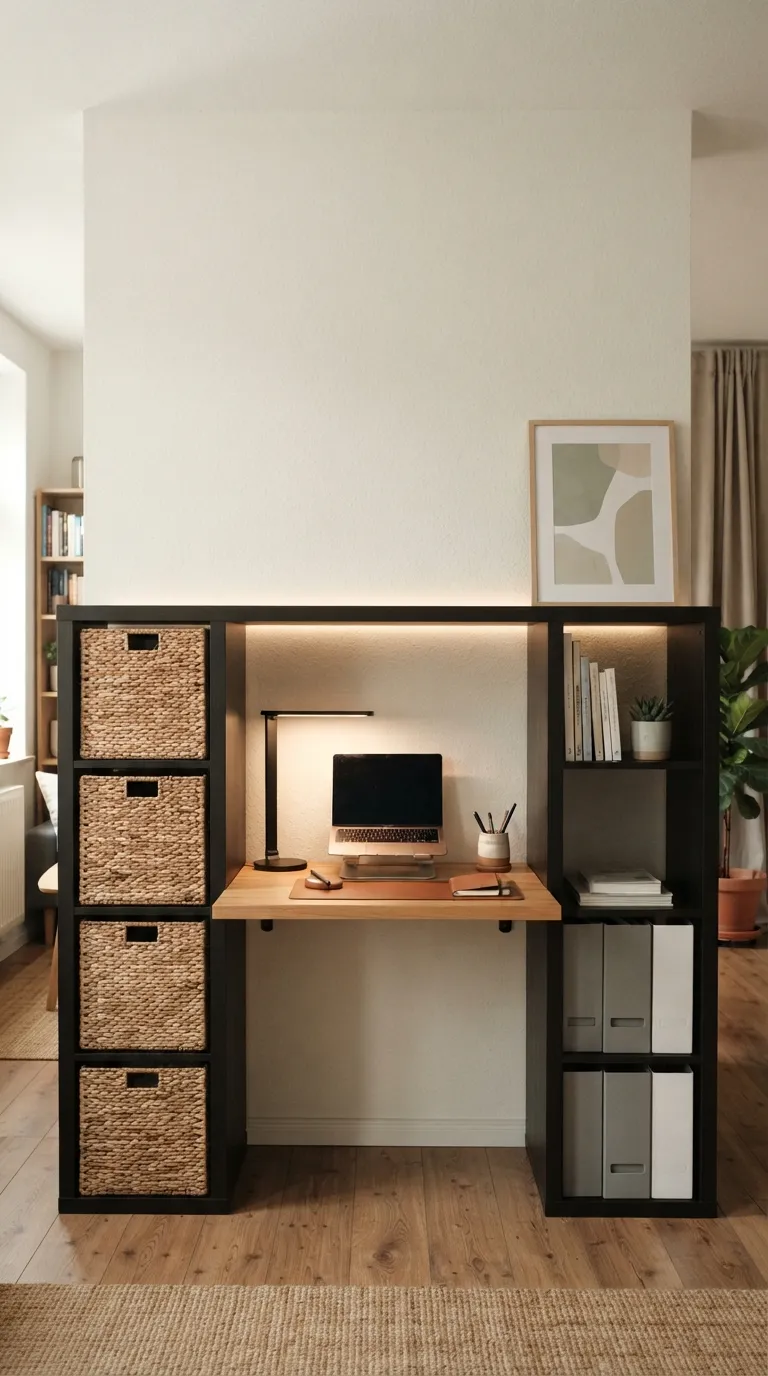
18 IKEA Kallax Home Office Ideas for Small Apartments
A Kallax home office is IKEA’s cube shelving unit pulling double duty desk, file cabinet, and room divider rolled into one piece of furniture you probably already own. Ahead are 18 concrete ways to turn that same bookcase into a workspace that holds up to actual work, whether you’re claiming a hallway nook or a full wall.
There’s a particular kind of relief that comes from a desk that finally has a place for everything no more laptop balanced on a kitchen stool, no more cables snaking across the floor. Good storage does the quiet work of making a small room feel less crowded, and a well-built Kallax setup can carry a surprising amount of weight without ever feeling bulky. Get the bones right first, and everything else the lamp, the chair, the little tray for pens falls into place fast.
Quick Navigation
- Why Kallax Home Offices Make Such a Difference
- 18 Kallax Home Office Ideas for Small Apartments
- How to Start Your Kallax Home Office Transformation
- Ready to Create Your Kallax Home Office?
Why Kallax Home Offices Make Such a Difference
IKEA’s Kallax system wasn’t built as office furniture it’s a modular cube bookcase, usually finished in white, black-brown, or oak-effect foil over particleboard but its 13-inch cubbies happen to match standard file-box and storage-bin sizes almost exactly.
Bins slide in flush, tabletops span the standard 30-inch or 42-inch widths, and add-on doors clip onto the same pre-drilled holes already built into the frame. With so many people working from a bedroom corner or a living room edge these days, that built-in flexibility matters more than dedicated square footage ever did. Start with the desk surface the rest can wait.
| Best starting point | Two Kallax 2×4 units bridged with a cut-to-size tabletop |
| Biggest impact area | Concealing cords and loose papers behind doors or bins |
| Budget to start | $120–$300 |
| Time to complete | A weekend for the desk, ongoing for the rest |
18 Kallax Home Office Ideas for Small Apartments
1. Bridge Two Kallax Units With a Tabletop for an Instant Built-In Desk
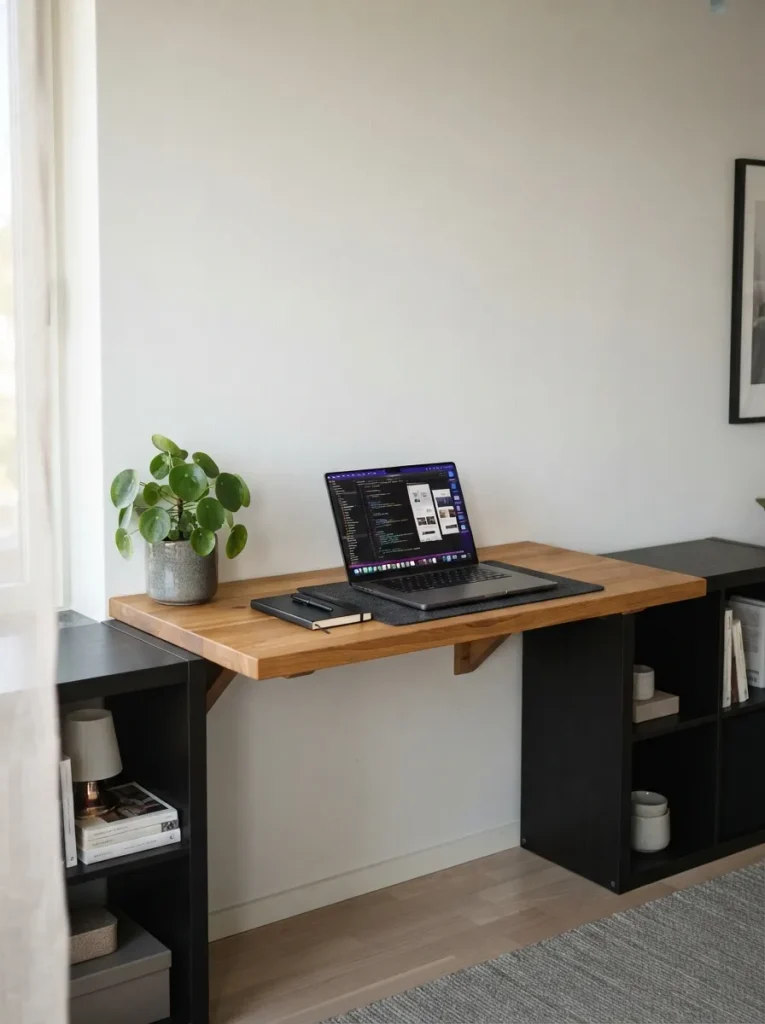
What it looks like: Grounded two solid cubes doing the work a desk frame usually does, with nothing wobbly in between.
Why it works: Two full-height Kallax units act as load-bearing legs, so a tabletop spanning them holds a monitor and a stack of books without sagging the same logic behind a kitchen island built on cabinets instead of a single pedestal.
How to copy it: Buy a 30-inch or 42-inch tabletop (butcher block or a cut-to-size MDF board both work), set it across two Kallax 2×4 units spaced to match its width, and secure it from underneath with L-brackets so it can’t shift when you lean on it.
Best for: Renters who need a real desk surface without buying a separate desk frame.
✅ Before You Build:
- [ ] Measure the tabletop width you want, then confirm both Kallax units together match that span
- [ ] Buy L-brackets and a drill before the tabletop arrives
- [ ] Sand and seal any raw-edge tabletop before installing it
- [ ] Attach the tabletop to both units from underneath, not just resting it on top
- [ ] Anchor tall units to the wall with an anti-tip strap
2. Turn a Single Kallax Row Into a Room Divider That Defines the Office Zone
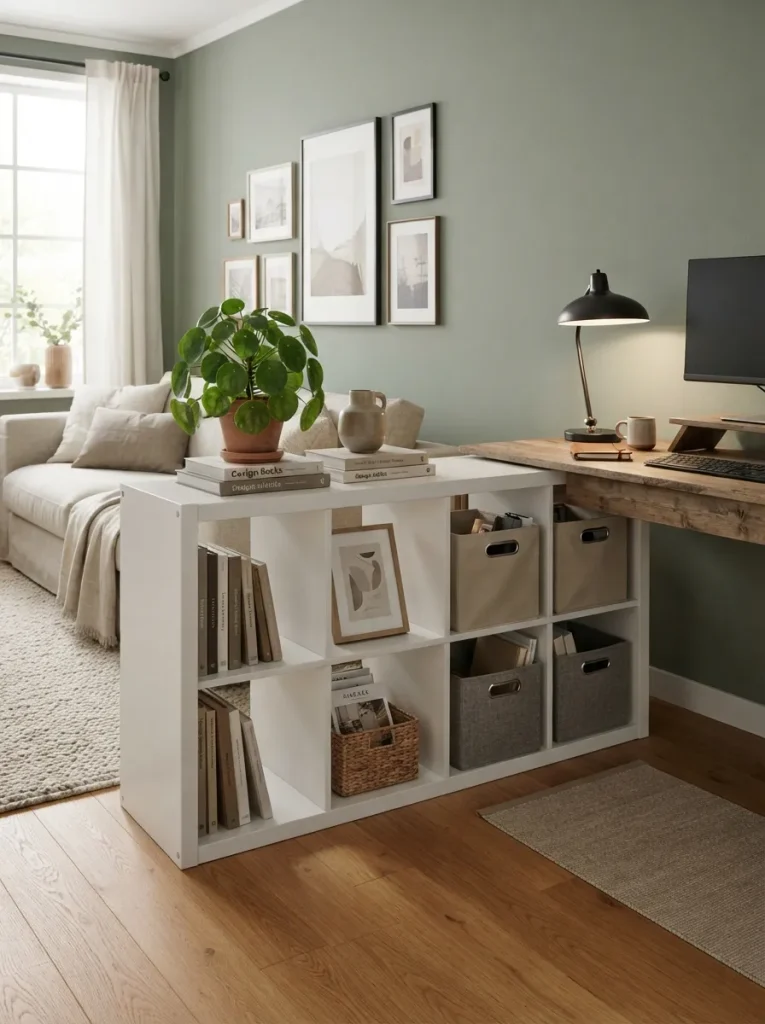
What it looks like: Still a single low wall of cubbies that reads as furniture from the living room side and function from the desk side.
Why it works: Because both faces of the unit are usable, it reads as furniture rather than a barrier, which keeps a shared room from feeling chopped in half the way a floor-to-ceiling partition would.
How to copy it: Position a horizontal Kallax 2×4 or 4×4 perpendicular to the longest wall, style the living-room-facing side with books and a plant, and reserve the office-facing side for bins, files, and a small lamp so each face has its own job.
Best for: Studio and one-bedroom apartments where the office and living room share the same footprint the same layout trick shows up constantly in dorm rooms.
Warning: An unsecured Kallax used as a freestanding divider is a real tip-over risk once it’s loaded with books on one side. Anchor it to the floor with furniture straps or an L-bracket into a stud, even if it isn’t against a wall.
3. Line Two Cubbies With Fabric Bins to Swallow the Cord Chaos
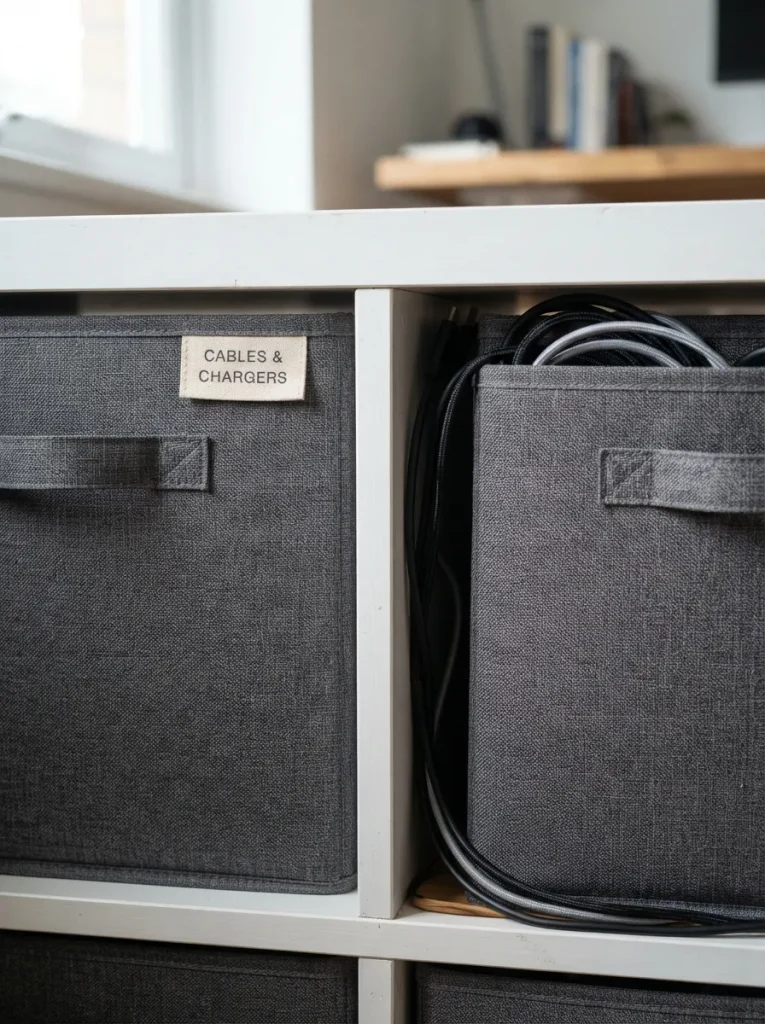
What it looks like: Tidy two soft-sided bins doing the one job a Kallax cube can’t do on its own, which is hide a mess.
Why it works: Open shelving organizes terribly for anything without a flat spine power strips, chargers, loose cables. A fabric bin adds a soft container inside a hard grid, the same fix stylists use for toy storage in a living room.
How to copy it: Pick bins sized for a 13-inch cube specifically, drill a small hole in the back panel if you want to run a power strip cord through to an outlet, and dedicate one full bin to cords only don’t mix them with paperwork the way you might get away with in a craft closet.
Best for: Anyone whose desk currently has visible cable spaghetti.
Mistake to Avoid: Packing one bin with every cord you own. Cords still tangle inside a bin sort by device into small pouches first, then drop those into the bin.
Shop This Look
| Product |
|---|
| Foldable fabric storage bins sized for a 13-inch cube |
| Cord organizer sleeve with cable ties |
| Under-desk cable management tray |
| Power strip with mountable clips |
| Label maker or blank bin tags |
Up next: the lighting trick that makes a Kallax desk actually usable after sunset.
4. Paint a Single Cube Bank a Saturated Color as a Desk-Height Focal Point
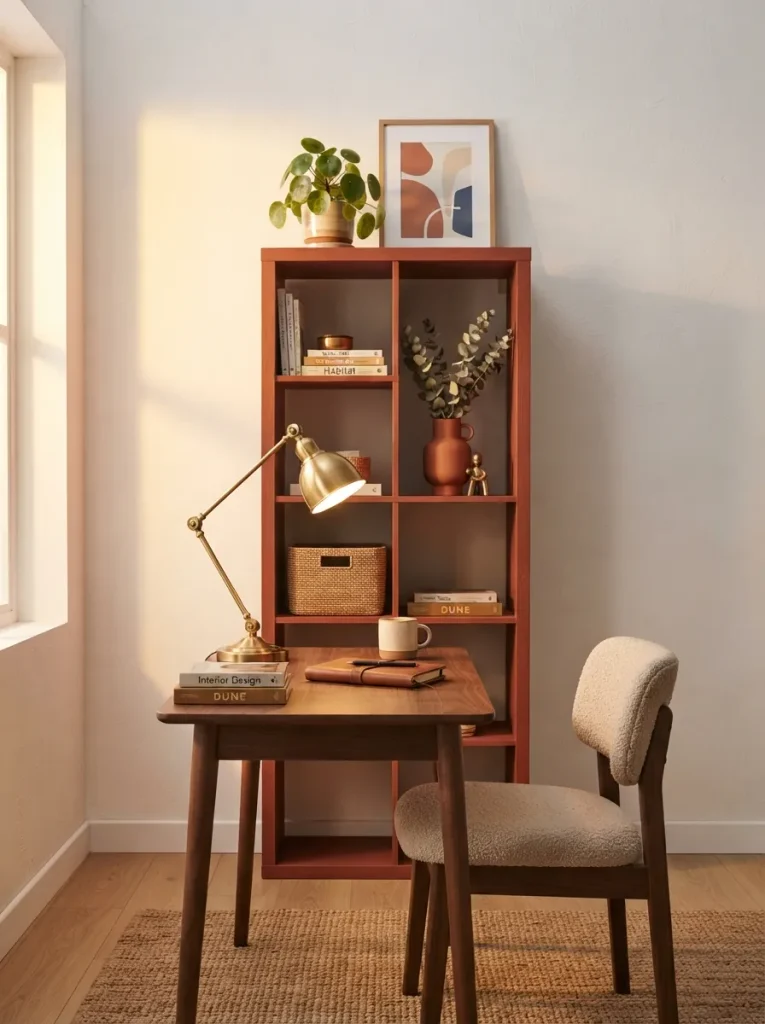
What it looks like: Layered one saturated column against plain walls, so the eye lands on the desk instead of wandering.
Why it works: Color contrast creates a visual anchor point, and a single painted piece does that job without repainting an entire wall the same principle as a colored front door on an otherwise neutral house.
How to copy it: Sand the Kallax lightly, prime with a bonding primer made for laminate or foil surfaces (regular primer won’t stick), and paint in a color one shade darker than you think you want it reads lighter once light hits it.
Best for: Renters who can’t paint walls but want a strong visual moment.
Styling Note: Leave the top and bottom cubes empty of bins so the paint color actually shows a fully packed cube bank hides the color you just spent a weekend applying.
5. Add On Doors to One Column So Clutter Disappears Behind a Flat Front
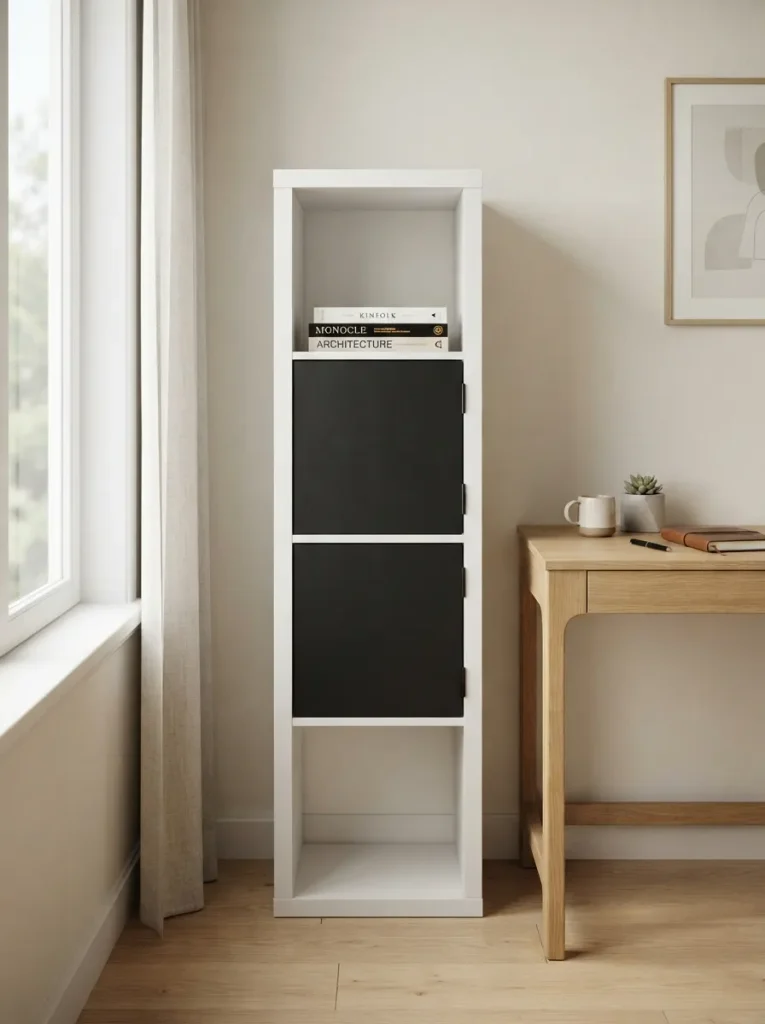
What it looks like: Grounded a flat, closed front where the eye expects to see stacked folders.
Why it works: Concealment is a legitimate design tool, not a shortcut it’s the same trick behind popular nursery storage hacks a closed door reduces visual noise the same way a cabinet front does in a kitchen, and it’s the fastest way to make a small office look finished rather than in-progress.
How to copy it: Order doors sized to the exact cube count you’re closing off (they’re sold per opening, not per unit), and mount them on the columns holding your least-attractive supplies paperwork and cords, not the books you’d actually want visible.
Best for: Anyone whose desk is visible from the living room or a video-call background.
Important: Add-on doors need roughly an inch of clearance to swing open, so don’t push the Kallax flush against a wall corner on the hinge side or the door won’t clear.
6. Run LED Strip Lighting Under the Top Shelf for Glare-Free Task Light
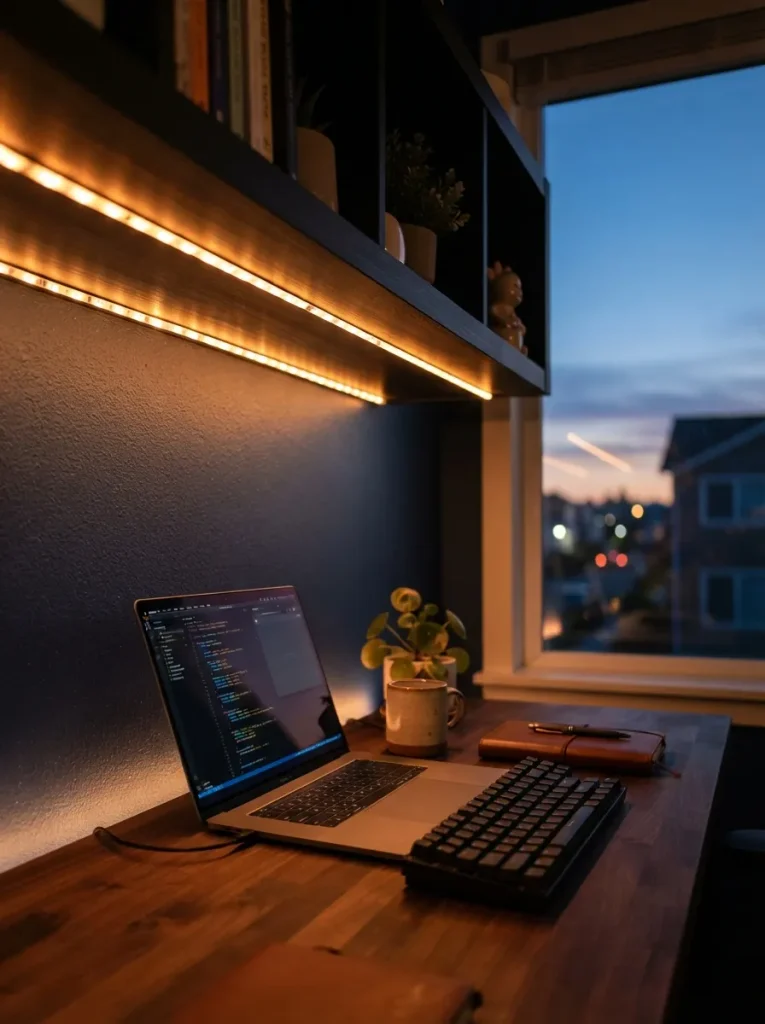
What it looks like: Warm a soft wash of light along the desk instead of one harsh beam from the ceiling.
Why it works: A strip mounted under the shelf lights the work surface directly, which avoids the screen glare you get from an overhead fixture light behavior matters more than the fixture itself here.
How to copy it: Choose a battery or USB-powered adhesive strip in warm white (around 3000K, not daylight blue-white), run it along the underside of the shelf directly above where you’ll sit, and route the cord along the inside back panel so it stays out of sight.
Best for: Anyone who works evenings or in a room without good natural light.
Shop This Look
| Product |
|---|
| Battery-powered adhesive LED strip light |
| Warm-white (3000K) dimmable LED tape |
| Motion-sensor puck lights for cubbies |
| Cable clips for the light’s power cord |
| Under-shelf light diffuser channel |
Three ideas in and we haven’t touched the furniture on top yet that’s next.
7. Slide a Half-Height Kallax Under a Window for a Slim Desk Nook
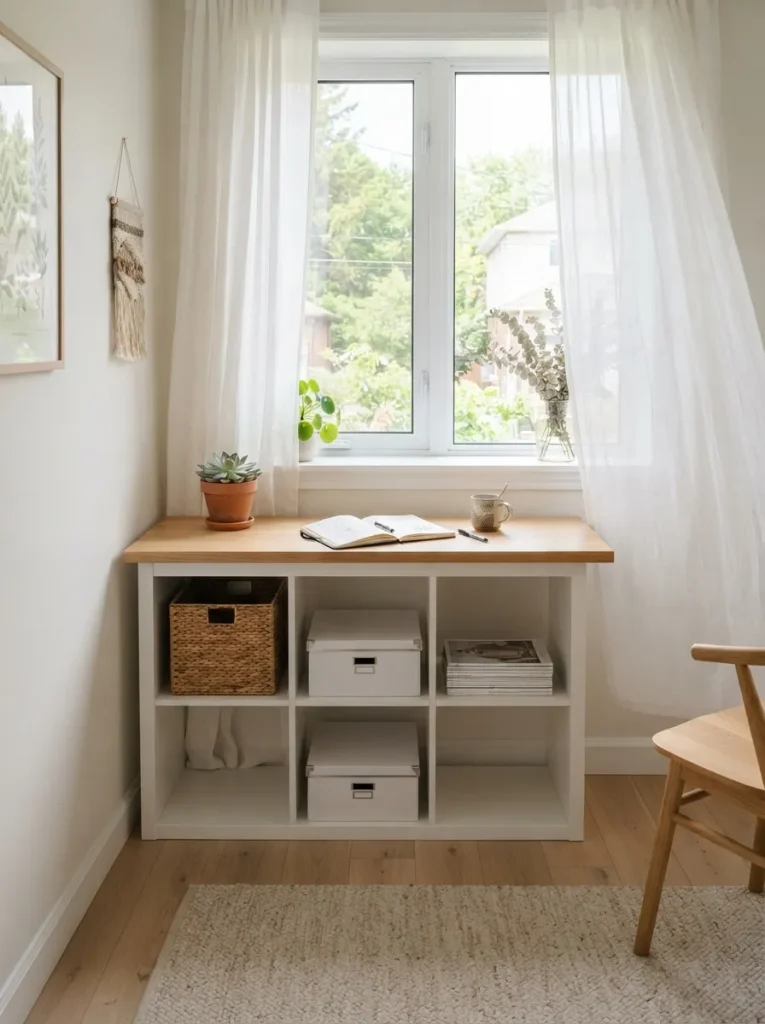
What it looks like: Airy a low run of storage that doesn’t block the window it’s sitting under.
Why it works: A half-height unit keeps the sightline to the window open, which matters more in a small room than the extra storage a taller version adds it’s the same space-stretching logic behind good small-room furniture choices negative space above the desk reads as more room than it measures.
How to copy it: Use a single-row 1×4 turned sideways so it sits about knee height, top it with a narrow board cut to the windowsill’s width, and skip the doors here the open cubbies double as a spot for a mug without cluttering the desk.
Best for: Bedrooms and living rooms where the only free wall has a window on it.
Small-Space Tip: A mirror leaned against the wall beside the desk not the window bounces the light further into the room without blocking the view outside.
8. Add a Floating Shelf Above the Kallax for Vertical Document Storage
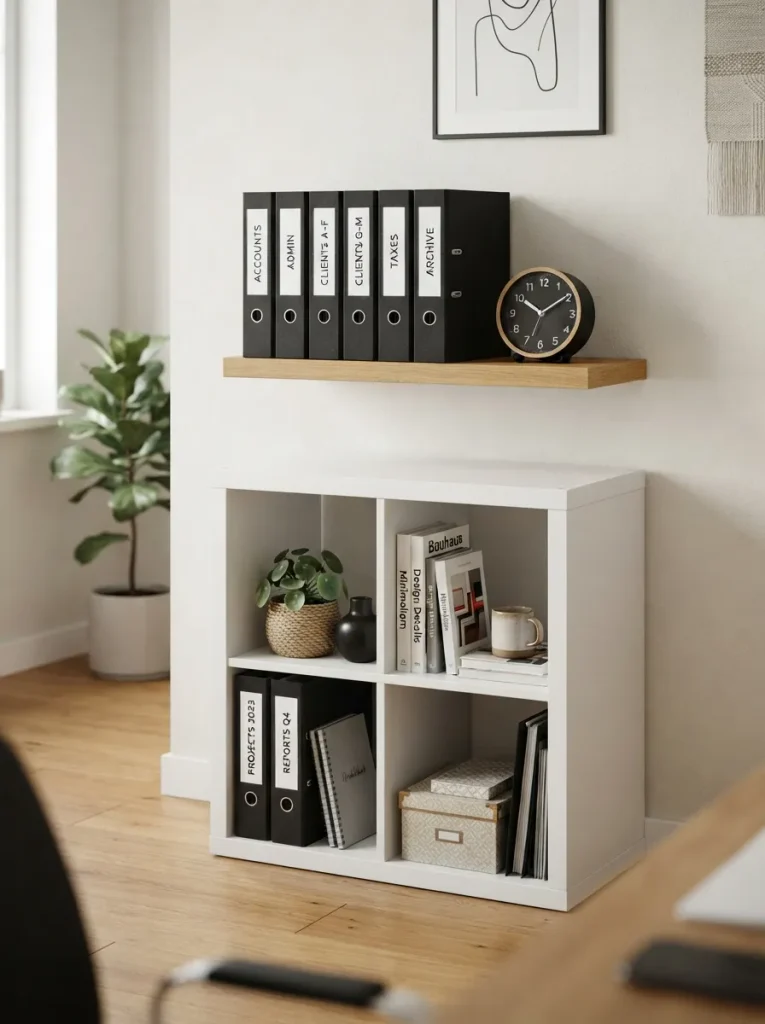
What it looks like: Layered storage that climbs the wall instead of spreading further across the floor.
Why it works: Vertical stacking is the single biggest space-saver in a small room the same principle that works well above a Kallax TV console and a floating shelf directly above the unit uses wall space that would otherwise sit empty above eye level.
How to copy it: Mount the shelf using the top of the Kallax as your reference line so the two pieces read as one built-in, keep the shelf’s depth shallower than the cubbies below so it doesn’t visually top-heavy the piece, and reserve it for items you reach for weekly, not daily.
Best for: Anyone who’s run out of cubby space but doesn’t have floor room for a second unit.
Pro Tip: Paint the floating shelf’s bracket the same color as the wall before mounting a visible bracket is the detail that makes a floating shelf look like an afterthought instead of a built-in.
9. Swap in Seagrass Baskets for a Softer, More Textured Storage Layer
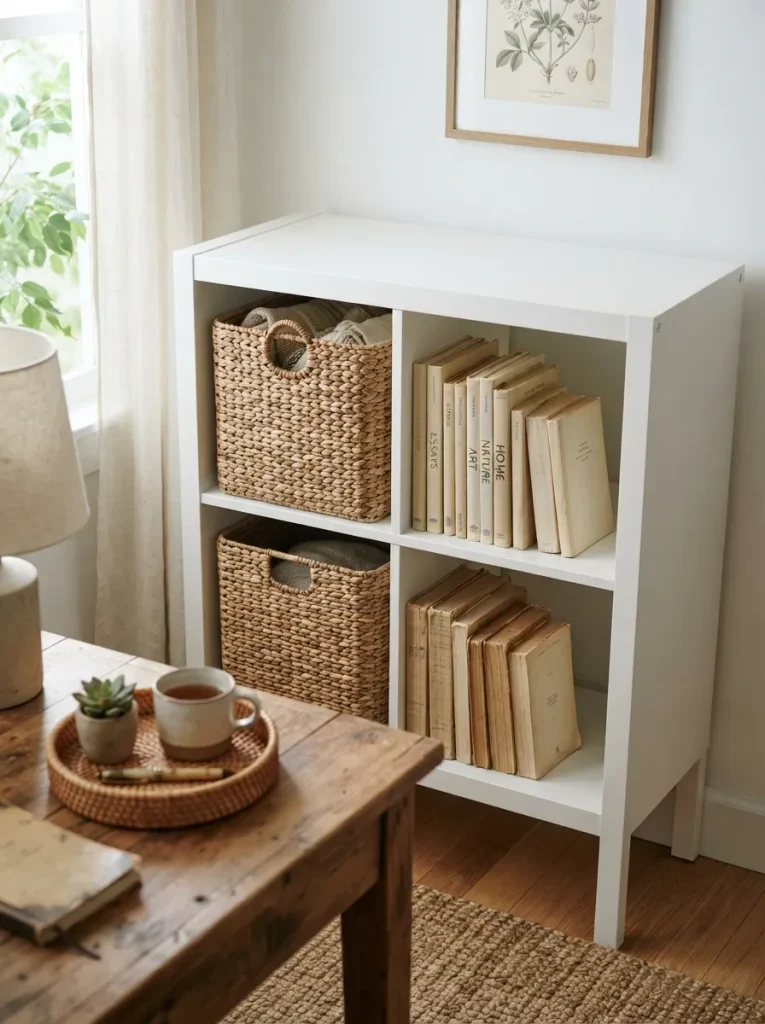
What it looks like: Raw natural fiber against the flat white grid, which softens what’s otherwise a pretty utilitarian piece of furniture.
Why it works: Texture layering breaks up a surface that would otherwise be all hard edges the same reason a linen throw softens a leather sofa, and a trick that shows up constantly in Kallax styling ideas woven baskets do that job while still fully hiding their contents.
How to copy it: Look for baskets described as fitting a 13-inch cube exactly, not “large storage bins” sized for bigger shelving a loose-fitting basket slides around and looks sloppy fast.
Best for: Anyone who wants concealed storage without the flatter, more office-y look of fabric bins.
Budget Version: A single seagrass basket costs less than an add-on door and covers the same job of hiding clutter start with one on your most-used cubby before committing to a full row.
Shop This Look
| Product |
|---|
| Seagrass storage baskets sized for a 13-inch cube |
| Woven basket with cutout handles |
| Interior fabric liner for loose papers |
| Small woven catch-all tray for the desktop |
| Jute basket in a darker tone for contrast |
The next one is a two-minute fix most people never think to try.
10. Paint Just the Back Panels for a Two-Tone Kallax With Zero Extra Furniture
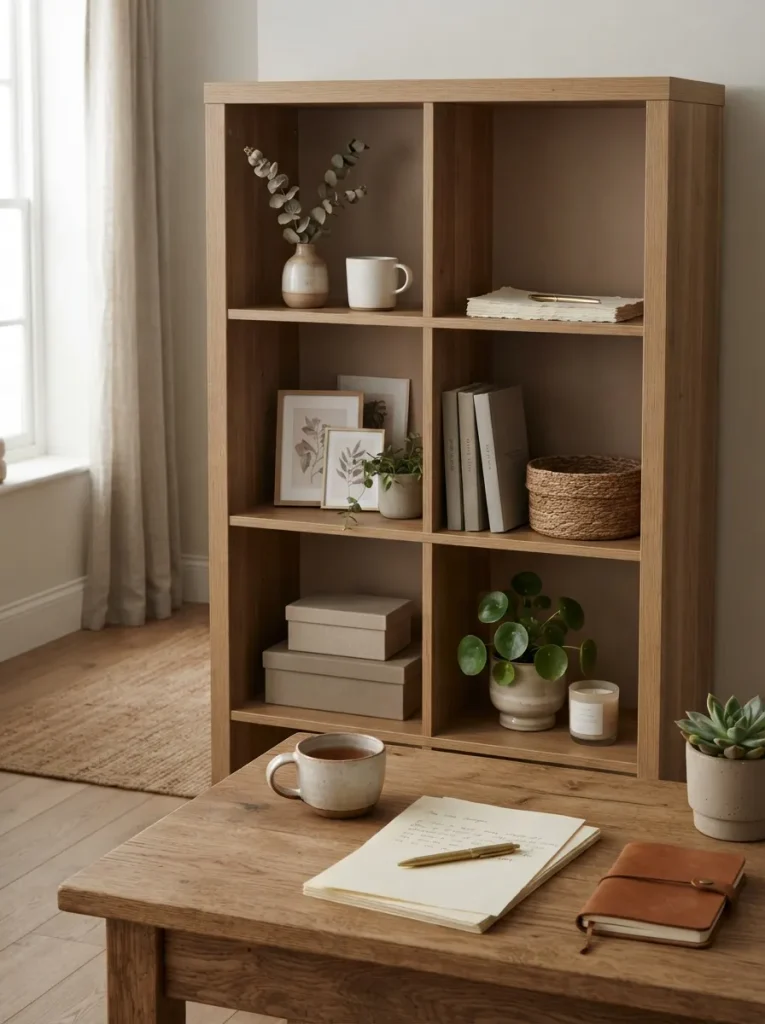
What it looks like: Hushed color that only shows in the negative space between objects, so it never competes with what’s stored on the shelf.
Why it works: Painting only the back panel adds color without adding visual weight the frame stays neutral, so the piece still reads as furniture rather than a colored accent, which matters in a room already busy with desk supplies.
How to copy it: Remove the back panels if your Kallax model has them detachable, paint both sides so the color reads correctly from any angle, and let them dry fully before reinstalling rushing this step is how paint ends up stuck to the frame edges.
Best for: Renters who want color commitment without painting the actual furniture frame or a wall.
11. Fit a Drawer Insert Into One Cube for Stationery That Stays Sorted
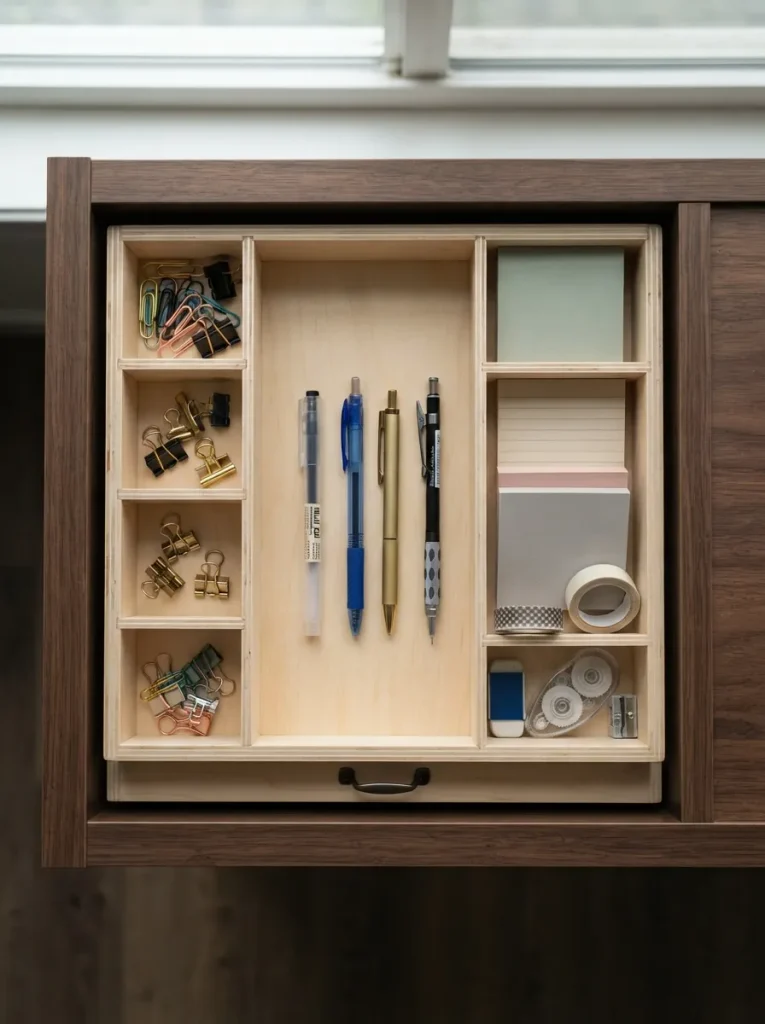
What it looks like: Still a drawer that closes on a mess instead of leaving it stacked in an open cube.
Why it works: An open cubby has no boundaries, so small items drift and pile a drawer insert reintroduces the compartments a desk organizer usually provides, the same logic behind good closet organization ideas, just scaled up to fit the Kallax opening.
How to copy it: Choose an insert built specifically for the 13-inch Kallax opening rather than a generic drawer unit, and use the smallest interior tray for anything you reach for daily pens, a charger cable so it stays at the front instead of buried.
Best for: People whose desk drawer situation is currently “one big junk cube.”
Important: Most Kallax drawer inserts are sold separately from the cube itself and aren’t interchangeable with the older “Expedit” shelving double-check the model before buying.
Shop This Look
| Product |
|---|
| Cube-fit drawer insert unit |
| Small drawer organizer trays for pens and clips |
| Adhesive drawer liner |
| Labeled drawer pulls or tabs |
| Stackable desktop drawer caddy |
12. Flank the Desk With Wall Sconces Instead of a Single Overhead Light
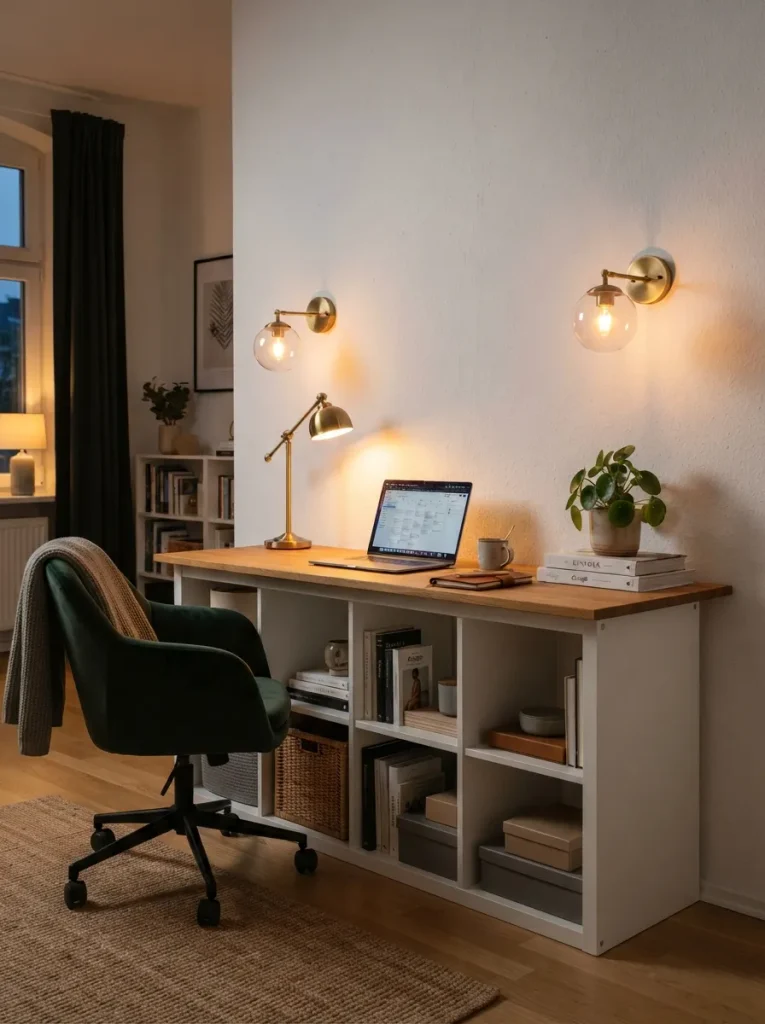
What it looks like: Warm two pools of light instead of one flat wash from the ceiling.
Why it works: Two smaller light sources create depth a single ceiling fixture can’t it’s the layered-lighting principle designers use in living rooms, applied to a desk that usually only gets one bulb.
How to copy it: Mount plug-in sconces (no wiring needed) at roughly eye level when seated, angle them slightly toward the desk rather than straight down, and pair them with a warm bulb anything labeled “daylight” will feel clinical here.
Best for: Anyone in a rented apartment who can’t install hardwired fixtures.
Quick Win: No wall space for sconces? A single plug-in wall lamp with an on/off switch on the cord does almost the same job without any mounting hardware.
Halfway through the list, and the next idea might be the simplest fix in the whole roundup.
13. Tuck a Low Kallax Cube Under the Desk as a Hidden Printer Stand
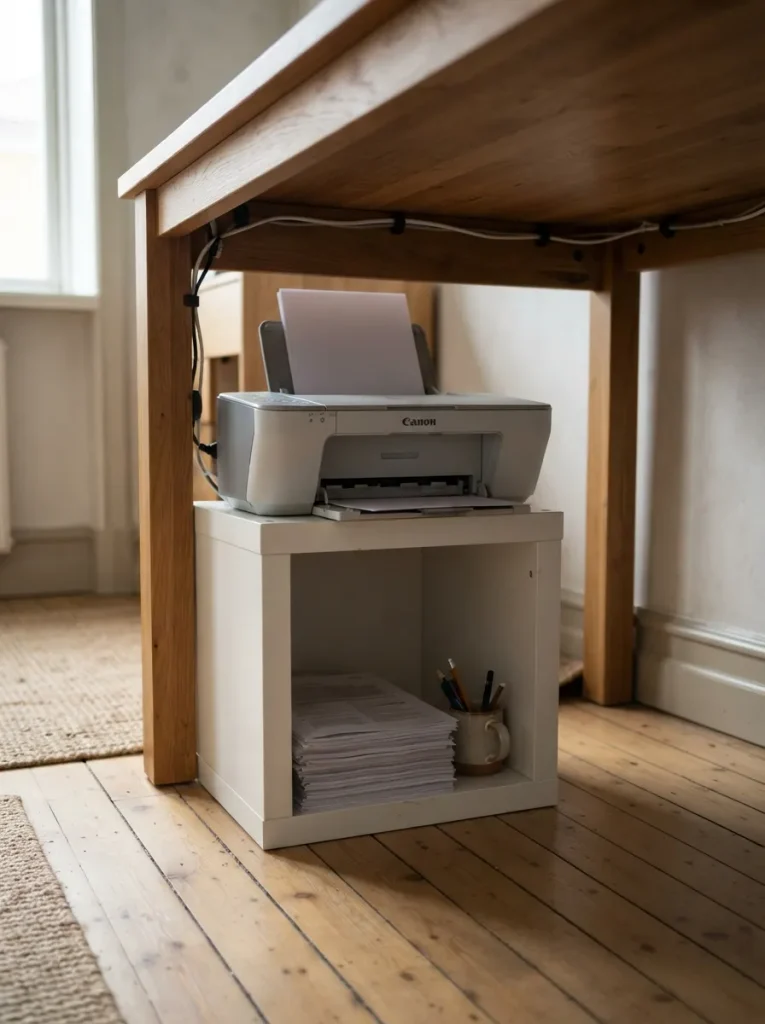
What it looks like: Grounded a printer that has an actual home instead of sitting on the floor or balanced on a stack of books.
Why it works: Under-desk space in a small home office almost always goes to waste using it for a compact Kallax cube turns dead space into function without adding a single extra square foot to the room’s footprint.
How to copy it: Measure your printer’s height before buying a single-row 1×2 Kallax fits most compact printers, but a larger all-in-one may need the internal shelf removed entirely to clear the desk underside.
Best for: Small offices where the printer currently lives on the floor.
Mistake to Avoid: Pushing the stand flush against the wall behind it most printers need a few inches of clearance at the back for paper to feed through, and a flush fit jams the tray.
My Views:
In my experience, the cube that becomes the junk drawer is almost always the one closest to the chair not the one farthest away, which is where most people assume clutter collects. Put your least-used bin in easy reach and your most-used one a full arm’s length out, and you’ll actually put things back instead of tossing them onto the desk “for now.”
14. Line the Back of One Cube in Cork for a Built-In Pinboard
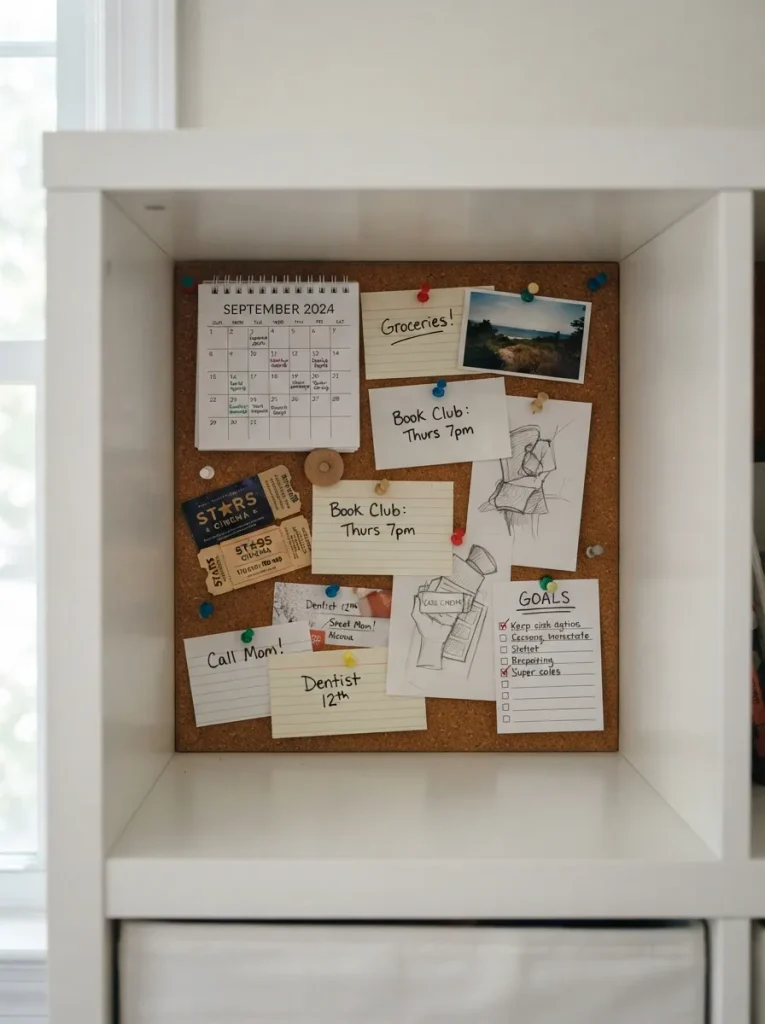
What it looks like: Layered a soft, pinnable surface tucked inside a cube instead of taking up wall space.
Why it works: A pinboard mounted on the wall competes for the same real estate as art or shelving building one into an existing cube uses square footage that’s already spoken for, so nothing new crowds onto the wall.
How to copy it: Cut a cork sheet (or thin felt board) to the exact interior dimensions of the cube, glue it to the back panel with a light adhesive so it can be swapped later, and keep it to one cube only a full column of pinboard reads cluttered fast.
Best for: Visual planners who like sticky notes and index cards over a digital calendar.
Styling Note: Skip colored pushpins in more than two colors a pinboard in one or two accent colors reads intentional, while a rainbow of pins reads like a middle-school locker.
15. Paint the Kallax to Match the Wall So the Whole Setup Disappears
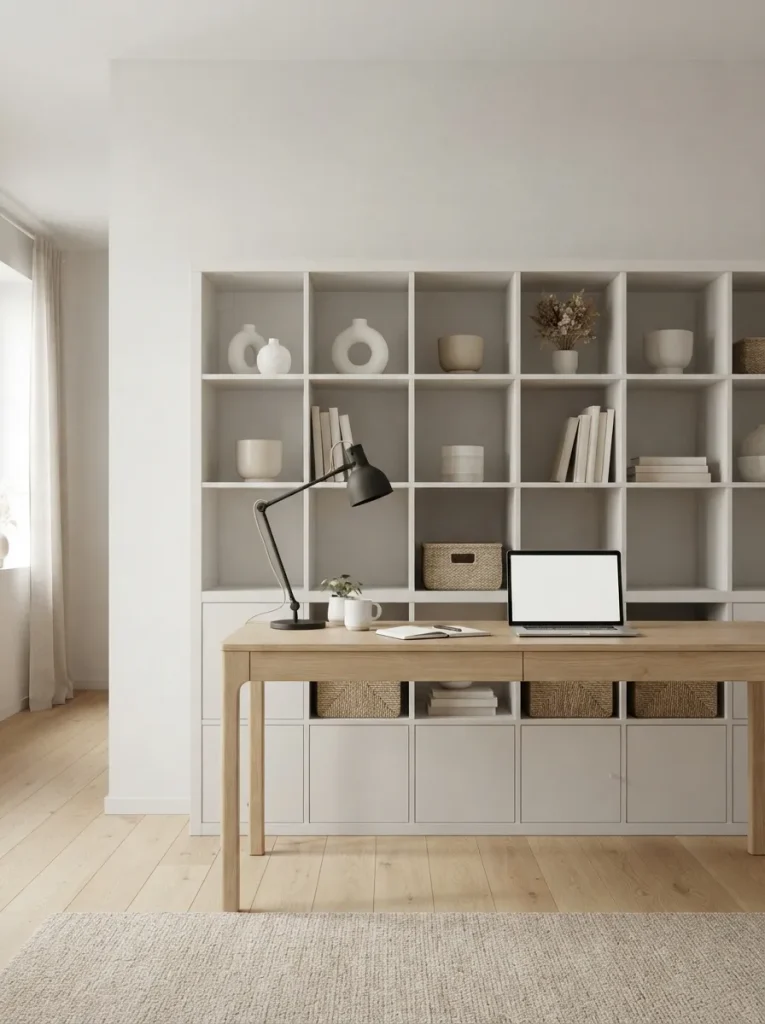
What it looks like: Still a unit that reads as part of the wall instead of a piece of furniture sitting in front of it.
Why it works: Matching a large piece’s color to its background reduces its visual footprint entirely borrowed from built-in cabinetry, where blending into the wall makes a small room feel less filled-up than a contrasting color would.
How to copy it: Take your exact wall paint color (or the closest match) to prime and paint the Kallax frame, and keep any decor on top of it in a color pulled from a broader home color combination palette so there’s still a visual point of interest otherwise the corner disappears a little too much.
Best for: Small rooms where the desk setup needs to visually recede, not stand out.
Warning: Laminate Kallax surfaces need a bonding primer made for melamine or foil before regular wall paint will stick skip it and the paint chips within weeks of normal use.
Three ideas left including the one almost nobody thinks to try until their desk starts overflowing again.
16. Add One Warm-Bulb Desk Lamp Instead of Relying on the Room’s Overhead Light
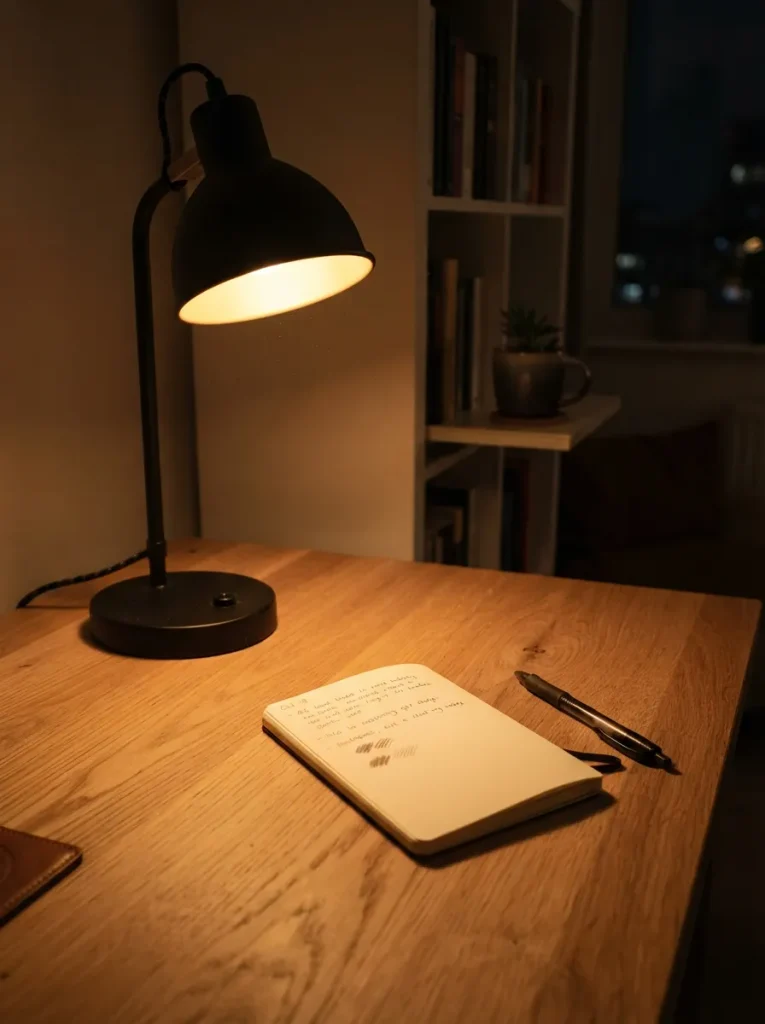
What it looks like: Hushed one warm circle of light instead of the flat wash from a ceiling fixture.
Why it works: Task lighting at the source does more for focus than ambient room light ever will a single warm-bulb lamp draws the eye, and your attention, down to the work surface instead of spreading light evenly across a room that doesn’t need it.
How to copy it: Choose a lamp with a shade that directs light down rather than up, fit it with a warm bulb around 2700K, and position it on the non-dominant-hand side of the desk so the lamp’s shadow doesn’t fall across whatever you’re writing.
Best for: Anyone doing close work reading, writing, detail tasks at the desk regularly.
Budget Version: A basic clip-on desk lamp with a warm-bulb swap costs less than most decorative lamps and clips directly onto the Kallax edge, freeing up desk surface entirely.
17. Add Labeled Bins for a “Close the Office” End-of-Day Reset
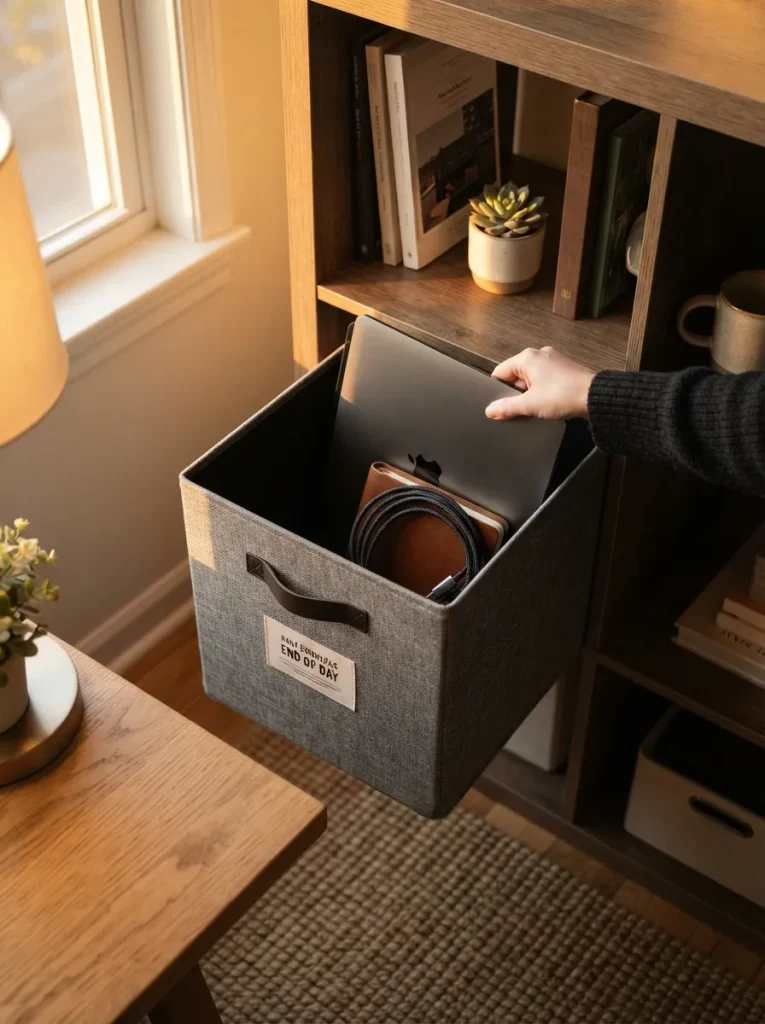
What it looks like: Grounded one bin with a job, so the desk actually clears at the end of the day instead of staying half-covered.
Why it works: A shared-space office needs a literal off switch, and a single labeled bin gives everything on the desk somewhere to go the same reason a hallway needs one designated spot for keys and mail instead of letting them land wherever.
How to copy it: Pick one lidded bin, label it something specific like “in progress” rather than “misc,” and make a habit of sweeping loose papers and the laptop charger into it at the end of each work session not everything on the desk, just what’s actively unfinished.
Best for: Anyone whose desk shares a room with the couch, the bed, or the dinner table.
Important: A bin that’s too vague (“stuff,” “misc”) fills up and never gets sorted. The more specific the label, the more likely you actually empty it on a regular basis instead of letting it become permanent storage.
Shop This Look
| Product |
|---|
| Matching lidded bins in a neutral finish |
| Chalkboard or write-on label tags |
| Small desktop tray for “in progress” items |
| Felt-lined bin for laptop and cord storage |
| Wall hook set for headphones or a bag |
18. Cap the Row With a Bench Cushion So the Desk End Doubles as a Reading Nook
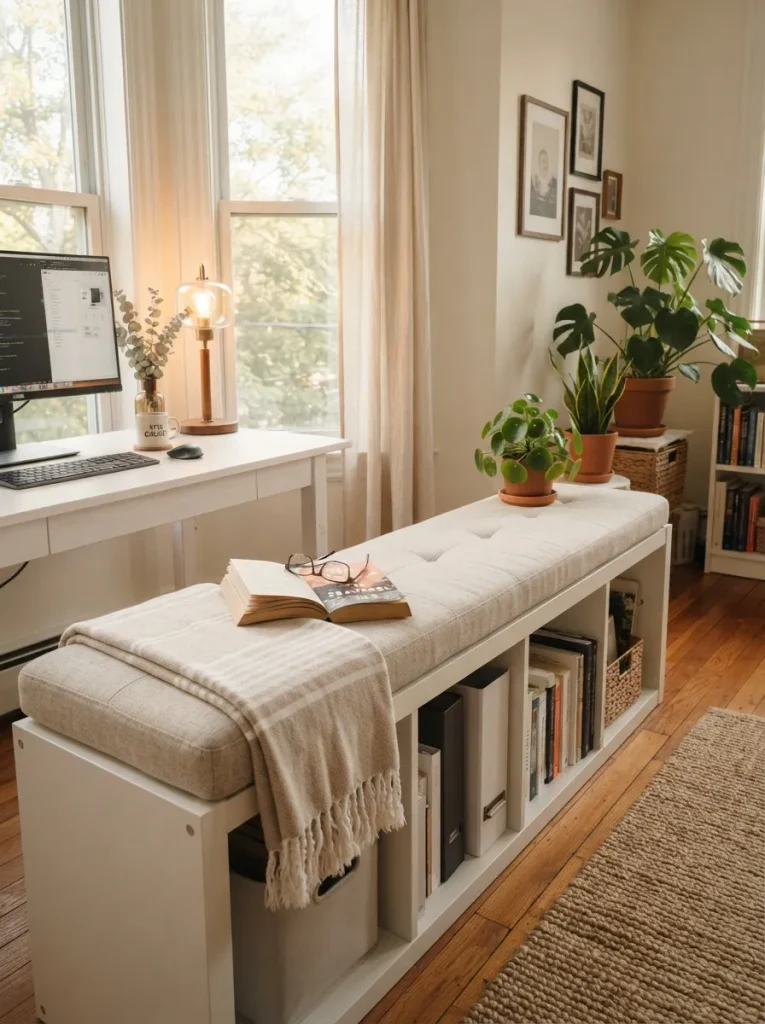
What it looks like: Sun-warmed a desk that ends in something soft instead of just stopping at a wall.
Why it works: In a small apartment, furniture that does two jobs is worth more than furniture that does one a Kallax row that transitions from desk to seating uses the same footprint for both work and a break from it.
How to copy it: Cap one end of a horizontal Kallax row not the end nearest the desk surface, so you’re not sitting where you type with a cushion cut to the cube-top width, add a small pillow, and keep that end’s cubbies styled with books rather than office supplies so it visually reads as separate from the work zone.
Best for: Studio apartments where the desk and the only comfortable reading spot need to share one wall.
How to Start Your Kallax Home Office Transformation
What I’ve found with real spaces: start with the desk surface, not the storage. Buy or cut the tabletop first, confirm it actually spans your two Kallax units at the width you want, and only then fill in bins, doors, or paint. A desk that gets used regularly is the one built around a comfortable typing height and a stable surface everything else is decoration on top of that.
The most common fixable error is buying storage before measuring what actually needs storing. People fill three cubbies with fabric bins, then realize the printer needed a fourth cube and there’s nowhere left to put it. Lay out everything you currently keep on or near your desk before buying a single bin, and leave at least one cube empty for whatever you haven’t accounted for yet.
Three items under $50 that make an immediate difference: a warm-white LED strip light for under-shelf task lighting, a fabric or seagrass bin sized specifically for the 13-inch cube opening, and a set of cable clips to route power cords along the back panel instead of letting them dangle in front. All three solve function problems, not decoration problems, which is where a Kallax office actually falls apart first.
The desk itself two units, a tabletop, and brackets is a weekend project and typically runs $120 to $300 depending on whether the units are new or secondhand. Storage add-ons can be added gradually over the following month without disrupting a desk that’s already functional. A full styled-and-organized setup, doors and all, realistically takes 4 to 6 weeks of incremental additions rather than one big push.
Ready to Create Your Kallax Home Office?
Between the built-in desk, the room-divider layout, the printer stand hiding under the tabletop, and the color and lighting swaps scattered throughout, there’s a version of this list that fits almost any corner you’re working with. None of it needs to happen at once a desk surface and one bin this weekend is still real progress, even if the doors and the paint wait until next month.
If you’re starting today, measure your tabletop span and order the brackets; that single step unlocks almost everything else on this list. A Kallax office done well doesn’t look like storage furniture pressed into service it just looks like a desk that happens to have somewhere to put everything. Save the ideas that fit your space now, and come back for the rest once the basics are actually built.
You Might Also Like
- 9 Budget-Friendly Home Office Organization Ideas for Renters
- 15 IKEA Kallax Nursery Ideas for New Parents on a Budget
- 12 Small Apartment Storage Ideas That Actually Look Good