19 Farmhouse Pallet Furniture Ideas for Cottagecore Lovers
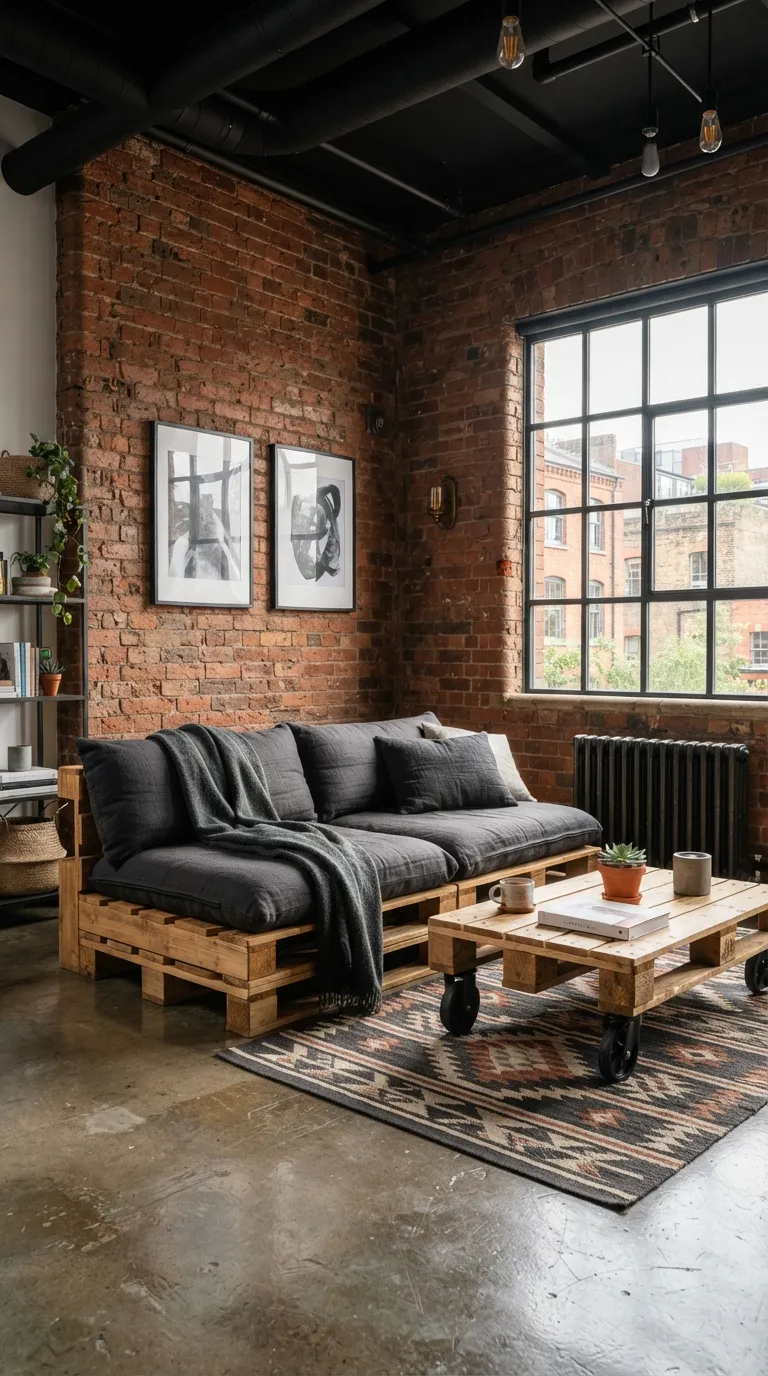
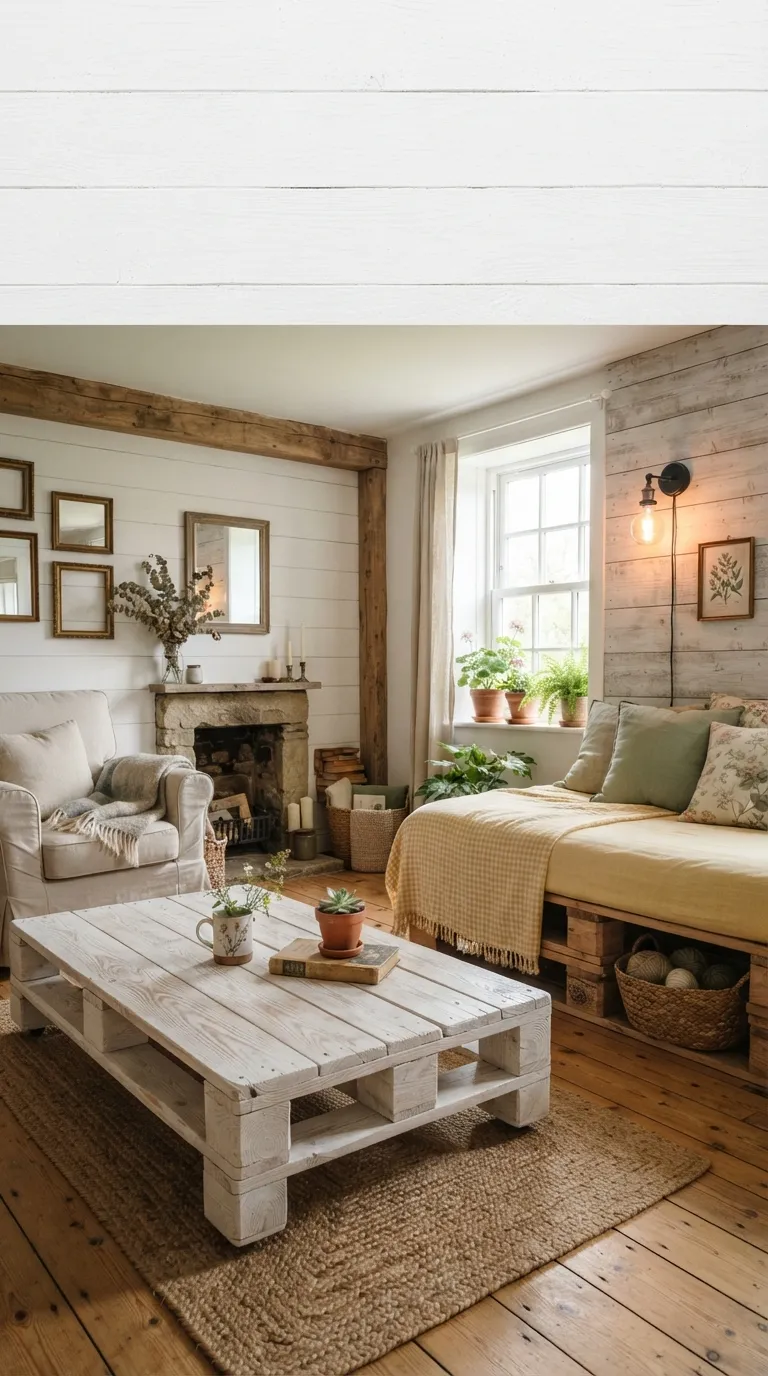
Pallet wood already has the weathered, hand-built character that cottagecore usually pays extra to imitate. These 19 farmhouse pallet furniture ideas for cottagecore lovers turn that raw material into tables, benches, beds, shelves and lighting that feel collected over decades rather than assembled over a weekend.
Picture whitewashed grain with soft light pooling in it, a linen bolster with a rumpled edge, enamel mugs hanging from a peg rail. Farmhouse cottagecore runs on that lived-in warmth: wood a little uneven, fabric a little creased, nothing that looks bought as a set. Rough boards, soft rooms.
Jump To
- Why Farmhouse Pallet Furniture Ideas for Cottagecore Lovers Work So Well
- The Builds, Easiest First
- How to Start Your Farmhouse Cottagecore Transformation
- Ready to Create Your Dream Farmhouse Cottagecore Home?
Why Farmhouse Pallet Furniture Ideas for Cottagecore Lovers Work So Well
Farmhouse and cottagecore share a love of worn wood, handmade proportions and fabric that’s allowed to wrinkle, which is why pallet boards suit both. Cottagecore supplies the softness: gingham, faded florals, enamelware, cut flowers. Look for whitewashed pine, weathered grey, sage, butter yellow, unbleached linen and black iron hardware.
A common North American pallet measures 48 × 40 inches, small enough for a cottage-scale room. Start with one anchor piece, a coffee table or bench, then let textiles do the rest.
Style at a Glance
| Element | Farmhouse | Cottagecore |
|---|---|---|
| Philosophy | Sturdy, honest, useful | Gentle, nostalgic, handmade |
| Materials | Pine and oak boards, black iron, galvanized metal | Linen, gingham cotton, wicker, enamelware |
| Color palette | Whitewash, weathered grey, black | Sage, butter yellow, dusty blue, cream |
The Builds, Easiest First
1. Whitewashed Coffee Table with the Grain Still Showing
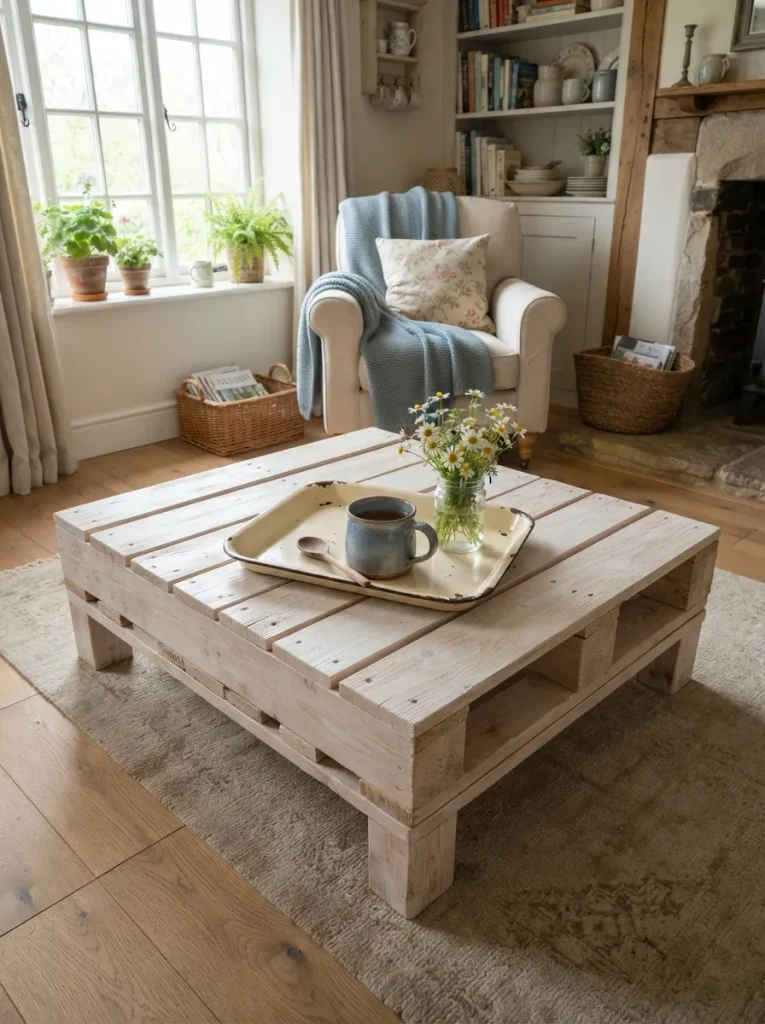
Pale pine grain shows through a soft white wash, and a chipped enamel tray sits on top. Nothing about it looks painted. That effect comes from wiping back rather than coating: thin the paint with roughly equal parts water (test on a scrap board first), brush it on, then rub most of it off with a rag while it’s wet.
Pigment stays in the recesses, light passes through the thin film, and the boards read as aged instead of finished. Seal knots with a shellac-based primer first, or tannins bleed yellow-brown through the wash. Best for a cottage living room that needs a low, forgiving centerpiece.
Warning: Check the pallet’s side block for the heat-treated “HT” stamp before you haul it home. Skip anything marked “MB” (methyl bromide), and skip any pallet that is oil-stained or smells of chemicals, since the wood will sit inside your home.
2. A Pallet-Plank Peg Rail for Enamelware and Linen Towels
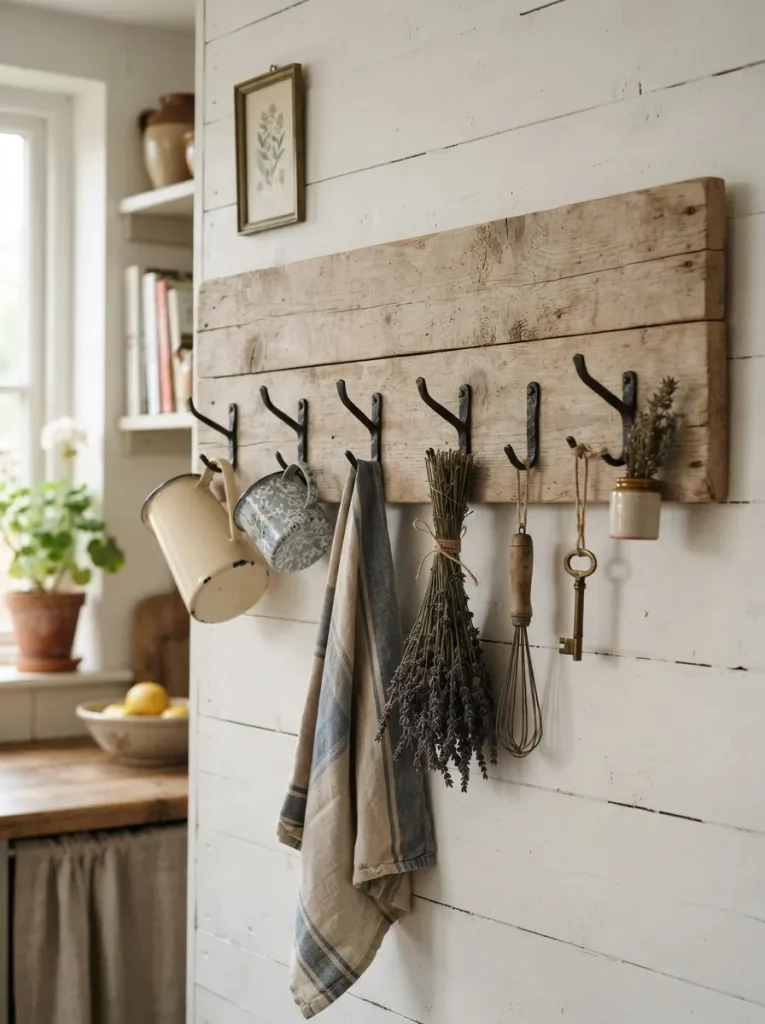
Small kitchens run out of counter long before they run out of pretty pitchers. A peg rail moves the collection onto the wall. Screw three or four planks to two horizontal battens, then add wooden pegs or black iron hooks along the bottom third, spaced roughly 6 inches apart so hanging mugs don’t clink.
Dark hardware against pale wood gives the rail a rhythm even when it’s empty. Hang it into studs if cast iron or full pitchers will live there, since a dozen loaded pegs add up faster than you’d guess.
Pro Tip: Drill peg holes at a slight upward tilt. Hooked handles and towel loops then stay put instead of slowly sliding off.
3. A Plug-In Sconce on a Small Pallet-Plank Backboard
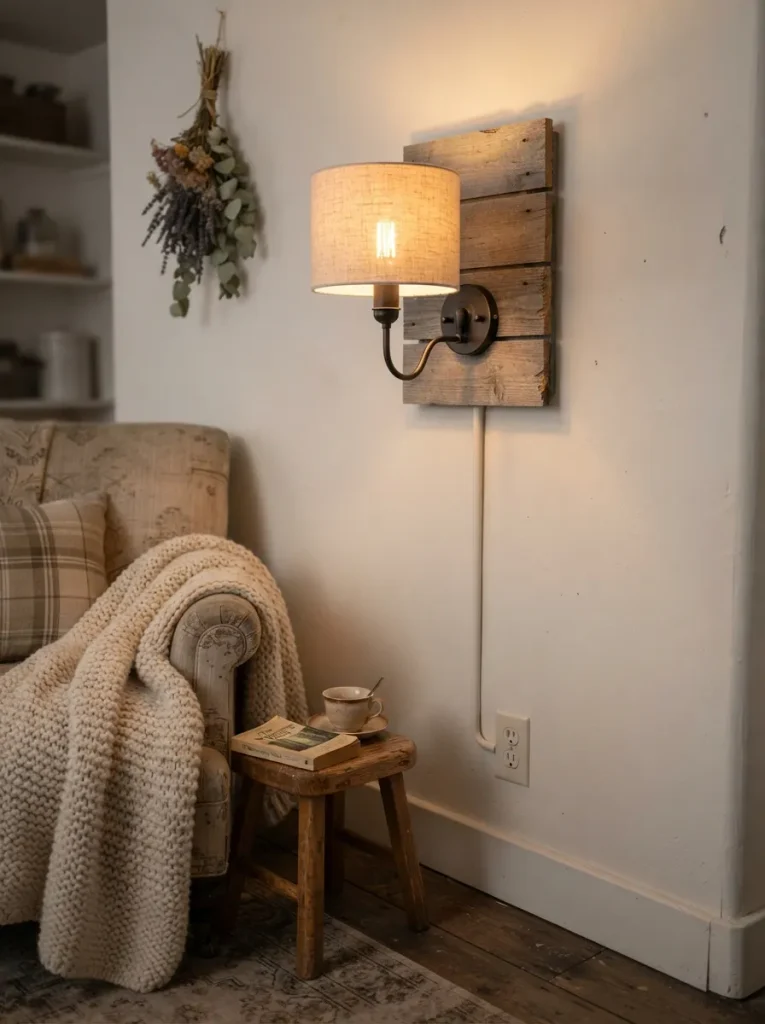
Cottage rooms glow when light sits low and warm rather than overhead. A plug-in sconce mounted near 60–66 inches from the floor, a common guideline for wall sconces, lights faces and pages without glare, and a 2700K bulb gives whitewash and linen the amber tone of candlelight.
Build the backboard from three planks, roughly 12 × 24 inches, and screw it up in two spots. Renters benefit most: the sconce plugs into the wall, so no wiring is involved. Run the cord down through a paintable cover strip so it disappears into the wall color.
Get the Look
| Product |
|---|
| Plug-in wall sconce with a linen or enamel shade |
| Warm-white 2700K LED bulb |
| Paintable cord cover channel |
Idea 4 asks you to sand less, not more: the silver-grey skin on old boards does work that no stain can.
4. Weathered Grey Boards Left Raw on a Side Table
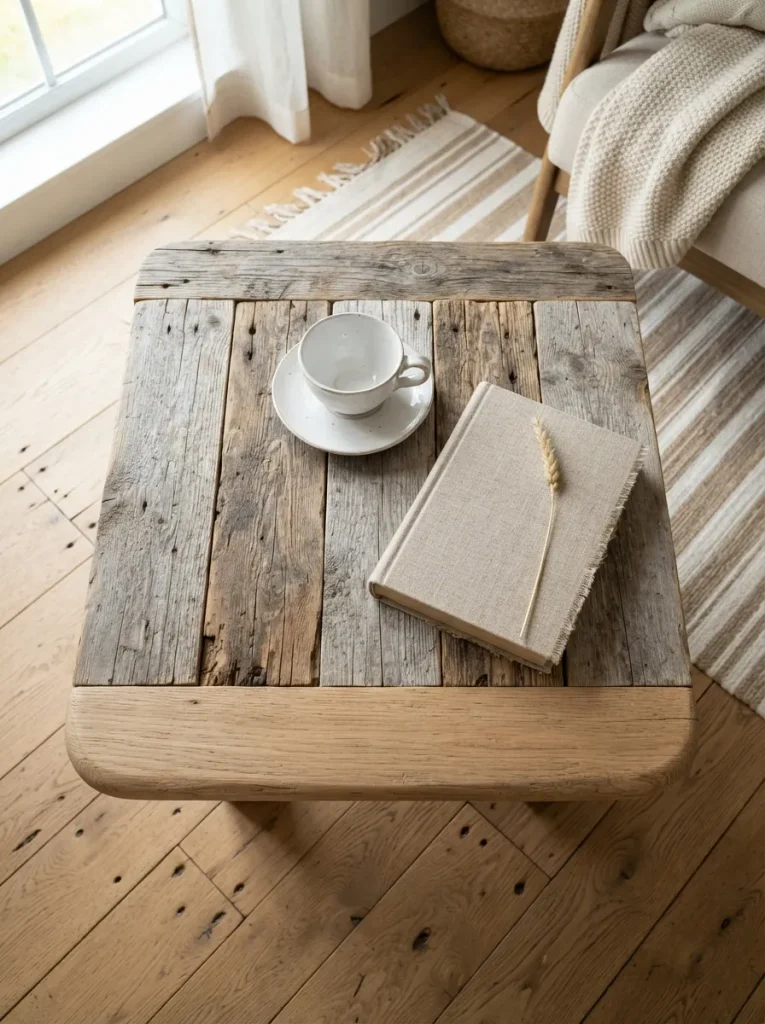
Sanding pallet wood down to blonde is the reflex, and it strips out the very thing that makes it look old. Weathered grey is color variation you can’t buy: silver, taupe and brown shifting board to board, which gives a plain table depth without any styling.
Wire-brush along the grain, vacuum, wipe with a damp cloth, then seal with a matte water-based finish so the grey doesn’t transfer onto linen. Sand only the edges that hands and elbows touch, finishing around 120-grit. Suits side tables beside soft chairs, where a little roughness is the point.
Important: Grey is not the same as rotten. Press a screwdriver tip into the surface: if it sinks in or crumbles, retire that board and pick a sound one.
5. A Fold-Down Pallet Table That Vanishes When Not in Use
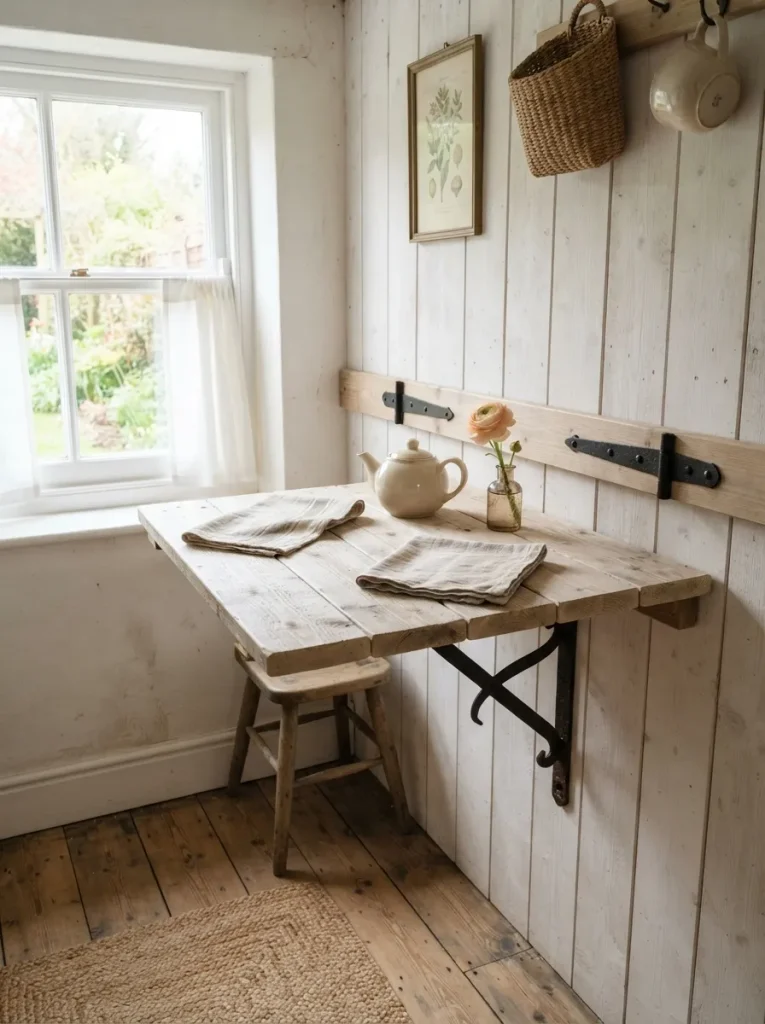
Begin with the rail, not the tabletop. A horizontal pallet plank screwed into wall studs, commonly 16 inches apart, carries every pound of the table, so everything else hangs from it.
Hinge a tabletop of trimmed deck boards to the rail and add a hinged bracket or a fold-out leg underneath. Folded, it sits a few inches proud of the wall; open, it’s a breakfast counter or potting surface. Built for studios, narrow hallways and any nook that has to work double duty.
✅ Fold-Down Table Install Order:
- [ ] Find two studs and mark a level line for the rail
- [ ] Screw the plank rail through the drywall into both studs
- [ ] Mount the tabletop to the rail with two heavy-duty hinges
- [ ] Attach the bracket or leg, then load-test before styling
6. Sage-Green Frame, Bare Wood Top
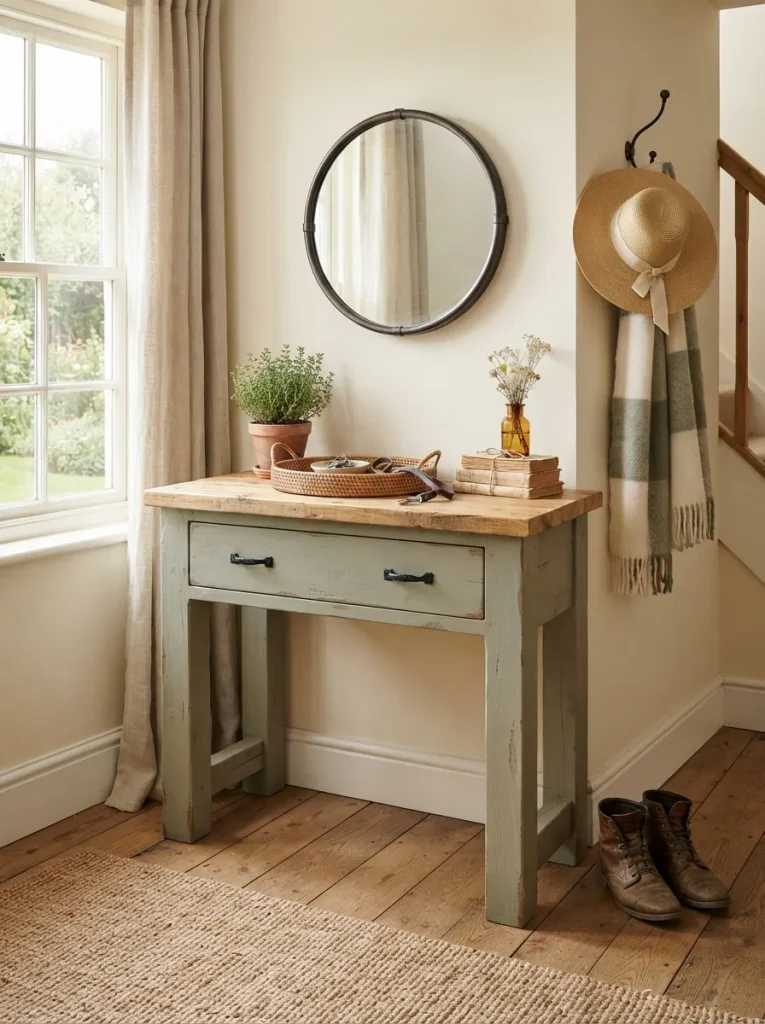
Paint only what nobody touches. A sage-green base with a bare, waxed plank top reads as furniture rather than a craft project, because two materials in one piece look deliberate. Choose a green with grey in it, since pure garden greens turn cartoonish against pale wood.
Painted surfaces chip where cups and elbows land; waxed wood wears in gracefully. Distress the frame only at corners and edges where real use would have worn it. Works for potting benches and entryway consoles alike.
Styling Note: Black iron or aged-brass knobs tie the green and the wood together. Hardware in a third color competes with both.
Idea 7 is the one build that has to survive wet boots, and a single choice below the seat decides whether it stays tidy.
7. An Entryway Bench with Basket Storage Underneath
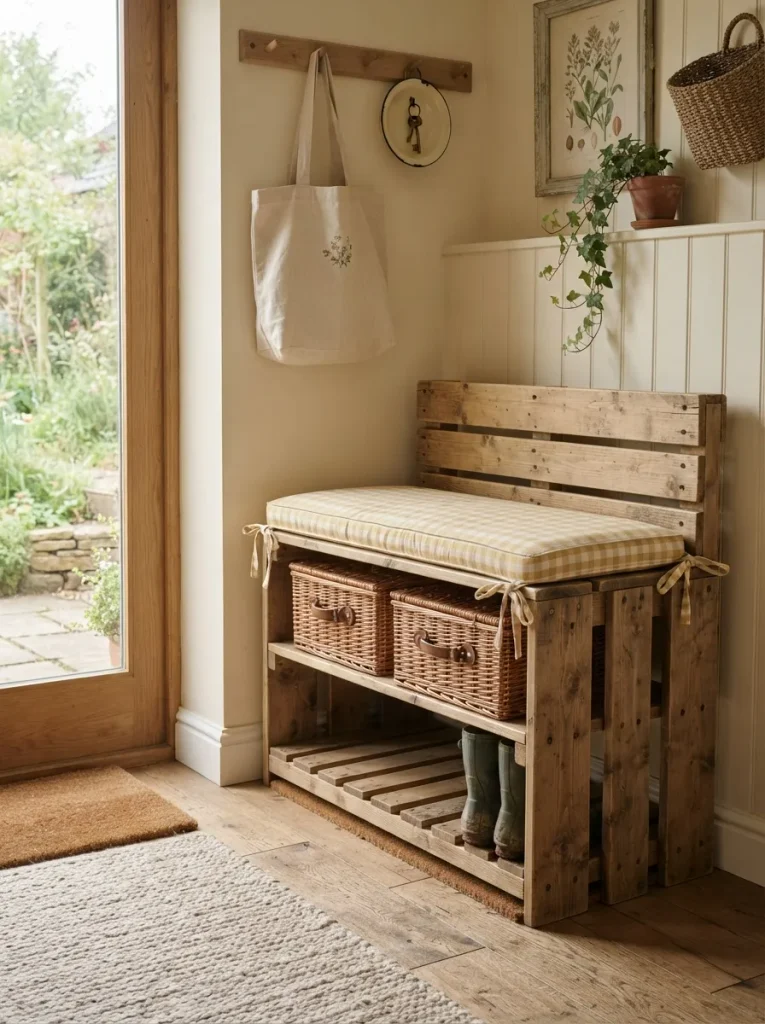
Front halls collect shoes faster than anywhere else in a cottage, and a pallet bench handles it with almost no joinery. Trim a pallet to fit the wall, set it on legs or a second pallet, and leave the lower slats open so two lidded willow baskets slide in beneath.
Baskets hide clutter while the slatted shelf lets damp boots dry. Wet boots darken raw wood, so seal the seat with a matte water-based finish and add a tie-on cushion for softness.
Pro Tip: Sit on the frame before you finish anything. A seat height of 17–19 inches suits most adults; add a taller base or a thicker cushion if the build comes in under that.
8. A Reading Nook Built Around One Window
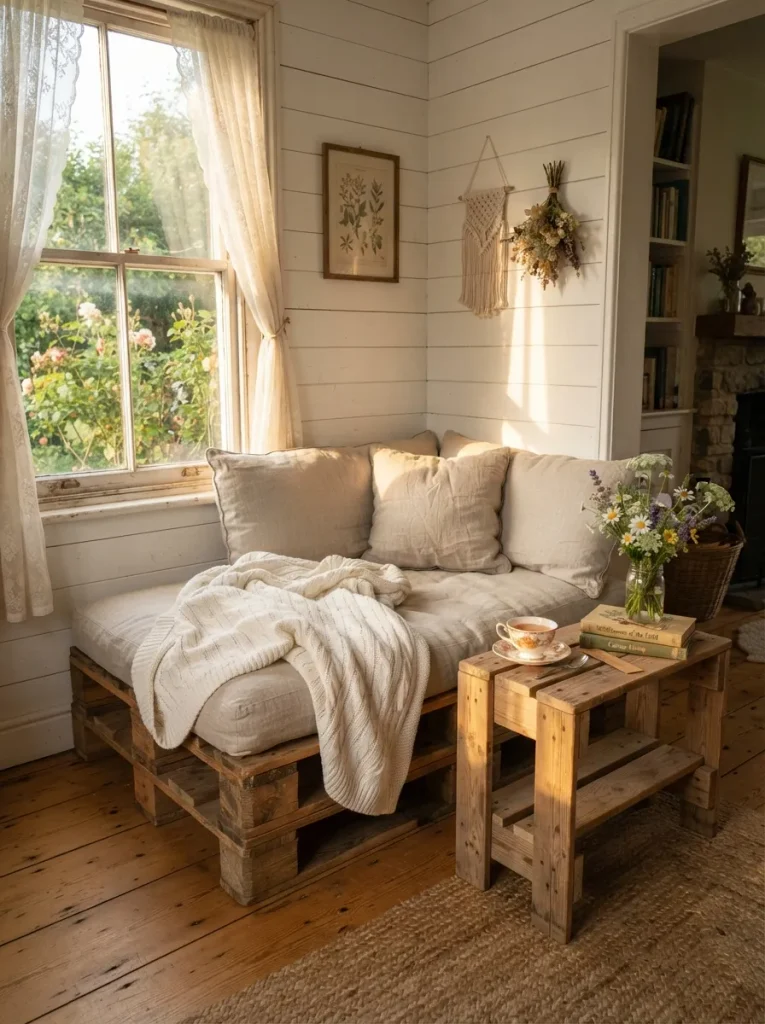
A low pallet sofa in the corner, a slim pallet side table within arm’s reach, and a window doing all the lighting. The layout rule: sit with the window at your shoulder, not in front of you, so daylight lands on the page rather than in your eyes.
Back the sofa against the wall perpendicular to the window wall. Keep the side table about 18 inches from the seat’s edge, close enough to reach a teacup without leaning. A good fit for bedrooms, landings and any corner with a window and little else going on.
9. A Mirror Framed in Pallet Slats, Placed Across from the Window
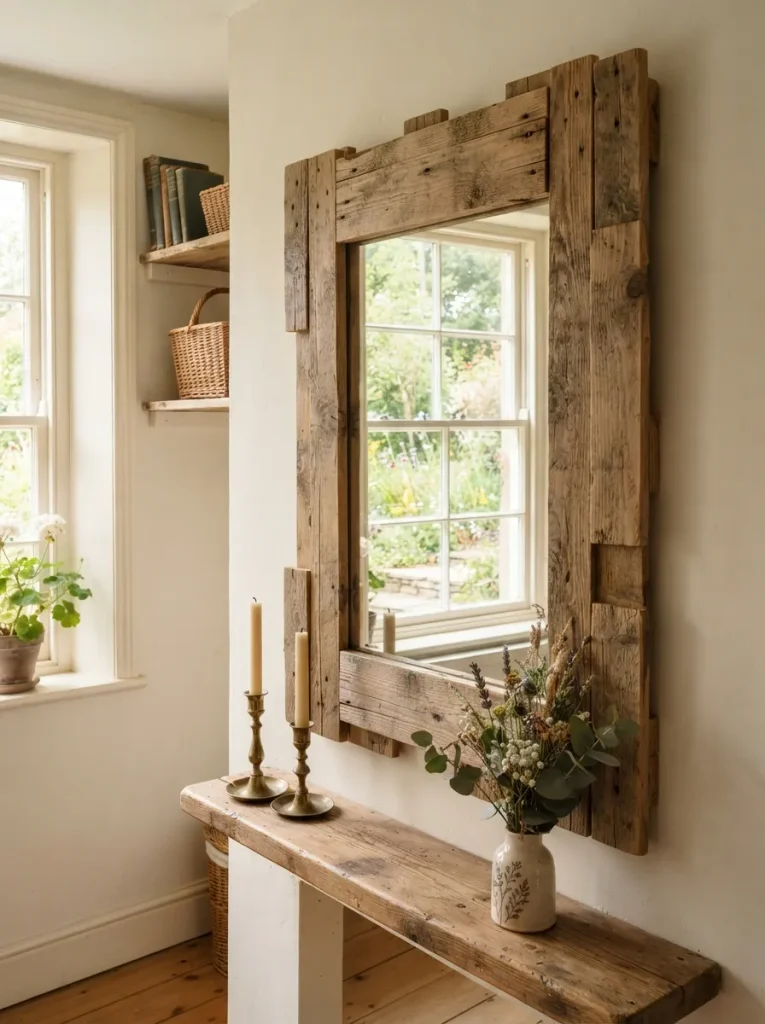
Start with the mirror, then build the frame to it. Screw four pallet-plank strips to a thin plywood backer so each overlaps the glass edge by about 1 inch, which holds the mirror in place with no visible clips.
Placement does the real work: a mirror across from or at right angles to a window bounces daylight deeper into the room, while one on a blank side wall just reflects more wall. Add a narrow ledge below for a candlestick pair, and the reflection doubles the flame at dusk.
Get the Look
| Product |
|---|
| Frameless rectangular wall mirror |
| Brass candlestick pair |
| Narrow ceramic bud vase |
Drawers usually mean joinery. Idea 10 swaps them for something that arrives ready-made and already looks like a cottage.
10. Woven Baskets Instead of Drawers in a Pallet Dresser
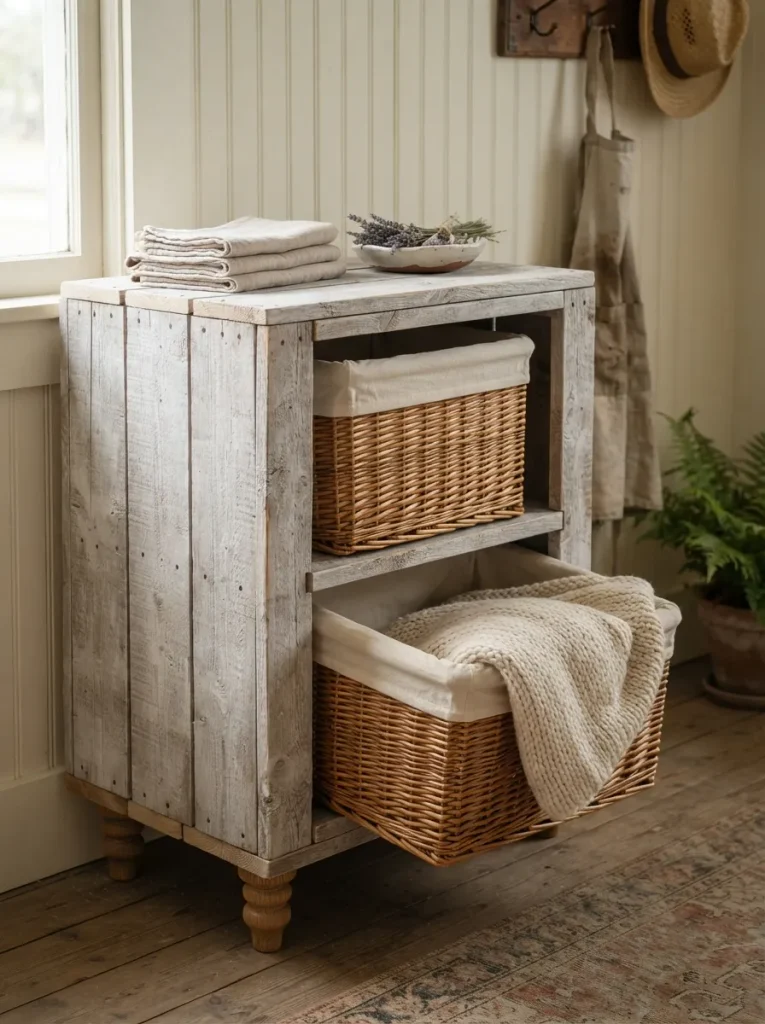
Pallet drawers are where most builds go wrong: uneven boards, sticking runners, fronts that never line up. Wicker baskets slide into open cubbies instead, and their soft weave sits against hard grain, so the contrast works twice, in look and in touch.
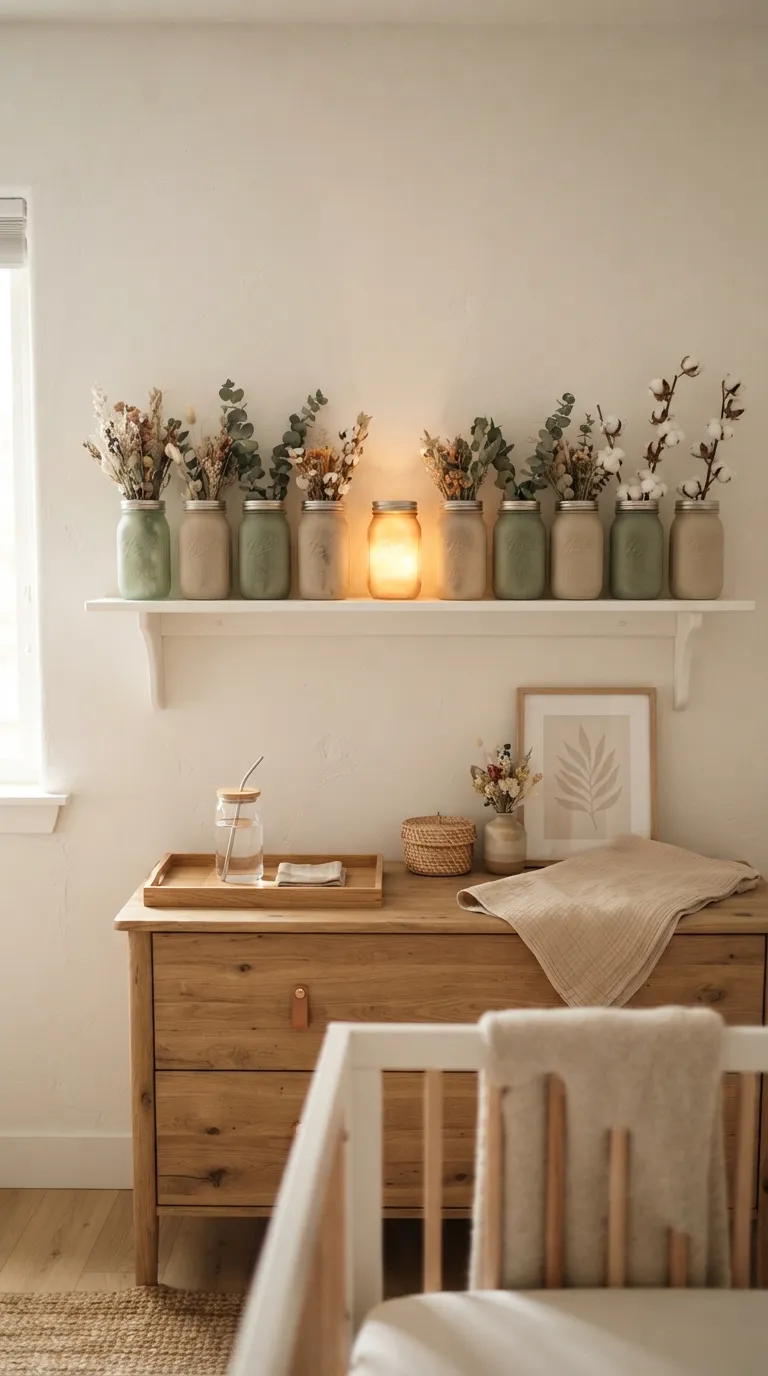
Frame a two-tier pallet cabinet, set it on short legs, and size the openings to the baskets you already own. Line each basket with cotton so knits don’t snag. Best for bedrooms and nurseries where towels, blankets and folded linens need a home.
Important: Baskets do not compress the way fabric does, so build the opening around the basket, not the other way round. Buy first, and leave roughly half an inch of clearance on each side.
11. A Garden Bench Under Warm String Lights
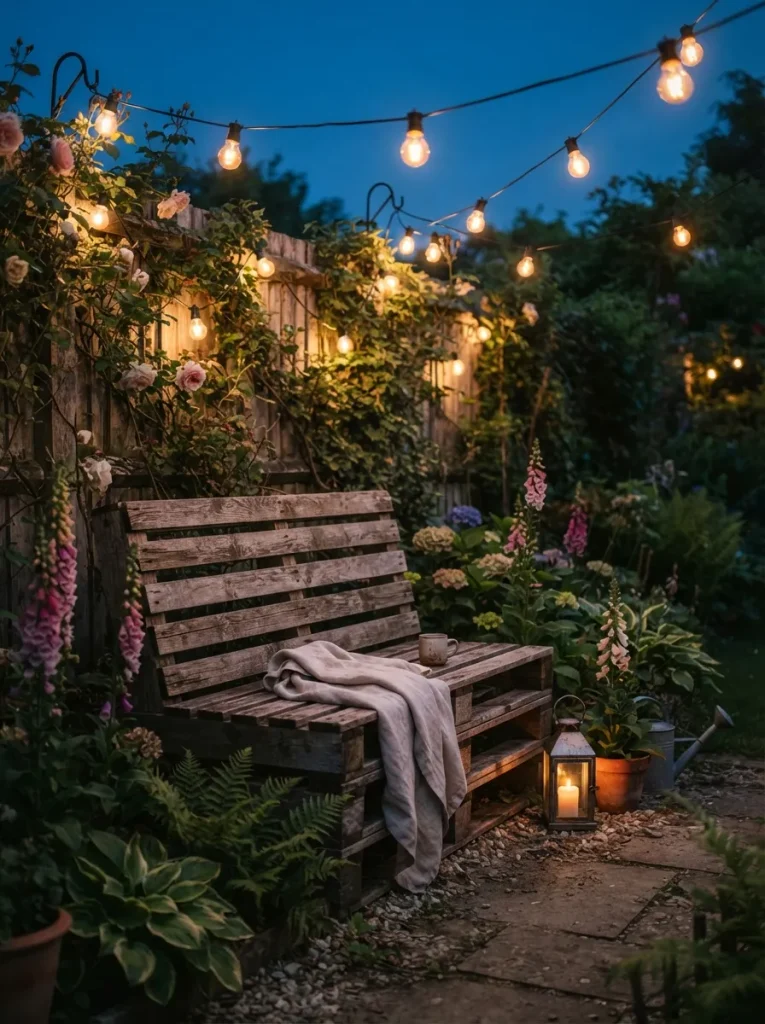
Dusk, a slatted pallet bench, and a loose scallop of warm bulbs overhead. String lights look best when they sag, so set hooks roughly 3–4 feet apart and let each span droop rather than pulling it taut.
Choose warm-white bulbs around 2700K; cool white turns whitewashed wood clinical. Solar strands need their panel in direct sun even if the bench sits in shade, so check cable length before you buy. Suits back gardens, porches and any small patio that needs an evening reason to sit.
12. A Wider-Than-the-Bed Headboard of Horizontal Planks
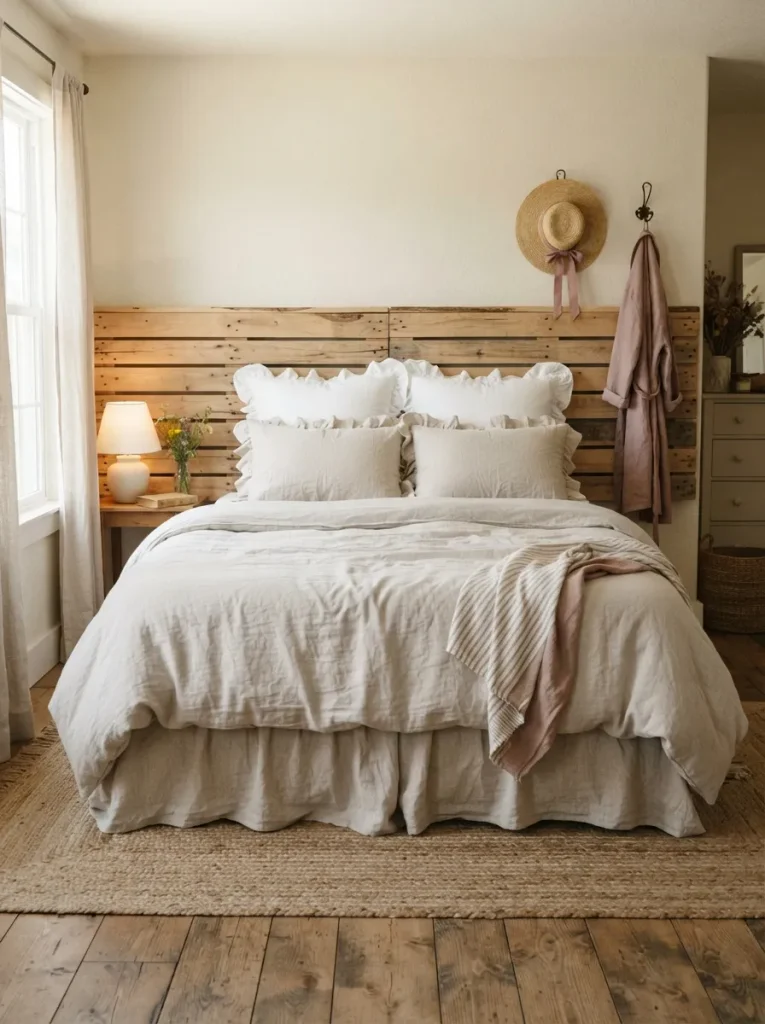
Width is the whole principle. A headboard that matches the mattress reads as a fixture; one that extends past each side, roughly 4–6 inches as a practical guide, looks built in. Run the planks horizontally, since horizontal lines stretch a wall while vertical ones lift it.
Screw them to two wall battens, and sand the top edge and any board that snags bedding, because linen catches on splinters immediately. Best for narrow bedrooms, where horizontal boards make the wall read wider.
Get the Look
| Product |
|---|
| Oatmeal or cream linen duvet cover |
| Ruffle-edged cotton pillow shams |
| Gathered linen bed skirt |
Idea 13 is the tallest build here, and where it stands relative to a window decides whether the room feels bigger or half as bright.
13. A Pallet Bookcase Divider for Open-Plan Rooms
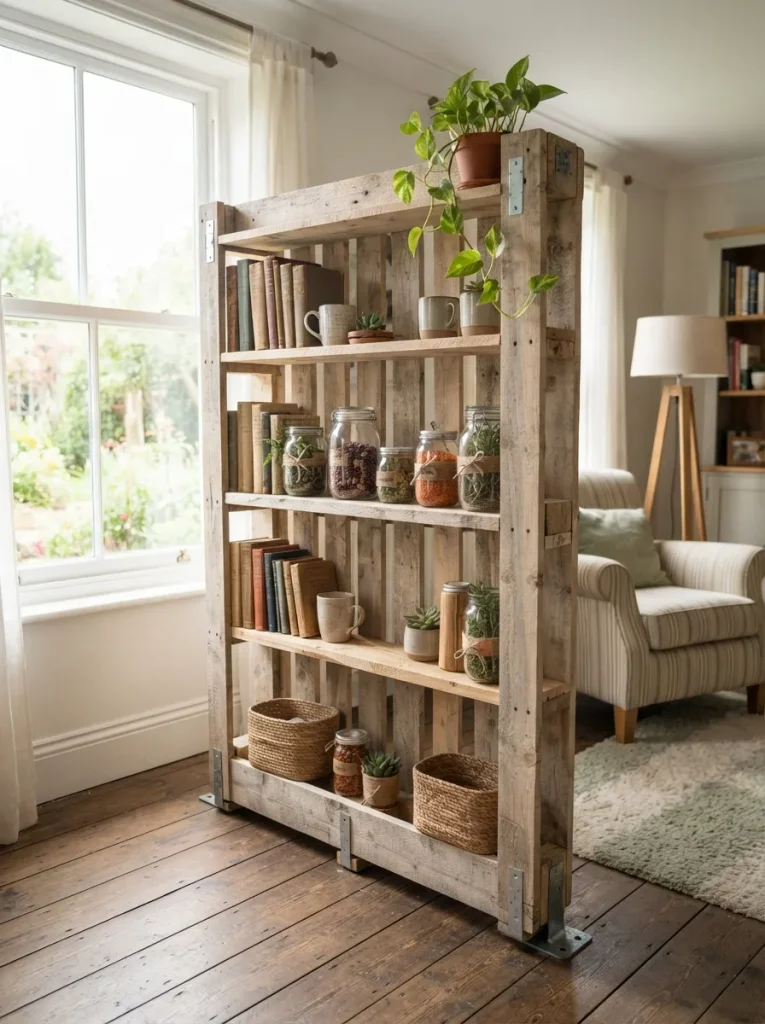
Studio dwellers and open-plan cottage lovers want a boundary between bedroom and living space without building a wall. Stand two pallets upright, long side vertical, join them with L-brackets, and keep the top under about 5 feet so daylight travels over it.
Place the divider at right angles to the window, never parallel, so light slips down both sides. Leave the back slats open so books and jars show from either room. Anchor the base to the floor or wall so it can’t tip.
14. A Galvanized-Metal Top on a Pallet Washstand
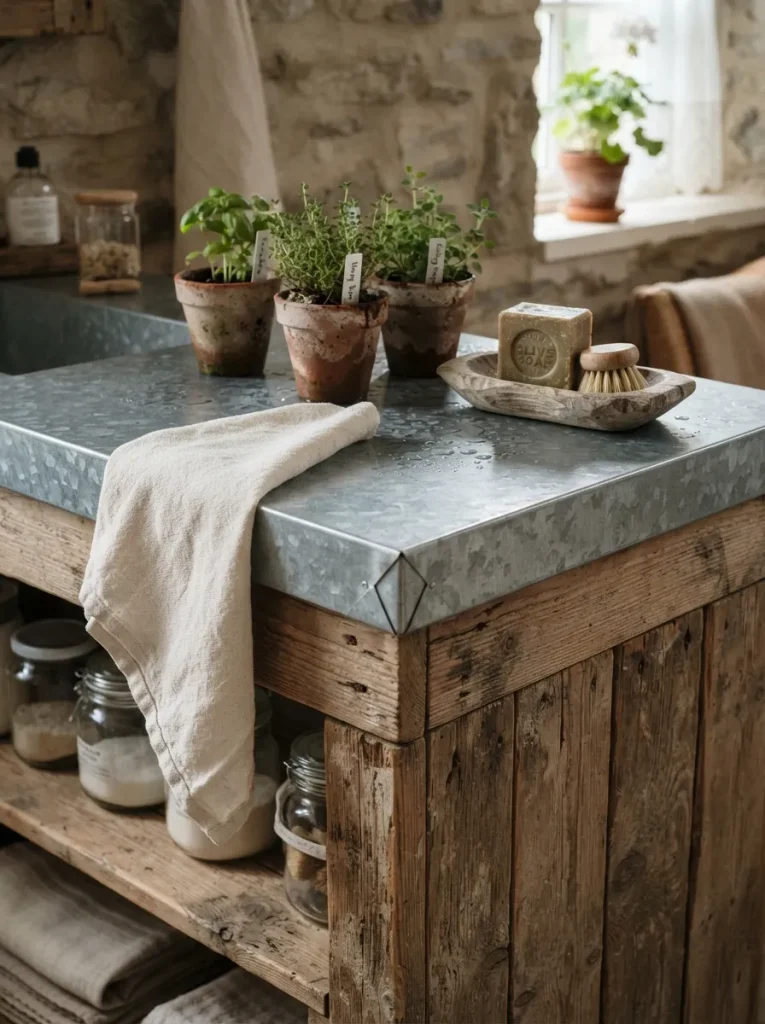
Cut the metal to the plywood top first, then build the base around the finished dimensions. Wrap galvanized sheet over a plywood panel, fold the edges down, and fasten underneath so no cut edge shows.
Cool zinc against warm pine adds temperature contrast, the material principle that keeps rustic pieces from turning muddy. Metal also handles wet pots and rinsed hands better than bare wood. Ideal for washstands and potting benches.
Warning: Cut edges of sheet metal are razor-sharp. Wear cut-resistant gloves while working, and fold every exposed edge under before the piece goes anywhere near a hand or a towel.
15. A Vertical Herb-and-Flower Planter Wall
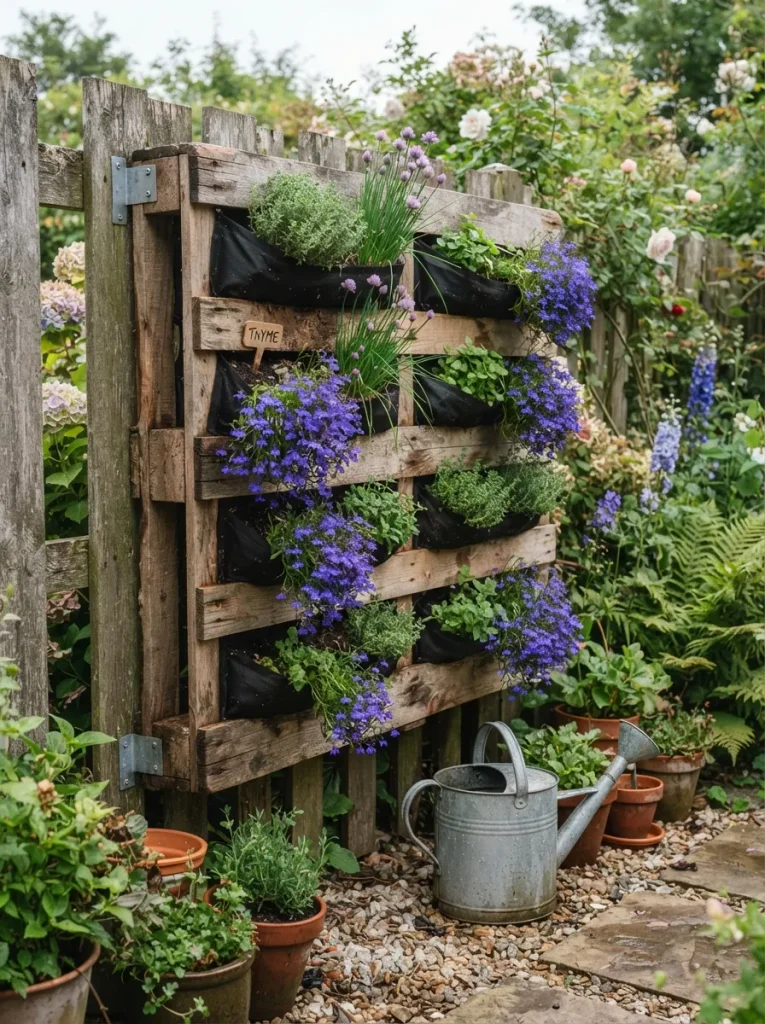
Pallet planters usually lean against a fence with loose soil pockets that leak. Hanging the pallet flat to a wall and lining each pocket properly fixes it. Staple landscape fabric behind the slats and across the pocket floors, leaving small gaps for drainage, then fill with shallow-rooted plants like thyme, chives or trailing lobelia.
Wet soil is heavy, so screw the frame into studs or fence posts. Fits small yards and balconies that have walls but no floor space.
Idea 16 needs two pallets and one habit, a straightedge dragged across the boards, to keep a big table from rocking.
16. A Long Farmhouse Dining Table Built from Two Pallets
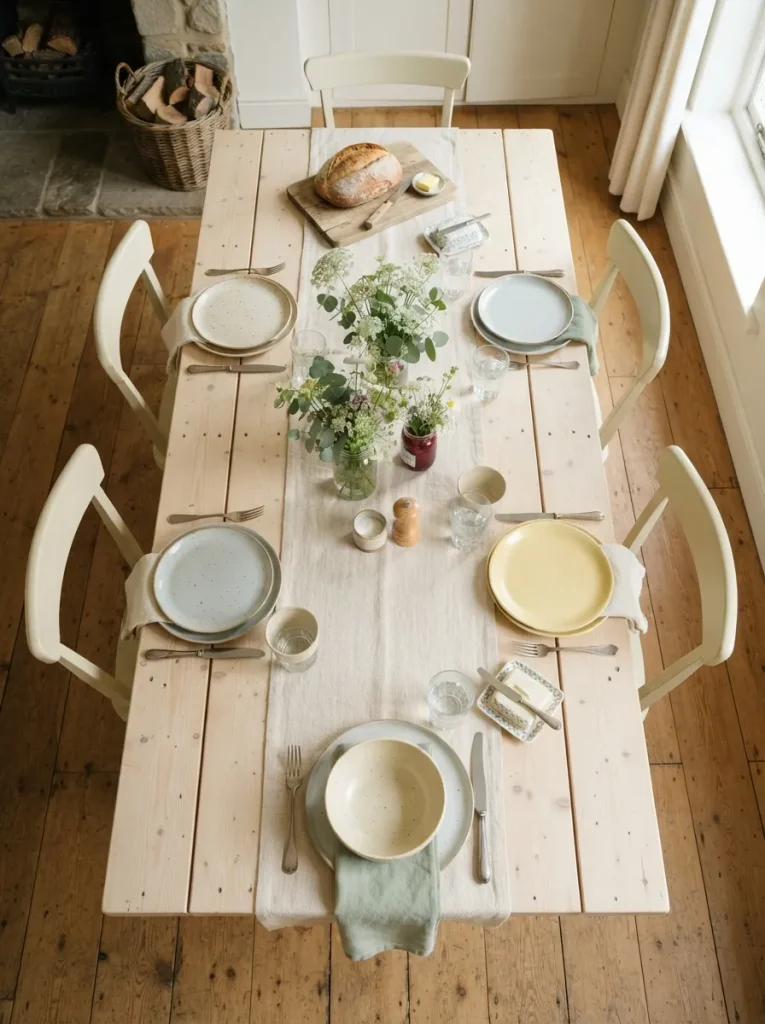
Long, low and pale, with slight gaps between boards where crumbs and sunlight pass. Take two pallets apart and lay the boards across battens end to end to reach about 96 inches, with the 40-inch width coming from the pallet itself. Aim for a finished height near 29–30 inches, a common dining-table range.
Plane, then sand, to level the top; uneven board thickness is why most pallet tables wobble and hold glasses badly. Best for families who eat together and don’t mind rings on wood.
Pro Tip: After gluing and screwing the top, drag a straightedge across the boards. Mark high spots with pencil and sand only those until the edge sits flush.
17. A Slat Pendant Shade Hung Low over the Table
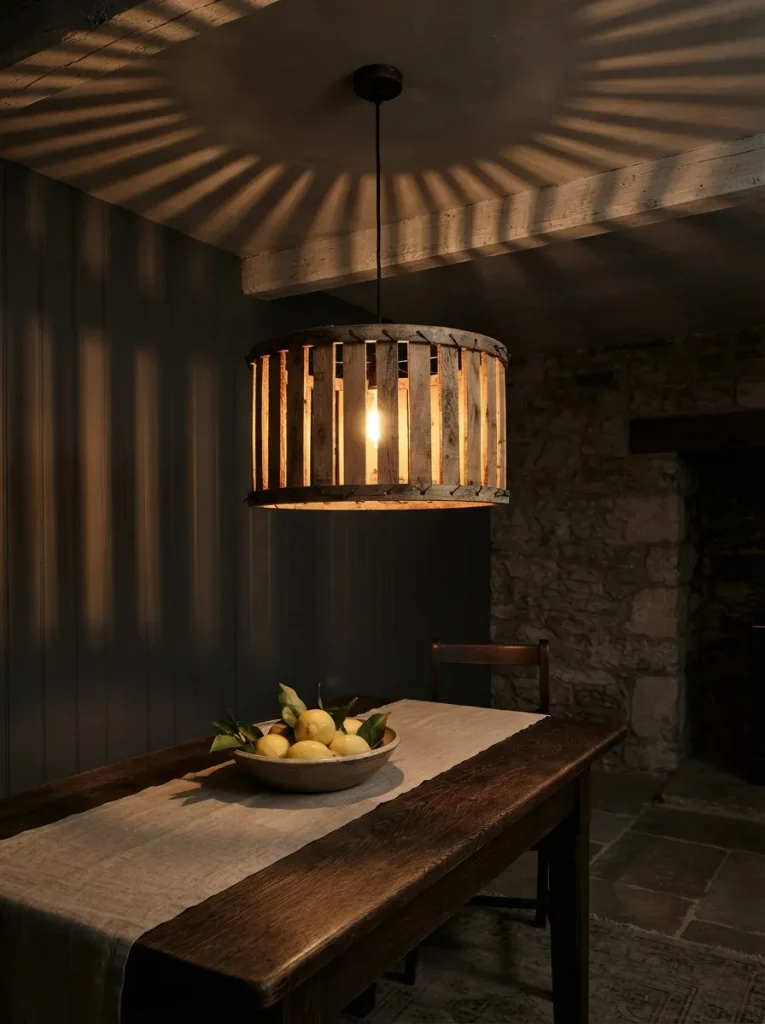
Lights hung low define a zone, which is why a pendant makes a dining table feel like a room within the room. Hang the shade roughly 30–36 inches above the tabletop, a common guideline that keeps glare out of eyes while still lighting faces.
Build a drum from thin slats wired around two wooden rings, over a pendant cord kit, and use LED bulbs only, since they run far cooler than incandescents. A 2700K bulb keeps the light amber. Gaps between slats throw striped shadows across the ceiling.
Observation
The counterintuitive part: rough pallet pine looks cheaper under dark stain, not better. Pine blotches when stained, and deep walnut tones flatten the shadow lines that make uneven boards read as character, so every flaw looks like a mistake. Whitewash, a clear matte finish or raw grey wood lets irregular boards look intentional. Stain hides less than it exposes.
18. A Pallet Hutch with Chicken-Wire Doors
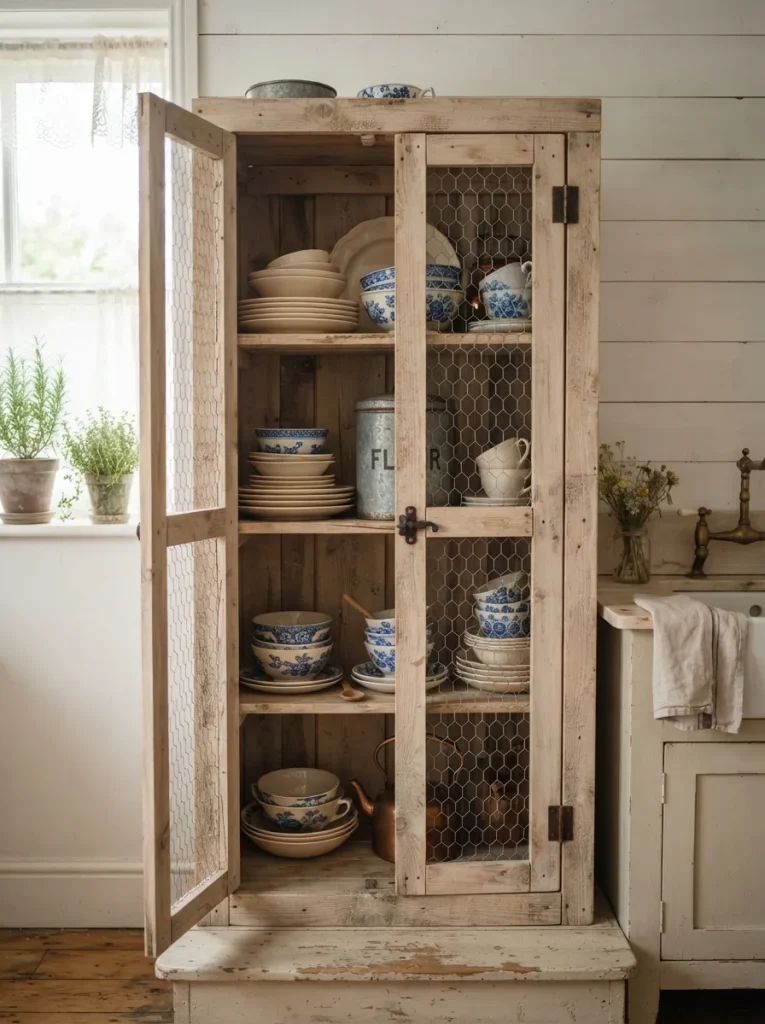
For cottage kitchens without a built-in china cabinet, an upright pallet becomes a hutch: slats form the shelves, and a hinged door frame carries hex poultry mesh. Staple the mesh inside the frame so raw wire ends stay hidden and the mesh reads as texture, not hardware.
Galvanized mesh echoes a metal-topped bench; painted mesh softens against sage. Wear gloves, since cut ends snag. Mesh lets plates show while the doors stay closed.
Styling Note: Keep the shelf contents to three tones at most. Wire is already busy, so cream, blue-and-white and one metal read calmer than a rainbow.
The last build turns leftover slats into the largest, softest piece in the room, with a real twin mattress inside it.
19. A Pallet Daybed with Bolsters
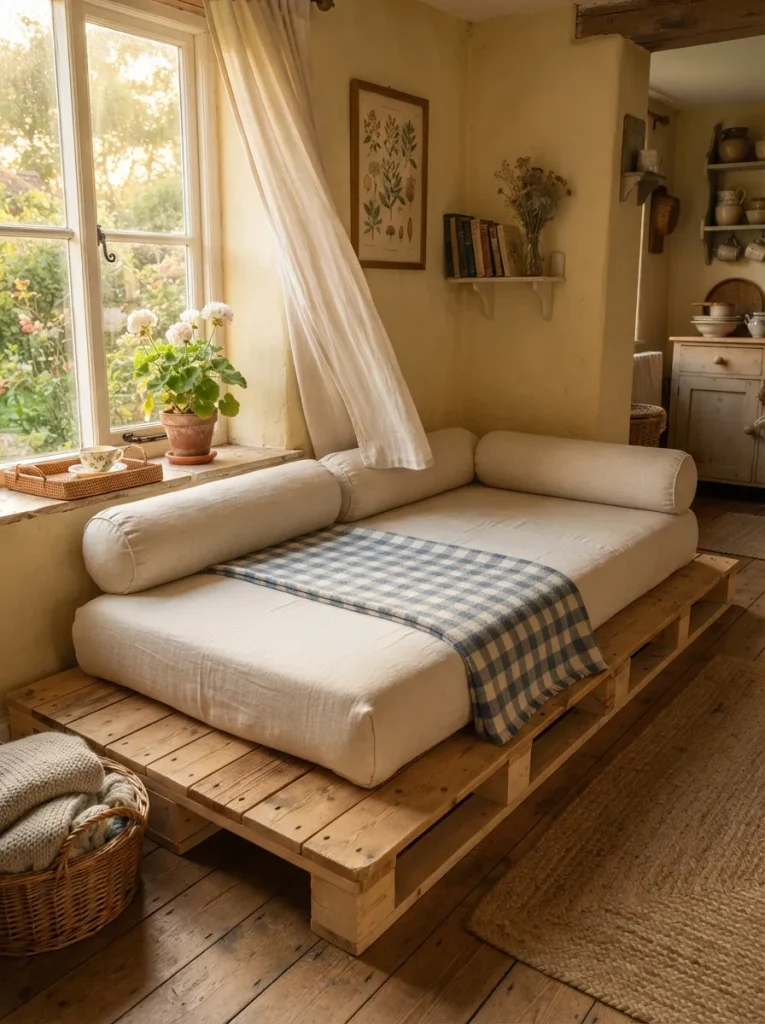
Pallet sofas usually stack a high back onto a boxy seat and end up feeling like patio furniture. A daybed drops the back and turns bolsters into the arms. Two-high stacks of pallets (roughly 5–6 inches each), set end to end, make a platform about 96 inches long and 40 inches wide, wide enough for a twin mattress of about 38 × 75 inches.
With a 6-inch foam mattress on top, the seat lands close to the 17–19 inch range. Best for sunrooms, guest rooms and any window that deserves a place to lie down.
Mistake to Avoid: Where two stacks meet, the seam becomes a ridge under the mattress. Screw a thin plywood sheet across the whole platform first, so the mattress sits on one flat plane.
Get the Look
| Product |
|---|
| Twin-size firm foam mattress |
| Long cotton or linen bolster pillows |
| Gingham-check throw blanket |
How to Start Your Farmhouse Cottagecore Transformation
Start here: one whitewashed pallet coffee table (idea 1). It teaches the three skills every other build borrows, which are checking the stamp, sealing knots and thinning paint, and it sits in the middle of the room, where it sets the palette for everything around it. Use a warm, creamy off-white rather than a stark one, since starker whites turn cold beside linen.
The most common beginner error is pattern overload. Gingham, faded floral and lace show up in the same room at once, and the eye has nowhere to rest. Pick two patterns at most, one check and one floral, and keep everything else solid: cream, sage, natural linen.
Three items that typically fall under $50 each: black iron cabinet pulls, a galvanized tin watering can and an unbleached linen table runner. Prices vary by seller, so treat that as a guideline, not a quote.
A first piece takes one weekend and roughly $50–$150 in paint, sealer and hardware, assuming the pallets are free or cheap. A full room of four or five pieces stretches to about 4–6 weekends and roughly $300–$600 once bedding, cushions and lighting are added; treat both as approximate ranges. Weekend jobs: the coffee table, peg rail and sconce backboard. Several-weekend jobs: the dining table, hutch and daybed, mostly because finishes need drying time.
Ready to Create Your Dream Farmhouse Cottagecore Home?
Nineteen farmhouse pallet furniture ideas for cottagecore lovers cover a lot of ground: whitewash and sage for color, raw grey wood, metal and wicker for material, sconces and string lights for glow, dividers and nooks for layout. Nothing here has to happen all at once. Pick one piece and let the room change slowly, the way cottage rooms really do. Today, find one pallet and check it for the HT stamp. Once the first build is finished, you’ll be sitting in a room that feels collected rather than staged, soft light on rough wood. Save your favorite builds to a Pinterest board so the next weekend project is already chosen.
Keep Exploring
- 15 Budget Pallet Furniture Ideas That Look Far More Expensive
- 17 IKEA Kallax Farmhouse Styling Ideas for a Collected Cottage Look
- 15 Pallet Storage Furniture Ideas for Tidy Cottage Rooms