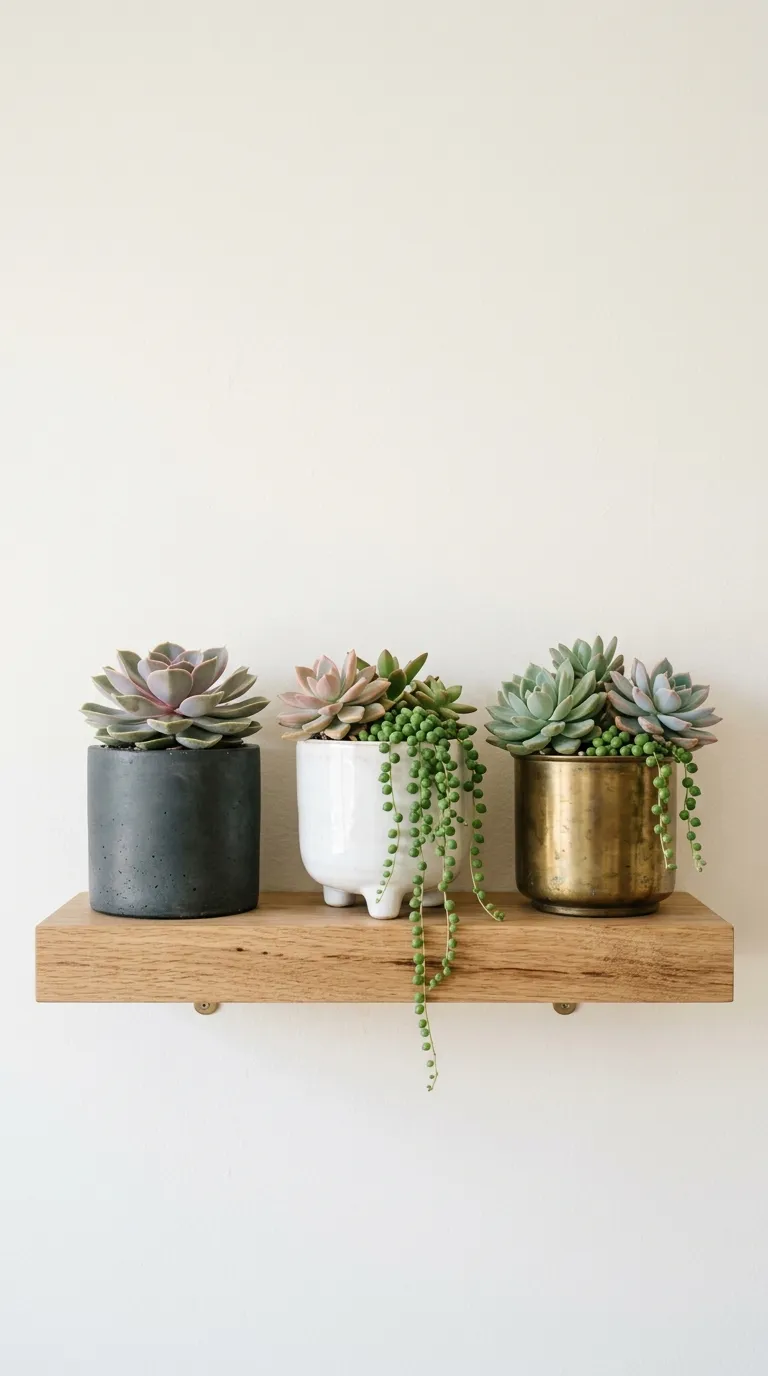
20 Modern Succulent Planter Ideas for a Clean, Confident Windowsill
A modern succulent planter isn’t just a pot it’s the difference between a plant that looks like an afterthought and one that looks like it was always meant to be there. Here are 20 modern succulent planter ideas, covering everything from concrete and terrazzo to brass accents and backlit glass, so you can build a display that actually holds its own in a room.
There’s a particular kind of calm in a windowsill lined with matte ceramic and a single stem catching afternoon light nothing fussy, nothing asking for attention it hasn’t earned. Modern succulent styling leans into negative space, cool textures, and restraint, the kind that makes a small collection read as intentional rather than accumulated.
It’s low-maintenance decor that still feels considered, texture-forward without tipping into busy. Let’s get your shelf, ledge, or console looking like it belongs in a design magazine minus the watering-schedule anxiety.
Quick Navigation
- Why Modern Succulent Planters Work So Well
- 20 Modern Succulent Planter Ideas to Try Right Now
- How to Start Your Modern Succulent Planter Transformation
- Ready to Style Your Own Succulent Display?
Why Modern Succulent Planters Work So Well
Modern succulent styling borrows from mid-century minimalism and today’s biophilic design the idea that greenery does more for a room than another framed print. The palette runs matte charcoal, warm greige, and raw terracotta, with the occasional brass accent; materials lean into unglazed concrete, powder-coated steel, and hand-thrown ceramic. If that same pared-back philosophy already guides how you approach bigger surfaces in your home say, a minimalist kitchen island a succulent grouping is really just that same restraint scaled down to a windowsill.
It’s having a real moment right now because succulents forgive neglect and modern planters photograph well, which matters when so much home decor discovery happens on Pinterest. It works in small spaces too start with one windowsill cluster before expanding to shelves or a console.
| Element | Minimalist | Textural |
|---|---|---|
| Philosophy | Negative space, restraint | Contrast through material, not color |
| Materials | Concrete, powder-coated steel, glass | Terrazzo, rattan, raw clay, brass |
| Color palette | Charcoal, warm greige, white | Terracotta, sage, blush, black |
20 Modern Succulent Planter Ideas to Try Right Now
1. Concrete Cylinder Planters in Matte Charcoal
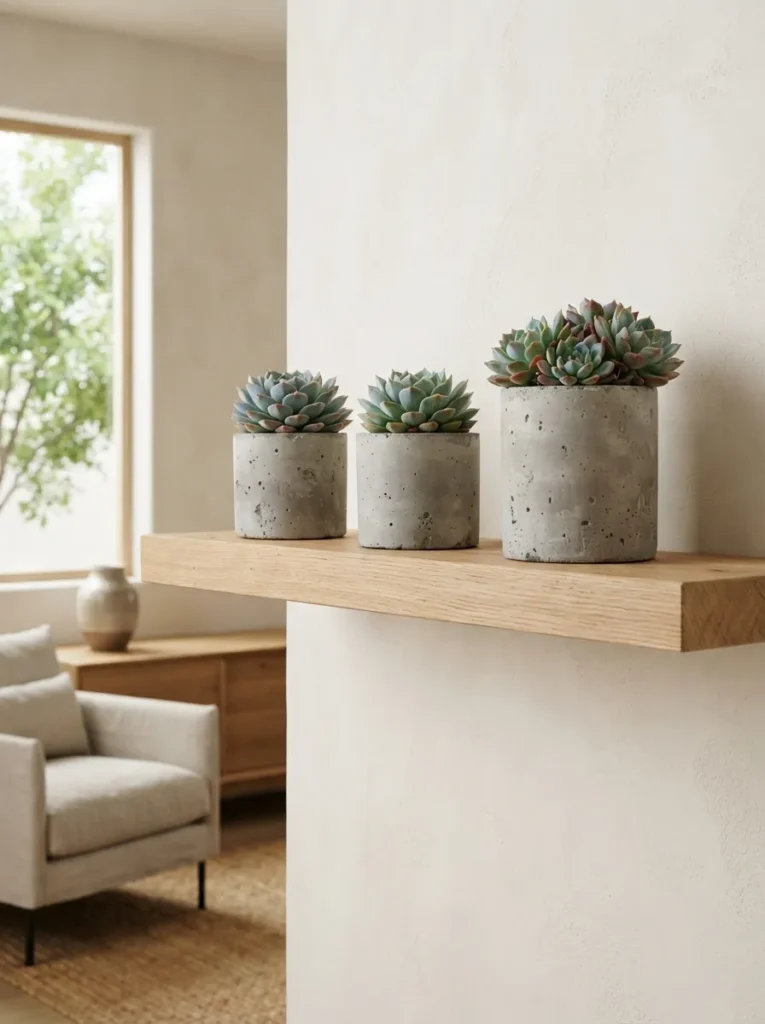
What it looks like: Grounded cool-toned, slightly industrial, unapologetically raw.
Why it works: Concrete’s raw texture against smooth succulent leaves creates real tactile contrast, and its visual weight anchors an otherwise airy shelf.
How to copy it: Buy unsealed concrete planters, not the glossy sealed kind. Pot with fast-draining cactus mix and group three at varying heights on one shelf.
Best for: Renters who want texture without a color commitment.
Pro Tip: Seal unglazed concrete with a light coat of matte concrete sealer if your climate is humid raw concrete wicks moisture and can develop a hairline crack over a season.
2. Monochrome White Ceramic Trio
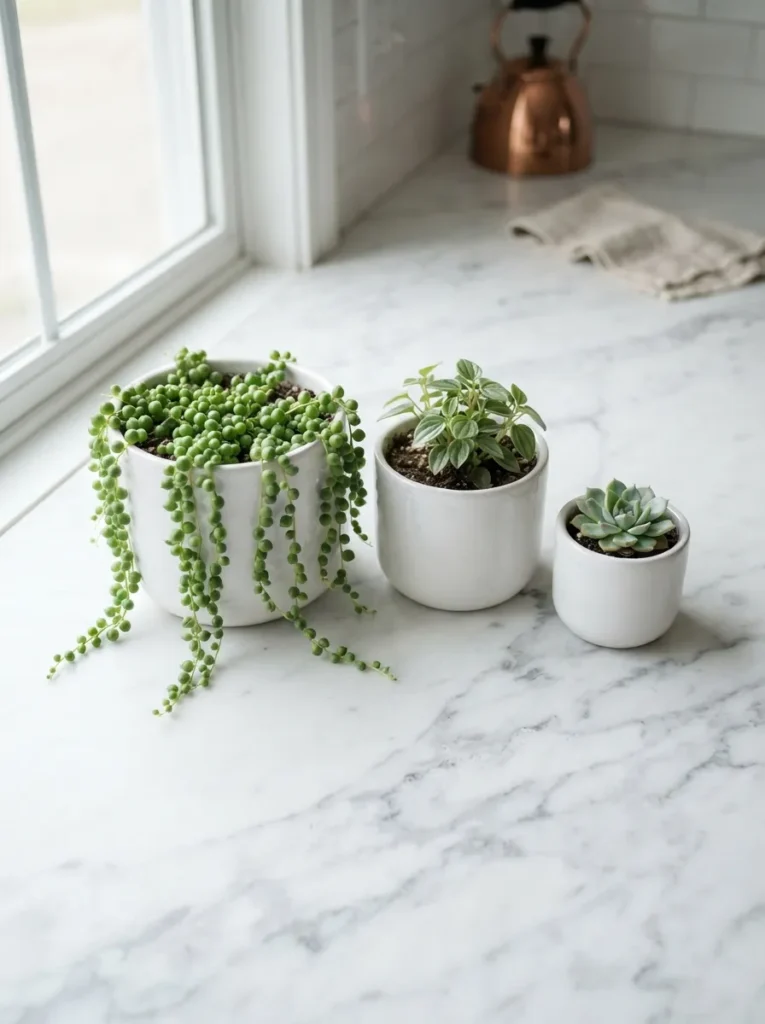
What it looks like: Luminous and crisp, quietly confident.
Why it works: A monochrome grouping uses proportion instead of color for interest varying heights create rhythm without competing for attention.
How to copy it: Choose three pots in roughly a 2:3:5 height ratio, same glaze finish, different silhouettes one round, one tapered, one footed.
Best for: Minimalists who want a display, not a color story.
Shop This Look
| Product |
|---|
| White ceramic tapered planter, 4-inch |
| Footed round ceramic pot, matte white |
| Fast-draining cactus and succulent soil mix |
| Small terra-cotta drainage tray, white |
| Wooden riser stand for tiered display |
3. Terrazzo-Effect Pots for a Playful Modern Edge
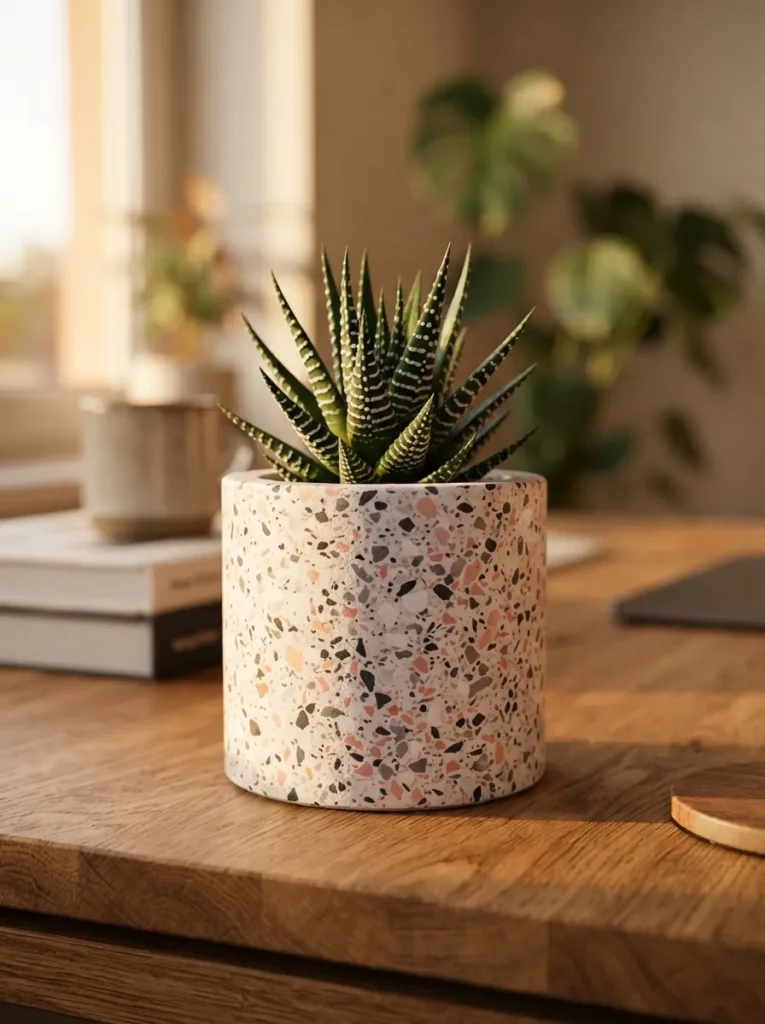
What it looks like: Flecked and cheerful, unexpectedly warm for a hard material.
Why it works: Terrazzo introduces pattern without breaking the modern palette it reads as texture, not decoration, so it never competes with a room’s existing color scheme.
How to copy it: Use terrazzo for one accent pot per grouping only. Keep every other pot solid so the fleck pattern stays the visual highlight.
Best for: People who find pure minimalism a little cold.
The next idea trades tabletop for wall space and it solves a problem most small apartments have.
4. Black Powder-Coated Metal Stands
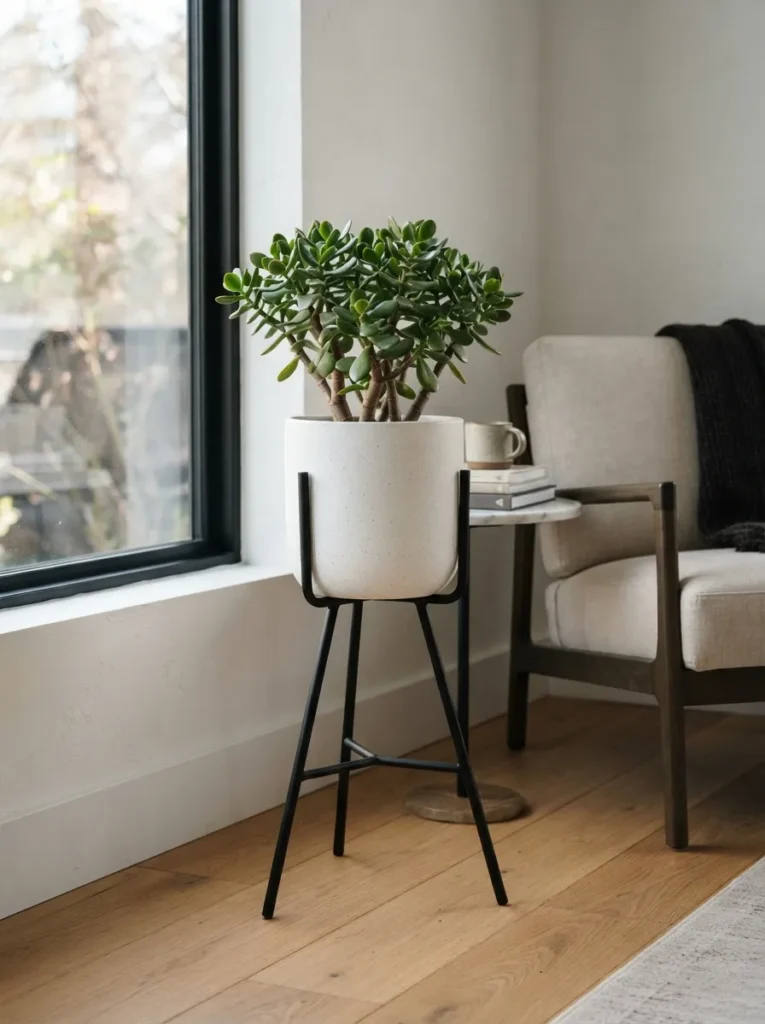
What it looks like: Architectural and lean, a little sculptural on its own.
Why it works: A stand lifts a succulent into eye-level sightlines, using elevation rather than size to command attention a trick most people underuse with small plants.
How to copy it: Pick a stand with three thin legs rather than four thick ones. Thinner legs read as modern; thick ones read as rustic.
Best for: People styling a plain corner that feels empty at floor level.
Warning: Cheap powder-coated stands with wide, flat feet dent hardwood floors under a heavy ceramic planter. Look for stands with rubber-capped feet, not bare metal.
5. Sunset Terracotta with Raw Clay Finish
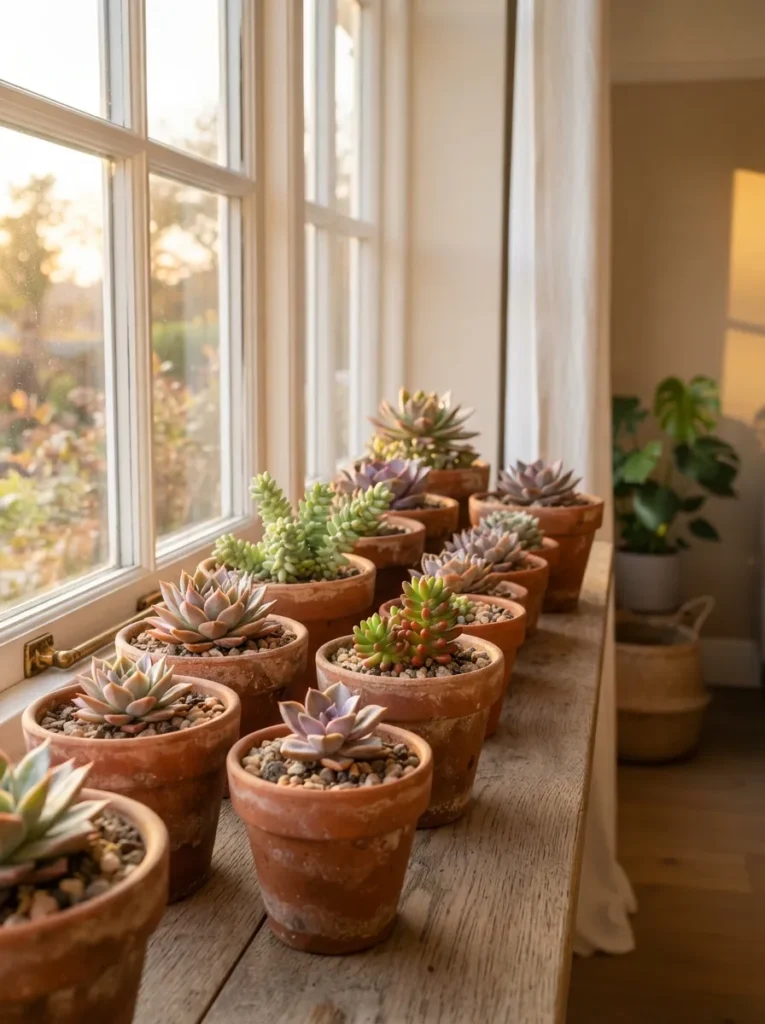
What it looks like: Sun-warmed and porous, quietly rustic-modern.
Why it works: Raw terracotta’s porous surface actually wicks excess moisture from soil, so the material choice is functional as well as visual a rare case where the right look is also the right care decision.
How to copy it: Leave terracotta unsealed and unglazed. Size the pot only slightly larger than the root ball so it dries fast between waterings.
Best for: Beginners worried about overwatering.
6. Woven Rattan Basket Covers Over Plastic Nursery Pots
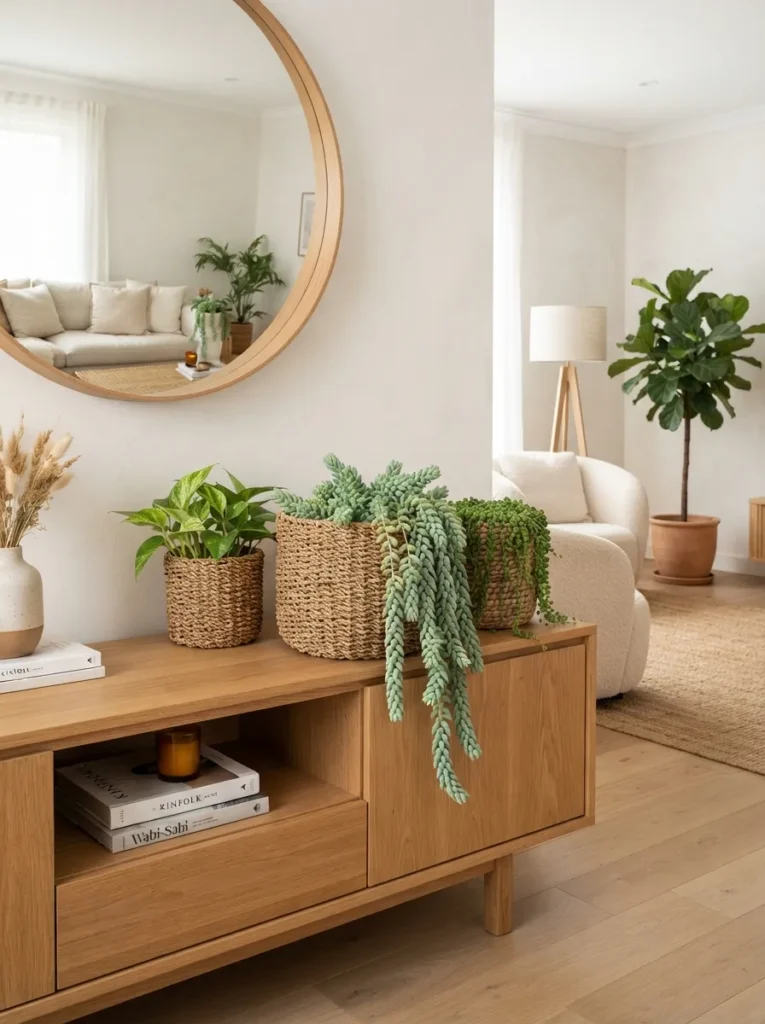
What it looks like: Textured and warm, softly imperfect.
Why it works: Rattan layers organic texture against the otherwise hard, cool materials common in modern styling it adds warmth without adding color.
How to copy it: Keep the plastic nursery pot inside the rattan sleeve for drainage, and pull the sleeve slightly above the pot rim so no plastic shows.
Best for: Renters who can’t drill or glue anything permanently.
Up next: the shape that photographs better than almost anything else on this list.
7. Geometric Hexagon Planters
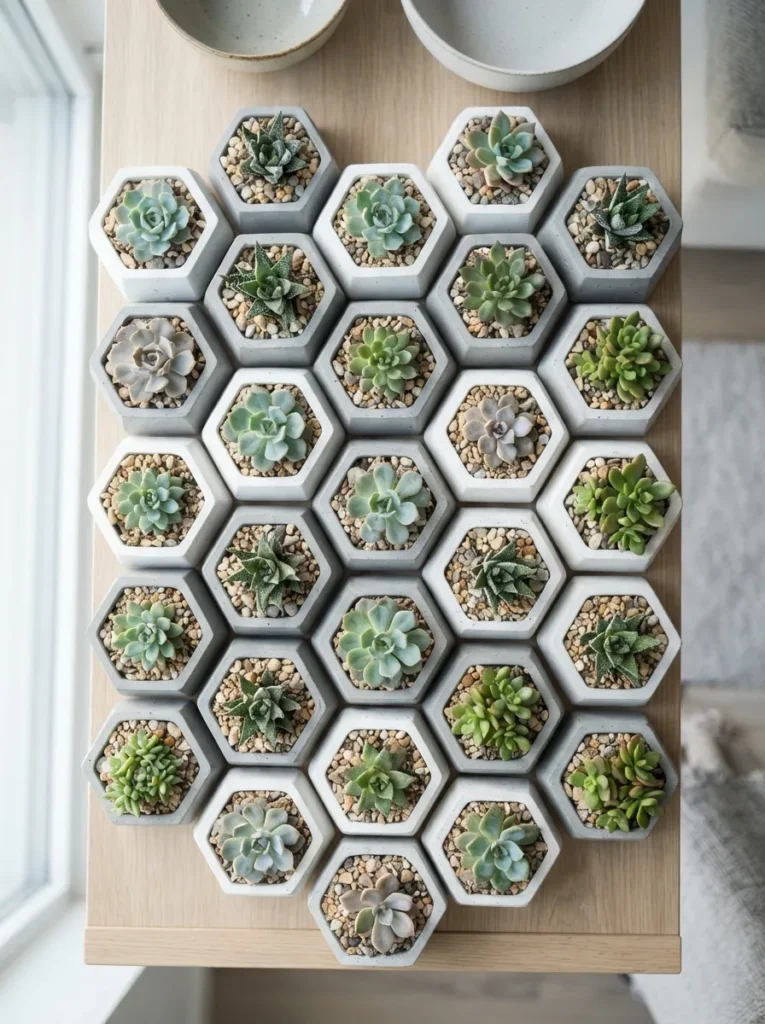
What it looks like: Angular and precise, a little architectural.
Why it works: Repeating a single geometric shape across a grouping creates pattern through repetition rather than color a principle borrowed straight from tile design.
How to copy it: Buy at least three identical hexagon pots and push them edge-to-edge so the honeycomb pattern reads clearly, rather than spacing them apart.
Best for: People who like a display with a clear visual system.
Styling Note: Push hexagon planters flush against each other rather than spacing them evenly the honeycomb effect disappears with gaps wider than half an inch.
Shop This Look
| Product |
|---|
| Hexagon concrete planter set of 3 |
| Mini succulent variety pack |
| Small precision watering can, narrow spout |
| Grey pebble top-dressing |
| Clear acrylic plant saucer |
8. Backlit Glass Terrariums for Evening Glow
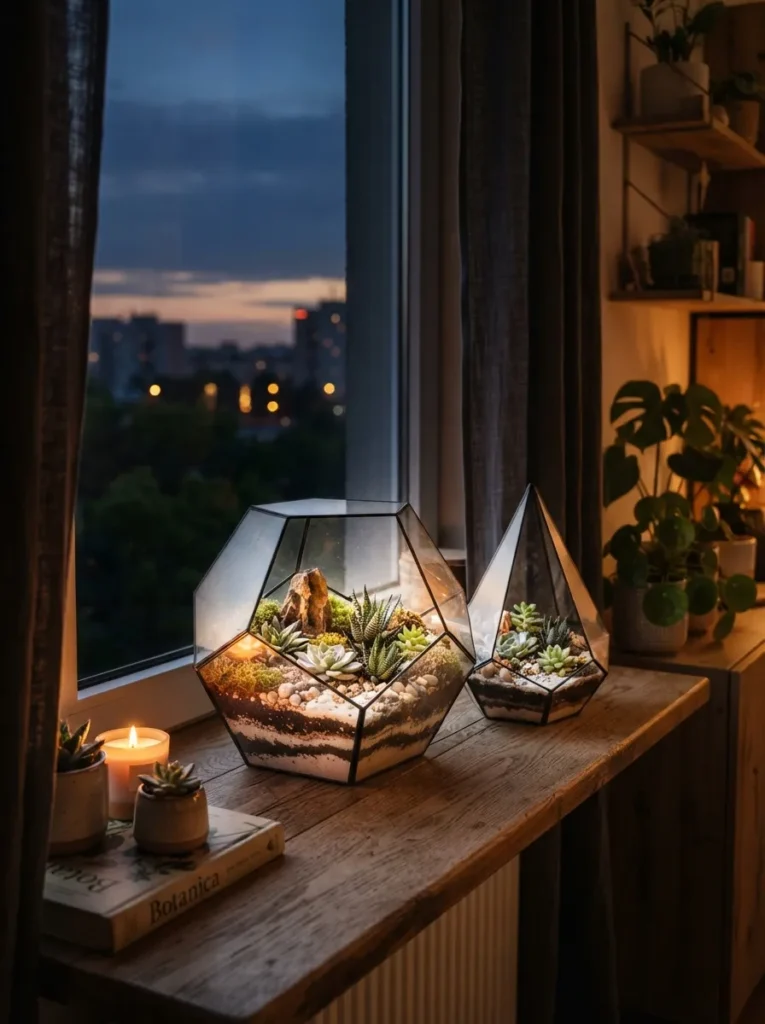
What it looks like: Glowing and layered, quietly dramatic once the sun drops.
Why it works: Glass is the only material here that changes character with light clear terrariums shift from purely functional in daylight to genuinely atmospheric once backlit, which most people never plan for.
How to copy it: Place terrariums where evening light a lamp or string lights sits behind them, not in front, so the layered sand and roots become visible silhouettes.
Best for: People who actually spend evenings in the room, not just daytime.
✅ Terrarium Layering Order:
- [ ] Add a 1-inch base layer of pea gravel for drainage
- [ ] Add a thin layer of horticultural charcoal to prevent odor
- [ ] Add a layer of cactus-specific potting mix, at least 2 inches deep
- [ ] Plant the succulent and top-dress with sand or fine pebbles
9. Sage Green Ceramic with Warm Undertones
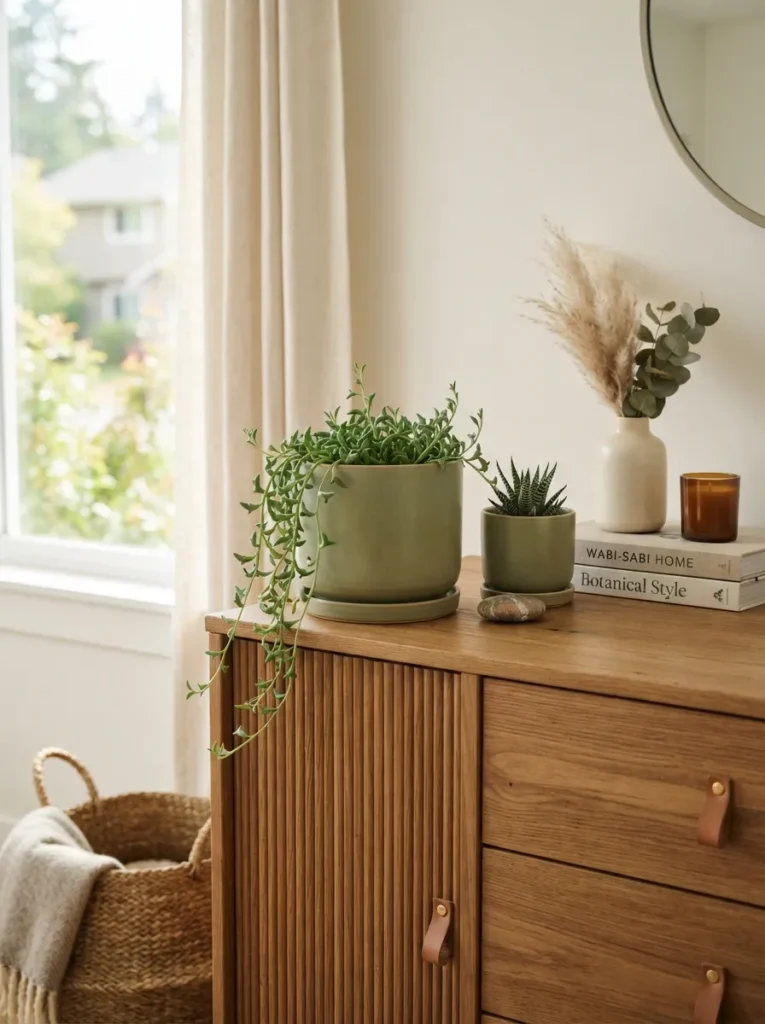
What it looks like: Calm and warm-leaning, quietly confident.
Why it works: True sage not mint, not olive carries a warm grey undertone that reads as sophisticated rather than trendy. Undertone is the detail most people get wrong when they say a green “looks cheap.”
How to copy it: Check the glaze in both daylight and lamp light before buying. Sage with a blue undertone reads cold under warm bulbs, which most listing photos won’t show you.This same warm-vs-cool undertone test matters anywhere you’re building a room around green, from a single pot on a shelf to a full green bathroom color scheme.
Best for: People who want color without straying from a neutral room.
Important: Most “sage green” ceramic sold online photographs more blue-grey than it looks in person. Check for customer photos taken in natural light before ordering, not just the listing image.
This next one is the easiest fix for a wall that feels unfinished.
10. Floating Wall-Mounted Planter Shelves
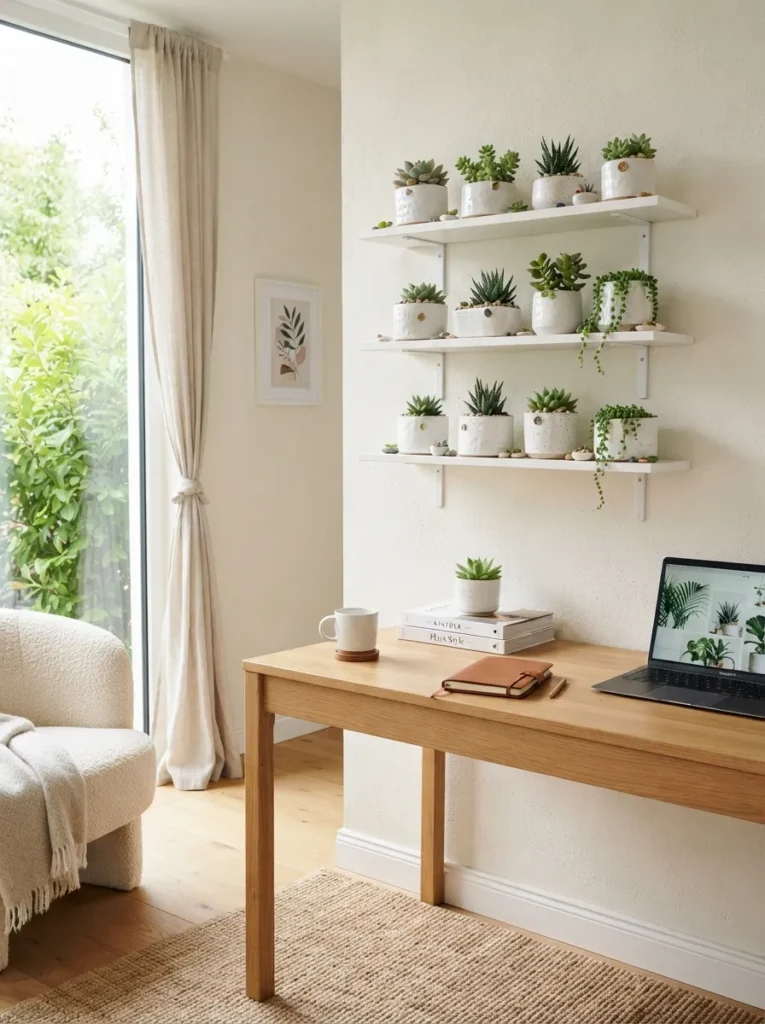
What it looks like: Floating and light, unexpectedly space-efficient.
Why it works: A wall-mounted display frees the surface below it entirely, using vertical space instead negative space applies here to the desk or counter, not just the wall.
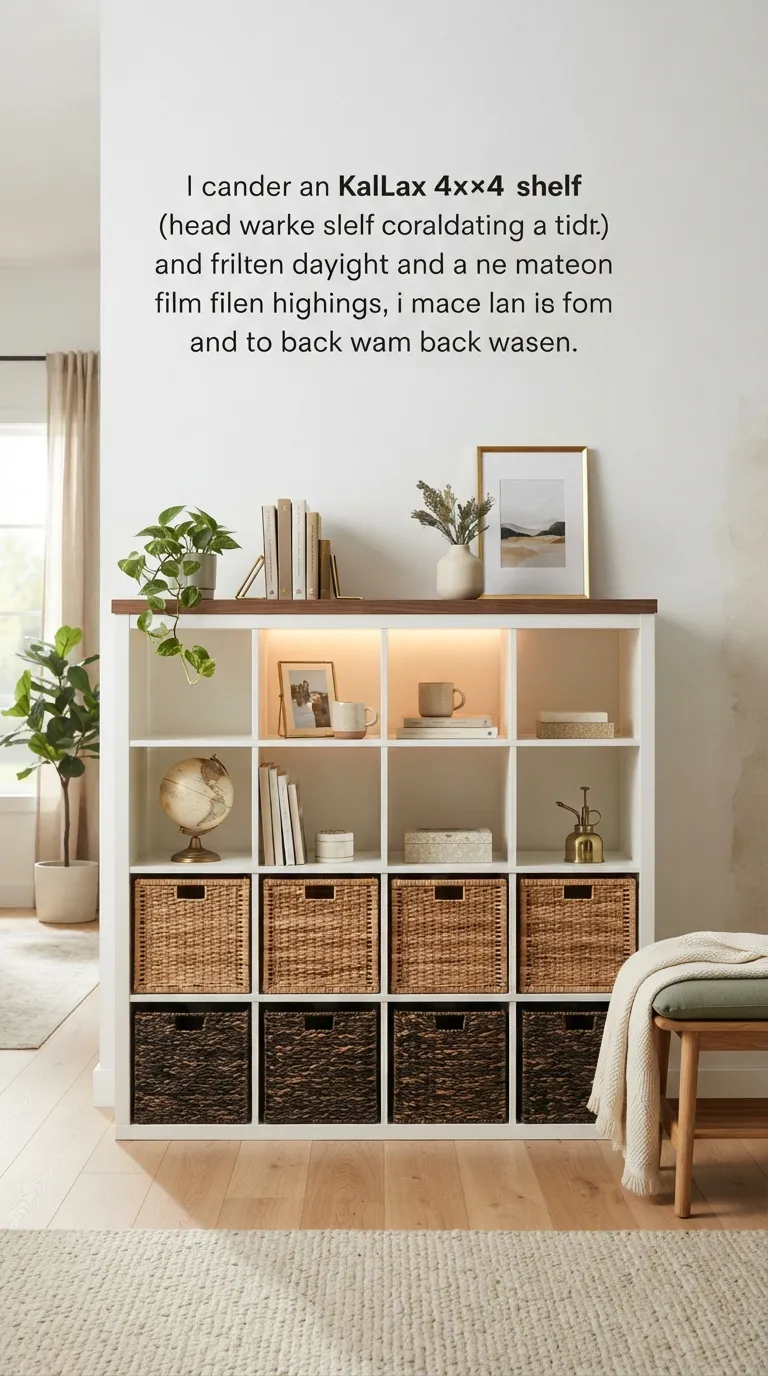
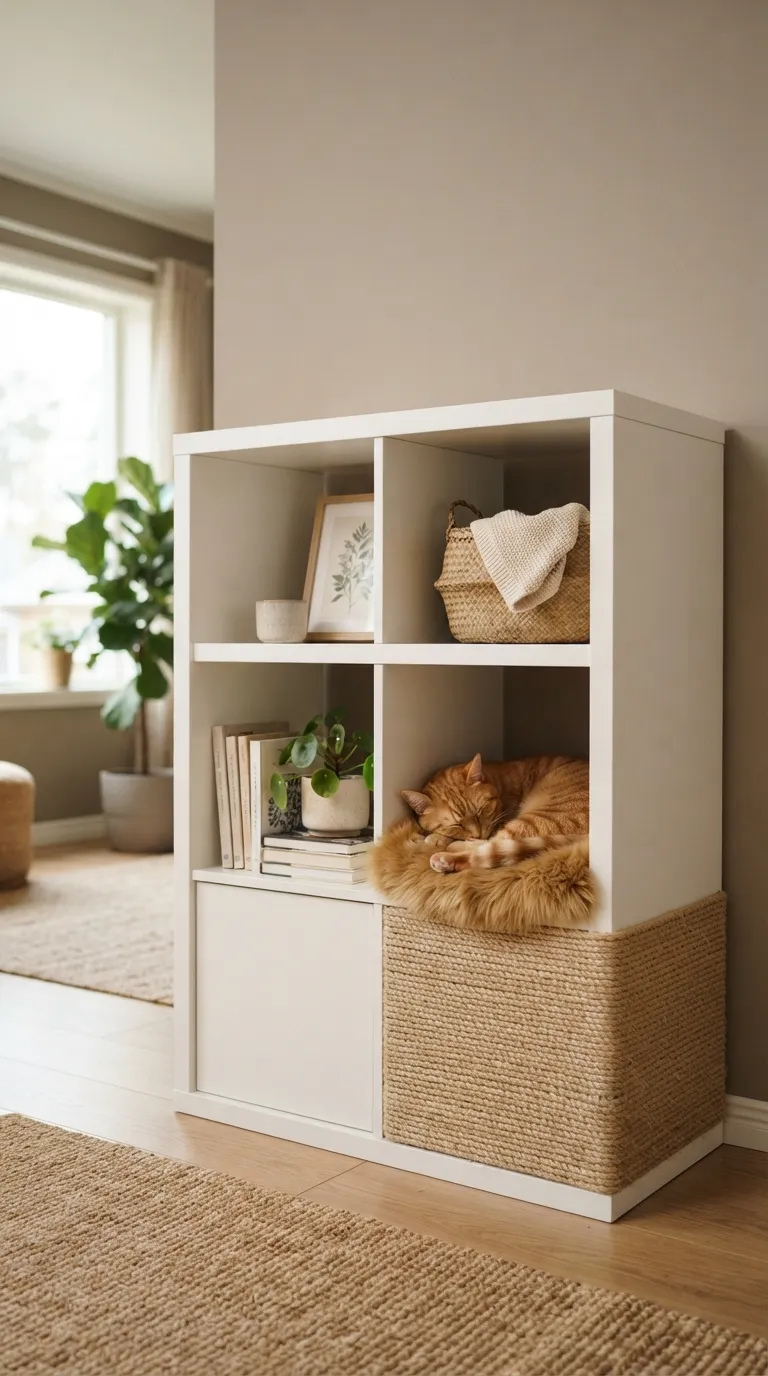
How to copy it: Mount shelves no deeper than 6 inches so pots don’t dominate visually, and stagger heights by at least 8 inches between each one.If you’ve already worked out a shelving rhythm somewhere else in the house say, a set of styled Kallax shelves the same grouped-height, negative-space logic carries straight over to a floating planter shelf.
Best for: Small apartments with limited counter or desk space.
Pro Tip: Anchor floating shelves into wall studs, not just drywall anchors, if you’re stacking more than two planters wet potting soil is heavier than it looks, especially right after watering.
11. Brass Accent Planters for Warm Metallic Contrast
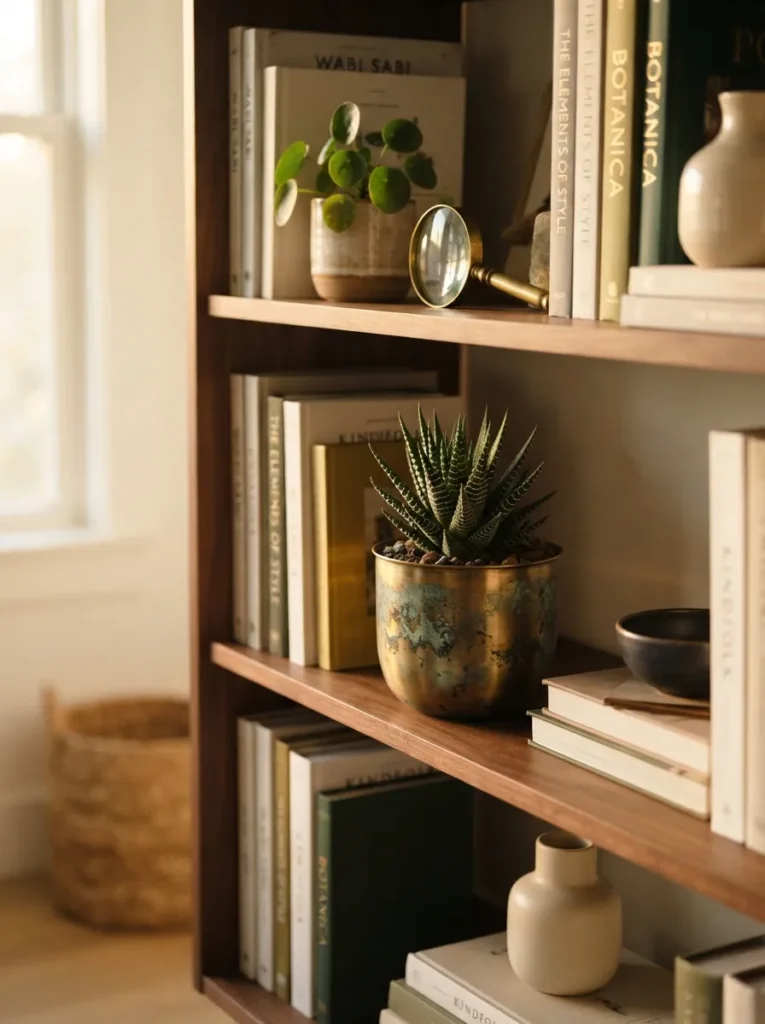
What it looks like: Warm and reflective, a little formal.
Why it works: Brass is the one metal that reads as warm rather than cold, so it softens an otherwise all-matte, all-neutral modern grouping without adding actual color.
How to copy it: Choose brass with visible patina rather than a mirror-polished finish. Polished brass reads dated fast; aged brass reads intentional.
Best for: People layering metals they already have elsewhere in the room.
Shop This Look
| Product |
|---|
| Brushed brass planter with patina, 5-inch |
| Brass plant mister |
| Small brass tray for catching drips |
| Zebra cactus or haworthia succulent |
| Brass-handled mini trowel |
12. Windowsill Ledge Cluster for Small Apartments
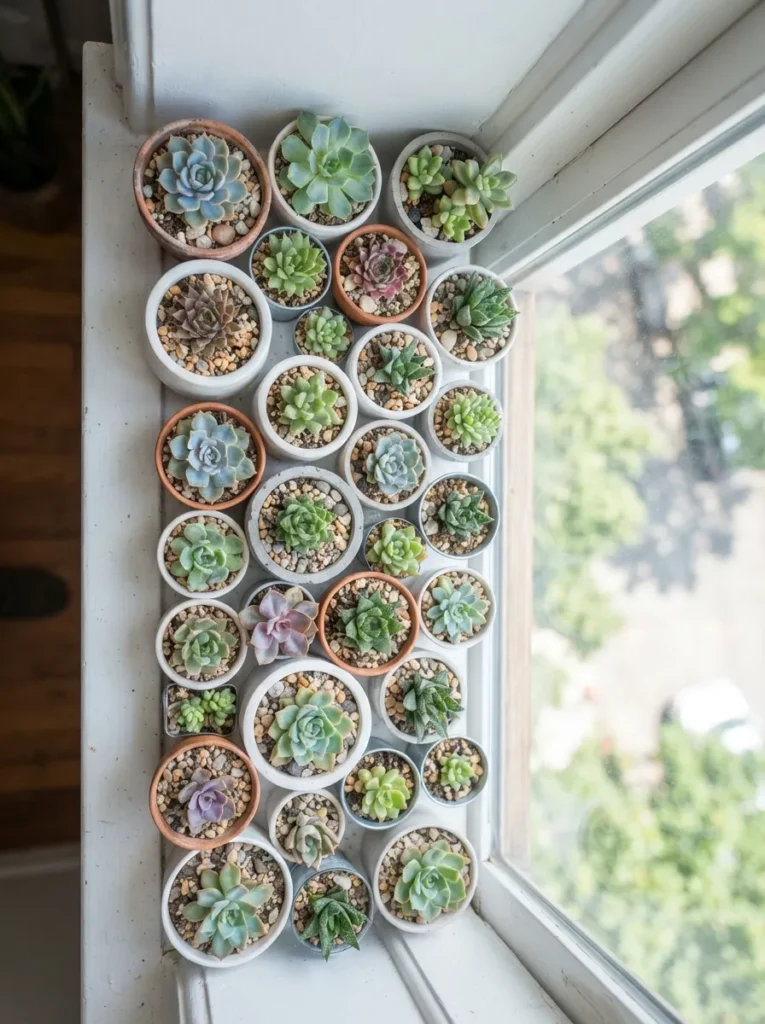
What it looks like: Sunlit and compact, cheerfully crowded without being cluttered.
Why it works: A windowsill rarely competes with other decor for territory, so filling it maximizes green space without taking room from a desk, shelf, or table.
How to copy it: Cap pot size at 3 inches so the ledge doesn’t feel overloaded, and leave at least an inch of visible sill between each pot.
Best for: Renters in studios or small apartments with limited surface space.
Small-Space Tip: Turn each pot a quarter turn every week succulents on a single-direction windowsill lean hard toward the glass within a month if you skip this.
The next idea solves the console-table problem nobody talks about too much empty space in the middle.
13. Matte Black Trough Planters for Long Console Tables
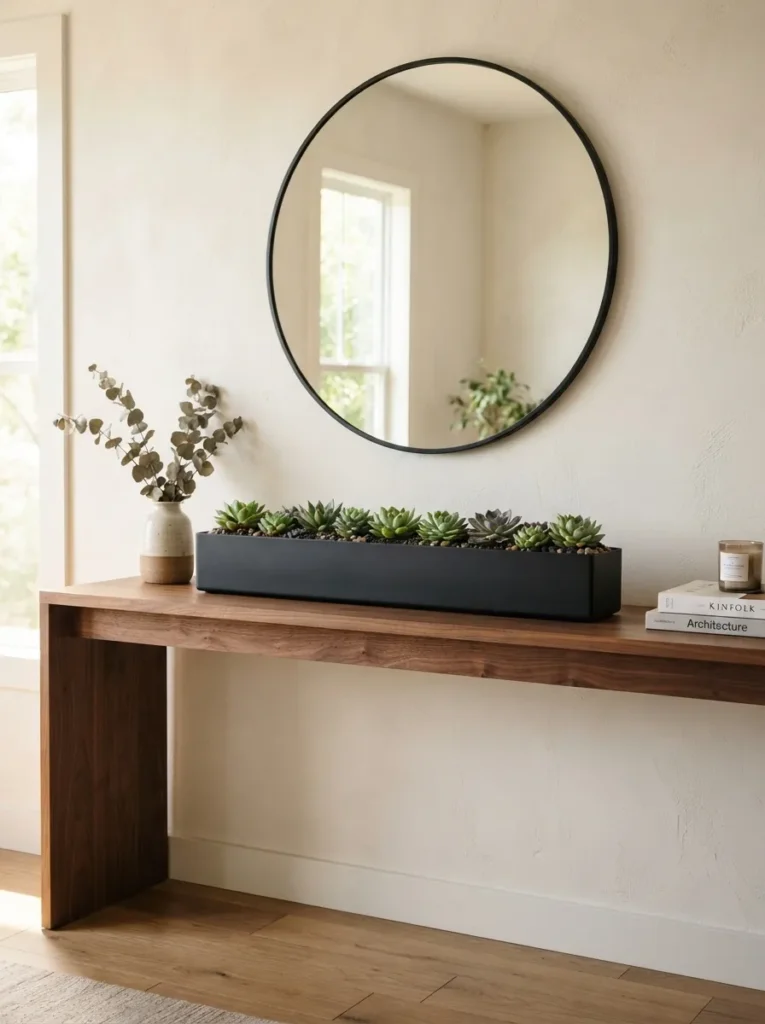
What it looks like: Linear and bold, quietly commanding.
Why it works: One continuous trough solves the “empty middle” problem of console tables better than scattered small pots a single line of visual weight reads as intentional, where three separate pots can read as random.
How to copy it: Choose a trough at least two-thirds the length of the console, and plant succulents at slightly uneven spacing perfectly even spacing reads artificial.
Best for: People styling a long, narrow surface like an entryway console or media stand.
14. Two-Tone Dipped Ceramic Pots
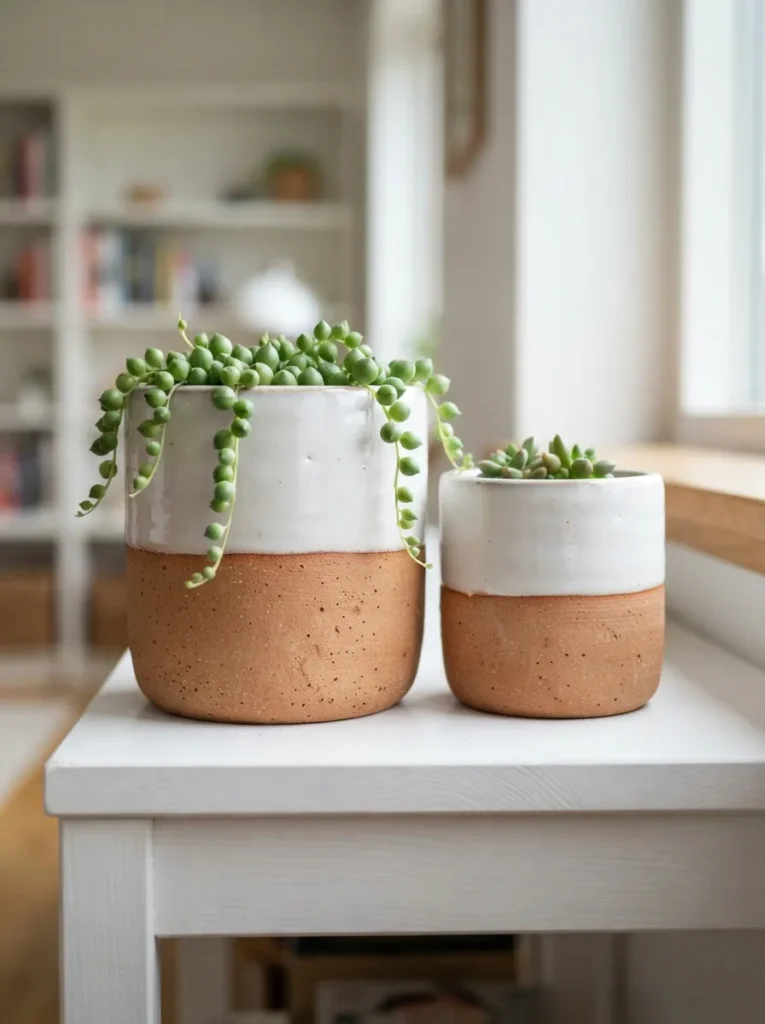
What it looks like: Half-finished on purpose, quietly clever.
Why it works: The visible line between raw clay and glaze creates contrast through process, not color it shows the making of the object, which reads as more considered than a fully glazed pot.
How to copy it: Keep the dip line consistent across a grouping same height ratio on every pot so the effect reads as a deliberate collection, not mismatched leftovers.
Best for: People who want visual interest without adding a new color to the room.
Pro Tip: Buy dipped ceramic pots from the same production batch when possible dye lots vary enough that the “raw” half can shift from beige to pink between orders placed months apart.
15. Pendant-Style Hanging Planters Under Skylights
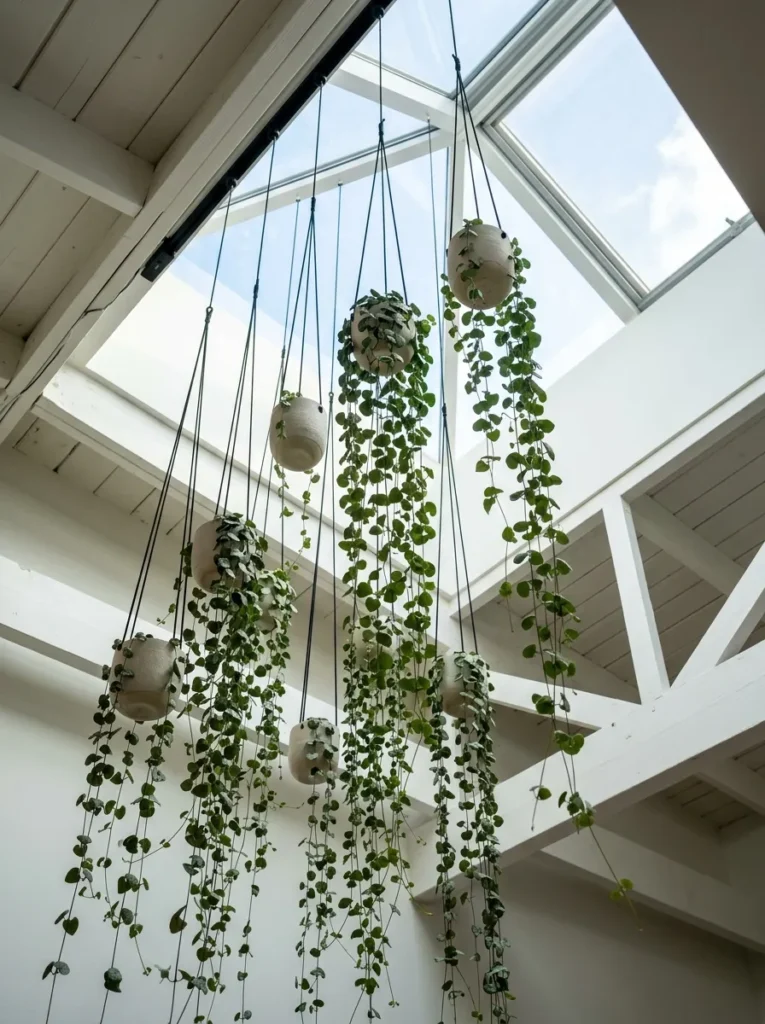
What it looks like: Suspended and airy, catching light from above in a way tabletop planters never do.
Why it works: Hanging planters use the one light source most people ignore overhead so a trailing succulent under a skylight gets stronger, more even light than the same plant on a shelf across the room.
How to copy it: Hang at a height where the lowest trailing leaf sits at or just above eye level, never lower. Anything lower turns a plant into something people duck under.
Best for: Rooms with a skylight or strong overhead natural light.
This next one is the material combination most beginners are afraid to mix and it works better than they expect.
My Views:
Here’s something most guides won’t tell you: mixing more than two pot materials in one grouping almost always looks like a collection instead of a mess as long as every pot shares one color note. I’ve seen rooms with concrete, brass, and terracotta side by side that read as curated, and rooms with three different ceramics in the same beige that read as chaos, because the materials had nothing in common except that they’d been bought separately.
16. Stone and Concrete Mixed-Material Vignette
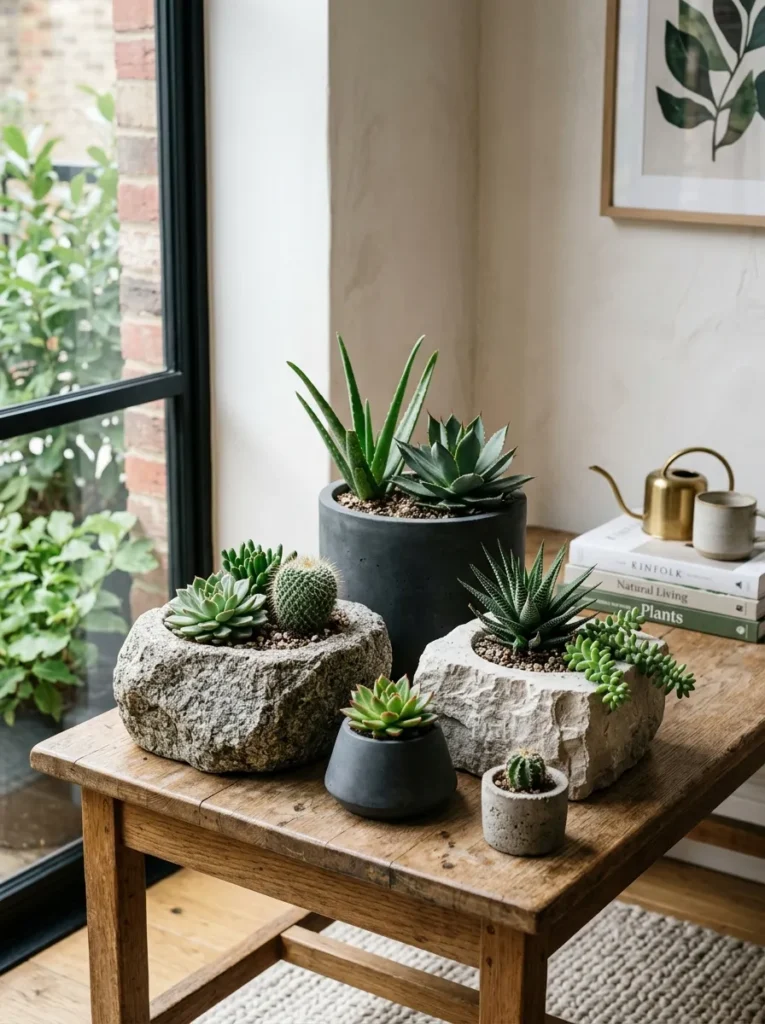
What it looks like: Layered and cool-toned, deliberately textural.
Why it works: Pairing rough natural stone with smooth cast concrete creates texture contrast within a single material family both are grey-toned, so contrast comes from finish, not color, keeping the grouping from feeling busy.
How to copy it: Match at least one stone piece and one concrete piece within the same grey undertone, then let a single warm-toned pot terracotta or brass break up the cool palette.
Best for: People building a display of more than three pots who want it to feel curated, not random.
Shop This Look
| Product |
|---|
| Natural stone planter, unfinished grey |
| Concrete cylinder planter, matte charcoal |
| Small barrel cactus |
| Fast-draining succulent and cactus soil |
| Grey pebble top-dressing |
17. Grouped Odd-Number Clusters on a Console
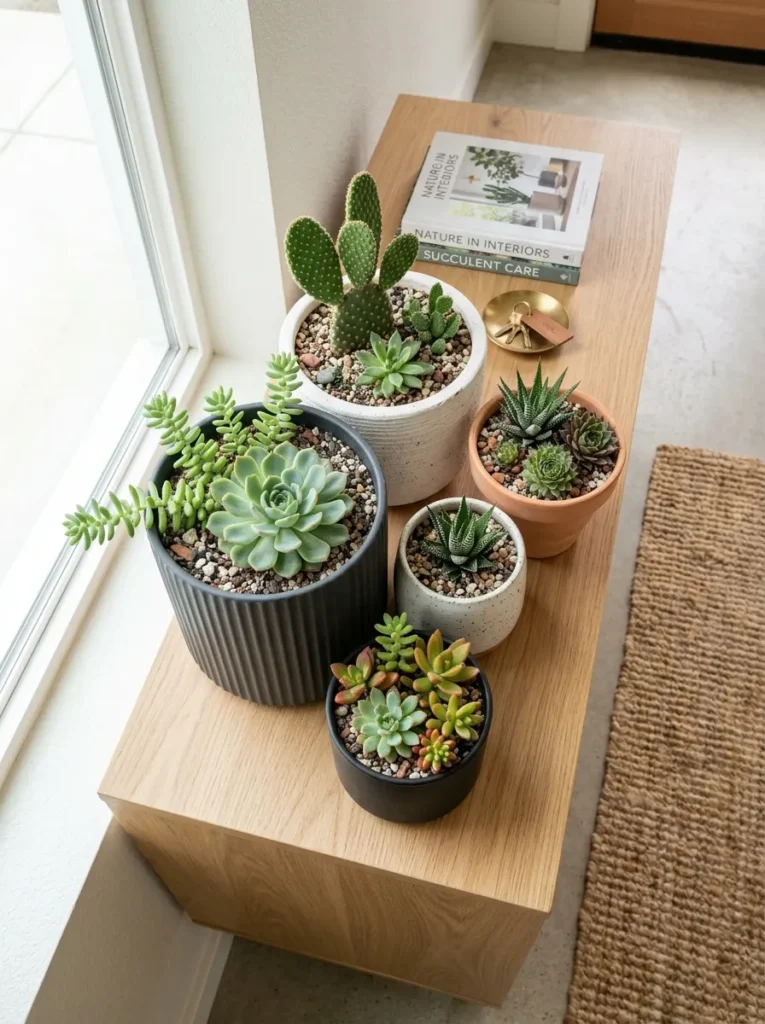
What it looks like: Intentional and varied, never quite symmetrical.
Why it works: Odd numbers three, five, seven read as deliberate groupings to the eye, where even numbers tend to read as pairs. It’s a basic gallery-wall principle that applies just as well to plant clusters.
How to copy it: Group in fives, vary height by at least an inch between each pot, and cluster them within a hand’s width of each other rather than spreading them evenly. The same odd-number, uneven-spacing logic is worth borrowing anywhere you’re styling a console in a lived-in room, like a console behind a tan sofa.
Best for: People with several mismatched planters who want them to look collected instead of leftover.
Mistake to Avoid: Spacing planters evenly across a console table is the single most common styling mistake even spacing reads like a product display, not a home.
18. Smart LED Grow-Light Planters for Low-Light Corners
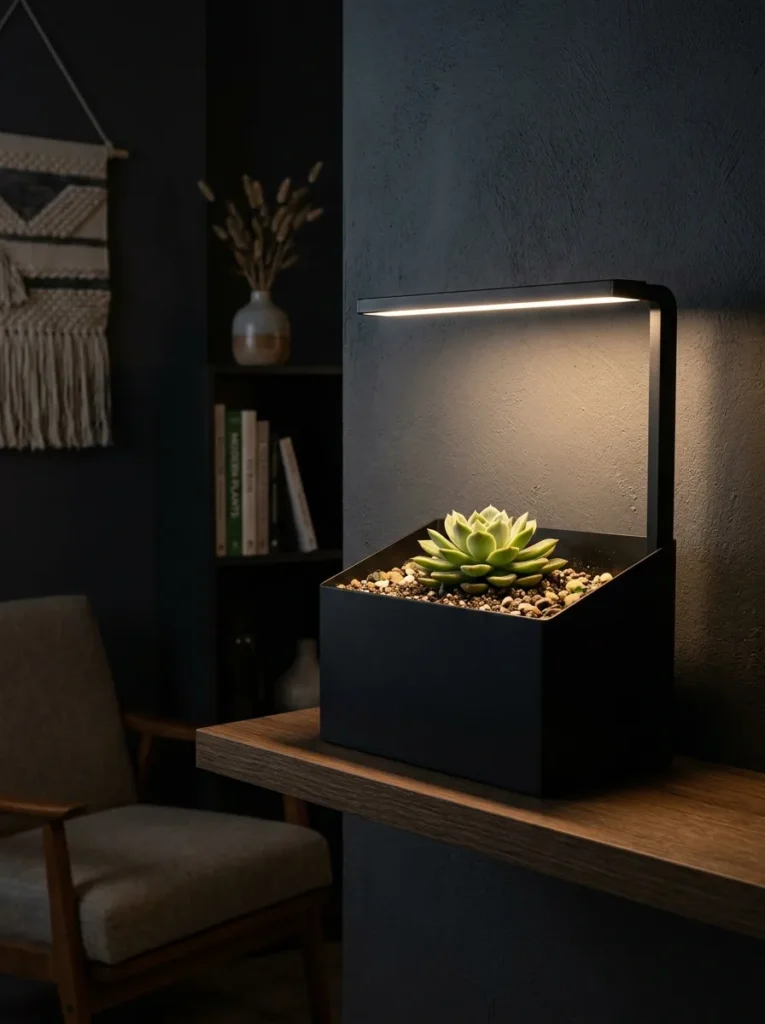
What it looks like: Subtly futuristic, glowing faintly without looking like a grow tent.
Why it works: Most low-light corners simply can’t support succulents no matter how the pot looks, so an integrated grow light solves a lighting problem styling alone never could.
How to copy it: Look for planters with a warm-white or full-spectrum LED, not a harsh purple grow light, so it still reads as decor during the day.
Best for: People with a stylish but genuinely dark corner they don’t want to give up on.
Important: Most grow-light planters advertise “full spectrum,” but many budget versions skew purple, which looks jarring in a living space after dark. Check for warm-white LED specifically if the planter will stay visible, not just functional.
Almost there the last two ideas are the ones that make a whole shelf feel finished.
19. Minimalist Steel Wire Plant Stands
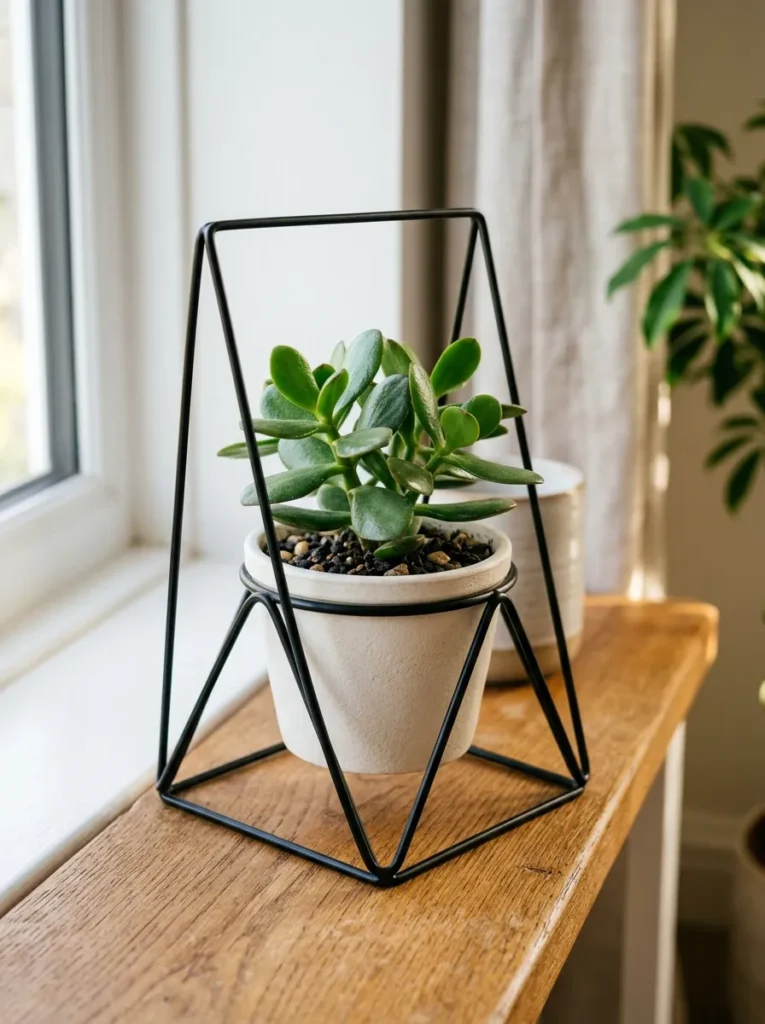
What it looks like: Skeletal and light, almost invisible from a distance.
Why it works: Wire stands add height without adding visual bulk, gaining the same elevation trick as idea four without the stand itself becoming another object competing for attention.
How to copy it: Pick a wire stand with a base narrower than the pot it holds. A wider base reads bulky and undercuts the whole point of a thin frame.
Best for: People who want elevation without a stand that looks like furniture.
Shop This Look
| Product |
|---|
| Thin steel wire plant stand, black |
| Small jade or echeveria succulent |
| Ceramic pot sized for a 4-inch stand top |
| Clear plant saucer |
| Mini watering can with narrow spout |
20. Warm Blush Pink Ceramic for a Soft Modern Accent
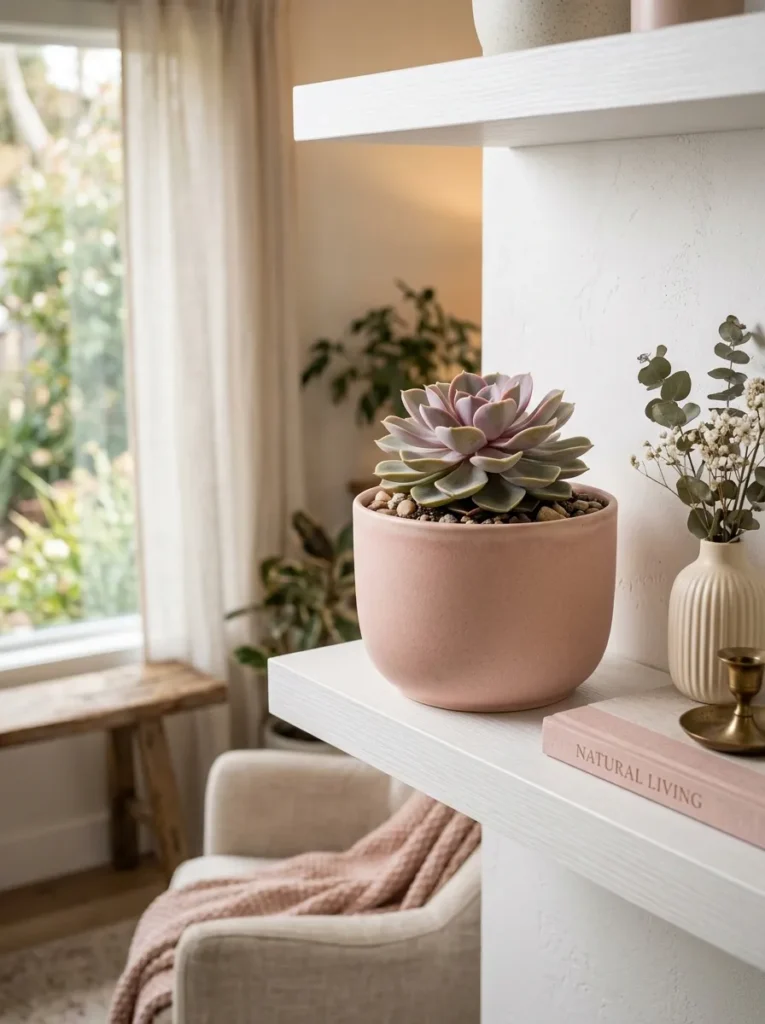
What it looks like: Soft and warm, the one unapologetically pretty note in an otherwise neutral list.
Why it works: Blush works in modern rooms specifically because it’s used as an accent, not a theme one pink pot against charcoal and white reads as a considered choice, where five would read as a nursery.
How to copy it: Pair a blush pot with a pink-tinged succulent variety, like certain echeveria, so the color repeats in the plant itself, not just the pot.
Best for: People who want one soft, statement-making piece to close out an otherwise neutral collection.
Pro Tip: If blush pink feels like too big a commitment, buy just one in the smallest available size a single 3-inch blush accent among neutrals reads as a choice, not indecision.
How to Start Your Modern Succulent Planter Transformation
What I’ve found with real spaces: start with the pot, not the plant. A single matte charcoal concrete planter on whatever surface bothers you most a bare windowsill, an empty console corner does more to anchor a modern look than five succulents in mismatched nursery pots. Everything else on this list builds outward from that one confident piece.
The most common mistake is buying planters without drainage holes because they look cleaner without one. Succulents rot fast in standing water, and a planter with no hole means guessing at watering forever. Fix it by drilling a hole in ceramic with a diamond-tip bit, or keep the plant in its plastic nursery pot and slide that inside the decorative one.
Three things under $50 that make an immediate difference: a 4-inch matte white ceramic planter, a bag of fast-draining cactus and succulent soil mix, and a narrow-spout watering can that lets you water precisely without soaking the leaves.
A single shelf or windowsill can be styled in a weekend for under $75 total. A full console or multi-surface display, mixing materials like concrete, brass, and ceramic, realistically takes a few weekends of sourcing and runs $150–$300 depending on how many pieces you’re after.
Ready to Style Your Own Succulent Display?
Twenty ideas is a lot of ground color through blush and sage, material through concrete and rattan, layout through floating shelves and windowsill clusters and none of it requires redoing a room to start.
Pick one grouping, not all twenty, and let it sit for a week before deciding what’s next. Today, that can be as simple as moving your best succulent into a plain white ceramic pot and setting it somewhere with real light.
Modern succulent styling rewards patience the same way the plants do a slow, quiet kind of satisfaction, not an instant one. Save this for whenever your shelf needs a refresh, especially the terrazzo and brass pairings if you’re after a little more warmth.