20 Vintage Grandma House Ideas That Feel Like a Warm Hug
A vintage grandma house is the kind of home where every lamp has a fringe, every chair has a story, and nothing matches on purpose. Here are 20 ideas for bringing that same warmth florals, brass, doilies, and all into your own space.
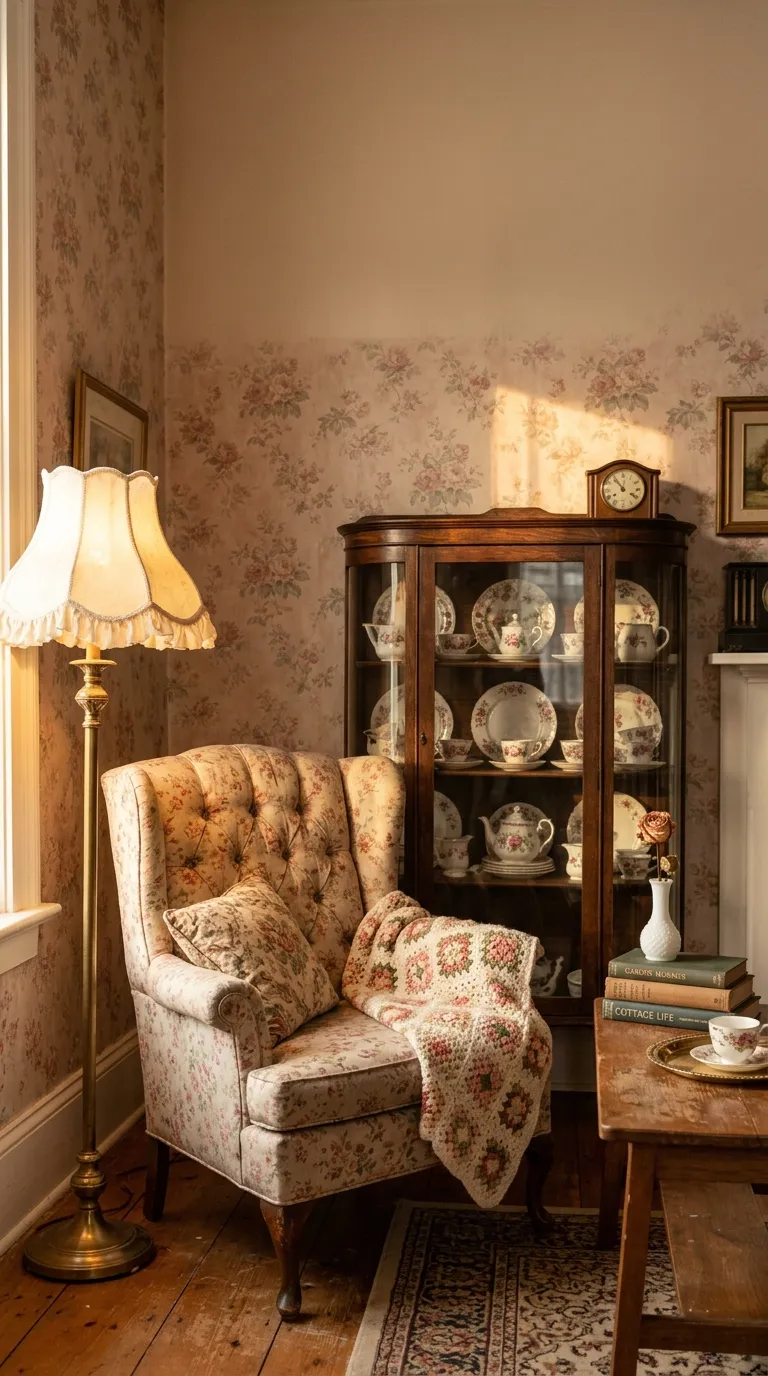
Afternoon light pools gold across a chintz armchair, catching dust motes nobody rushes to chase away. Everything smells faintly of rosewater and old paperbacks, and the clock on the mantel ticks like it has nowhere else to be. This is comfort with texture layered, collected, a little imperfect. Ready to steal some of that magic?
Jump To
- Why Vintage Grandma Style Works So Well
- 20 Vintage Grandma House Ideas
- How to Start Your Vintage Grandma House Transformation
- Ready to Create Your Dream Vintage Grandma House?
Why Vintage Grandma Style Works So Well
Vintage grandma style also called grandmillennial or grandmacore pulls from mid-century cottage interiors: chintz florals, brass fixtures, crocheted linens, and furniture that looks collected over decades instead of bought as a set.
Expect dusty rose, sage green, and warm butter yellow against cream trim, paired with materials like glazed chintz, unfinished oak, and worn brass. It’s having a real moment as a reaction to sterile minimalism people want rooms that feel lived-in. It works in small spaces too, as long as you prioritize one anchor piece, like a chair or a wallpapered nook, instead of layering everything at once.
Style at a Glance
| Element | Traditional Charm | Where It Shows Up |
|---|---|---|
| Philosophy | Nothing matches on purpose — pieces collected over time | Mixed china, layered textiles, inherited furniture |
| Materials | Chintz, crochet, brass, worn wood | Upholstery, table linens, lighting, frames |
| Color palette | Dusty rose, sage, butter yellow, cream | Walls, cabinetry, accent chairs, wallpaper |
20 Vintage Grandma House Ideas
1. Dusty Rose Reading Corner
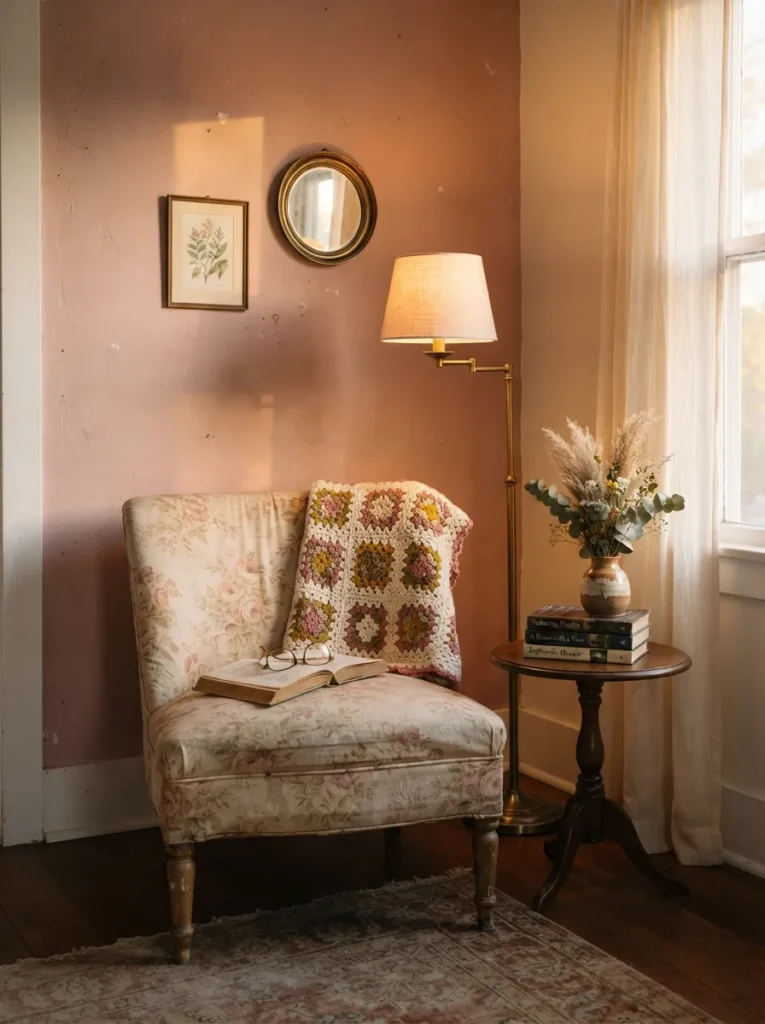
What it looks like: A hushed, powdery corner that glows rose-gold by late afternoon.
Why it works: Dusty rose reads warm rather than sweet because of its low saturation, and its muted tone pairs with brass and cream trim without fighting for attention the low-chroma pigment keeps it from tipping into nursery territory.
How to copy it: Test a chalky, gray-toned rose like Farrow & Ball’s Setting Plaster on the wall behind your favorite chair only, not the whole room, then anchor it with a brass-based lamp and one piece of aged wood furniture.
Best for: Renters who want commitment-free color this works as a single accent wall or even a painted alcove.
Pro Tip: Test the rose on a swatch board and check it under both morning and evening light before committing dusty pinks shift warm-to-muddy depending on bulb temperature.
2. Crocheted Lace Table Runner
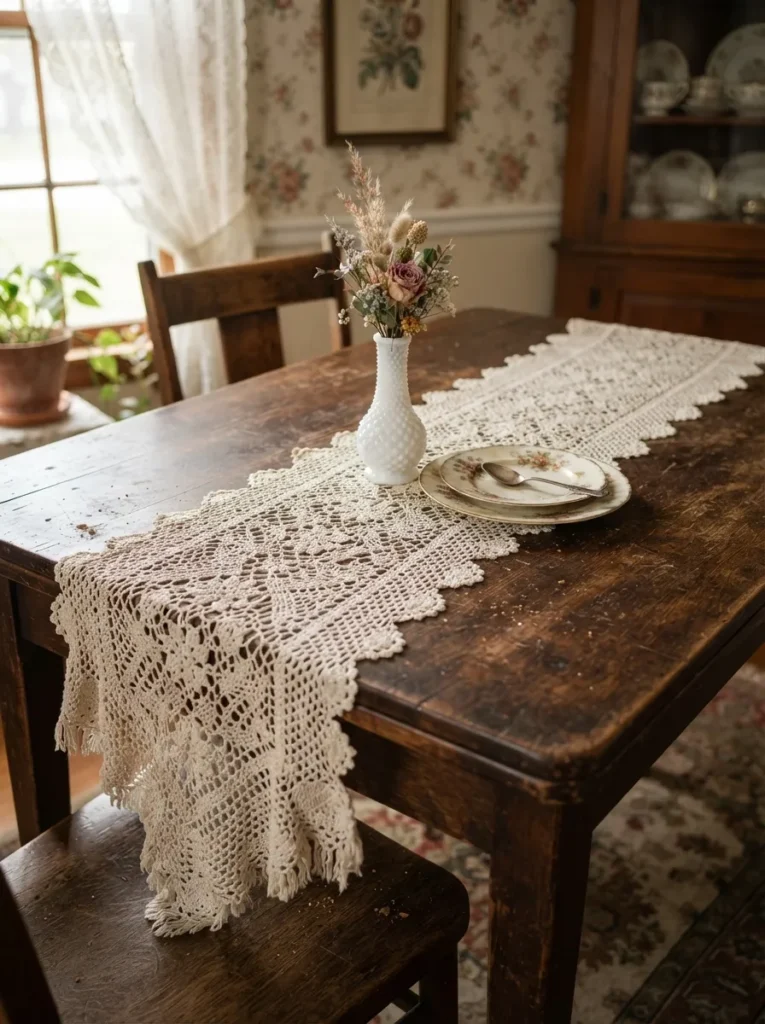
What it looks like: Raw, hand-worked lace draped loose over dark wood, edges left uneven.
Why it works: Crocheted cotton adds tactile contrast against hard surfaces like wood or glass the texture layering keeps a tablescape from feeling flat even with minimal color.
How to copy it: Layer a cream crocheted runner over a stained walnut table and let the edges hang slightly uneven rather than centered symmetry kills the handmade feel. If you love this handmade texture, our crocheted wall hangings guide has more ways to work it into a room.
Best for: Anyone styling a dining table or console who wants texture without buying new furniture.
Quick Win: Thrift stores almost always have vintage crocheted runners for under $8 wash in cold water and lay flat to dry to keep the shape.
3. Ruffled Fabric Lampshade
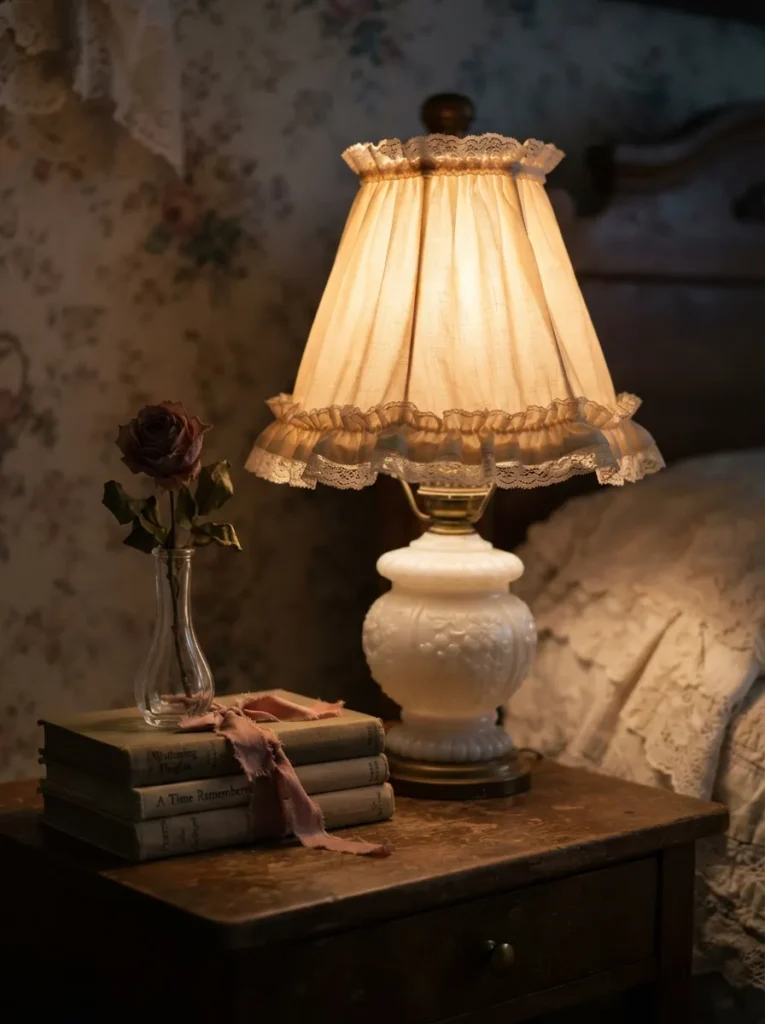
What it looks like: A soft, gathered shade that scatters warm light instead of casting it.
Why it works: Fabric ruffles diffuse light rather than direct it, softening shadows across a room the way a hard glass shade never could a lighting principle worth knowing before you shop for lamps.
How to copy it: Look for a ballerina or bell-shaped ruffled shade in cream or dusty rose, and pair it with a milk-glass or brass base the contrast between soft shade and hard base sells the look.
Best for: Bedrooms and reading nooks where ambient, forgiving light matters more than task lighting.
Styling Note: Match the ruffle trim color to one other textile nearby a throw pillow or curtain edge so the lamp feels chosen, not accidental.
Up next: the chair that anchors an entire room without saying a word.
4. Tufted Wingback Chair
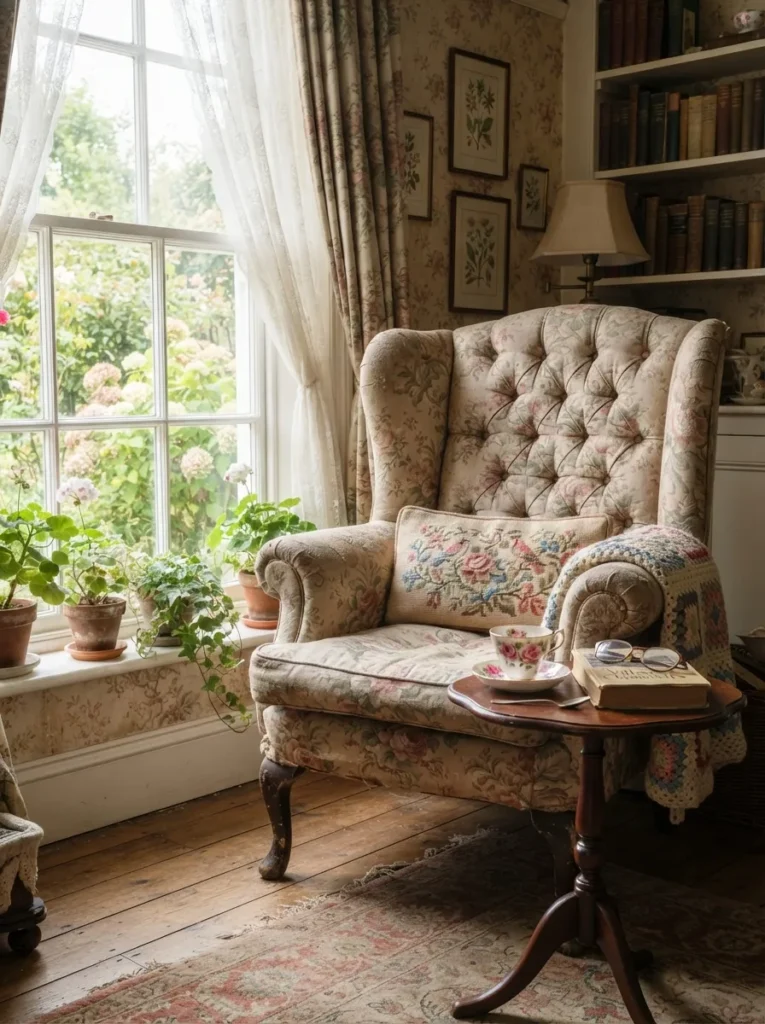
What it looks like: A grounded, high-backed silhouette wrapped in faded floral print.
Why it works: A wingback’s tall proportions create vertical visual weight, balancing out low furniture like sofas and coffee tables a scale principle that keeps a seating area from feeling squat.
How to copy it: Reupholster a secondhand wingback in a small-scale chintz floral rather than a large bold print scale is what separates this look from costume.
Best for: Living rooms that need one statement piece without a full furniture overhaul. If you’re building out the rest of the seating area around it, our tan sofa living room ideas show how to balance a neutral sofa against a patterned chair like this one.
Warning: Reupholstery on a wingback typically runs $400–$800 with fabric get a quote before falling for an expensive designer chintz, or the “budget vintage” project quietly becomes the priciest item in the room.
Find It Online:
| Product |
|---|
| Tufted wingback accent chair |
| Small-scale floral chintz upholstery fabric, by the yard |
| Brass upholstery nailhead trim |
| Chair-side book table |
| Needlepoint lumbar pillow |
5. Vintage China Display in a Glass-Front Cabinet
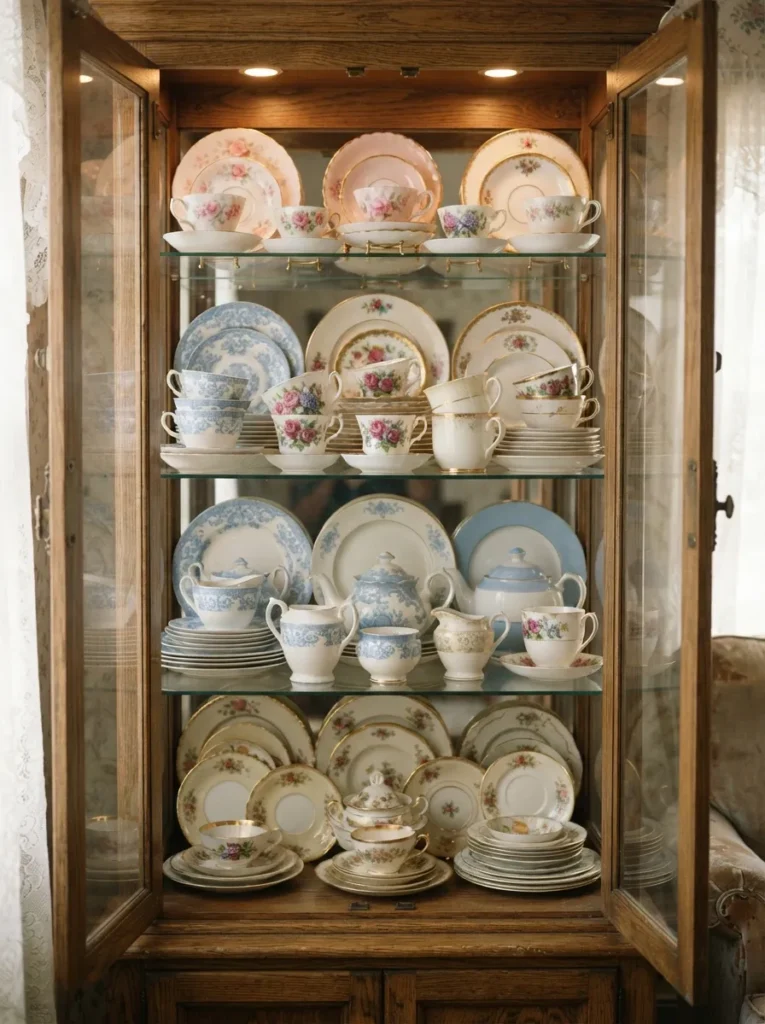
What it looks like: Layered, mismatched patterns stacked with quiet confidence.
Why it works: Grouping mismatched china by color family rather than pattern creates cohesion through repetition the principle that lets “nothing matches” still look intentional.
How to copy it: Sort plates and teacups by dominant color before arranging them on shelves, and vary plate sizes so the display has rhythm instead of a flat grid.
Best for: Collectors who already own inherited or thrifted china and want it to feel curated, not cluttered.
Budget Version: A secondhand glass-front cabinet from a resale shop often costs less than a single new bookcase refinish the wood with a light sand and oil rather than replacing it.
Find It Online:
| Product |
|---|
| Glass-front curio display cabinet |
| Assorted vintage-style teacups |
| Plate display stands |
| Brass plate hangers |
| Floral-pattern dessert plates |
6. Sage Green Kitchen Cabinets
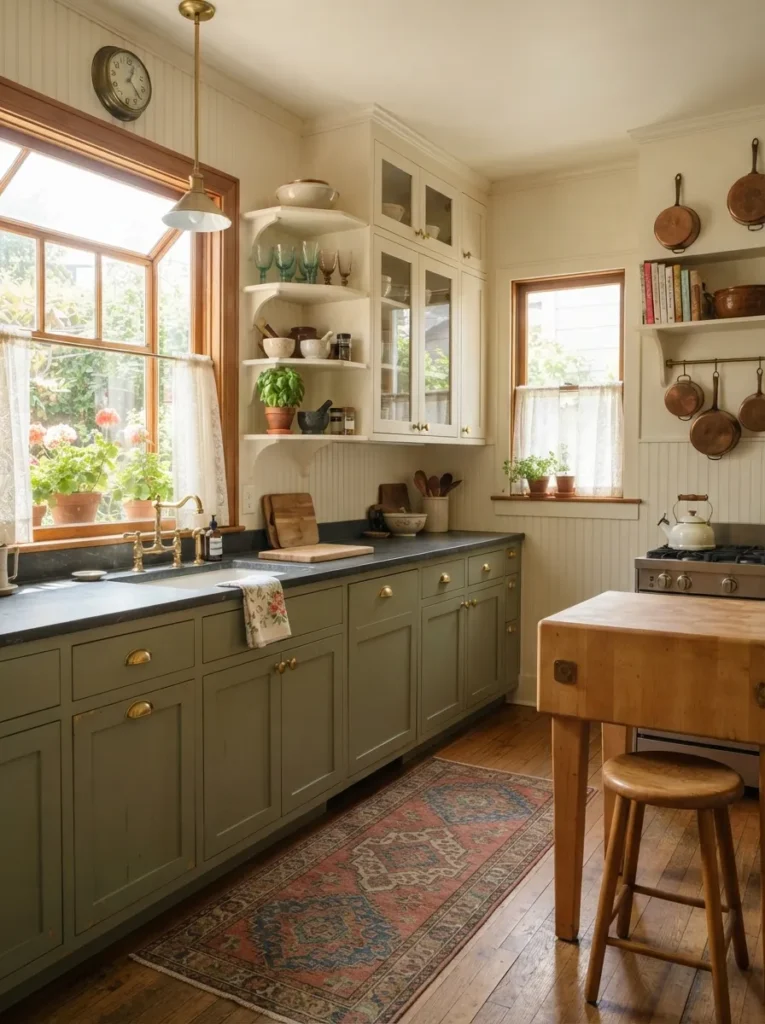
What it looks like: A muted, herbal green that reads calm instead of trendy.
Why it works: Sage sits close to gray on the color wheel, which is why it pairs easily with both warm wood tones and cool brass or nickel hardware a versatility that true green shades don’t offer.
How to copy it: Paint lower cabinets sage and leave uppers cream or white to keep the kitchen from feeling heavy, then swap hardware to unlacquered brass, which patinas naturally over time. Choosing an interior green often means thinking about curb appeal too our exterior house paint colors guide can help you keep the palette consistent from the outside in.
Best for: Kitchen refreshes on a budget paint is far cheaper than replacing cabinet boxes.
Mistake to Avoid: Skipping a bonding primer on existing cabinet finish is the top reason painted cabinets chip within months always deglaze and prime before color goes on.
Here’s one that sounds minor and changes more than you’d expect.
7. Quilted Patchwork Throw
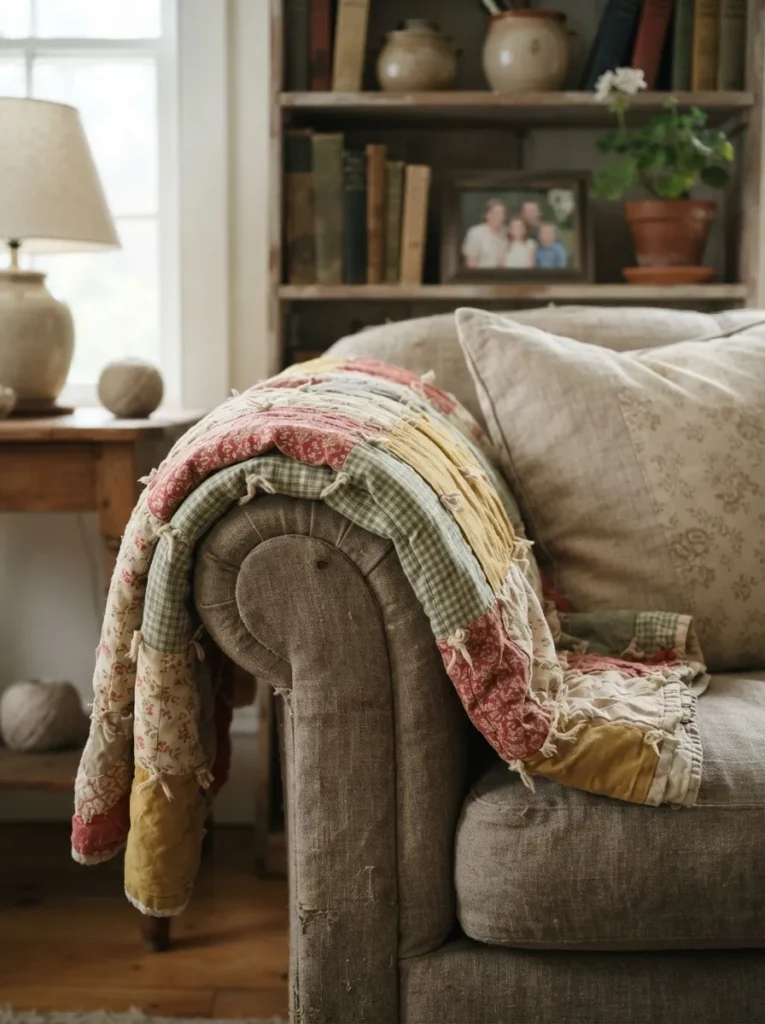
What it looks like: Layered, faded patchwork folded loose across a sofa arm.
Why it works: Patchwork’s small repeating color blocks create visual rhythm without demanding attention the way a large-scale print would texture and pattern working at a whisper instead of a shout.
How to copy it: Choose a hand-quilted or hand-tied throw over a machine-printed “patchwork-style” fabric the slight irregularity in stitching is what reads as authentic rather than costume.
Best for: Sofas and beds that need warmth and pattern without committing to new upholstery.
Important: Genuine antique quilts are often too fragile for daily use display them folded over a quilt rack instead of draping them where they’ll take wear, and save a sturdier reproduction for actual lounging.
8. Brass Wall Sconces
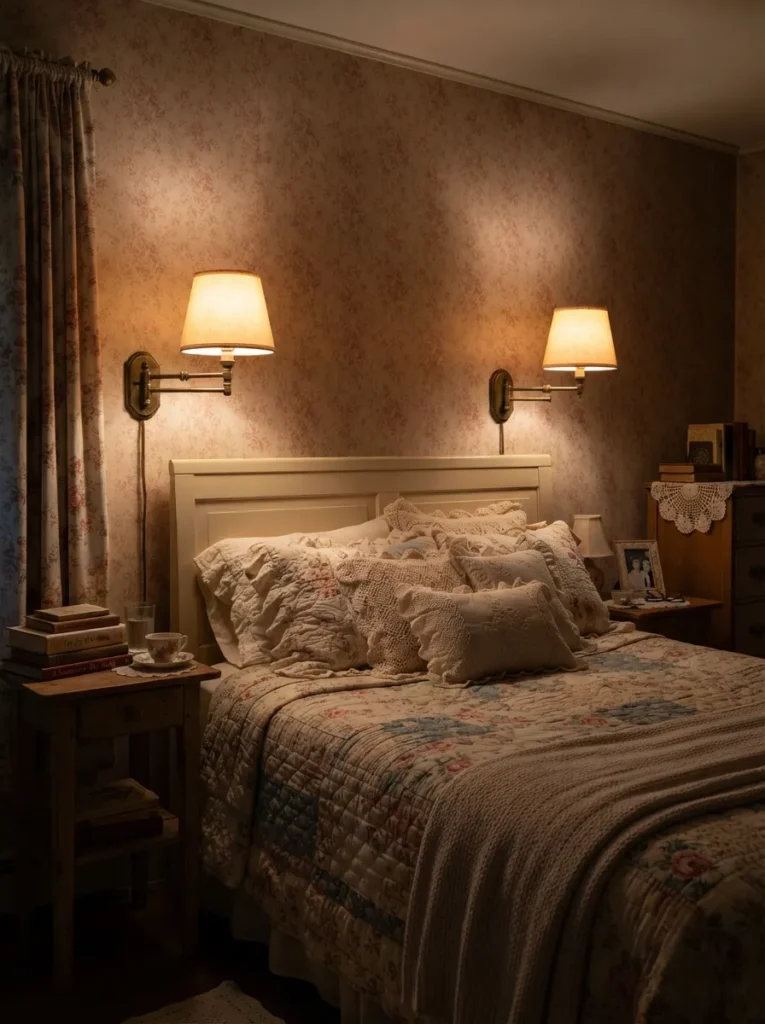
What it looks like: Warm, low-glow fixtures that pool light instead of flooding it.
Why it works: Wall-mounted lighting frees surface space for collections below, and brass reflects warm-toned light rather than the cool cast of nickel or chrome a material choice that shapes the whole room’s temperature.
How to copy it: Install swing-arm brass sconces flanking a bed or reading chair instead of relying on a single overhead fixture, and use a warm 2700K bulb to keep the glow amber.
Best for: Small bedrooms or reading nooks short on nightstand space.
Small-Space Tip: Swing-arm sconces free up an entire nightstand’s worth of surface area ideal for rooms too tight for a lamp and a stack of books.
The next idea is easy to overlook and it costs almost nothing.
9. Curio Cabinet for Collectibles
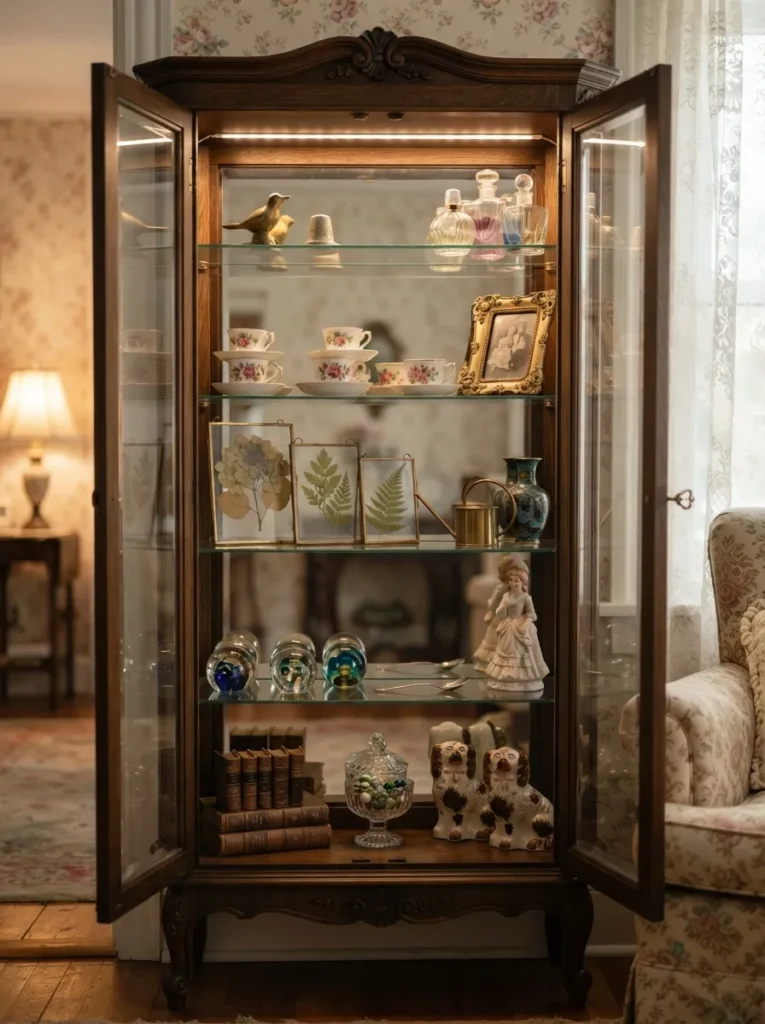
What it looks like: A storied, glass-walled case holding a lifetime of small objects.
Why it works: A curio cabinet contains collections behind glass, which prevents small objects from reading as clutter visual containment is what separates “curated” from “messy.”
How to copy it: Group objects in odd numbers, three or five per shelf, rather than even, and leave visible negative space so the eye has somewhere to rest.
Best for: Anyone with an inherited or growing collection of figurines, glassware, or trinkets currently scattered around the house.
✅ Setting Up a Curio Cabinet:
- [ ] Clean the glass inside and out before adding anything
- [ ] Sort your collection into groups of 3–5 similar items
- [ ] Place tallest pieces toward the back of each shelf
- [ ] Add one unexpected object per shelf a small photo, a pressed flower to break the pattern
- [ ] Step back and view the whole cabinet from across the room before finalizing placement
Find It Online:
| Product |
|---|
| Glass curio display cabinet |
| LED strip cabinet lighting |
| Small glass display risers |
| Vintage-style porcelain figurines |
| Glass cloche display domes |
10. Collection of Mismatched Teacups
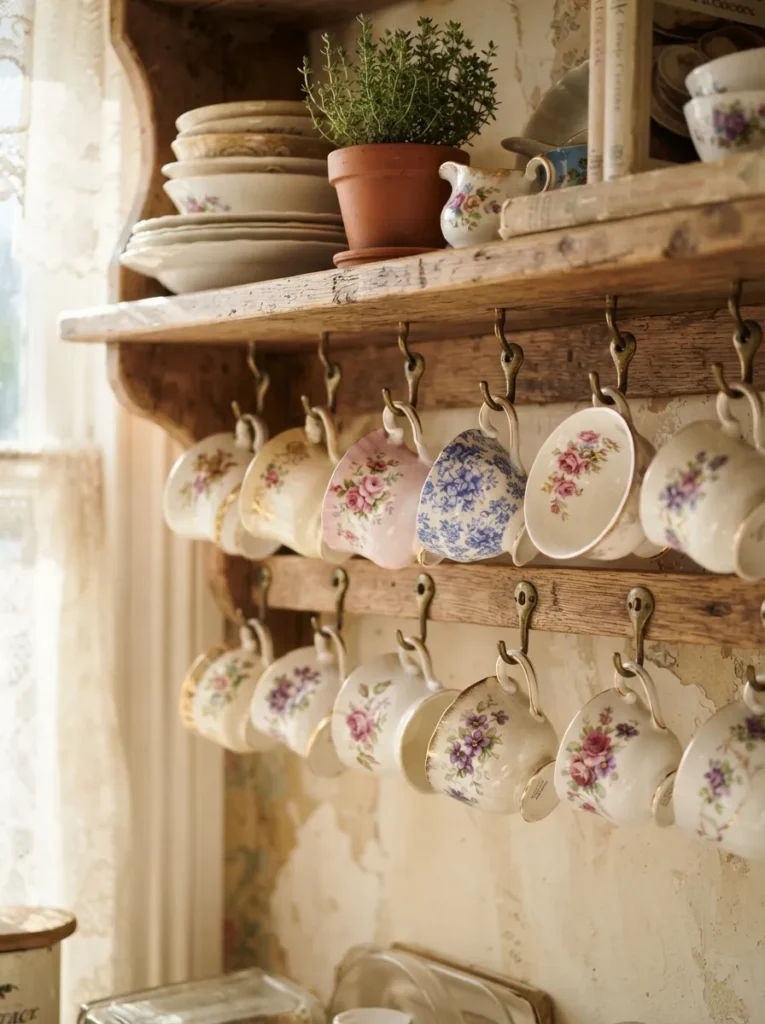
What it looks like: Dust-caught porcelain lined up like tiny characters.
Why it works: Displaying teacups on open shelving instead of hiding them in a cupboard turns everyday objects into decor same shape, different pattern, using repetition-with-variation to create interest.
How to copy it: Hang teacups from small brass cup hooks under an open shelf rather than stacking them, which keeps handles visible and prevents chipping.
Best for: Kitchens or breakfast nooks that need personality on otherwise bare shelving. Still building your collection? Our mug gift ideas roundup has plenty of stylish pieces worth adding to the mix.
11. Faded Floral Wallpaper in a Reading Nook
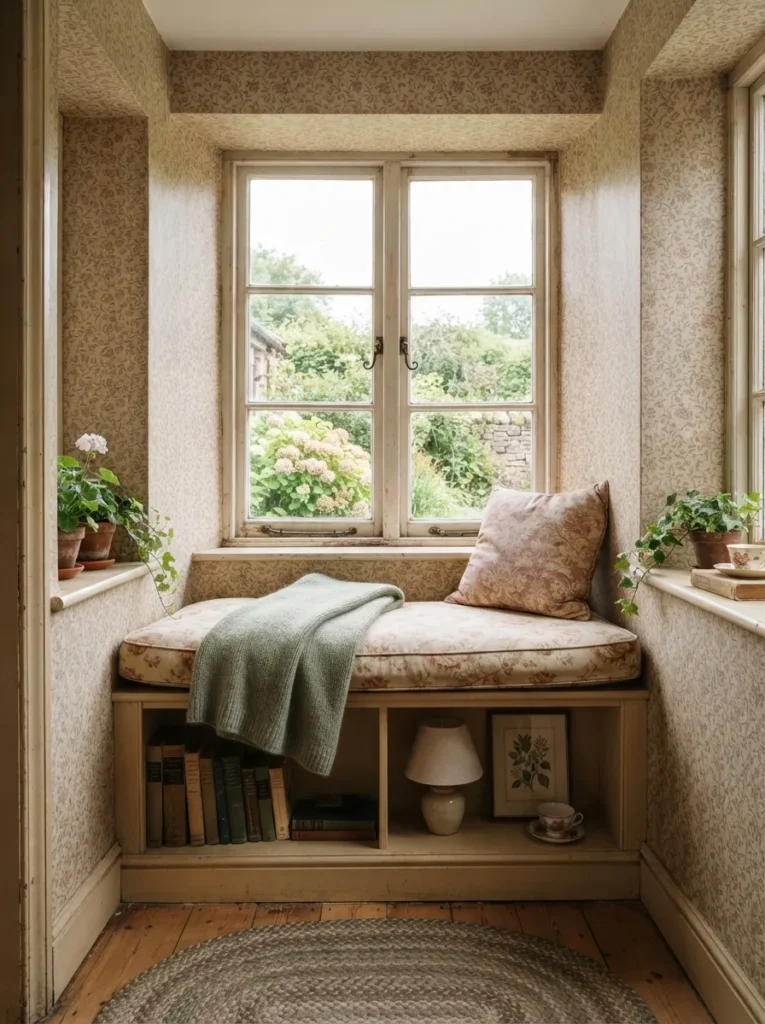
What it looks like: A softened, small-scale bloom pattern that recedes rather than shouts.
Why it works: Contained wallpaper one nook or a single wall lets you use a busier pattern than you’d dare in a full room, since scale of application matters as much as scale of print.
How to copy it: Choose a wallpaper with a muted, slightly faded-looking print rather than a bold saturated floral, and apply it only to a window nook or the back of a built-in shelf. Looking for more contained-space inspiration? Our small powder room wallpaper ideas cover the same one-wall approach in a different room.
Best for: People who love pattern but are nervous about committing to a full room.
Styling Note: Echo one flower color from the wallpaper in a single nearby accessory, a lampshade or cushion, so the pattern feels tied to the room instead of isolated.
Up next: the fabric choice that quietly ties every room in this style together.
12. Needlepoint Throw Pillows
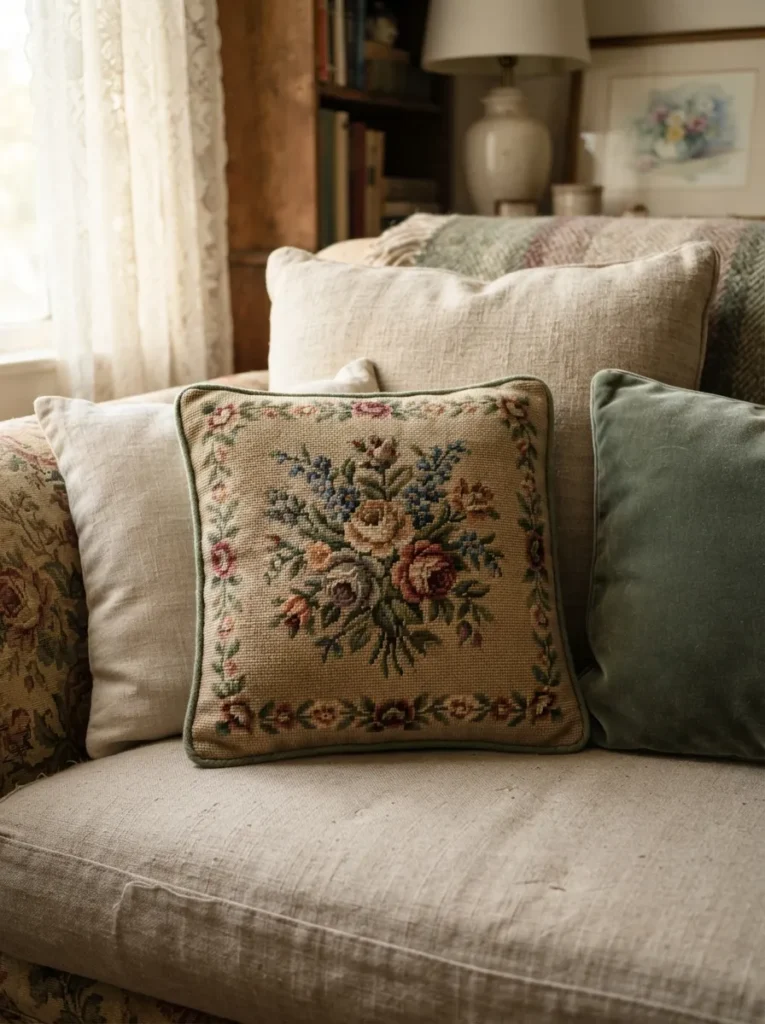
What it looks like: Raw-stitched motifs florals, fruit, small dogs propped against plain upholstery.
Why it works: A hand-stitched pillow contrasts against smooth or solid upholstery through texture, which is a cheaper way to add handmade warmth than reupholstering an entire piece.
How to copy it: Pair one needlepoint pillow with plain linen or velvet ones rather than an entire sofa of needlepoint, so the stitched piece stays the focal point instead of getting lost.
Best for: Sofas or window seats in a solid, neutral fabric that need one point of visual interest.
Pro Tip: Vintage needlepoint pillows are often sold as flat panels without backing or stuffing factor $20–$40 into your budget for finishing if you’re buying from an antique mall or online marketplace.
This idea looks simple on paper and pays off quickly.
13. Stained Glass Table Lamp
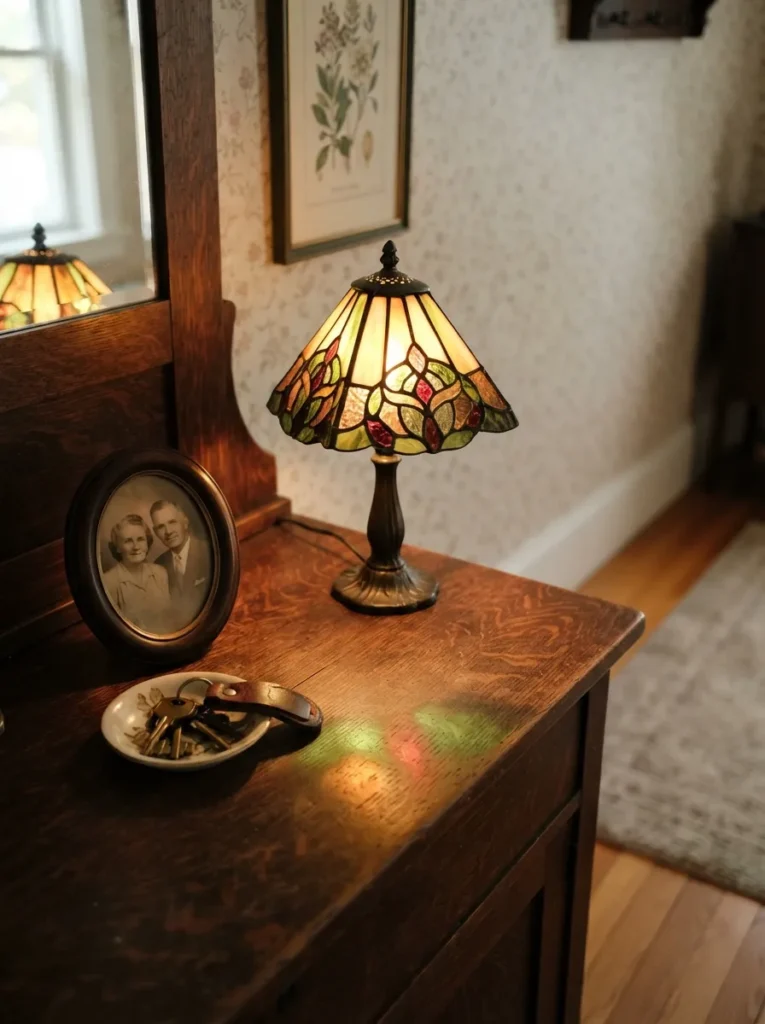
What it looks like: A luminous, jewel-toned glow filtering color across a side table.
Why it works: Colored glass filters light rather than just covering a bulb, casting tinted pools onto nearby surfaces a lighting effect flat fabric shades can’t replicate.
How to copy it: Choose a small reproduction stained-glass lamp in a muted palette amber, moss, cranberry rather than bright primary colors, which keeps it from reading as a tourist-shop piece.
Best for: A side table or entry console that needs a focal point after dark.
Budget Version: Reproduction stained-glass lamps run far cheaper than genuine Tiffany-style antiques and give nearly the same colored-light effect for a fraction of the price.
14. Antique Vanity with Oval Mirror
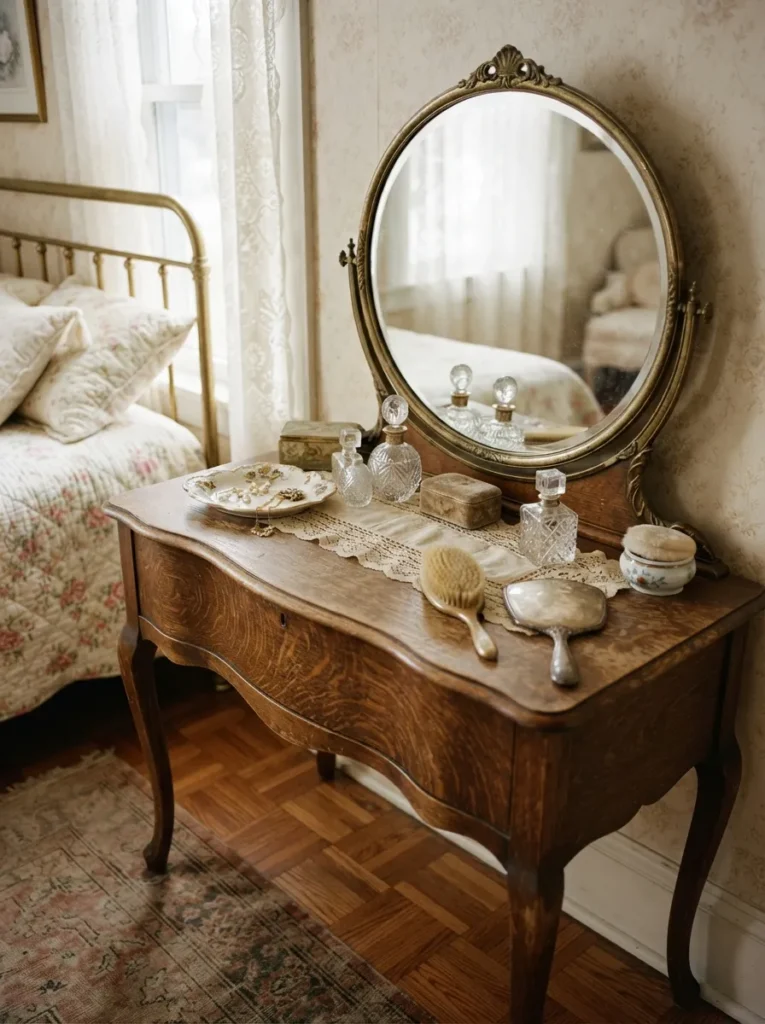
What it looks like: A worn, curved-leg vanity catching soft light in its oval mirror.
Why it works: An oval mirror’s curved frame softens the straight lines common in modern furniture, and vanities pull double duty as function and focal point a proportion trick that finishes a bedroom corner.
How to copy it: Refinish a secondhand vanity with a light wax rather than heavy paint if the wood grain is in good shape natural wood ages better with this style than a glossy painted finish.
Best for: Bedrooms with an awkward corner that needs both function and visual anchor. Not sold on oval? Our bathroom mirror ideas guide covers plenty of other shapes that work just as well in a bedroom.
Mistake to Avoid: Skipping a test patch before waxing old wood can trap old finish residue under the new coat always sand lightly and wipe with mineral spirits first.
Find It Online:
| Product |
|---|
| Antique-style vanity table |
| Oval wall mirror with brass frame |
| Tufted vanity stool |
| Crystal perfume bottle set |
| Small jewelry dish |
15. Vintage Mantel Clock
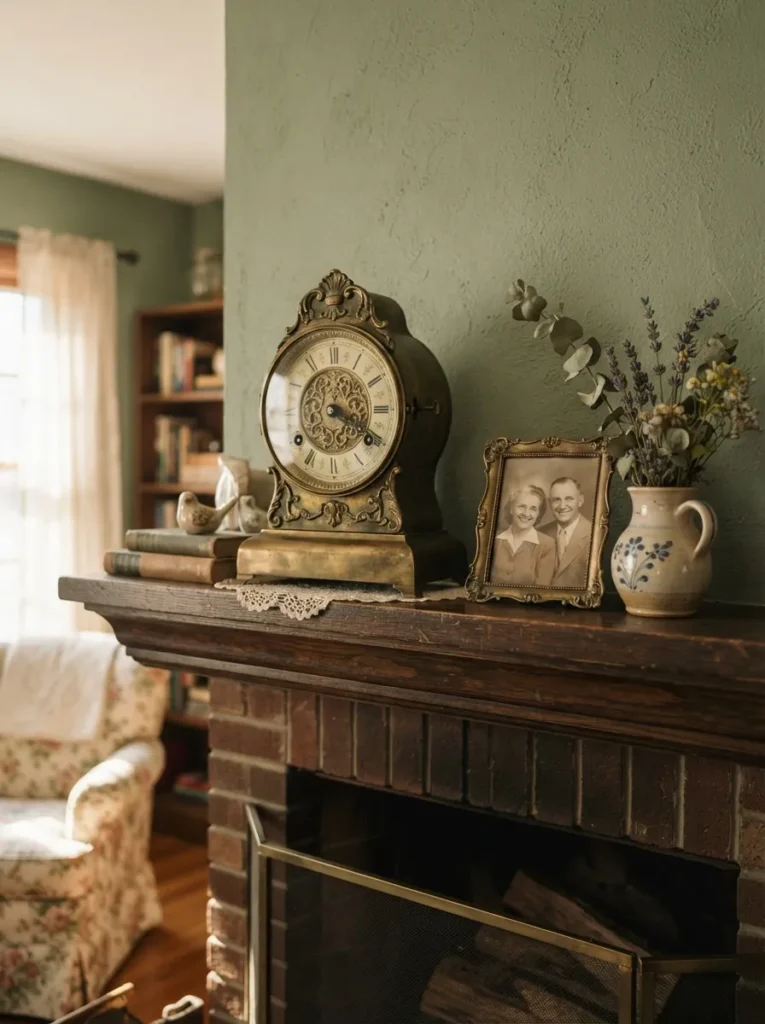
What it looks like: A quiet, ticking centerpiece anchoring a mantel or shelf.
Why it works: A mantel clock provides a natural focal point at eye level center the tallest or most detailed object first, then build outward, a rule of thumb for styling any mantel or shelf.
How to copy it: Place the clock slightly off-center rather than dead-center, then balance the opposite side with a shorter grouping, a framed photo and a small vase, instead of matching height exactly.
Best for: Mantels, bookshelves, or console tables that currently feel empty or unbalanced.
Important: Wind-up mechanical clocks need weekly winding to keep time if you want the look without the upkeep, quartz reproduction clocks are visually identical from more than a few feet away.
This next one is easy to skip and it’s the one guests notice first.
16. Nesting Tray Tables for Small Spaces
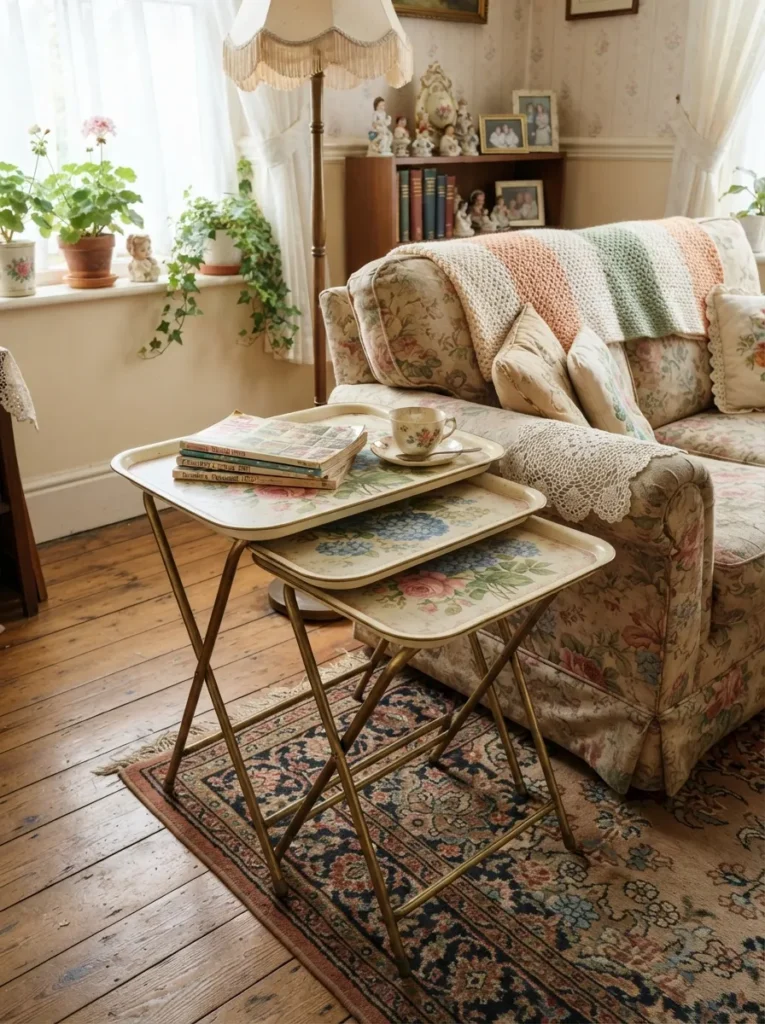
What it looks like: Stacked, folding tables tucked flush against a wall.
Why it works: Tray tables solve the small-space problem of needing surface area without a permanent footprint nested together, they take up the space of one table instead of three.
How to copy it: Look for a set of three vintage folding tray tables with a floral or scenic print top, and store them nested in a corner or beside a sofa, pulling out only the ones you need.
Best for: Small apartments or studio living rooms without space for a full coffee table.
Small-Space Tip: Use the smallest table as a bedside surface in a studio apartment where a full nightstand won’t fit.
My Views:
Here’s something most guides won’t tell you: grandma-style rooms usually have one “wrong” object in them a plastic remote caddy, a modern lamp, a mismatched throw and it’s what keeps the room from feeling like a museum. In actual project work, a client’s living room finally clicked not when we added an eleventh vintage piece, but when we left her son’s slightly ugly beanbag chair right where it was.
17. Warm Butter Yellow Kitchen Nook
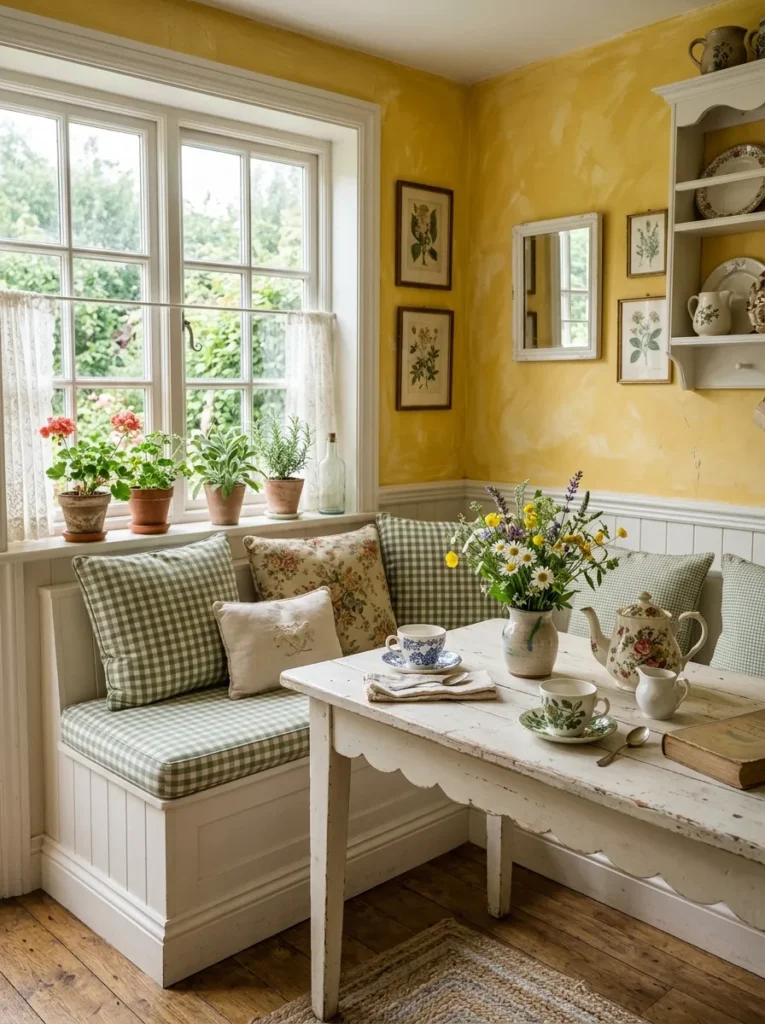
What it looks like: A sun-warmed corner that glows even on overcast days.
Why it works: Butter yellow has enough gray mixed in to avoid reading as a nursery color, and warm yellows make north-facing rooms feel sunlit even without direct light a color-temperature trick worth using in darker kitchens.
How to copy it: Paint just the breakfast nook or a single banquette wall rather than the full kitchen, and pair it with white trim to keep the yellow from overwhelming the space.
Best for: North-facing kitchens or nooks that read cold or dim for most of the day.
Quick Win: A can of sample-size paint covers most breakfast nooks test the color on foam board first so you can move it around the room before committing to the wall.
18. Chintz-Upholstered Armchair
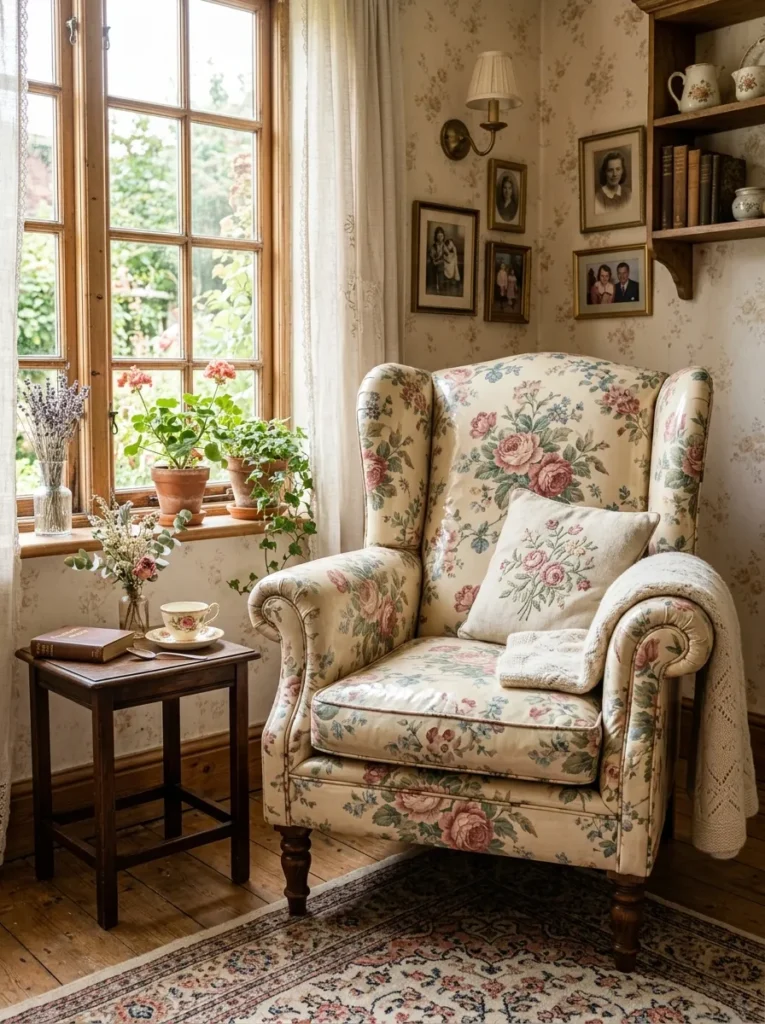
What it looks like: Layered floral fabric catching light along every fold.
Why it works: Chintz’s glazed cotton finish reflects light slightly differently than matte fabric, which is why it reads as more special-occasion than a flat floral print a finish detail that’s easy to miss but changes the whole feel.
How to copy it: Choose a chintz with a cream or ivory ground rather than white the slightly warmer base color ages better and hides light wear over time.
Best for: A single statement chair in a living room or bedroom full-room chintz is a much bigger commitment.
Warning: Glazed chintz can lose its sheen if cleaned with the wrong product always spot-test any cleaner in a hidden spot first, since some finishes are damaged permanently by standard upholstery cleaners.
Last few ideas and one of them ties the whole house together.
19. Gallery Wall of Vintage Family Photos
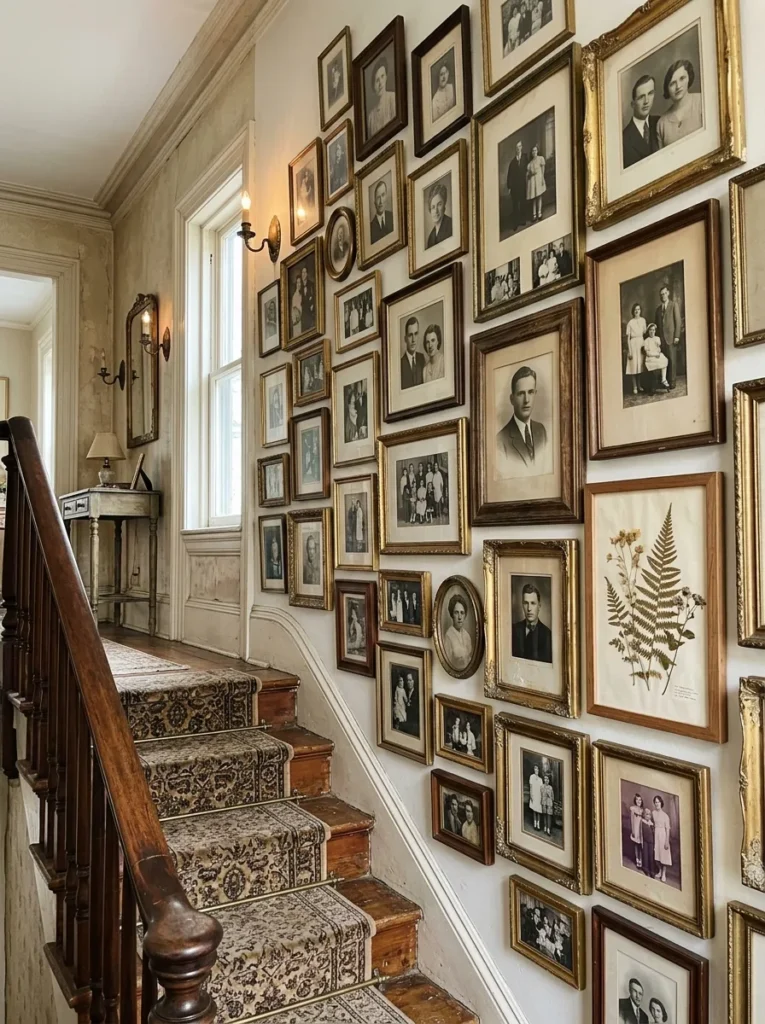
What it looks like: Layered, mismatched frames climbing a stairwell wall.
Why it works: Mixing frame finishes within one gallery wall uses variety-with-repetition same photo-and-frame format, different finishes to avoid a matchy, showroom look.
How to copy it: Lay frames out on the floor first in a loose grid, mixing horizontal and vertical orientations, and leave 2–3 inches between frames rather than crowding them edge to edge.
Best for: Stairwells, hallways, or any long wall that currently feels bare and unused.
Styling Note: Include at least one empty or mismatched frame with a pressed botanical instead of a photo an all-photo wall can start to feel more like a memorial than a design feature.
20. Skirted Occasional Table
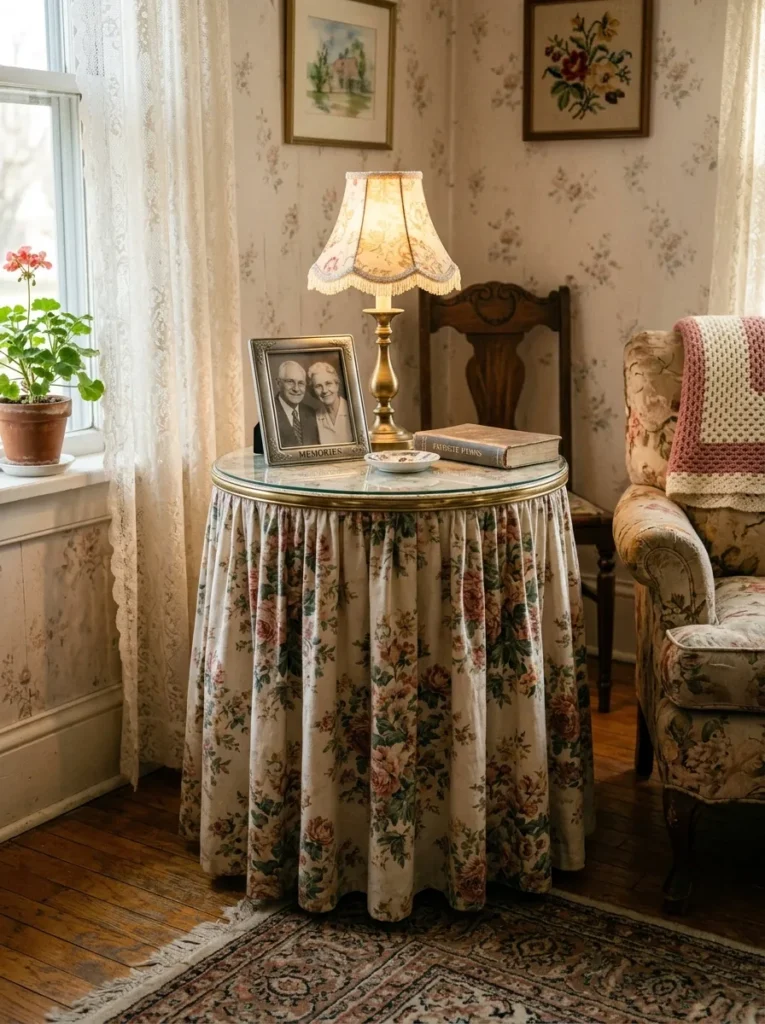
What it looks like: A soft, fabric-draped silhouette hiding storage beneath.
Why it works: A floor-length skirt turns a plain table into both a display surface and hidden storage, and the fabric softens what would otherwise be another hard-edged furniture leg a proportion and function trick in one move.
How to copy it: Use a round table base with a floor-length skirt in a small floral or gingham cotton, then top it with a round piece of glass to protect the fabric and add a display surface.
Best for: Small living rooms that need extra hidden storage for blankets, books, or remotes.
How to Start Your Vintage Grandma House Transformation
What first? In practice, the fastest way into this style isn’t paint it’s one thrifted anchor piece. A single wingback chair, a curio cabinet, or a vanity gives the whole room a reference point everything else can build around, so start there before touching walls.
What mistake? The most common fixable error is mismatched finishes brass here, chrome there, nickel somewhere else. Pick one metal finish per room and stick to it; the eye clocks inconsistent hardware faster than almost anything else in a space.
Three items under $50: A set of crocheted lace coasters, a pair of brass cup hooks for hanging teacups, and a secondhand ceramic vase from a thrift shop will all get you most of the way to the look for well under $50 combined.
Timeline and budget: A single anchor piece and a paint refresh can happen in a weekend for $150–$400. A full room, chair, lighting, wallpaper nook, and accessories, realistically takes four to eight weekends and $800–$2,000 depending on how much you thrift versus buy new.
Ready to Create Your Dream Vintage Grandma House?
These 20 ideas cover color, material, and layout, from a single painted wall to a fully styled curio cabinet, so there’s an entry point no matter your budget. Transformation here is incremental one anchor chair or one wallpapered nook is enough to start, and the rest can follow over months.
Today, pick the cheapest idea on this list, maybe the crocheted table runner or the teacup hooks, and get it in place this weekend. The whole philosophy of this style is that a room gets better with time, not with a single big purchase, so you’ll feel that same unhurried warmth settle in as your space fills up. Pin your favorites now, especially the ones that made you pause, since this is a style best built one small, well-loved object at a time.
Continue the Look
- 12 Vintage Grandma Living Room Ideas for Effortless Cottage Charm
- 18 Grandmillennial Bedroom Ideas for a Soft, Storied Retreat
- 10 Thrift Store Shopping Tips for Building a Vintage Grandma Home