9 Creative Craft Night Themes You’ll Actually Want to Host
A craft night theme is a shared creative activity dye, clay, candles, collage built around one material and one evening, so everyone leaves with something they made with their own hands. This guide gives you 9 creative craft night themes, each with a supply list, a hosting tip, and a scene you can pin for inspiration.
There’s a particular kind of quiet that settles over a table full of hands working wax cooling, dye setting, clay softening under warm light. It feels unhurried, a little messy, and entirely present in a way that scrolling never is. The best craft nights lean into texture and low light instead of fighting them, letting the mess become part of the mood, not something to hide before guests arrive. Here are 9 ideas worth saving and stealing.
Why Creative Craft Night Themes Work So Well
Craft night themes descend from a long line of gathering-around-a-task traditions quilting bees, letterpress workshops, and the informal “make and take” parties that circulated through American homes in the 1950s. What sets a modern craft night apart from a plain get-together is structure: one material, one technique, one takeaway object, so nobody stands around unsure what to do with their hands.
The materials that anchor a good craft night are tactile and forgiving: soy wax in warm amber, air-dry terracotta clay, embroidery floss, indigo dye, and reclaimed cedar. Color-wise, hosts tend to build around a single dominant tone per night a sunset coral-and-marigold palette for a dye night, or a deep indigo-and-bone palette for a resist-dye evening rather than mixing several unrelated color stories at once.
The current pull toward craft nights tracks with a broader shift away from screen-heavy socializing. Pinterest search data has shown steady growth in “slow living” and “analog hobby” terms, and after years of video-call socializing, people are actively searching for reasons to sit at a table with friends and make something they can hold. A craft night answers that directly, with a built-in reason to show up.
Small spaces can absolutely host these nights a single folding table, a drop cloth, and one material family is often all a studio apartment needs. The real limit isn’t square footage, it’s ventilation: resin and strong-fume dyes need airflow that a small, closed room may not have, so those two crafts are better saved for a larger space or an open window.
Craft Night Themes at a Glance
| Element | Detail |
|---|---|
| Philosophy | Tactile, hands-on connection over screen time |
| Key Materials | Soy wax, air-dry clay, embroidery floss, reclaimed cedar |
| Key Colors | Warm amber, terracotta, indigo, dusty sage |
1. Sunset Ombré Tie-Dye Night
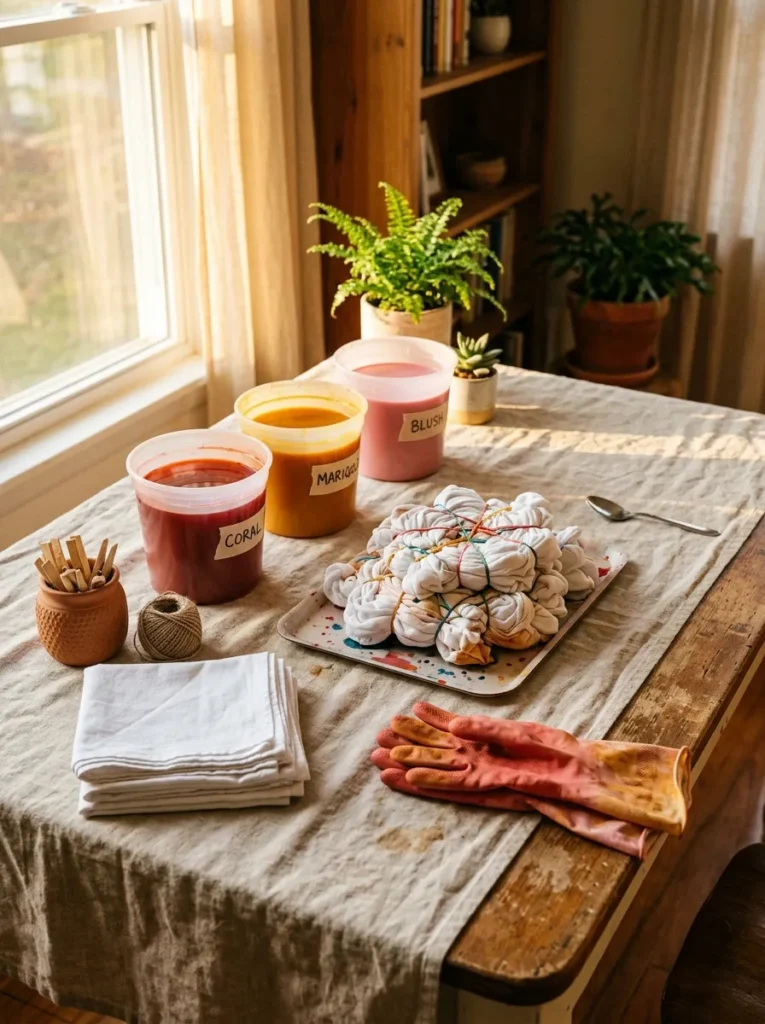
Vibe: The table feels sun-warmed, like the color itself is radiating heat back at the room.
Why it works: Ombré dyeing relies on gradient theory moving from light to saturated tone in one continuous direction reads as intentional rather than accidental, the same principle that makes a sunset photograph feel composed instead of chaotic.
Using fiber-reactive dye instead of all-purpose dye also keeps the coral and marigold tones from muddying into brown once they overlap.
How to get it: Pre-soak plain cotton bandanas or tote bags in soda ash fixer for 20 minutes before guests arrive, then dip each item in three dye baths pale coral, marigold, and deep sunset orange in that order, letting each layer set for two minutes before the next.
Quick Win: Buy pre-cut, pre-hemmed white cotton bandanas in bulk so no one spends craft time trimming fabric edges.
Shop the Look
| Product |
|---|
| Fiber-reactive tie-dye kit sunset colors |
| Plain white cotton bandanas bulk pack |
| Terracotta utility jar with lid |
| Rubber dip gloves reusable set |
| Linen table runner ivory |
2. Vintage Clay Pinch Pot Night
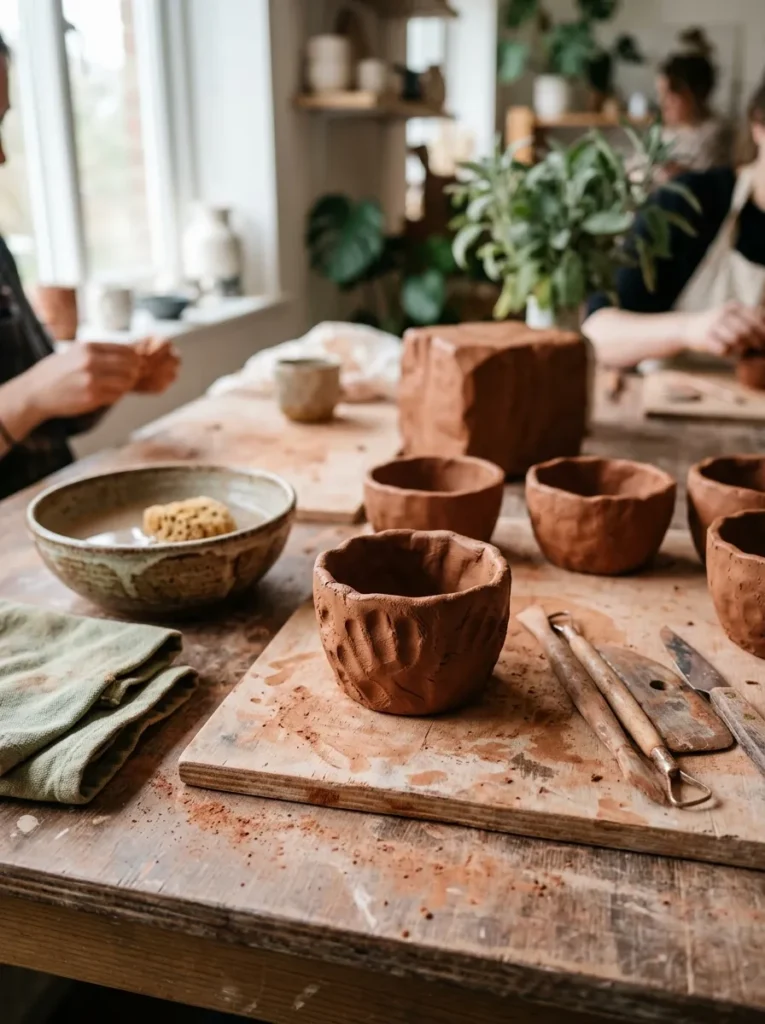
Vibe: Working the clay feels grounded, slow, and satisfyingly imperfect.
Why it works: Pinch pots lean on material honesty as a design principle every dent and fingerprint stays visible in the final piece, which means imperfection reads as character instead of a mistake to correct.
Air-dry terracotta clay also holds a warmer, earthier tone than the cooler stoneware clay used in kiln-fired pottery, which suits a casual home setup better.
How to get it: Give each guest a fist-sized ball of air-dry terracotta clay and one simple wooden rib tool, and set a 20-minute timer so nobody over-thins the walls of their pot past the point where it can hold its shape while drying.
Shop the Look
| Product |
|---|
| Air-dry terracotta clay block set |
| Wooden pottery rib tool set |
| Small stoneware water bowl |
| Canvas clay work mat |
| Natural bristle clay dusting brush |
3. Golden Hour Candle Pouring & Scent Bar Night
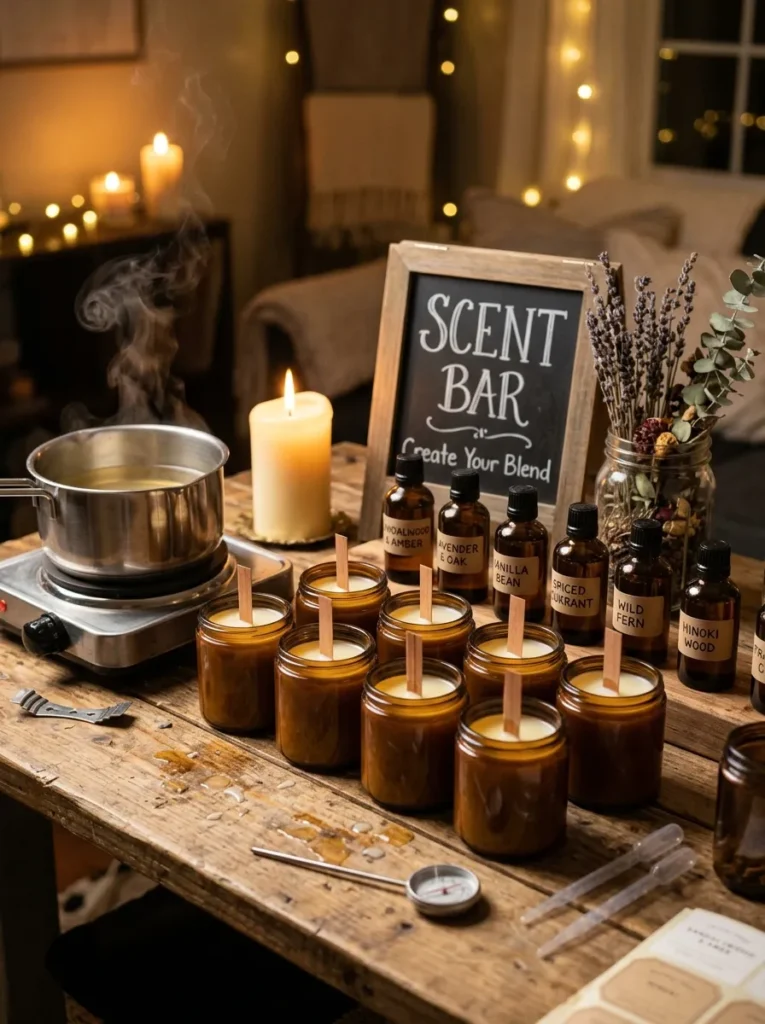
Vibe: The room feels hushed, lit only in warm amber tones from the wax itself.
Why it works: Layering scent is its own design skill pairing a base note like sandalwood with a lighter top note like lavender creates depth the same way layering textures does visually, so the candle reads as considered rather than one-dimensional.
Wooden wicks also throw a softer, more ambient light and a gentle crackle that pairs naturally with a low-lit evening.
How to get it: Pre-measure single-scent fragrance oil doses into small paper cups before guests arrive, capped at 1 ounce per 16 ounces of soy wax, so nobody accidentally over-scents their pour and the room doesn’t turn overwhelming.A finished jar also travels well if you’re pulling together handmade gift basket ideas later in the season one poured candle is an easy anchor item.
Quick Win: Buy pre-cut wooden wicks with adhesive tabs so no one has to fuss with wick glue or centering tools.
Shop the Look
| Product |
|---|
| Amber glass candle jars set of 6 |
| Soy candle wax flakes bulk |
| Wooden candle wick pre-tabbed set |
| Fragrance oil sampler set warm scents |
| Small chalkboard label signs set |
4. Reclaimed Wood Floating Shelf Display Night
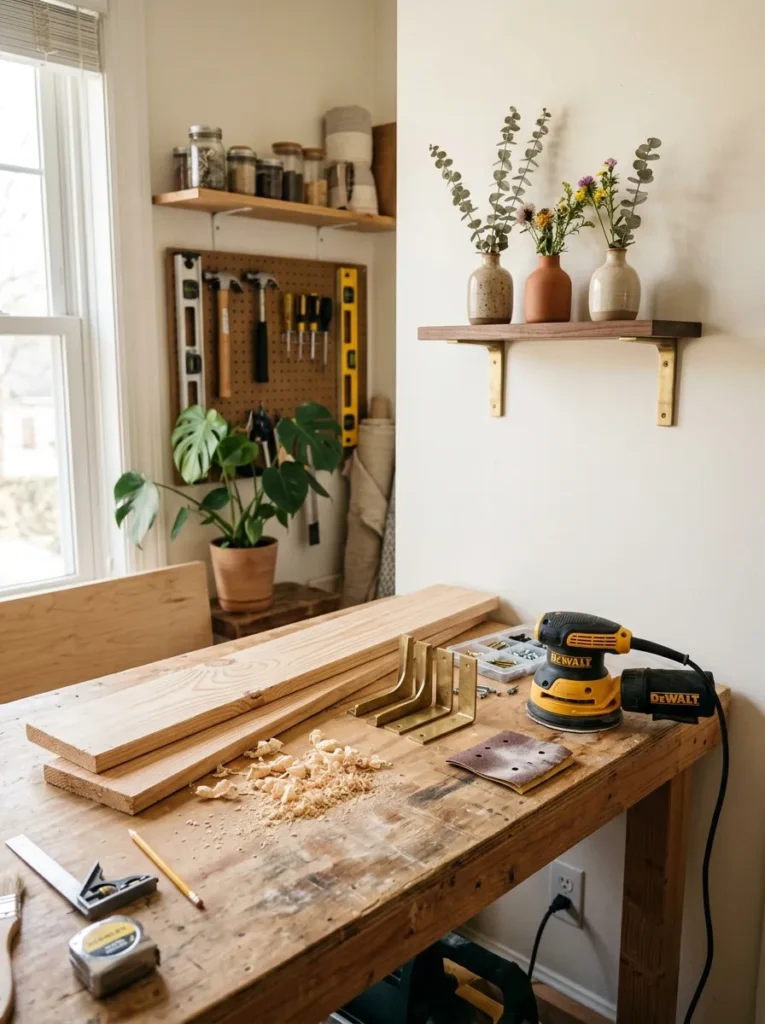
Vibe: The unfinished wood feels raw, closer to a workshop than a living room.
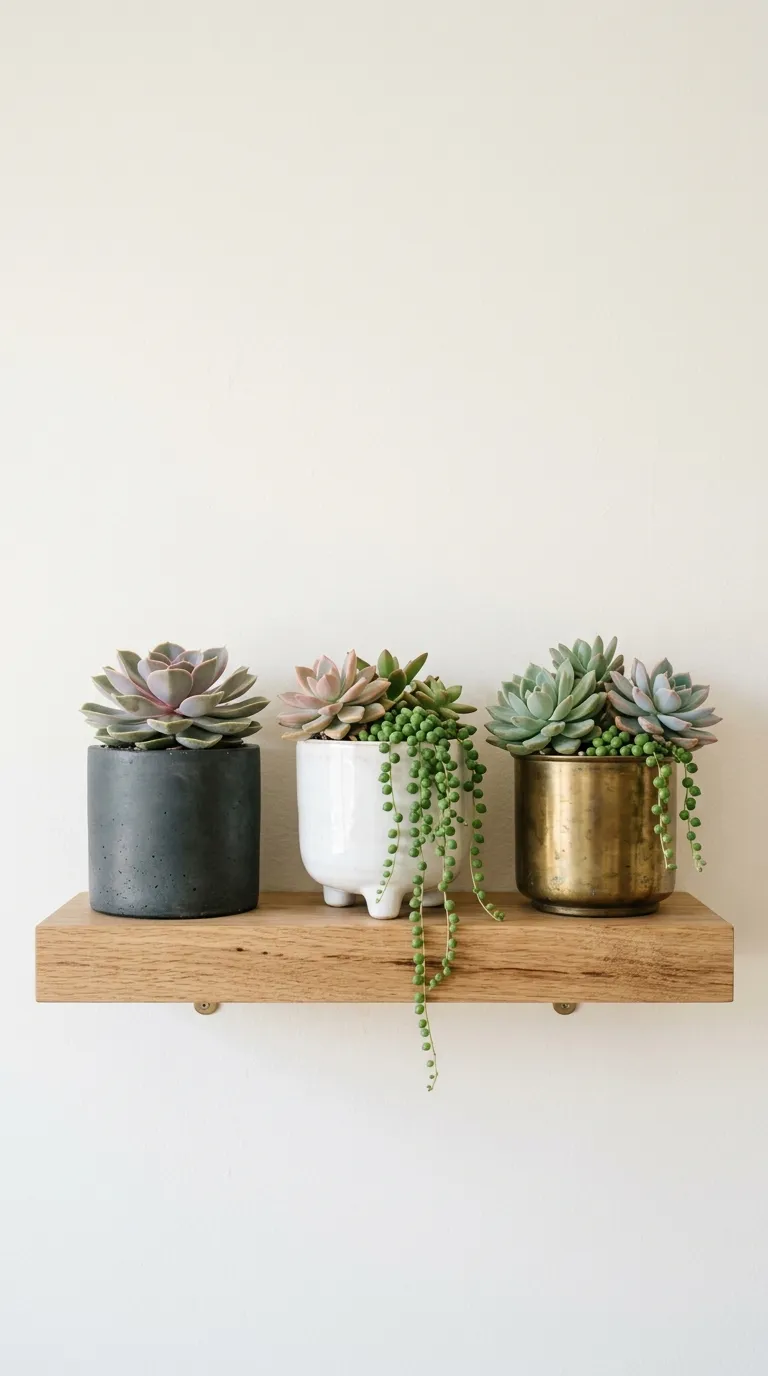
Why it works: A floating shelf plays with negative space and visual weight leaving open air below the shelf keeps a small display from feeling heavy on the wall, while limiting each shelf to three objects prevents visual clutter from crowding out the wood grain itself.
Unfinished pine also takes stain unevenly in a way that highlights grain rather than hiding it.If this reclaimed-material approach appeals to you, it’s worth browsing pallet furniture ideas for garden and patio spaces too, since the same raw-wood philosophy carries outdoors.
How to get it: Pre-cut pine boards to 18 inches before the night so guests only sand and stain, then mount with concealed brass floating shelf brackets rated for at least 15 pounds so the finished piece holds real books or ceramics.
Shop the Look
| Product |
|---|
| Unfinished pine board pre-cut 18 inch |
| Concealed floating shelf brackets brass |
| Wood stain walnut finish small can |
| Fine grit sanding block set |
| Small ceramic bud vase trio |
5. Pressed Botanical Wall Art Night
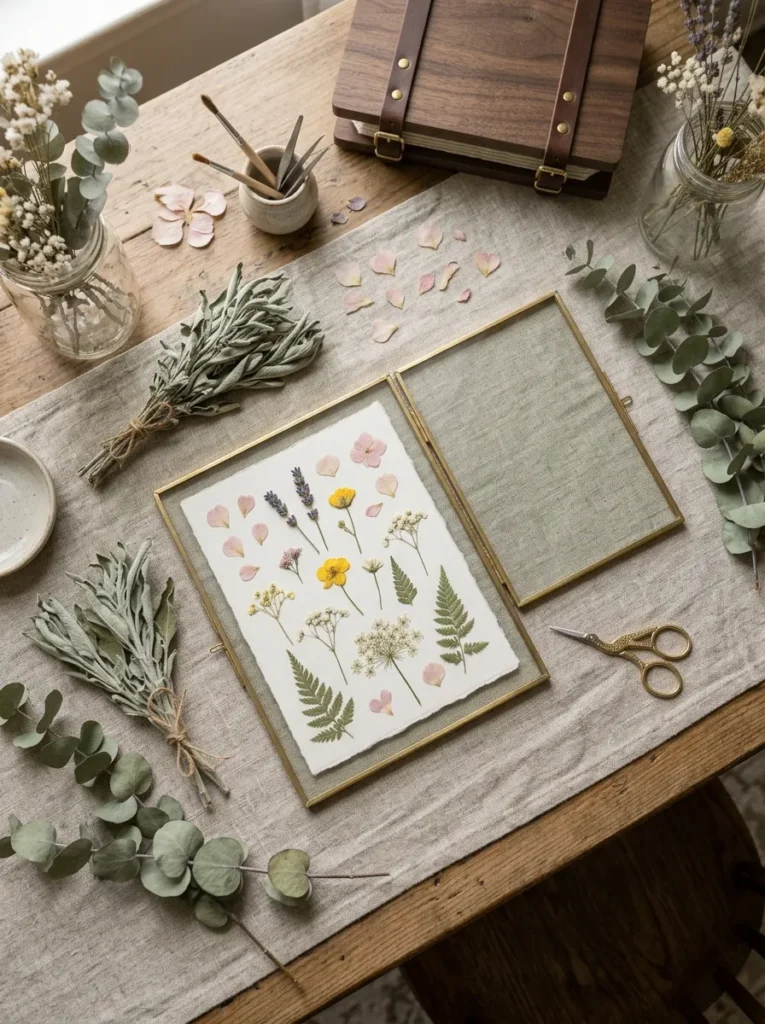
Vibe: The flattened botanicals feel still, almost frozen mid-bloom.
Why it works: Pressed botanical art relies on texture contrast the papery, flattened petal against the smooth glass frame is what gives the piece depth, so choosing a thin float-frame instead of a thick shadow box keeps that contrast visible rather than buried.
Dusty sage and dried eucalyptus also hold their color far longer than brighter flowers once pressed.If wall art is the part of this night you’re most drawn to, crochet wall hangings make a good fiber-based theme for a future night with a similar payoff.
How to get it: Press sage sprigs and small blooms in a heavy book for at least two weeks before the event, then arrange them directly against the glass of a thin float frame so light passes through the petals rather than sitting behind them.
Quick Win: Buy a set of pre-pressed dried botanicals online if the two-week press window doesn’t fit your schedule.
Shop the Look
| Product |
|---|
| Thin float glass frame set of 4 |
| Dried sage and eucalyptus stem bundle |
| Botanical flower press wooden |
| Brass detail scissors small |
| Linen table runner sage green |
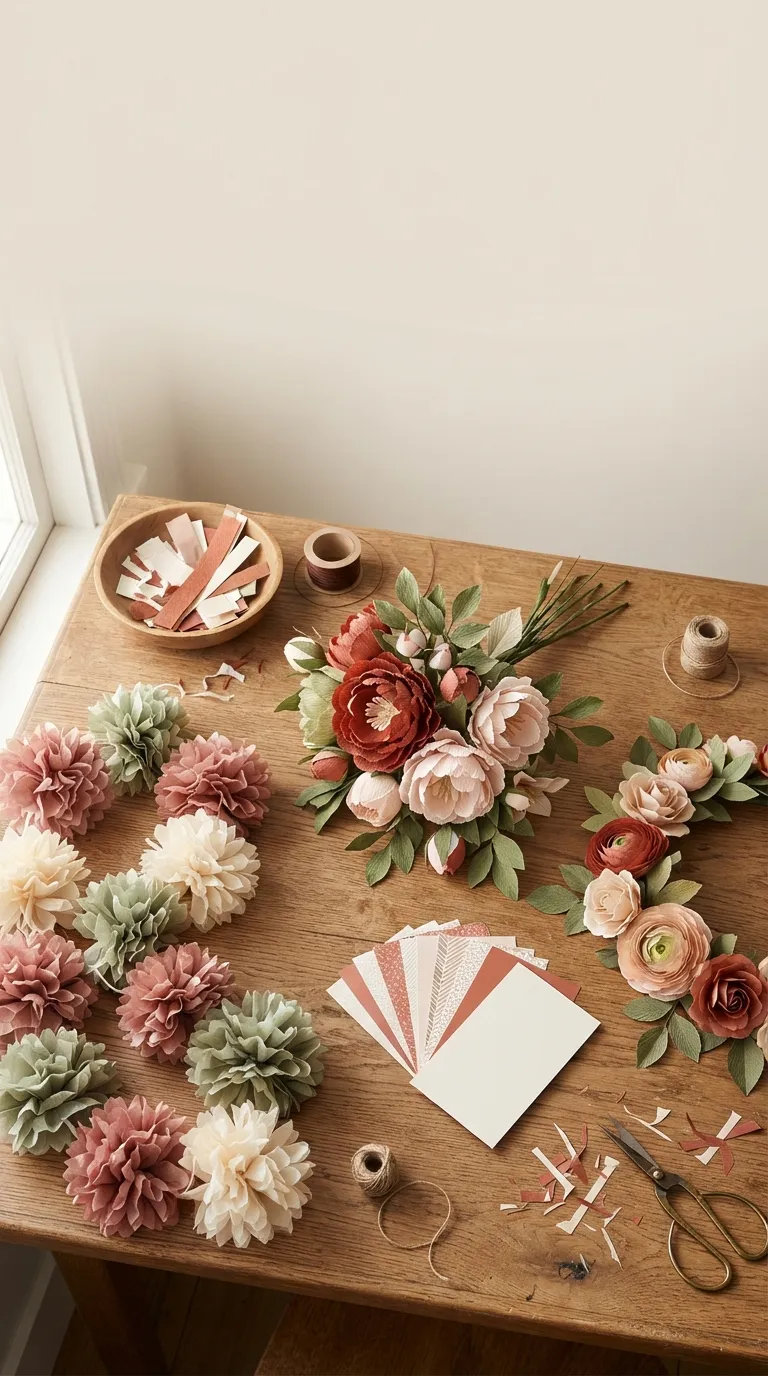
6. Multi-Station Mixed Media Collage Night
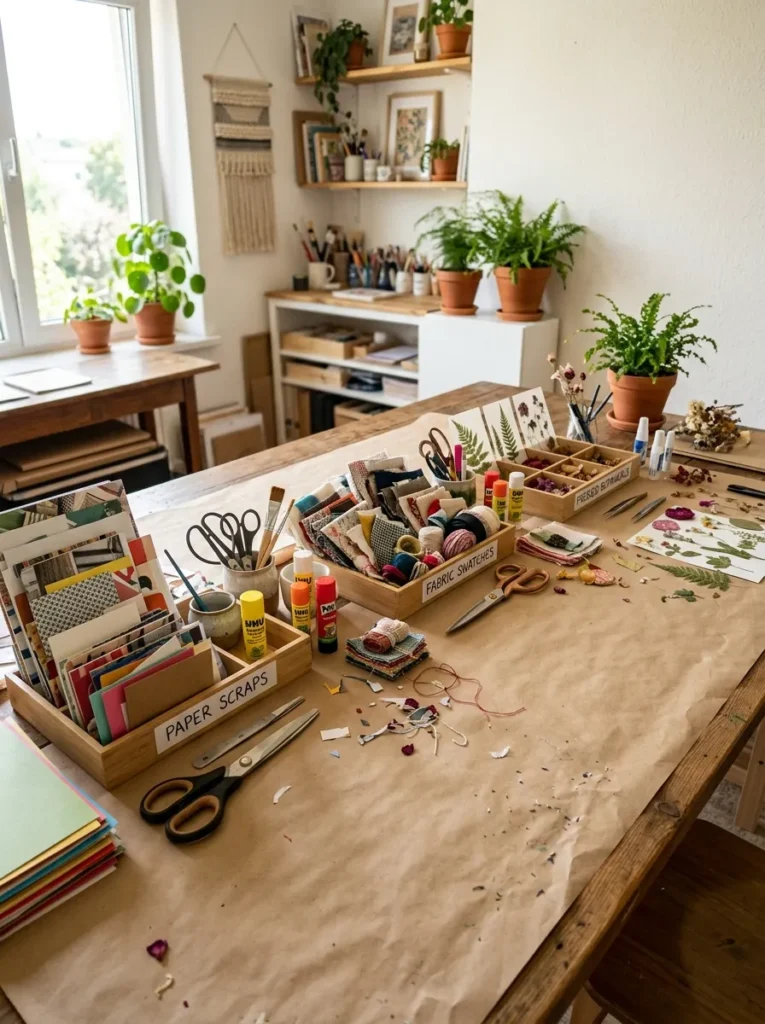
Vibe: The table feels layered, with each zone building on the one before it.
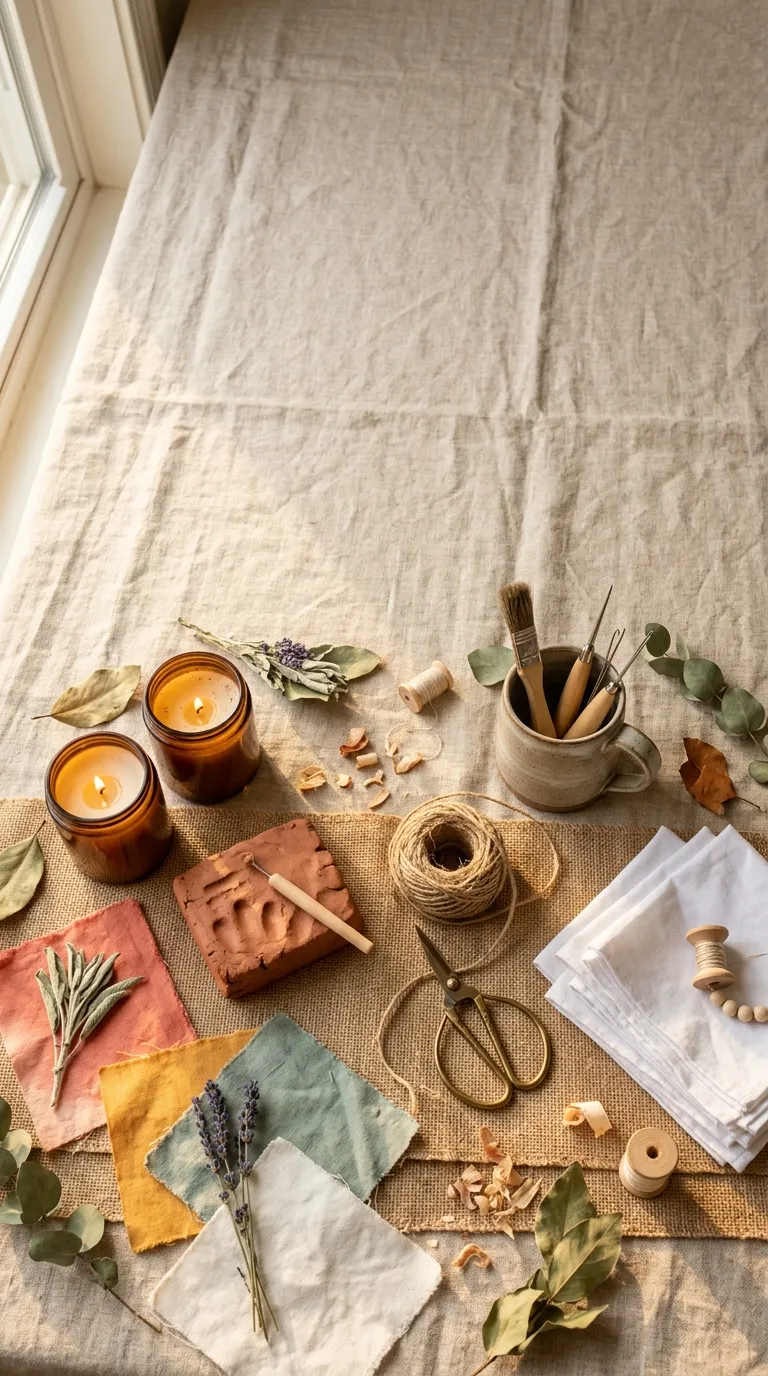
Why it works: Dividing the table into material zones is a traffic-flow decision as much as a craft one guests move from paper to fabric to botanicals in one direction, which prevents the bottlenecking that happens when every material sits in one shared pile.
Kraft paper as a table covering also keeps the layered mess from feeling chaotic, since it visually unifies three very different materials underneath it.If the paper station ends up being everyone’s favorite, a full night built around easy paper craft ideas is worth planning next.
How to get it: Set up three labeled trays paper scraps, fabric swatches, pressed botanicals in a straight line down the table so guests naturally circulate past each one instead of reaching across each other for the same bin.
Shop the Look
| Product |
|---|
| Kraft paper table roll |
| Assorted scrapbook paper pack |
| Fabric swatch remnant bundle |
| Craft glue stick multipack |
| Labeled wooden sorting trays set |
7. Apartment-Friendly Air-Dry Clay Trinket Night
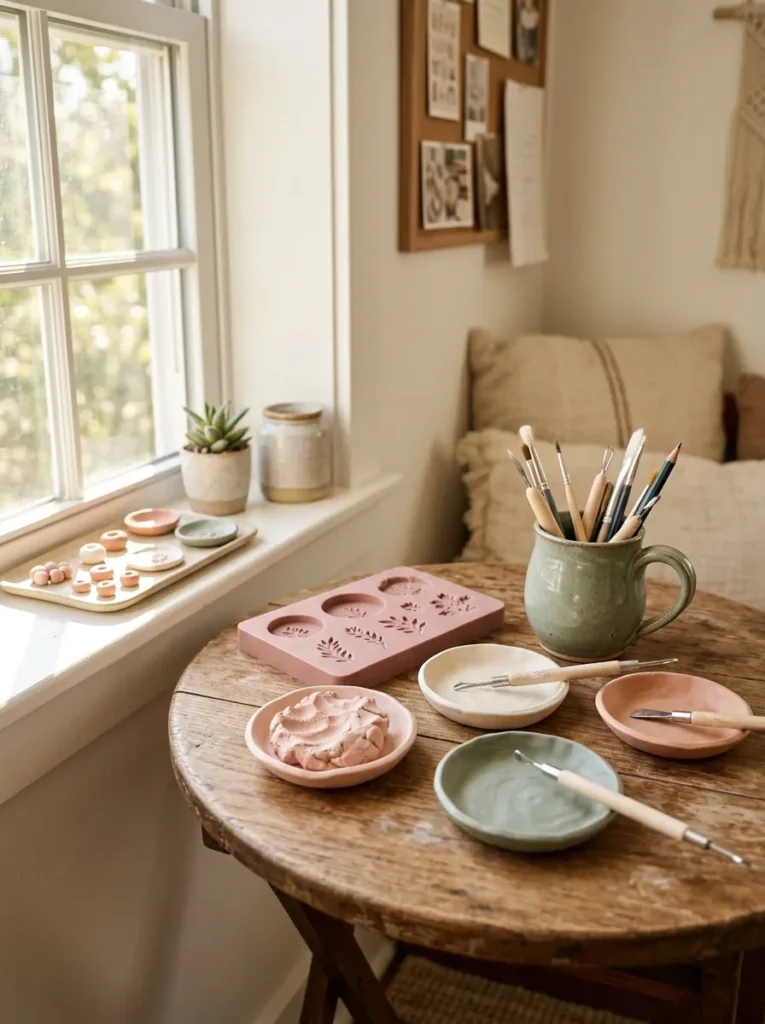
Vibe: The small table feels luminous, catching every bit of window light it can.
Why it works: Small-space crafting depends on scale a single hero mold and one small dish of clay per guest keeps the footprint tight enough for a bistro table, so the limited space itself never feels like a constraint.
Air-dry clay also needs no kiln or oven, which matters directly in an apartment without extra equipment storage.
How to get it: Give each guest one silicone trinket dish mold and a golf-ball-sized portion of air-dry clay in a single soft color, so the entire setup clay, mold, and drying tray fits on one 24-inch round table.
Quick Win: Buy a pre-made silicone trinket dish mold instead of a full mold-making kit to cut the setup down to five minutes.
Shop the Look
| Product |
|---|
| Silicone trinket dish mold set |
| Pastel air-dry clay multipack |
| Small round bistro table |
| Mini ceramic tool holder mug |
| Compact clay drying tray |
8. Moody Indigo Shibori Dye Night
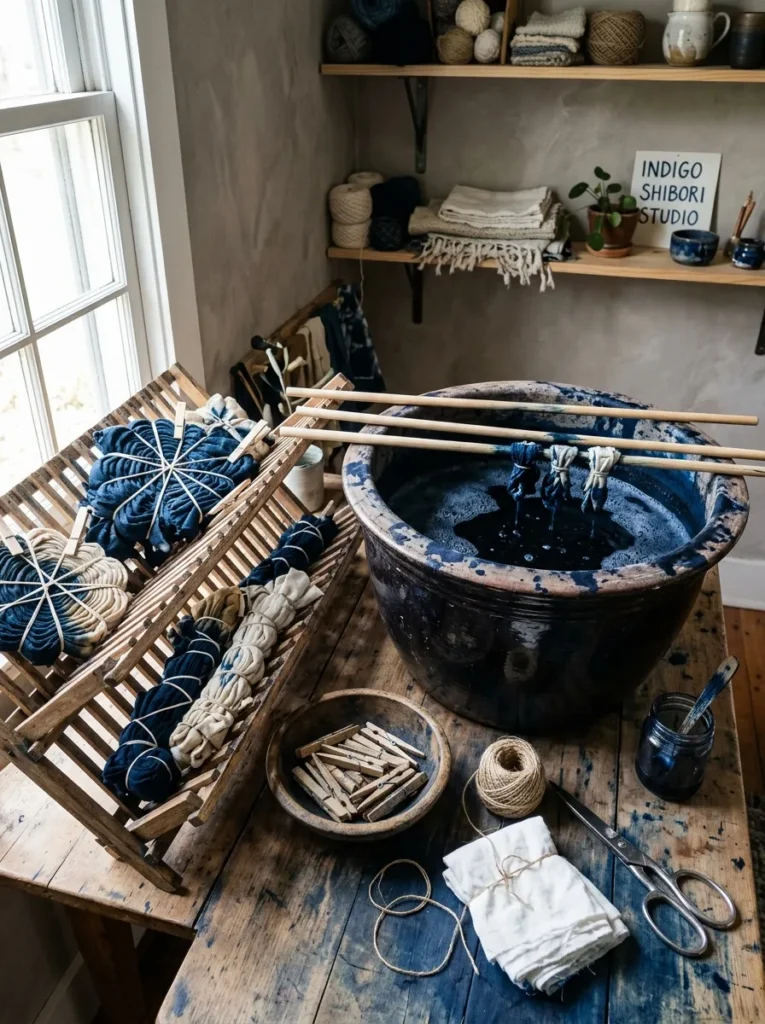
Vibe: The deep indigo vat gives the whole table a moody, concentrated feel.
Why it works: Shibori dyeing is built on value contrast the resist pattern only reads clearly when the indigo is dark enough against the bone-white fabric underneath, so under-dyeing is the single biggest reason a shibori piece looks flat instead of graphic.
Wrapping fabric tightly around a wooden dowel before dyeing is also what creates the crisp linear pattern instead of a soft blur.
How to get it: Wrap plain cotton fabric tightly around a wooden dowel, secure it with rubber bands at even 1-inch intervals, and dip the full bundle into the indigo vat for at least five minutes before unwrapping to reveal the resist pattern.
Shop the Look
| Product |
|---|
| Indigo shibori dye kit |
| Wooden dowel rods set |
| Plain cotton fabric yardage |
| Wide rubber band pack |
| Wooden clothespin set natural |
9. Earthy Scrap Wood & Twine Coaster Night
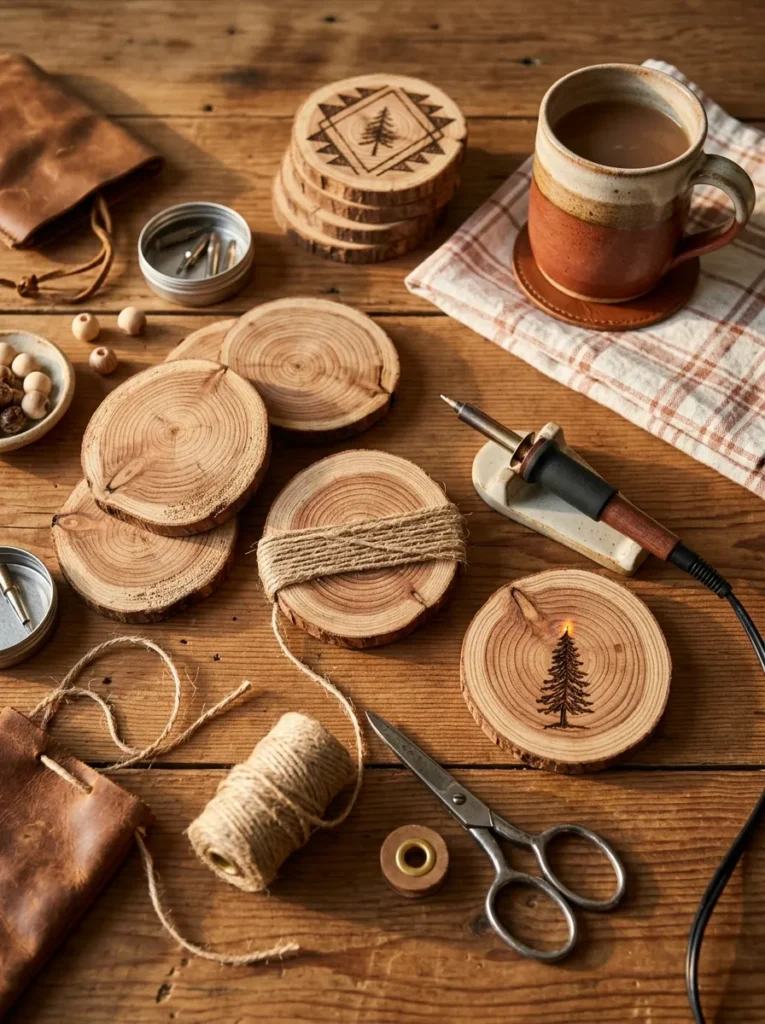
Vibe: The reclaimed wood feels earthy, grounded in something that already had a life before the table.
Why it works: Wrapping natural jute twine around a reclaimed cedar round leans on material honesty again, but paired with color the warm rust tones already in the wood grain and the natural jute both stay in the same tonal family, so nothing added needs to fight the base material for attention.
Reclaimed wood also carries small knots and cracks that a factory-cut coaster never would, which is the whole appeal.A finished set is also one of the simplest handmade gift ideas to wrap up right after the night ends, since coasters need no extra packaging to look finished.
How to get it: Pre-cut cedar rounds to 4 inches in diameter, then wrap jute twine around the outer half-inch edge using hot glue in small sections, leaving the center wood exposed so the grain stays the visual focus.
Quick Win: Buy pre-cut, sanded wood rounds from a craft store instead of cutting your own from a branch.
Shop the Look
| Product |
|---|
| Pre-cut cedar wood rounds 4 inch |
| Natural jute twine spool |
| Mini hot glue gun with sticks |
| Stoneware coffee mug set |
| Wood grain sealant spray |
How to Start Hosting Craft Nights
The one first move is choosing a single material family soy wax and pre-made glass vessels, for example rather than offering five different crafts at once.
Starting with one material means you only need to source, test, and set up one station, and it anchors the whole evening’s supply list, seating, and even the playlist around a single mood instead of splitting attention three ways.If you’re ready to make this a regular thing, setting it up in a dedicated space like a small she shed craft room means the supplies stay out and ready between nights instead of getting packed away each time.
The most common mistake is over-scheduling the craft itself, packing five techniques into one two-hour night so nobody actually finishes anything.
This breaks the relaxed pace that makes a craft night feel different from a regular party. Fix it by picking one craft with a clear stopping point a candle that’s poured and cooling, a coaster that’s wrapped and done so every guest leaves with a finished object.
Three specific items under $50 that create instant impact: a set of 6 amber glass candle jars, a bulk pack of plain white cotton bandanas for dyeing, and a 5-pound block of air-dry terracotta clay.
A first craft night can be planned and hosted in a single weekend for under $75 for six guests. A more elaborate multi-station night, with three material zones and custom labels, takes closer to two to three weeks of planning and runs $150 to $250 depending on group size.
Frequently Asked Questions About Craft Night Themes
What’s the difference between a craft night and a regular DIY party?
A craft night is built around one specific technique and one finished object per person, while a DIY party is often looser and can include several unrelated activities at once. The single-focus structure is what keeps a craft night from feeling scattered, since every guest is working toward the same clear outcome, like a poured candle or a dyed bandana.
What color palette works best for a craft night table setup?
Most hosts do best building the whole table around one dominant palette rather than mixing several. A warm amber-and-honey palette suits a candle night, while a deep indigo-and-bone palette suits a dye night, and keeping decor, supplies, and lighting within that one story is what makes the table read as intentional in photos.
How much does it cost to host a craft night for 6 people?
A simple single-material craft night for six people typically runs $60 to $90, covering supplies like soy wax, glass jars, and fragrance oil. A more elaborate night with multiple stations, like a mixed media collage setup, can run closer to $150 once paper, fabric, and botanical supplies are all included.
Can you host a craft night in a small apartment?
Yes, most craft night themes scale down easily to a single folding table or a small bistro table for two to four guests. The one real limitation is ventilation-heavy crafts like resin or strong-fume dyes, which need more airflow than a closed studio apartment can usually provide, so those are better saved for a larger space.
What’s the easiest craft for beginners to host at home?
Air-dry clay trinket dishes are typically the easiest entry point, since they need no kiln, no special tools beyond a basic mold, and no drying rack beyond a windowsill. A single silicone mold and one small block of clay per guest is enough to set up an entire beginner-friendly station in under ten minutes.
Ready to Create Your Own Craft Night?
Between the color-driven dye nights, the material-focused clay and wood themes, and the small-space-friendly trinket setups, there’s a version of craft night that fits almost any group and any space.
Starting small one material, one technique, four to six guests isn’t a compromise, it’s genuinely the better way to begin.
Tonight, pick just one theme from this list and order the single supply kit it needs, rather than trying to plan the whole lineup at once.
There’s a specific kind of satisfaction that comes from leaving a craft night with something you made with your own hands, still warm from the wax or still damp from the dye. Save your favorite theme now, so it’s ready the next time you’re deciding what to host.