20 Closet Organization Ideas That Actually Solve the Clutter Problem
A well-organized closet isn’t about matching hangers or a Pinterest-perfect shelf display it’s about opening the door and finding what you need in under ten seconds. This guide walks through 20 closet organization ideas built to fix real storage problems, from wasted vertical space to closets so jammed you’ve bought duplicates of things you already own.
There’s a particular kind of relief that comes from a closet that finally makes sense no more digging, no more guessing, no more clothes heaped on the floor. Every item gets a spot, and every spot gets used. That kind of order doesn’t take a renovation. Small, deliberate changes add up fast.
Quick Navigation
- Why Closet Organization Makes Such a Difference
- 20 Closet Organization Ideas
- How to Start Your Closet Organization Transformation
- Ready to Organize Your Closet?
Why Closet Organization Makes Such a Difference
Most closets aren’t short on space they’re short on structure. A single hanging rod at one height wastes nearly half the vertical room a closet offers, while mismatched bins and no labeling system mean minutes of searching before you’ve even picked an outfit.
Adding a second rod, swapping sagging wire shelving for solid wood or laminate, and using matching canvas or acrylic bins fixes most of the chaos without a full remodel. It works even in a narrow reach-in closet start with rod height and shelving before touching anything else.
| Best starting point | Add a second hanging rod or adjustable shelf |
| Biggest impact area | Vertical space above eye level |
| Budget to start | $40–$150 |
| Time to complete | A weekend, for one closet |
20 Closet Organization Ideas
1. Double Hanging Rods for Smarter Closet Organization
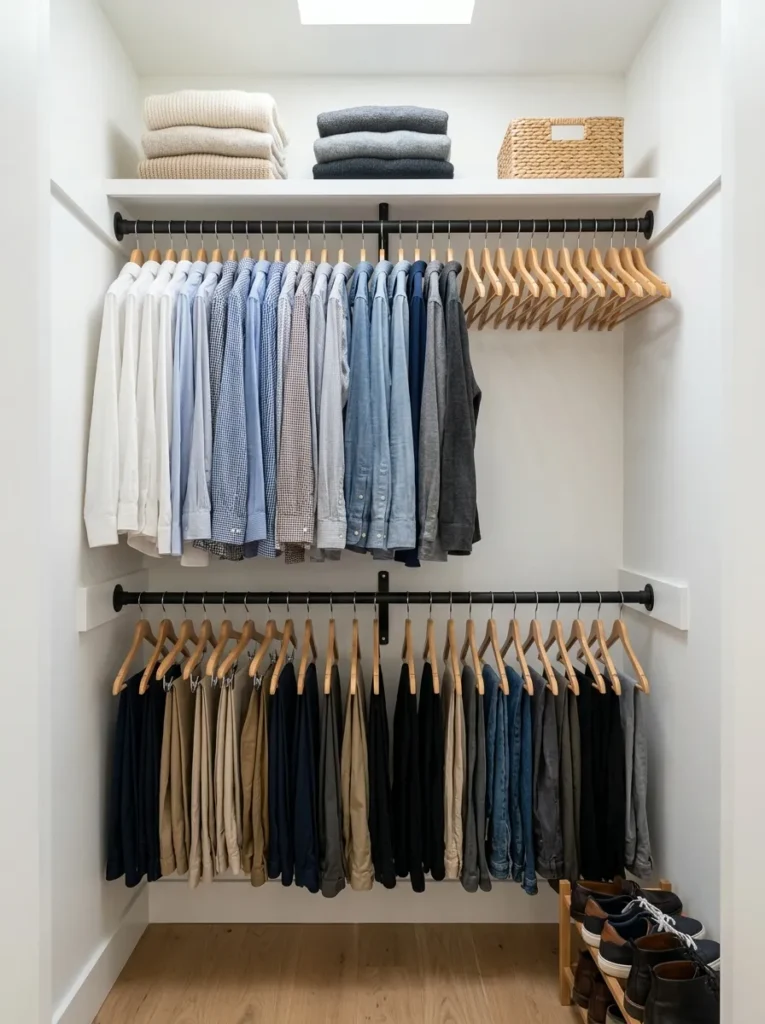
What it looks like: Two rods, mounted one above the other, split a single hanging zone into a shirt-and-jacket tier up top and a folded-length tier below.
Why it works: Most garments shirts, folded pants, blazers only need about 40 inches of hanging clearance, not the 66 inches a standard closet allows. Stacking rods captures that leftover space instead of wasting it.
How to copy it: Mount the second rod 40 inches below the first, leaving at least 6 inches of clearance for hangers to swing freely; use a stud finder before drilling. If you’re tackling a dedicated storage space rather than a bedroom closet, these craft closet ideas use the same double-rod logic for bulkier supplies.
Best for: Anyone with a single-rod reach-in closet and more clothes than hanging space.
Pro Tip: Measure your longest folded garment before setting rod height pants hung double-length need roughly 42 inches, not the standard 40.
| Shop This Look |
|---|
| Adjustable double closet rod kit |
| Matte black rod end brackets |
| Wall stud finder |
| Slim non-slip hangers, 30-pack |
| Closet rod support bracket, center mount |
2. Clear Labeled Bins for Off-Season Storage
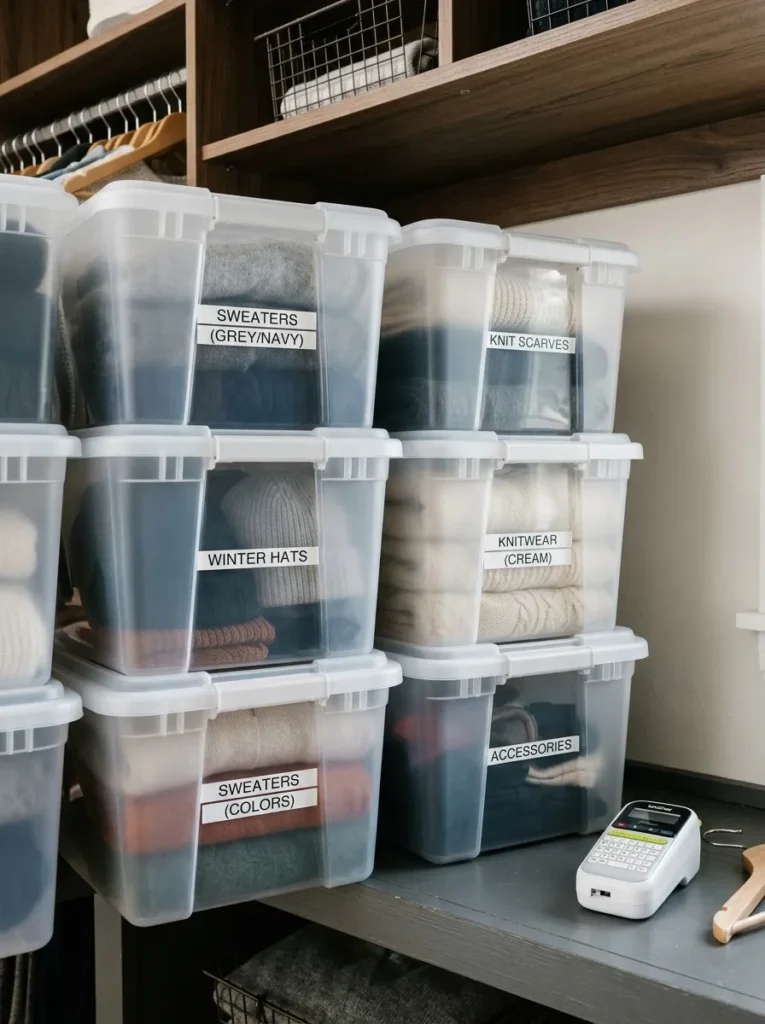
What it looks like: Uniform clear bins stacked on the top shelf, each one labeled by category so you can see and read the contents without opening a single lid.
Why it works: The reason off-season items disappear into a closet is that opaque boxes remove visual memory if you can’t see it, you forget it exists, and duplicate purchases follow.
How to copy it: Use one bin per category outerwear, swimwear, holiday sweaters and print labels rather than handwriting them; they stay legible and look uniform stacked side by side.
Best for: Households rotating seasonal wardrobes twice a year.
Warning: Skip cardboard boxes for closet storage they trap humidity and invite moths into wool and cashmere. Stick to sealed plastic or breathable canvas instead.
The next idea costs almost nothing and takes ten minutes to install.
3. Battery LED Puck Lights for Dark Corners
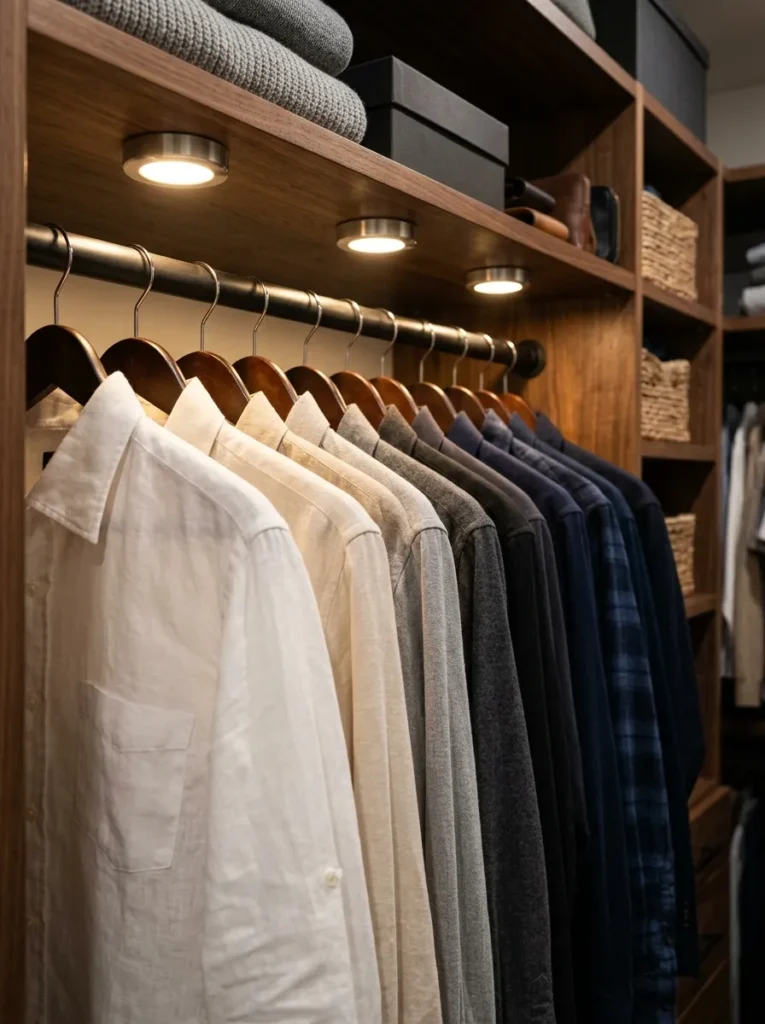
What it looks like: Small battery-powered disc lights, stuck under the shelf edge or in closet corners, casting warm light exactly where the ceiling fixture doesn’t reach.
Why it works: Most reach-in closets rely on a single overhead bulb, which leaves the back corners and lower shelves in shadow exactly where navy and black items become indistinguishable.
How to copy it: Mount lights with motion-sensor mode under the top shelf, angled toward the back wall, rather than the front this evens out light across the whole depth of the closet.
Best for: Closets without a wired ceiling light, and renters who can’t run new electrical.
Quick Win: A pack of four stick-on LED pucks solves 90% of closet visibility problems for under $25, with zero tools required.
4. Uniform Velvet Hangers Instead of Mismatched Wire
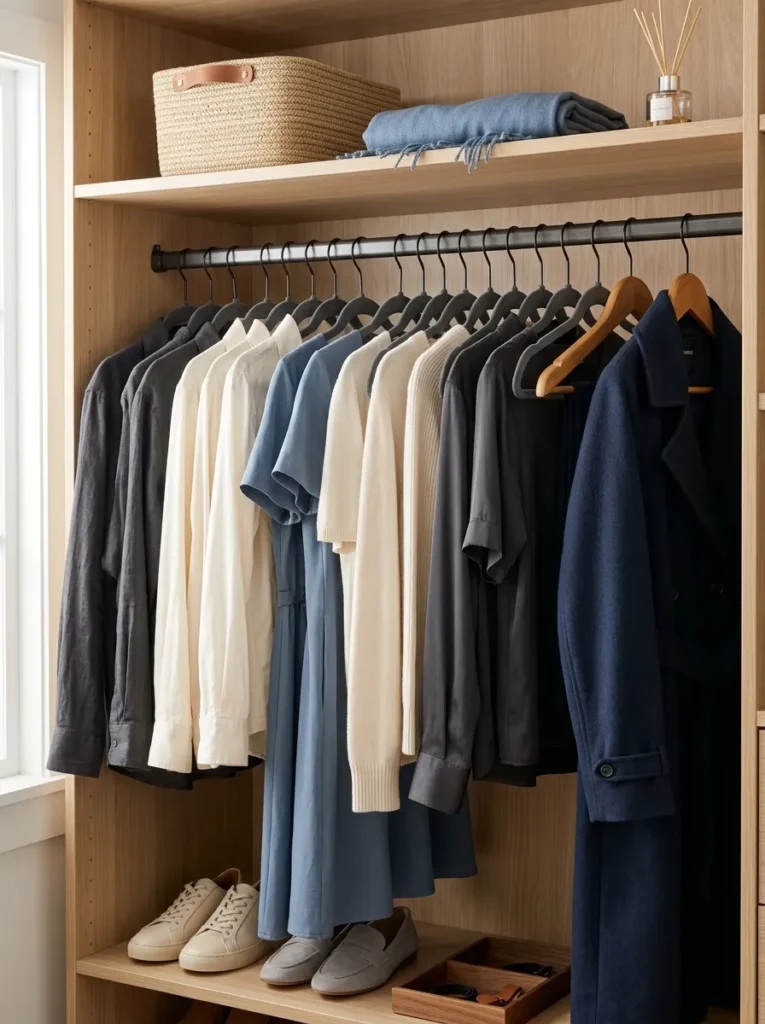
What it looks like: Every garment hangs on the same slim, flocked hanger, all facing the same direction, so the rod reads as one continuous row instead of a mismatched pile of wire and plastic.
Why it works: Wire hangers are roughly three times thicker than velvet ones swapping them can reclaim several inches of usable rod space and stop shoulders from stretching out of shape.
How to copy it: Buy one hanger type in one color, sized for your rod length, and donate every mismatched hanger the same day mixing styles undoes the effect almost immediately.
Best for: Anyone who wants a visibly calmer closet without adding storage.
Important: Velvet hangers grip fabric, which is good for silk and slippery blouses but they’re not built for heavy wool coats, which need a wider wooden hanger to hold their shape.
Styling Note: Turn all hooks the same direction when you hang something new it’s a small habit that keeps the row looking intentional instead of chaotic.
5. Adjustable Shelving System With Modular Brackets
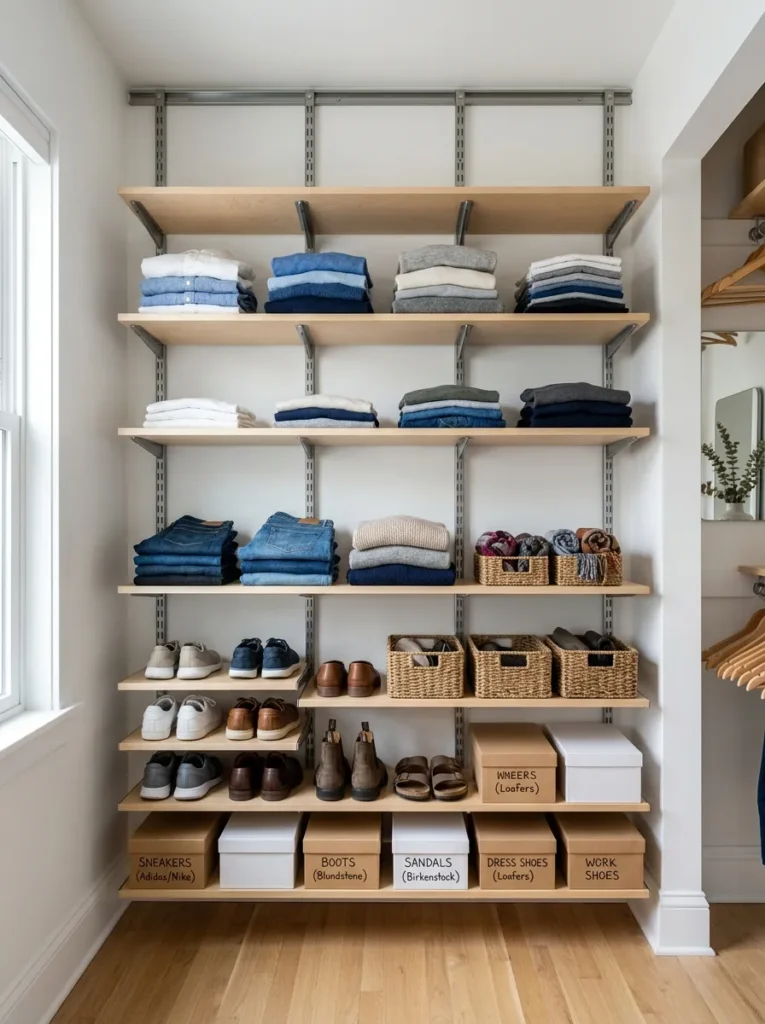
What it looks like: Metal tracks run floor to ceiling on the closet wall, with shelf brackets that slot in at any height, holding solid wood or laminate shelves instead of fixed wire.
Why it works: A fixed single shelf forces every item into one storage type; a track system lets shelf spacing change as your needs change tighter for shoes, wider for bins.
How to copy it: Install two vertical tracks 24 inches apart, mark bracket height with a level before drilling, and set the lowest shelf at least 8 inches off the floor for shoe clearance. If a built-in track feels like overkill, these Kallax styling ideas show how a modular cube shelf can do the same job without any wall cutting.
Best for: Anyone planning to reorganize seasonally or as storage needs shift.
✅ Before You Buy Checklist:
- [ ] Measure closet width and depth before ordering tracks or shelving
- [ ] Confirm wall studs with a stud finder and mark them
- [ ] Choose shelf material rated for your load solid wood for heavy folded stacks
- [ ] Order brackets in matte black or brushed steel to match existing hardware
6. Color-Coded Wardrobe Arrangement by Hue
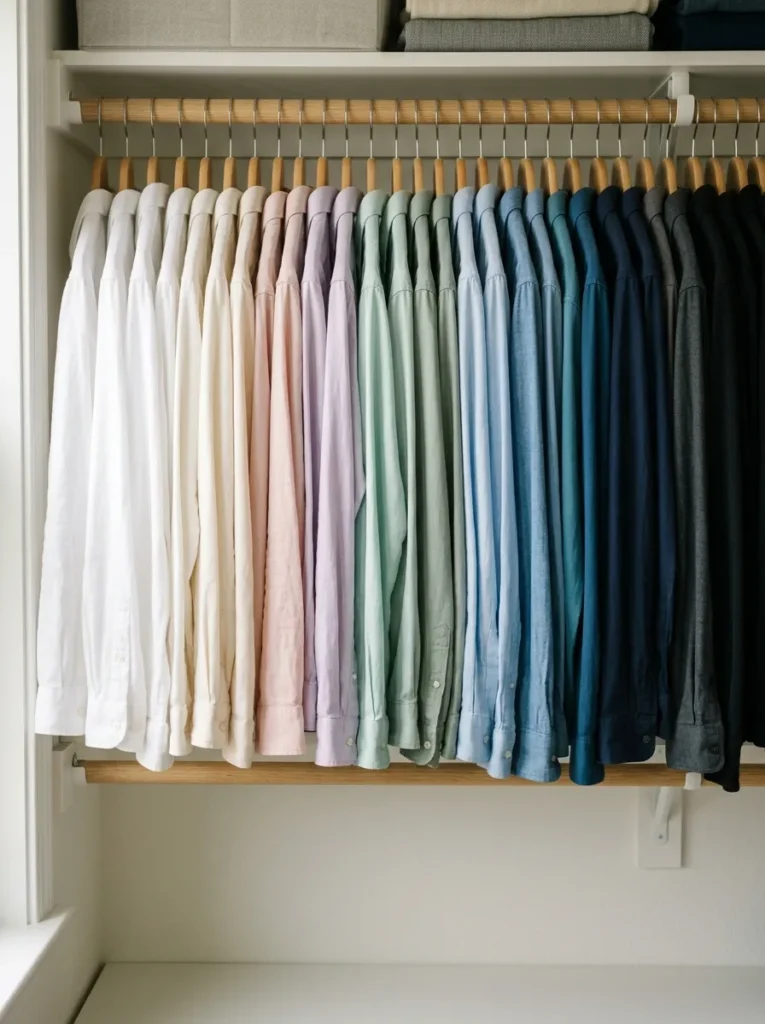
What it looks like: Garments hung in a visible gradient lights on one end, darks on the other instead of grouped by type or randomly placed.
Why it works: Color order gives the eye a fixed reference point, which cuts search time dramatically; you already know a navy blazer sits two-thirds of the way down the rod before you look.
How to copy it: Sort by garment type first shirts, then pants, then jackets and only then arrange each group by color within its own section, light to dark.
Best for: Visual thinkers and closets with a lot of similar garment types.
Pro Tip: Re-sort by color once a season new purchases and returned laundry drift the order faster than you’d expect.
Up next: the closet accessory most people forget until their belts end up in a tangled drawer.
7. Rolling Shoe Cart for Flexible Floor Storage
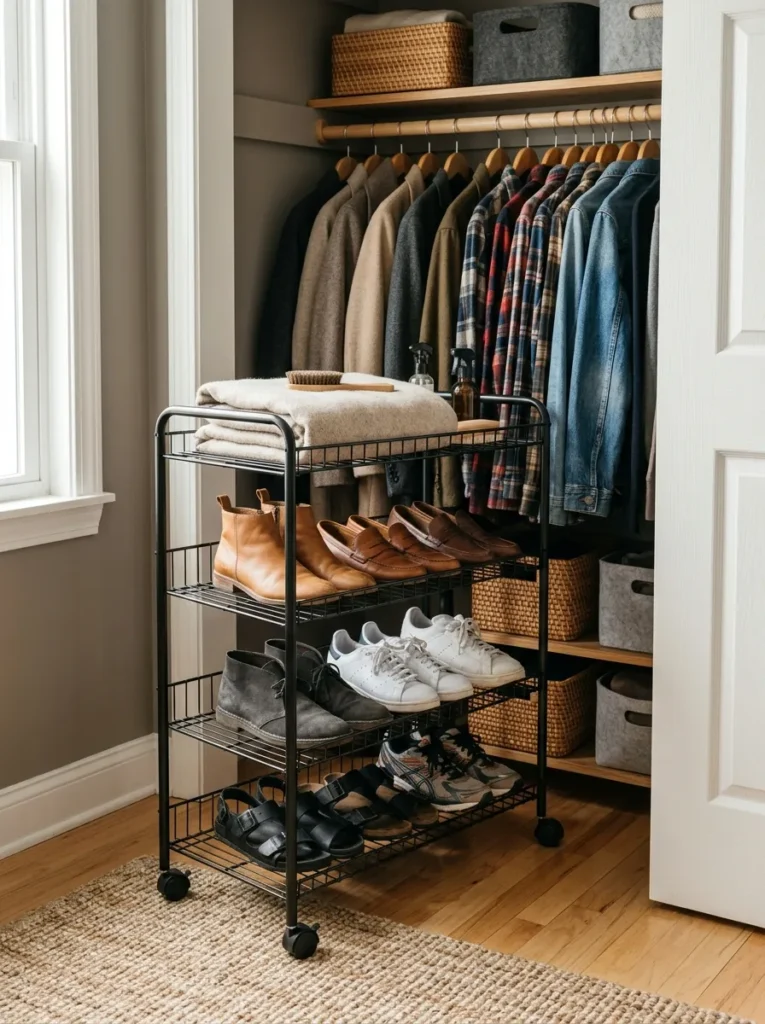
What it looks like: A slim, wheeled cart tucked under the hanging clothes, with three or four wire shelves holding shoes in visible rows instead of a pile on the floor.
Why it works: Floor space under hanging clothes is usually dead space in a standard closet; a rolling cart uses that vertical gap while staying mobile enough to pull out for cleaning.
How to copy it: Measure the gap between floor and your lowest hanging garment before buying most carts need at least 30 inches of clearance to fit underneath a full-length rod.
Best for: Small closets with limited floor footprint and a shoe collection that keeps growing.
8. Woven Seagrass Baskets for Open Shelving
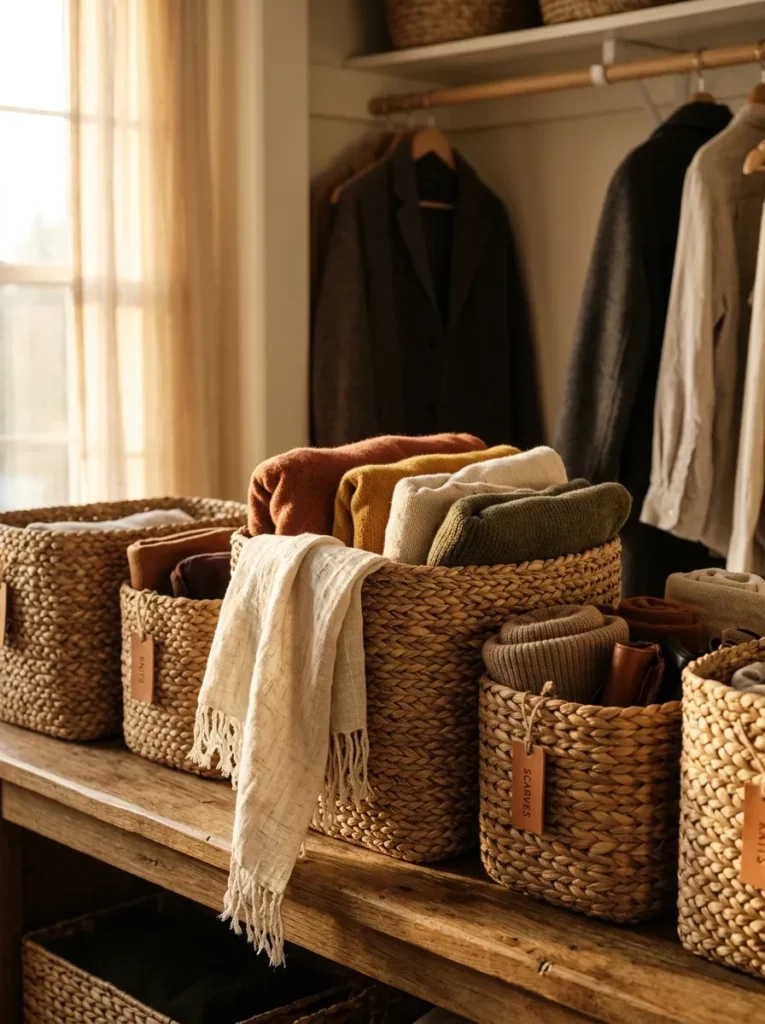
What it looks like: Open shelves holding a row of natural woven baskets instead of exposed loose items, each one sized to the shelf depth so nothing overhangs the edge.
Why it works: Loose items on open shelving read as visual clutter even when they’re technically organized; baskets create a container boundary that keeps the eye calm without hiding contents completely.
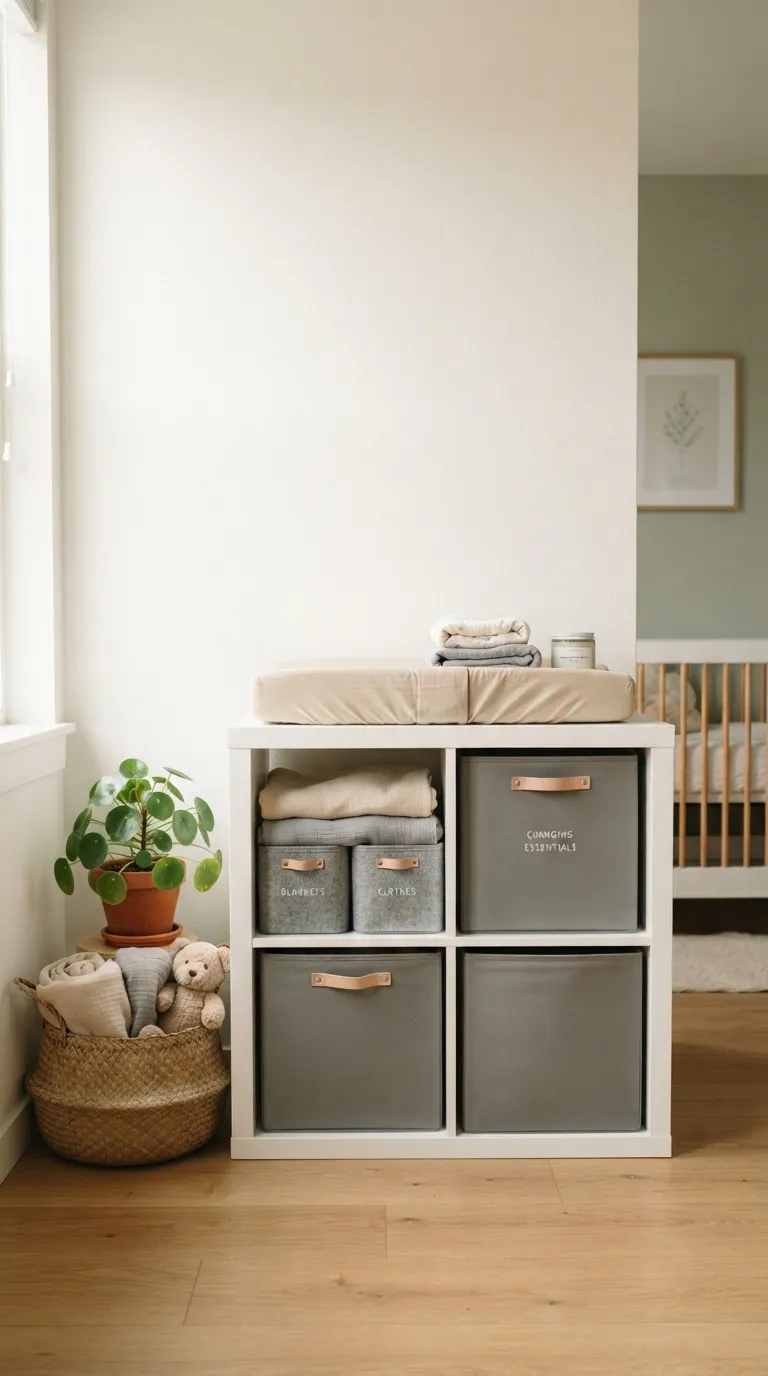
How to copy it: Measure shelf depth first and buy baskets an inch shallower baskets that stick out past the shelf edge catch on clothing and pull loose over time. The same basket-in-open-cube approach shows up in this Kallax storage setup, just scaled down for smaller items.
Best for: Open shelving in walk-in closets where everything is visible.
Budget Version: Skip designer baskets unfinished seagrass baskets from a craft or home store run under $15 each and hold up just as well.
9. Over-the-Door Hook Rack for Accessories
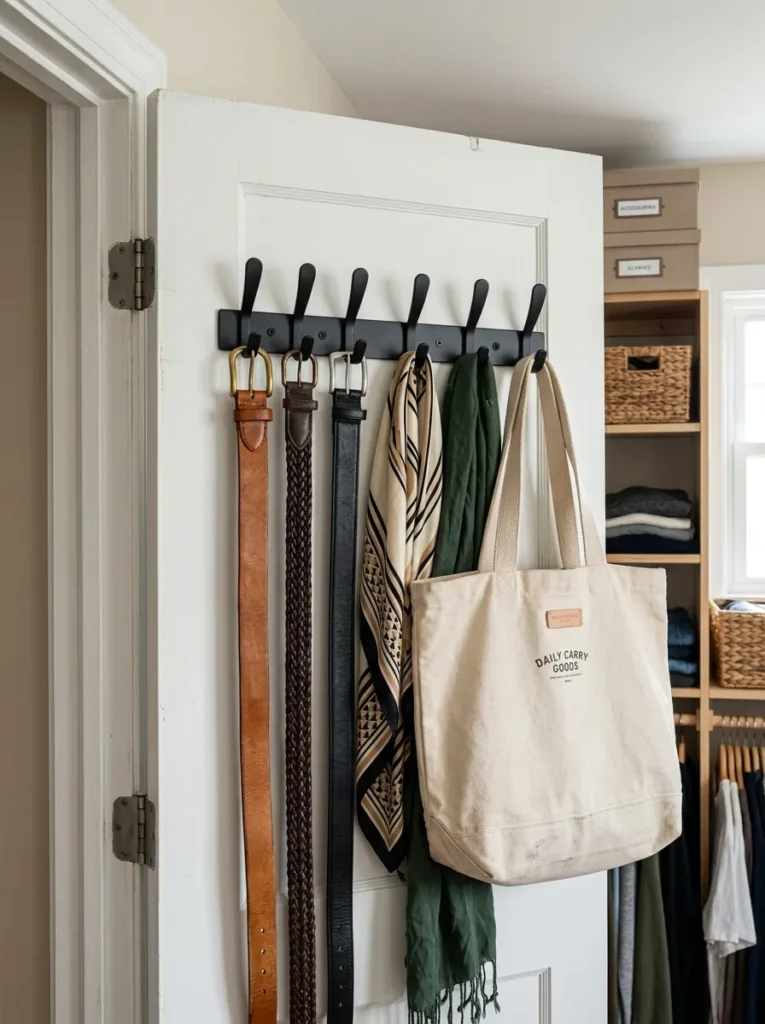
What it looks like: A row of hooks mounted directly to the inside of the closet door, holding belts, bags, and scarves that would otherwise end up tangled in a drawer.
Why it works: The back of a closet door is almost always wasted space; hooks turn it into a dedicated zone for accessories that don’t fold or hang well on a standard rod.
How to copy it: Space hooks at least 4 inches apart so bags don’t overlap, and mount the top row low enough that the door still closes without hooks hitting the frame.
Best for: Anyone with a growing bag or belt collection and no drawer space left.
Quick Win: An adhesive hook strip works if you’re renting no drilling, and most hold up to 5 pounds per hook.
| Shop This Look |
|---|
| Over-the-door hook rack, matte black |
| Adhesive-back hooks, no-drill |
| Canvas tote organizer bag |
| Leather belt roll organizer |
| Slim scarf hanger with rings |
The next idea is the smallest closet in the house and it usually gets the least attention.
10. Diagonal Shelving for Corner Closet Organization
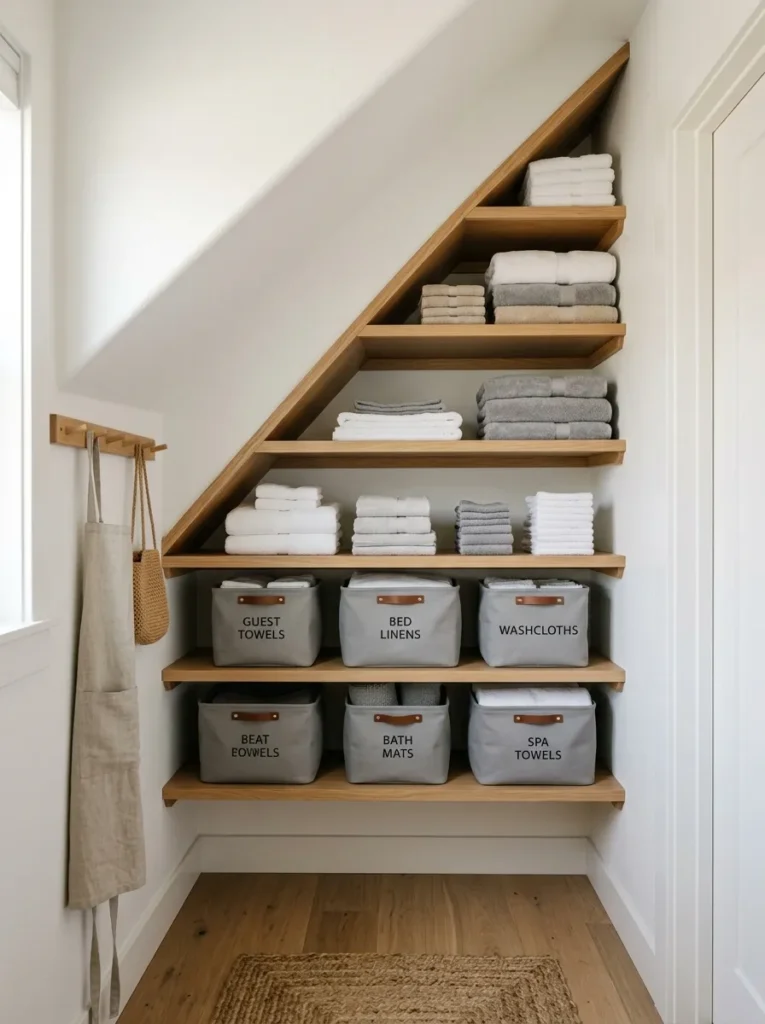
What it looks like: Shelves cut at an angle to match an awkward corner or sloped ceiling, following the room’s actual shape instead of stopping short at a standard rectangle.
Why it works: Corner and attic-adjacent closets waste the most space precisely because standard shelving is built for square rooms a custom angled cut can reclaim a foot or more of usable depth.
How to copy it: Template the angle with cardboard before cutting real shelf material, and use a jigsaw for the final cut measuring twice here matters more than almost any other step.
Best for: Closets with sloped ceilings, corner nooks, or non-standard closet organization challenges.
Warning: Don’t eyeball the angle even a 2-degree miscut leaves a visible gap along the wall that’s nearly impossible to hide once the shelf is installed.
11. Motion-Sensor LED Light Bar
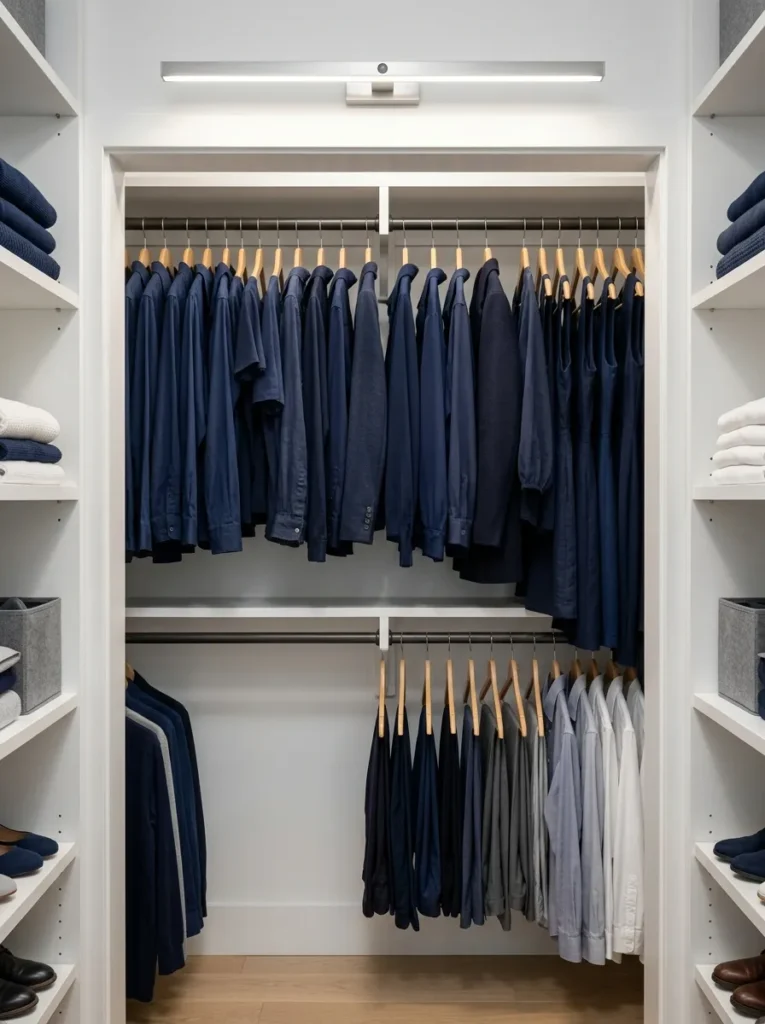
What it looks like: A slim light bar mounted above the door frame that switches on automatically the moment the door opens, lighting the full width of the closet at once.
Why it works: A single bulb at the center of the ceiling creates a hot spot in the middle and shadows at both ends; a wide bar distributes light evenly across the whole rod.
How to copy it: Mount the bar as close to the door frame as possible, angled slightly downward, so the sensor catches the door swing every time.
Best for: Closets used in a rush mornings, kids’ rooms, mudroom closets.
Styling Note: Choose a warm white bulb (around 2700K) rather than cool daylight it reads truer against skin tones and fabric colors when you’re picking an outfit.
12. Neutral Canvas Bins That Match the Wall
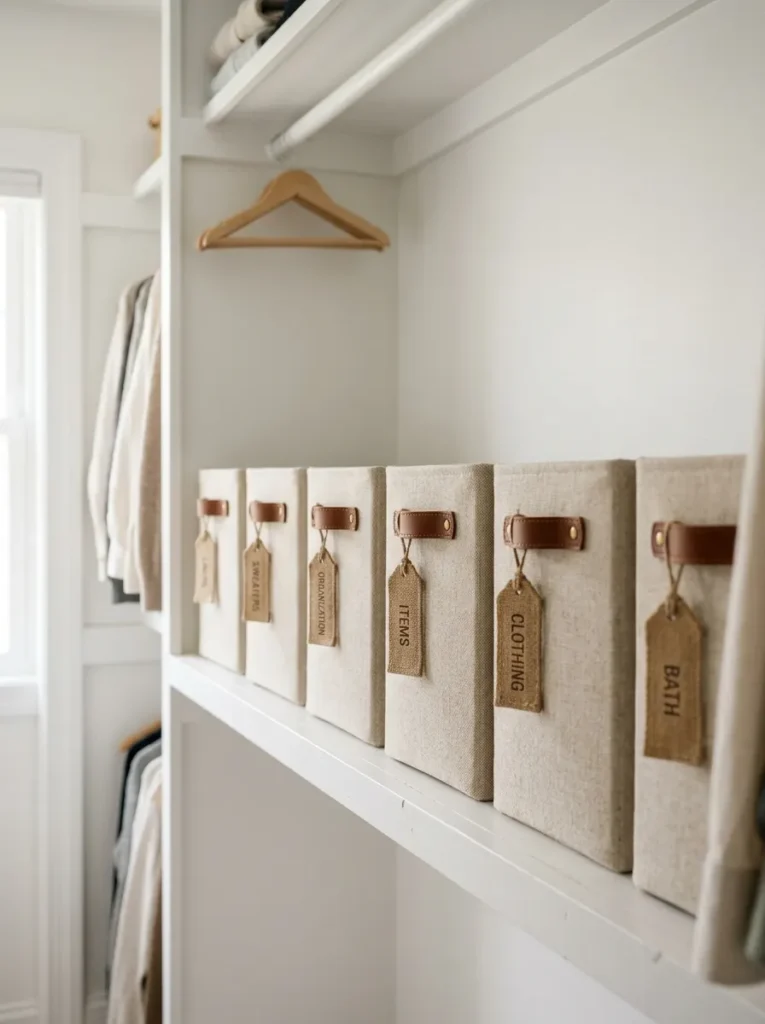
What it looks like: A full shelf of matching canvas bins in a neutral tone close to the wall color, so the storage nearly disappears into the background instead of competing for attention.
Why it works: Mismatched bin colors create visual noise even when contents are organized; matching bins to the wall lets the eye skip past storage and focus on what’s being reached for.
How to copy it: Pick one neutral oatmeal, warm gray, or off-white and buy every bin in that single tone rather than mixing leftover containers from other rooms.
Best for: Anyone who wants organized storage that doesn’t visually dominate the closet.
Important: Canvas bins breathe better than plastic, which matters for anything stored long-term plastic can trap moisture against fabric even in a dry closet.
13. Pull-Out Drawer Dividers for Folded Stacks
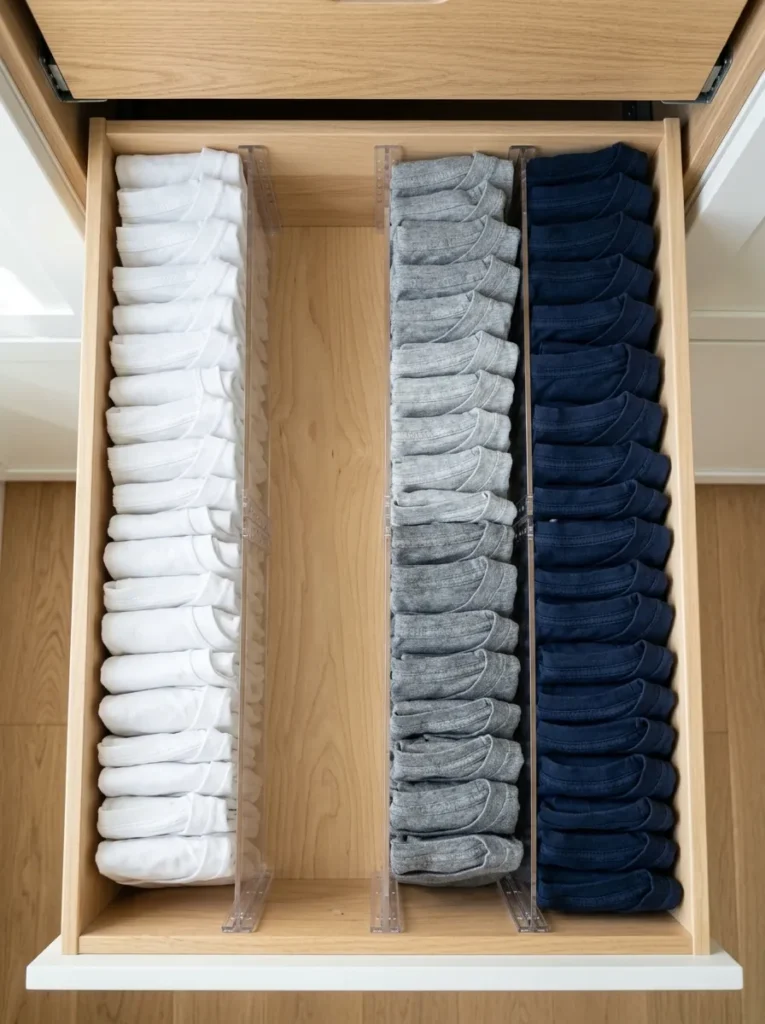
What it looks like: A pull-out drawer with slim adjustable dividers separating folded shirts into upright vertical rows instead of a stacked pile.
Why it works: Stacked folded clothes force you to dig from the top, which collapses the pile within days; standing rows let you see and remove one item without disturbing the rest.
How to copy it: Fold shirts in thirds lengthwise, then in half, so they stand upright on their own file-fold, not flat-stack, is what makes the divider system hold.
Best for: Anyone tired of a “reorganize the drawer” chore every single week.
✅ Quick Setup Checklist:
- [ ] Measure drawer interior width before ordering dividers
- [ ] Choose adjustable acrylic or bamboo dividers, not fixed-width
- [ ] Sort clothing by category before dividing the drawer into zones
- [ ] File-fold each item so it stands upright between dividers
| Shop This Look |
|---|
| Adjustable drawer divider set, acrylic |
| Bamboo drawer organizer tray |
| Slim drawer liner, non-slip |
| Fabric drawer dividers, set of 6 |
| Label clips for drawer sections |
14. Cedar-Lined Shelf Panels for Moth Protection
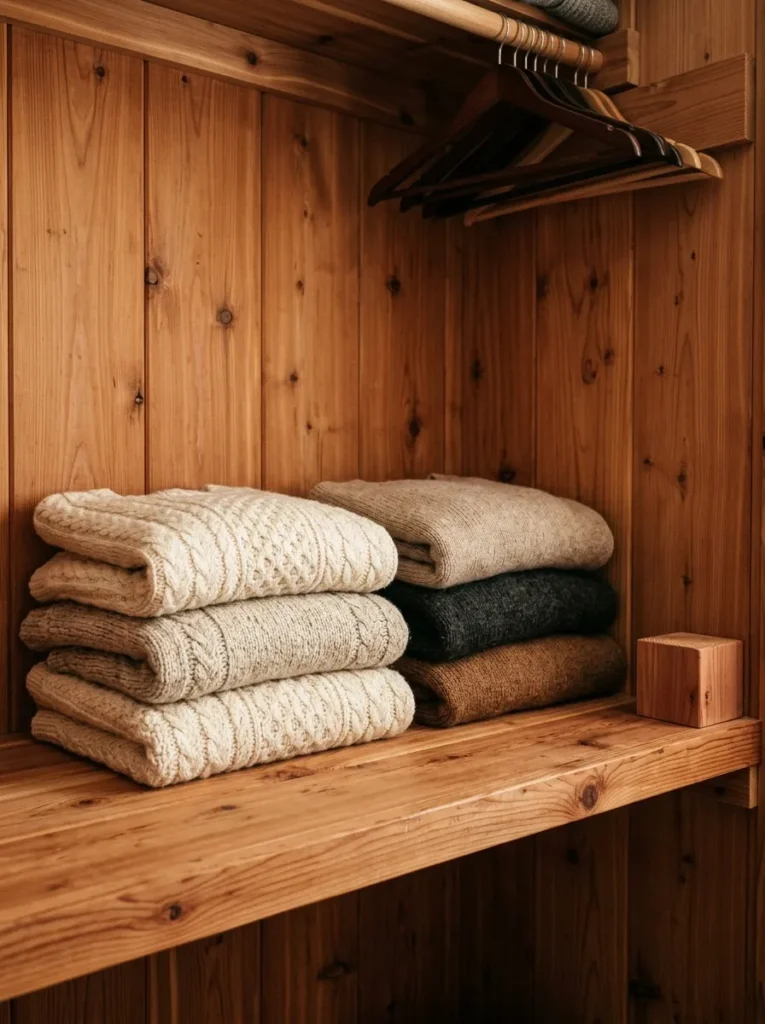
What it looks like: Thin cedar wood panels lining the underside or surface of a shelf where wool and cashmere sit folded, with the natural reddish grain still visible.
Why it works: Cedar’s natural oils repel moths without chemical repellents, and the wood also absorbs a small amount of ambient moisture, which keeps folded wool from developing a musty smell over a season.
How to copy it: Lightly sand cedar panels every six months with fine-grit paper this refreshes the scent and oil release, since cedar loses potency as the surface ages.
Best for: Wool, cashmere, and any closet storing natural fibers long-term.
Quick Win: No panels on hand? A few loose cedar blocks tucked between folded sweaters do almost the same job for under $10.
This next idea surprised even experienced organizers the first time they tried it it’s a bench, not a shelf.
15. Built-In Bench With Storage Cubbies
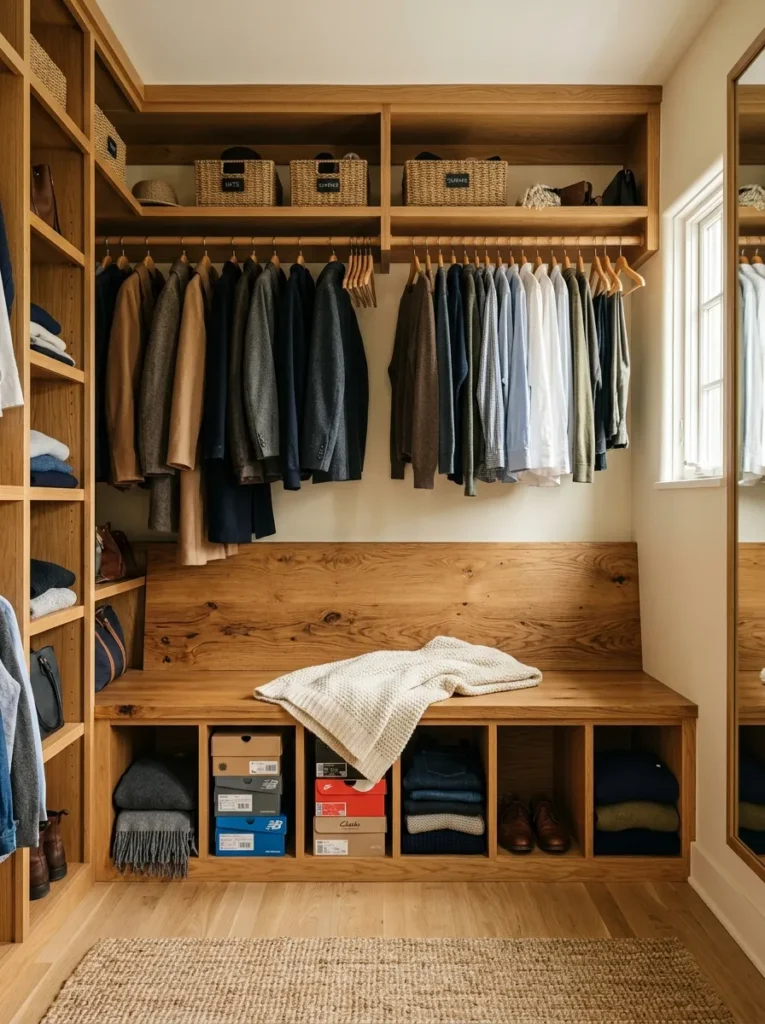
What it looks like: A low bench built along one closet wall, with open cubbies underneath the seat holding folded items or shoe pairs, doubling as a spot to sit while getting dressed.
Why it works: Floor-level storage below a bench uses a zone most closets leave completely empty, and the bench itself solves the common problem of nowhere to sit while putting on shoes.
How to copy it: Build or buy a bench at 18 inches high with cubby openings sized to your bins, and anchor it to the wall if it’s freestanding a loaded bench can tip. This same cubby-and-bench layout works well in a craft room storage build, too, if you’re organizing a workspace rather than a closet.
Best for: Walk-in closets with at least 5 feet of open wall space.
Budget Version: A ready-made shoe bench from a home goods store runs $60–$100 and skips the building step entirely.
16. Slim Velvet Hangers for Scarves and Belts
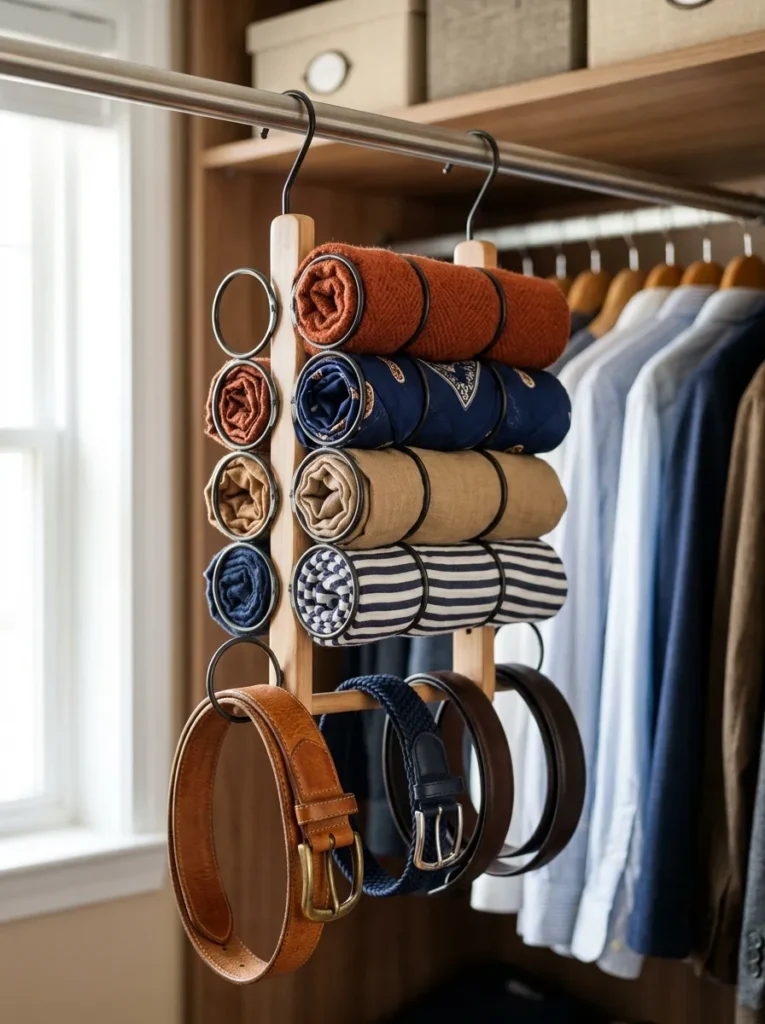
What it looks like: A single hanger with a stack of connected rings, each holding one rolled scarf or looped belt, taking up the width of one standard hanger instead of a whole drawer.
Why it works: Scarves and belts are notoriously hard to store flat without tangling; vertical rings let you see and grab one item without unraveling the rest of the collection.
How to copy it: Roll scarves rather than folding them before looping through the ring rolled fabric holds its shape and slides off the ring cleanly.
Best for: Small collections that don’t justify a full drawer or shelf.
Warning: Overloading one ring hanger past 8–10 items causes the bottom rings to sag and eventually bend the wire frame.
17. Color-Tabbed Bin System for Kids’ Closets
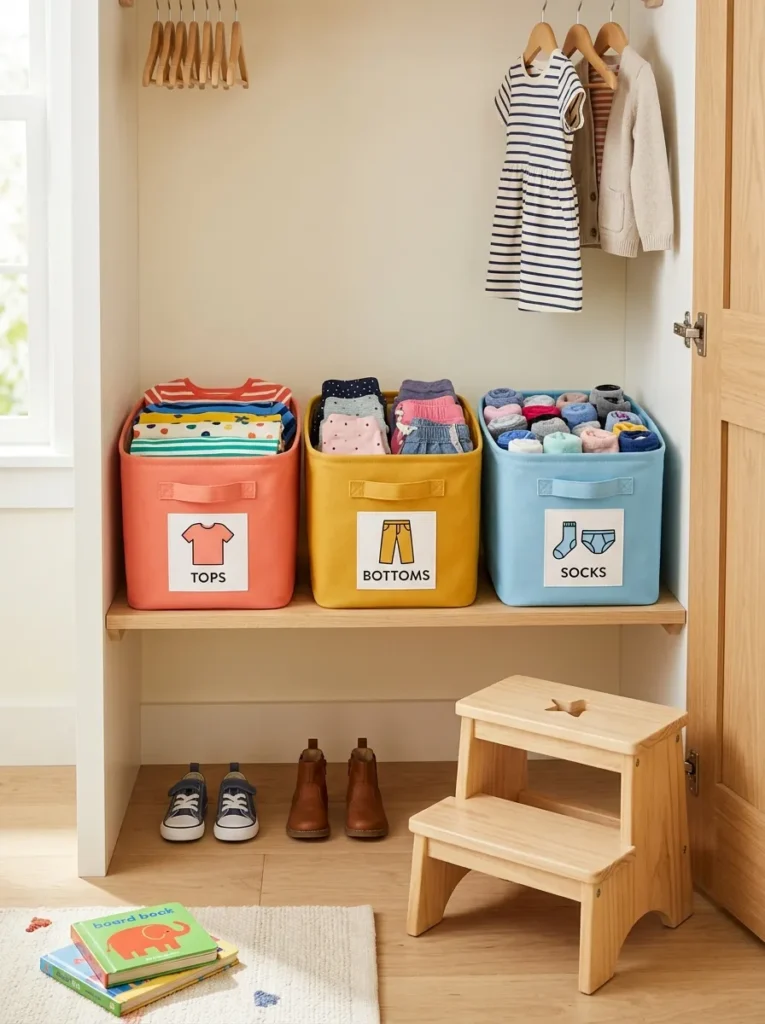
What it looks like: Low bins in distinct colors, each tagged with a picture rather than text, placed at a height a young child can reach without help.
Why it works: Kids sort by color and image long before they read fluently a color-tabbed system lets them put laundry away independently, which cuts down on the daily re-sorting parents otherwise do.
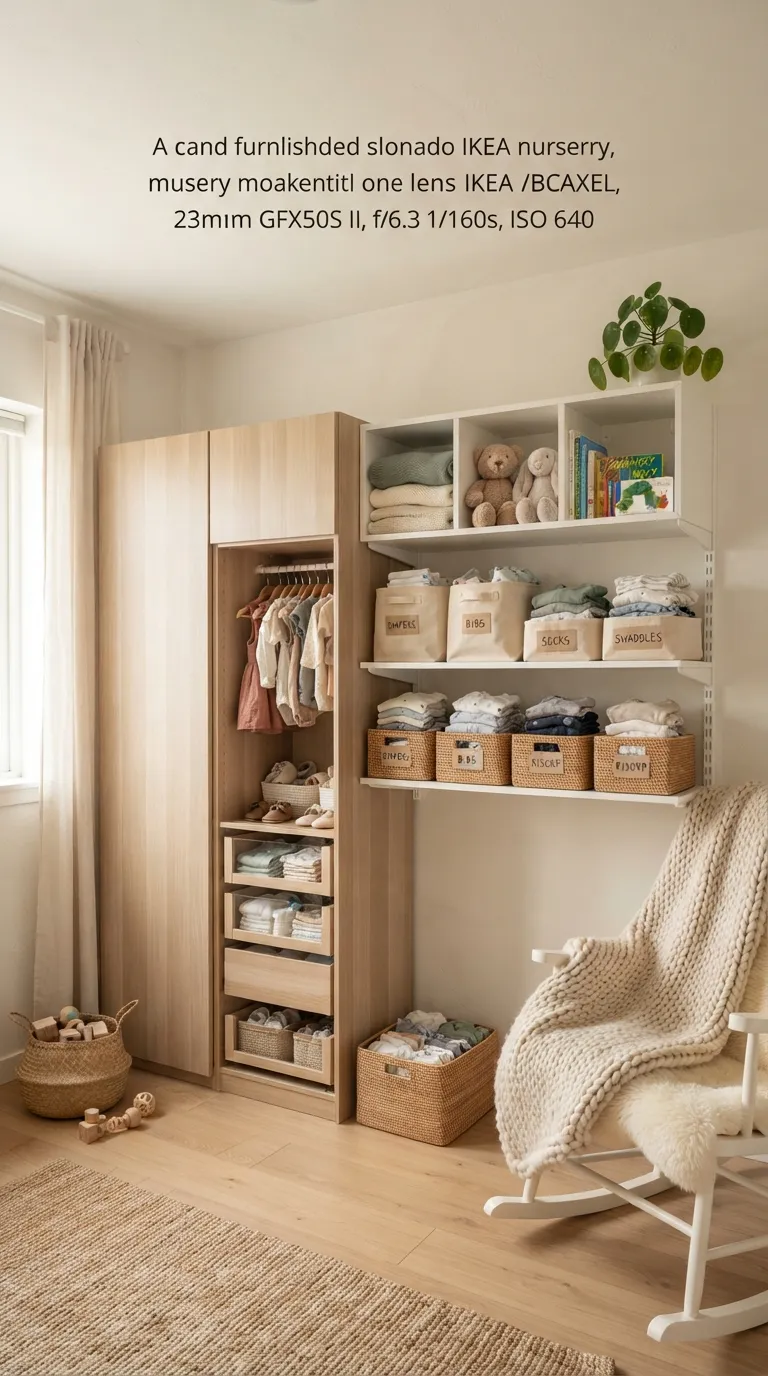
How to copy it: Assign one color per category blue for shirts, yellow for pants and keep the system at or below shoulder height for the child using it. For more ways to keep kids’ spaces this manageable, these nursery storage hacks cover the same reachable-height principle.
Best for: Kids’ closets and shared sibling spaces.
Quick Win: Take a phone photo of the finished sort and tape it inside the closet door as a visual reference for restocking.
| Shop This Look |
|---|
| Colored fabric storage bins, set of 6 |
| Picture label sticker set |
| Low closet step stool |
| Adjustable child-height closet rod |
| Wall-mounted picture label holders |
Up next: the closet lighting swap that also happens to be the easiest install on this whole list.
18. Warm Dimmable Closet Sconce
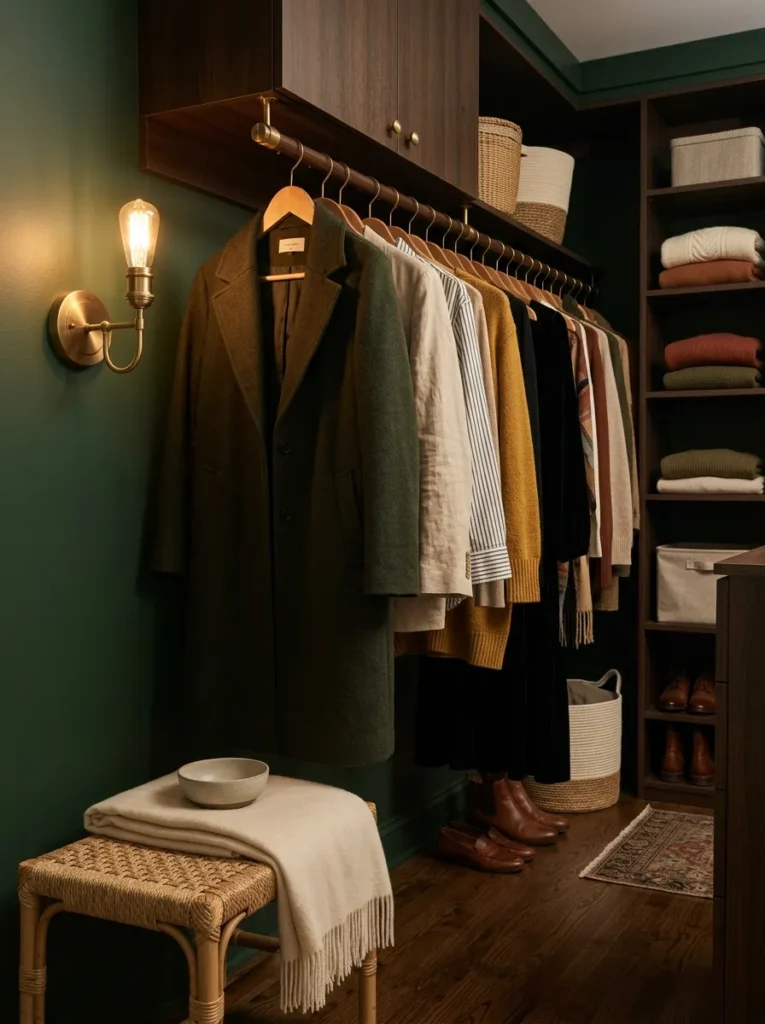
What it looks like: A single wall-mounted sconce with a dimmer switch, replacing or supplementing a harsh overhead bulb with adjustable, directional light.
Why it works: Overhead lighting alone tends to wash out closet colors and cast shadows straight down; a side-mounted sconce lights garments from an angle closer to how you’d view them in a mirror.
How to copy it: Mount the sconce roughly 60 inches from the floor, wired to a dimmer switch, positioned to shine across the closet rather than straight down.
Best for: Walk-in closets used as a dressing area, not just storage.
Budget Version: A plug-in sconce with a built-in dimmer skips the electrical work entirely and still delivers the angled light effect.
19. Stacking Acrylic Drawer Organizers for Accessories
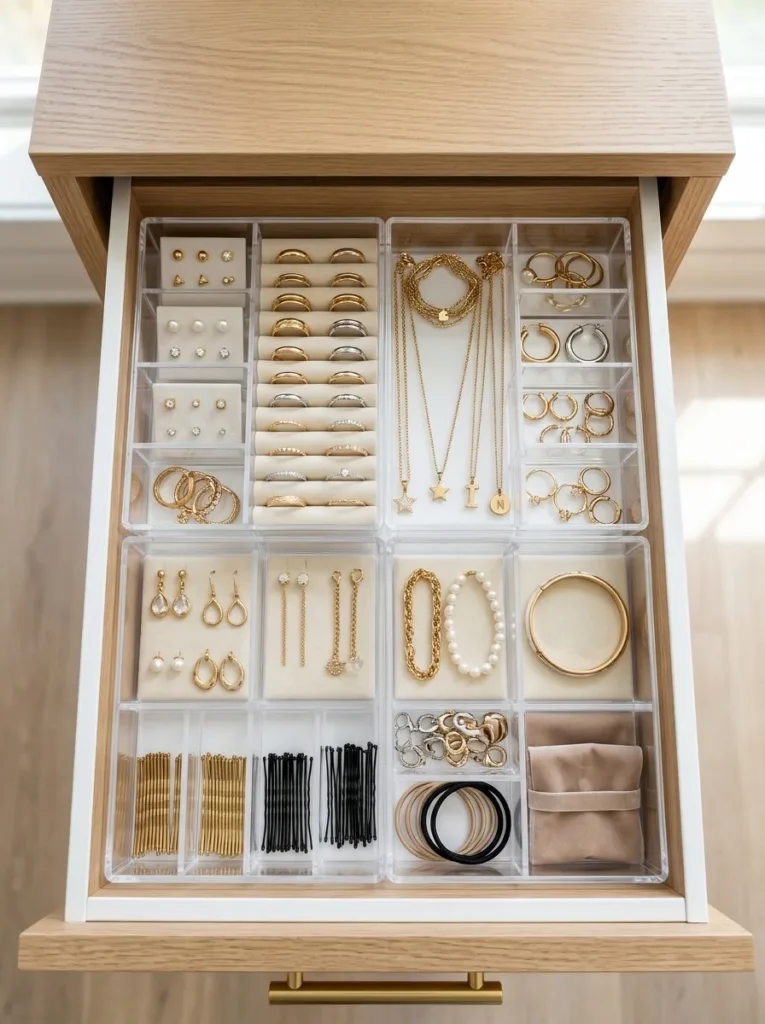
What it looks like: Clear acrylic trays stacked two or three high inside a drawer, each with small compartments sized for jewelry, watches, or other small accessories.
Why it works: Loose small items settle into a jumbled layer at the bottom of any drawer within weeks; fixed compartments physically prevent items from sliding together and tangling.
How to copy it: Measure drawer depth before stacking trays leave at least half an inch of clearance so the drawer still closes fully once trays are loaded.
Best for: Jewelry, watches, sunglasses, and other small daily-use accessories.
Important: Clear acrylic shows dust more than fabric-lined organizers a quick wipe with a microfiber cloth once a month keeps it looking as clean as day one.
20. Tonal Capsule Display for Closet Organization That Lasts
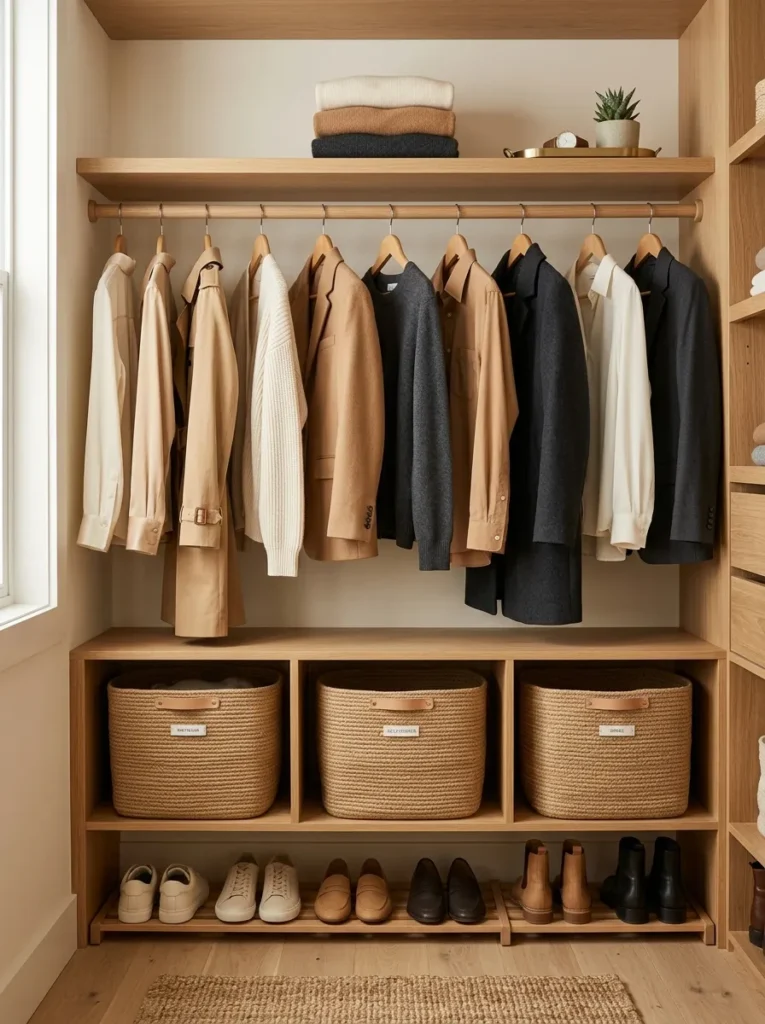
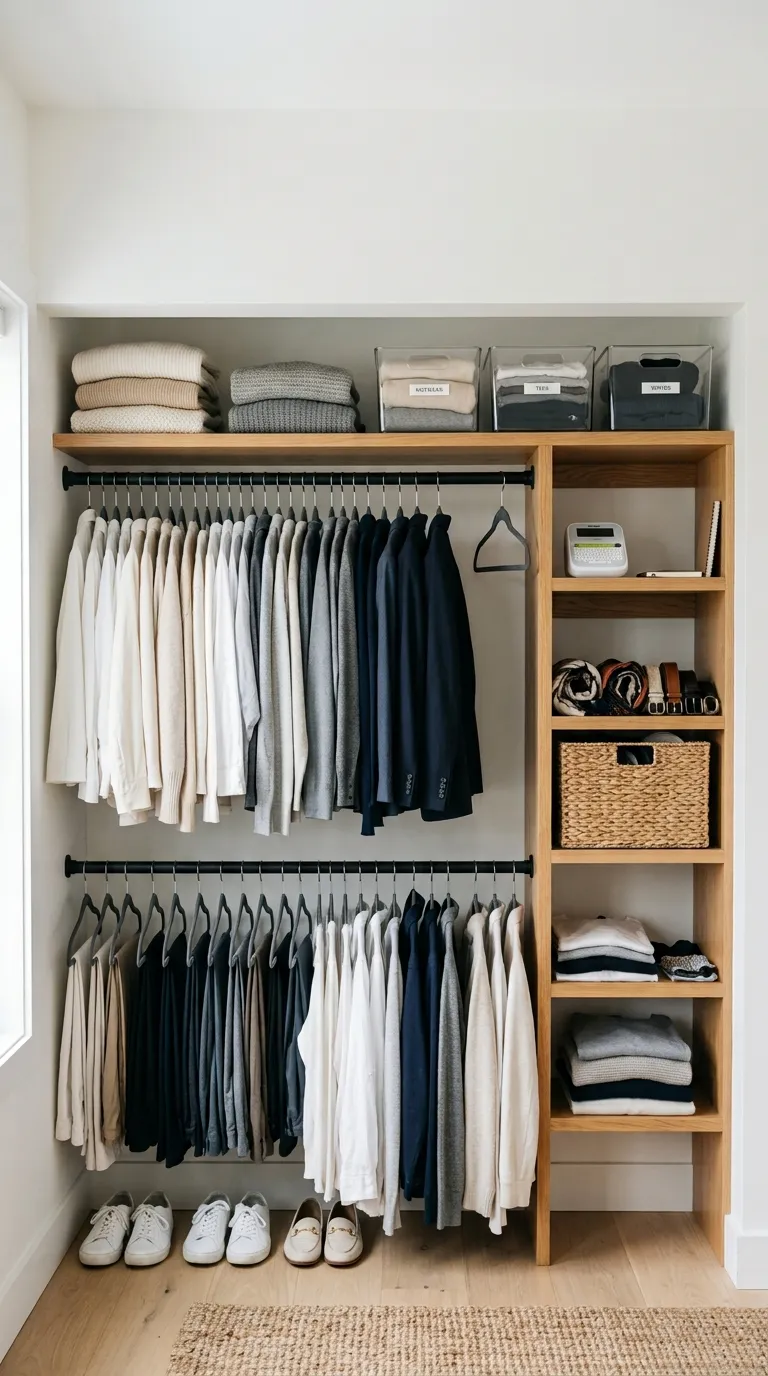
What it looks like: A closet where every visible system hangers, bins, rod height, color order works together as one finished layout instead of a collection of separate fixes.
Why it works: Closet organization holds up longest when every element reinforces the others; a color-sorted rod above mismatched floor clutter falls apart within a month, but a fully coordinated system is easier to maintain because putting things back correctly is the path of least resistance.
How to copy it: Once the individual systems are in place, do a final walkthrough and remove anything that doesn’t have an assigned spot a true capsule only works if every item belongs somewhere specific.
Best for: Anyone finishing a full closet organization project and wanting it to actually stick.
Styling Note: Leave one empty hanger and one empty bin slot on purpose a system with zero spare capacity breaks the first time you buy something new.
My Views:
Here’s something most guides won’t tell you: the closet that looks the most “organized” in photos is often the least functional day to day. In real client closets, I’ve seen color-coded rods collapse within three weeks because the system had no room for laundry in transit clean clothes waiting to be put away need a landing spot, usually a single open hook or basket, or the whole color order falls apart by the first Tuesday.
How to Start Your Closet Organization Transformation
What first? In practice, the single move that fixes the most closets fastest is adding a second hanging rod. It’s the one change that immediately doubles usable hanging space without buying a single bin, and every other system bins, dividers, lighting works better once clothes aren’t overflowing the existing rod.
What mistake? The most common fixable error is mounting shelving or a second rod at a fixed, symmetrical height without measuring actual garment length first. A rod set too low for pants or too high for shirts wastes the exact space it was meant to save measure your longest hanging item before drilling anything.
Three items under $50: A stud finder for safe mounting ($15), a 30-pack of slim matching velvet hangers ($20), and a set of six stackable clear drawer dividers ($18) together they solve the three most common closet complaints: wasted rod space, mismatched hangers, and drawer chaos.
Timeline and budget: A single reach-in closet can be fully reorganized in a weekend for $100–$200, covering a second rod, matching hangers, and a few labeled bins. A full walk-in overhaul with built-in shelving, a bench, and lighting runs closer to $400–$800 and typically takes two to three weekends to complete properly.
Ready to Organize Your Closet?
These 20 ideas cover more than storage rod height, lighting, color order, drawer systems, and small fixes that solve the problems that cause closet chaos. You don’t need to tackle all twenty at once; picking two or three that match your biggest frustration is enough to see a real difference.
Start today with the simplest one: measure your longest hanging garment and see how much dead space is sitting above it. A closet that finally works isn’t about how it photographs it’s about how it feels to open the door on a Monday morning. Save the ideas that fit your space so they’re easy to find when you’re ready to start.