21 Pallet Furniture Ideas for Garden Patio Style That Feel Sun-Warmed and Effortless
Garden patio style is what happens when reclaimed wood stops apologizing for its scars and starts showing them off. This roundup walks through 21 pallet furniture ideas built for outdoor living, each one sized for a real patio and a real budget.
Sun hits the grain differently out here warmer, rougher, more forgiving than anything indoors. There’s a looseness to it: cushions that don’t quite match, hardware left visible, plants growing a little wild at the edges. It reads relaxed because it is relaxed. Somewhere between a beach shack and your grandmother’s porch, honestly.
Jump To
- Why Garden Patio Style Works So Well
- 21 Garden Patio Pallet Furniture Ideas to Try
- How to Start Your Garden Patio Style Transformation
- Ready to Create Your Dream Garden Patio Style Patio?
Why Garden Patio Style Works So Well
Garden patio style grew out of necessity reclaimed shipping pallets, free behind hardware stores, turned into daybeds and planters back when decent outdoor furniture cost a small fortune. The palette leans weathered grey, warm greige, and sun-bleached driftwood blue, with rope, linen, and unfinished oak doing most of the textural work.
It’s having a real moment now because sustainability sells and Pinterest rewards anything that looks handmade rather than mass-produced. Small patios benefit too, provided you anchor with one real piece a daybed or bench before layering on anything decorative.
| Element | Reclaimed & Relaxed | Sun-Worn & Layered |
|---|---|---|
| Philosophy | Nothing wasted, everything visible | Comfort over polish |
| Materials | Heat-treated pallet wood, rope, linen | Rattan, terracotta, galvanized metal |
| Color palette | Weathered grey, warm greige | Terracotta blush, sage, driftwood blue |
21 Garden Patio Pallet Furniture Ideas to Try
1. The Low-Slung Pallet Daybed
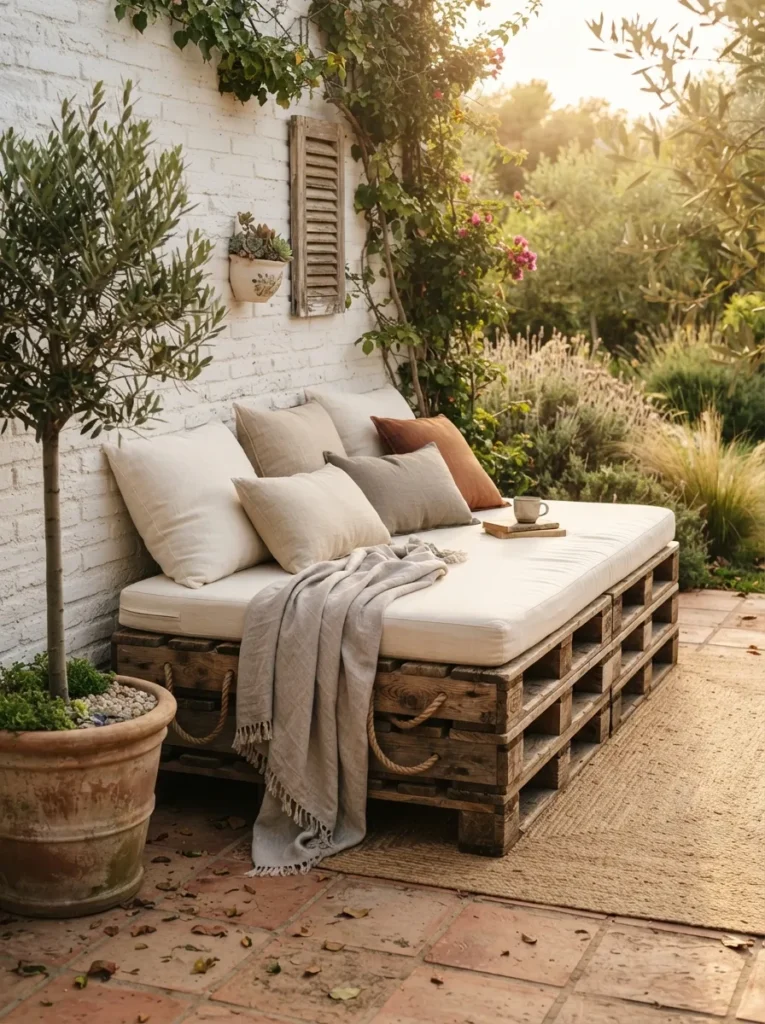
What it looks like: Two pallets stacked and bolted together, low to the ground, with a cushion thick enough to sink into.
Why it works: The low profile widens the sightline across a small patio visual weight stays close to the floor, which is the exact proportion trick that keeps compact spaces from feeling cramped.
How to copy it: Sand the top pallet smooth, stain it in a warm greige wash, then top it with an outdoor-rated foam cushion cut to size most fabric shops will custom-cut for under $40.
Best for: Renters and anyone furnishing a patio from scratch on a tight budget.
✅ Before You Build Checklist:
- [ ] Confirm pallets are heat-treated (stamped “HT”), never chemically treated (“MB”)
- [ ] Sand all visible surfaces to remove splinters
- [ ] Seal with exterior-grade polyurethane before first use
- [ ] Add rubber furniture pads underneath to prevent ground rot
Shop This Look
| Product |
|---|
| Outdoor-rated foam cushion insert, custom-cut |
| Exterior polyurethane sealant, matte finish |
| Weatherproof linen throw pillow covers |
| Furniture riser pads, rubber |
| Cordless orbital sander |
2. Weathered Grey Wash Finish
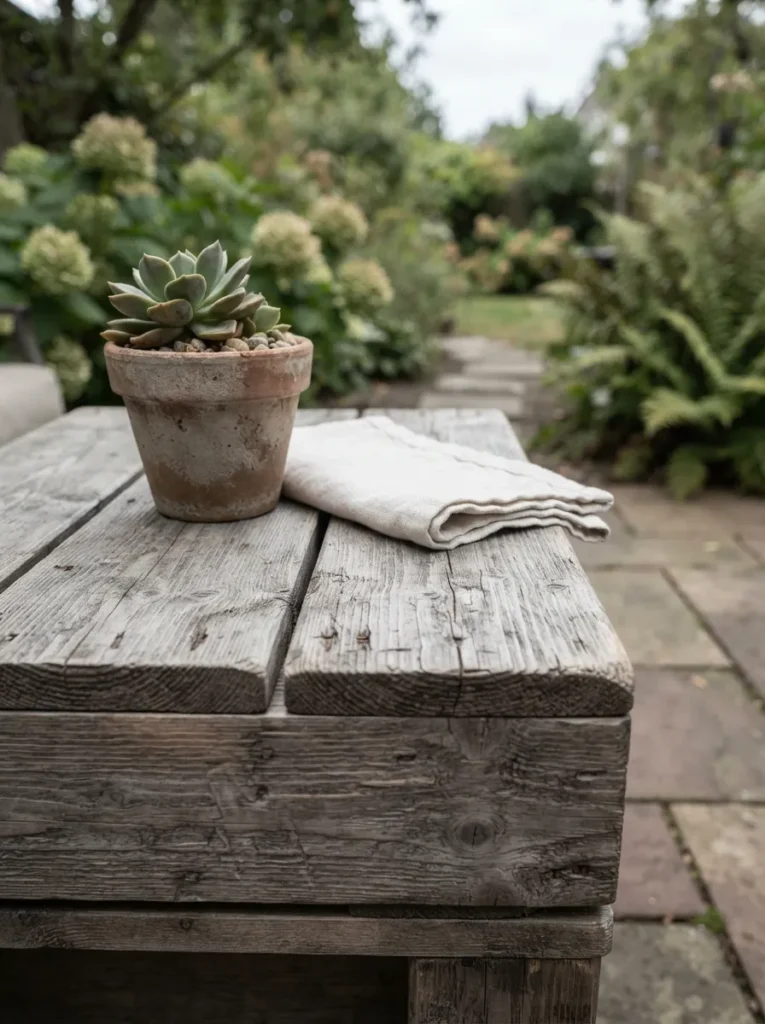
What it looks like: Pallet wood gone the color of driftwood after a decade near saltwater pale, ashy, slightly uneven.
Why it works: Raw pallet wood ages orange and blotchy in direct sun. A grey wash pre-empts that shift and gives every piece in the set a shared undertone, which is what reads as “coordinated” outdoors.
How to copy it: Mix one part white exterior paint with three parts water, brush it on, then wipe back immediately with a rag so the grain stays visible rather than fully coated.
Best for: Anyone mixing several pallet pieces who wants them to look intentional instead of scavenged.
Important: Most people assume a grey wash needs a specialty product it doesn’t. Diluted exterior paint does the same job for a fraction of the cost.
Styling Note: Pair the grey wash with warm-toned cushions rather than cool ones the contrast keeps the finish from reading cold or clinical.
3. Herringbone Pallet Accent Wall
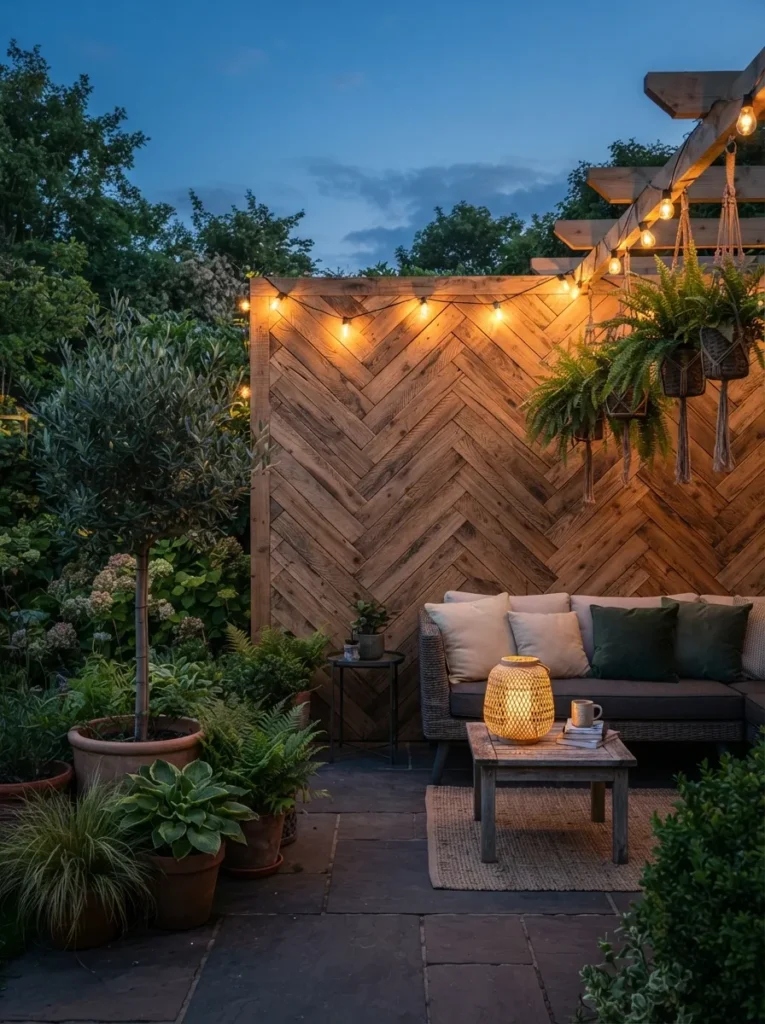
What it looks like: Disassembled pallet boards cut and mounted at 45-degree angles against a fence or exterior wall, forming a zigzag pattern.
Why it works: Herringbone breaks up the repetitive horizontal lines that plain pallet fencing tends to fall into the diagonal pattern adds visual movement to what’s otherwise a flat backdrop.
How to copy it: Pull pallets apart with a pry bar, trim boards to matching lengths, then mount them onto furring strips in alternating diagonal rows using exterior screws.
Best for: Homeowners with a bare fence line or blank exterior wall who want a real focal point.
Here’s an idea that often gets skipped and it costs almost nothing.
4. Fairy-Lit Pallet Trellis
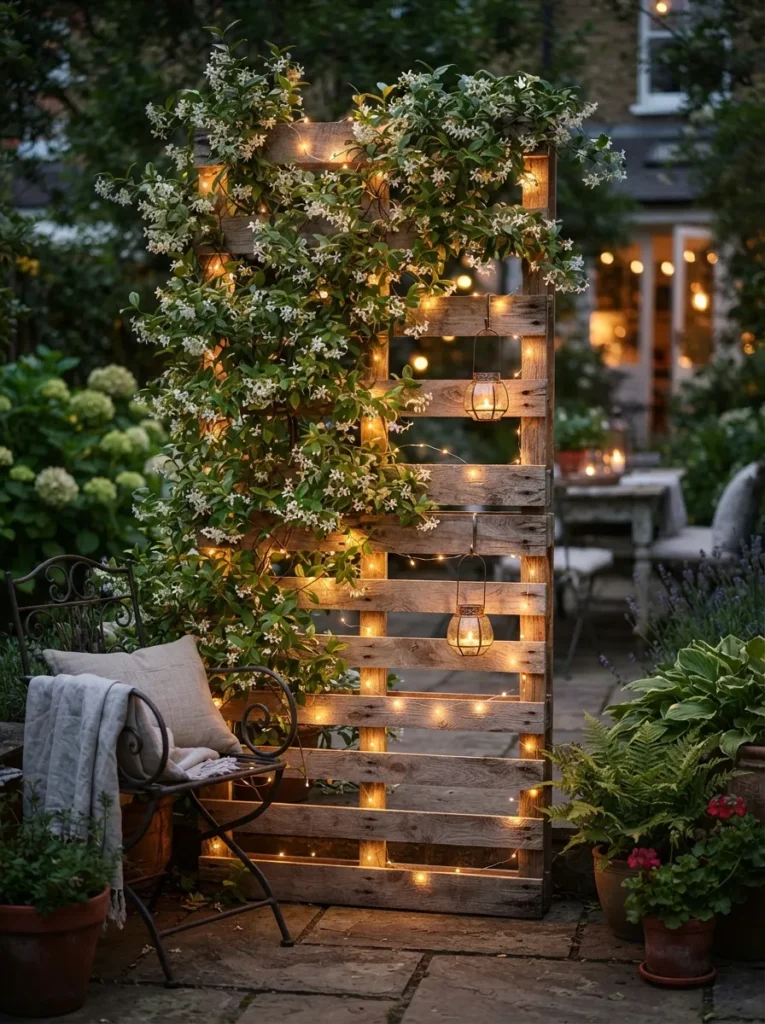
What it looks like: A single pallet stood on end, its natural slat gaps used as a built-in lattice for both vines and lights.
Why it works: The gaps between slats do double duty climbing plants get something to grip, and string lights get somewhere to sit without extra hardware. Two problems solved by one leftover object.
How to copy it: Stand the pallet upright, brace it with two ground stakes, then weave warm-white LED string lights through every third gap before the vine fills in.
Best for: Gardeners who want privacy screening and evening ambiance from a single build.
Pro Tip: Choose solar-powered string lights rated for at least 8 hours of charge cheaper sets fade to dim orange by 9pm, which undercuts the whole effect.
5. Pallet Vertical Herb Garden
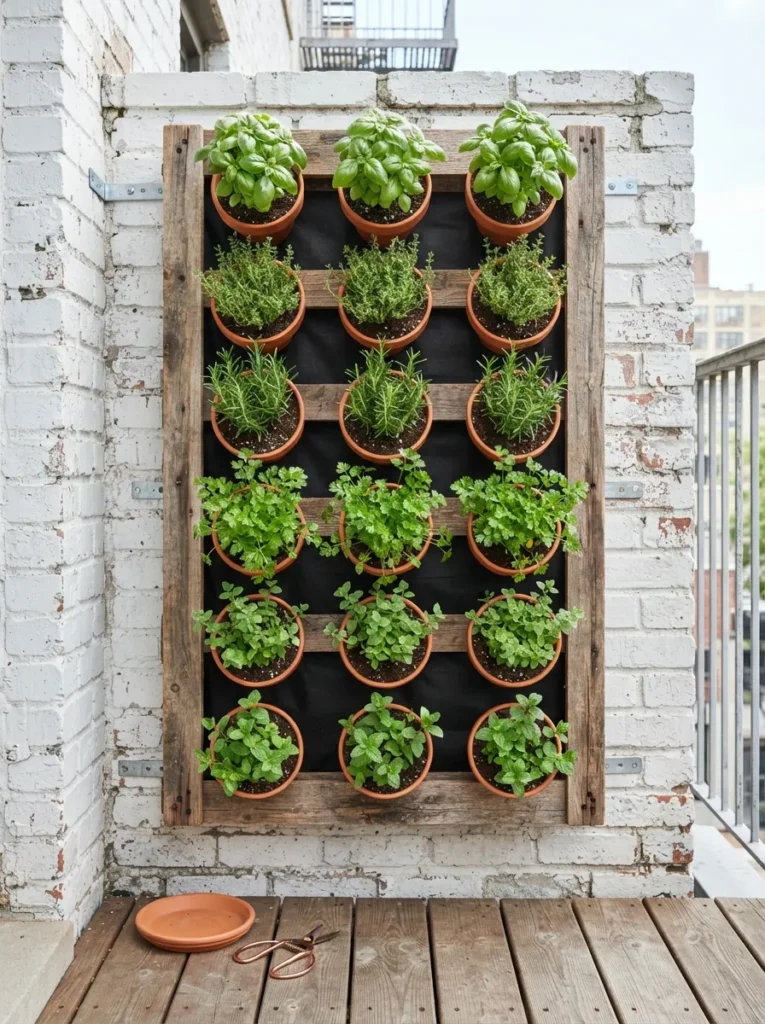
What it looks like: A pallet mounted flat against a wall, its slat gaps lined with fabric to hold soil and small pots in tiers.
Why it works: Vertical growing solves the single biggest complaint about small patios no floor space for a garden bed. Stacking upward instead of outward turns a two-foot-wide wall into six planting rows.
How to copy it: Staple landscape fabric across the back and bottom of each slat gap, let it dry for 24 hours, then fill with potting soil and plant directly or nestle in small pots. Not a cook? The same tiered framework works just as well for a run of modern succulent planter ideas instead of herbs.
Best for: Apartment balconies and courtyard patios with almost no ground space to spare.
Small-Space Tip: Lean the pallet against the wall at a slight backward angle rather than mounting flush it drains better and won’t rot as fast.
6. Woven Cushion & Textile Layering
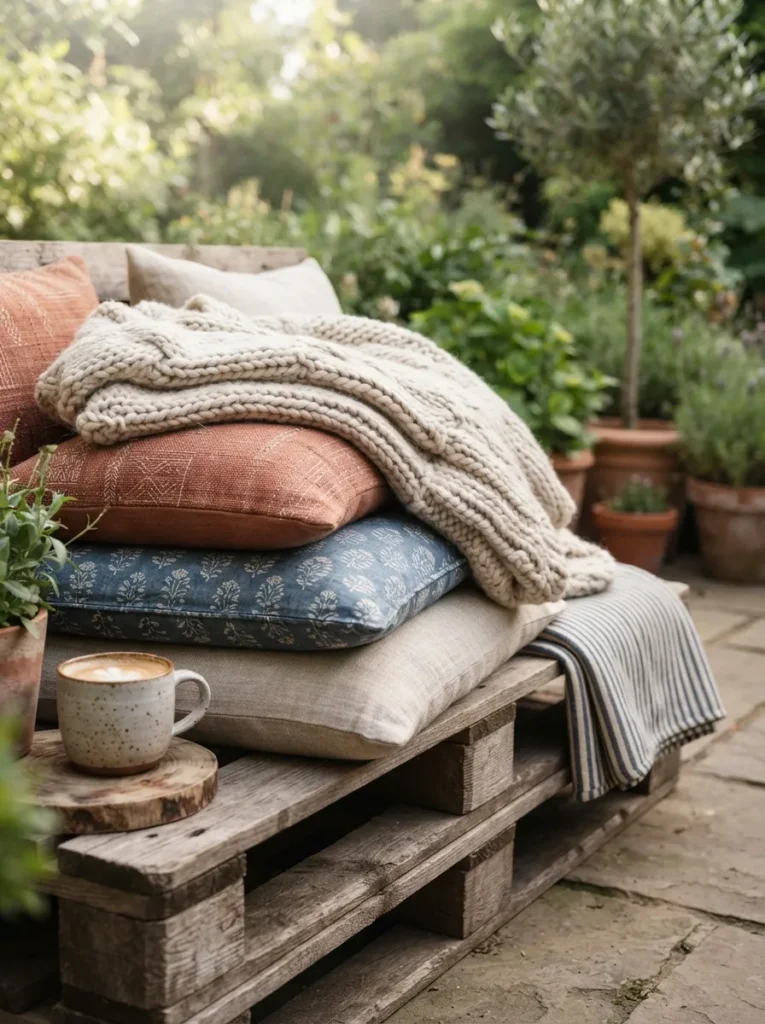
What it looks like: Two or three cushion patterns in the same color family, stacked rather than matched, with one chunky knit throw draped over the arm.
Why it works: Pallet wood has almost no softness on its own texture layering is what makes the seating feel inviting rather than like a stack of shipping crates with a pillow on top.
How to copy it: Choose one solid cushion as a base, add one block-print or striped pattern, then finish with a textured throw in a third, slightly darker shade of the same palette.
Best for: Anyone who’s built the frame but the seating still feels unfinished.
Up next: the material choice that quietly anchors every idea after this one.
7. Terracotta & Raw Wood Color Pairing
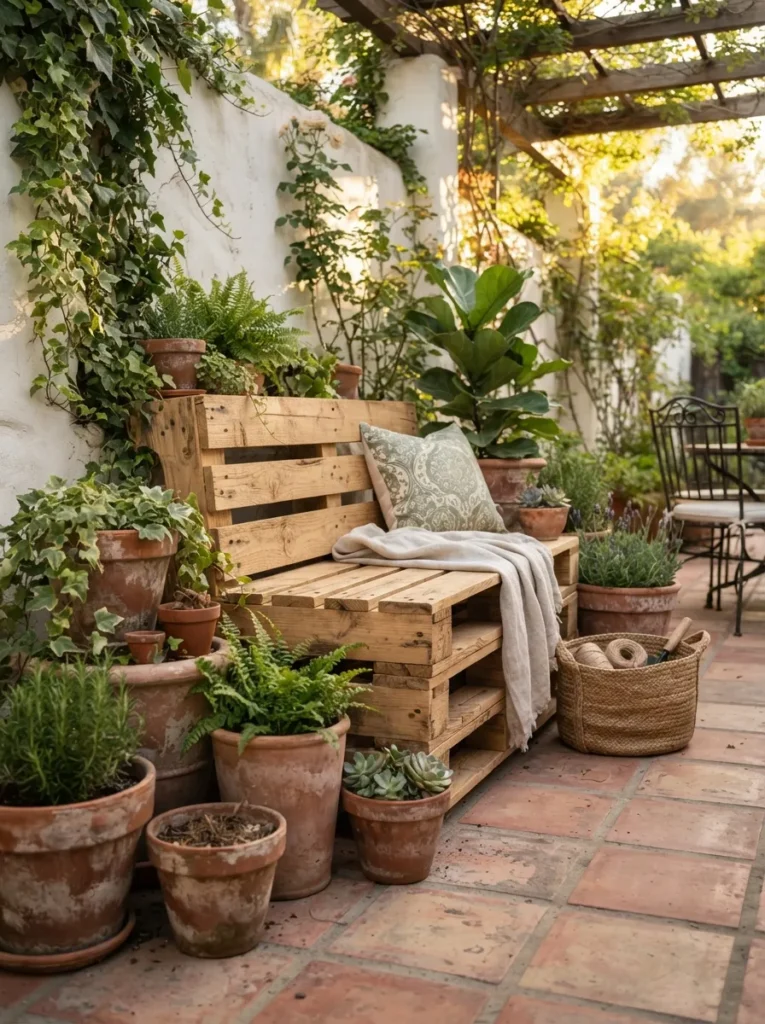
What it looks like: Untreated pallet wood left its natural honey-oak tone, set against terracotta pots rather than painted or stained furniture.
Why it works: Terracotta and raw oak sit close together on the color wheel both are warm and earthy so the pairing reads cohesive without either surface needing to match exactly.
How to copy it: Skip stain entirely on one piece per seating area, seal it with a clear matte exterior oil, then group three or more terracotta pots of different heights nearby.
Best for: Anyone who likes the idea of stain but doesn’t want to commit to a color.
Important Note: Raw sealed wood still needs re-oiling roughly once a year people assume “clear coat” means permanent, and it isn’t.
8. Rope-Slung Pallet Swing
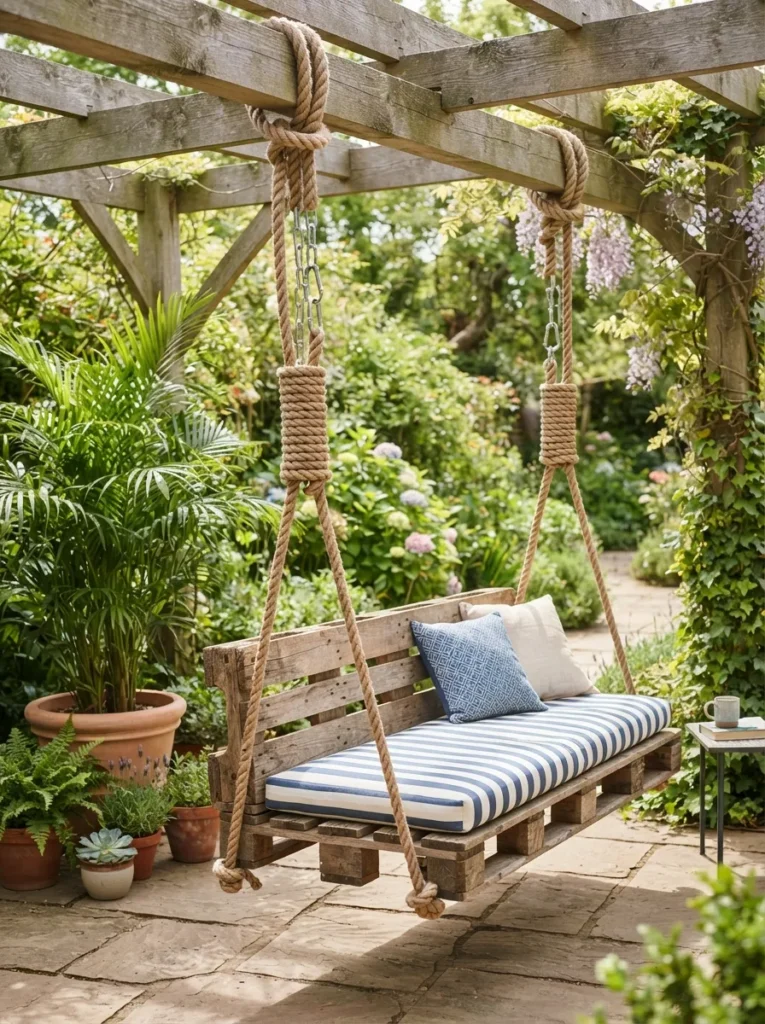
What it looks like: A single pallet, reinforced underneath, hung flat by four rope corners from a pergola or sturdy tree branch.
Why it works: A swing changes how a patio functions, not just how it looks it gives the space a second, more playful seating zone without taking up any new footprint.
How to copy it: Reinforce the pallet’s underside with an extra 2×4 frame, run galvanized chain through the corners hidden beneath decorative rope wrap, and mount to a beam rated for at least 300 pounds.
Best for: Families and anyone with a pergola or overhang strong enough to support real weight.
9. Pallet Bar Cart
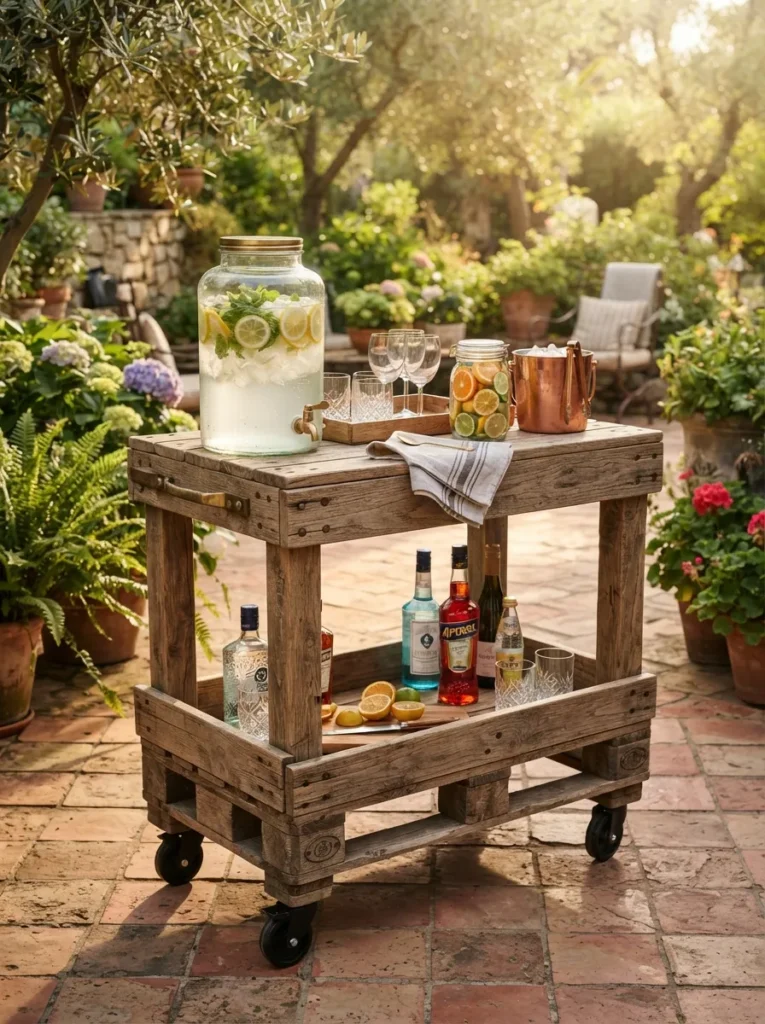
What it looks like: Two pallet sections stacked with a shelf gap between them, mounted on locking caster wheels for rolling between the kitchen and the patio.
Why it works: Mobility is the whole point a fixed bar table only works in one spot, while a cart adapts to whatever the gathering actually needs that day.
How to copy it: Cut one pallet in half for the top shelf, keep a full pallet as the base, bolt both to a plywood spine, then attach four locking casters rated for outdoor use.
Best for: Anyone who entertains often and needs furniture that earns its keep in more than one spot.
Shop This Look
| Product |
|---|
| Locking caster wheel set, outdoor-rated |
| Galvanized drink dispenser with spigot |
| Stackable acrylic outdoor glassware |
| Exterior wood screws, weatherproof |
| Linen cocktail napkins |
The next idea is a small change with a visible result.
10. Pallet L-Shaped Sectional Layout
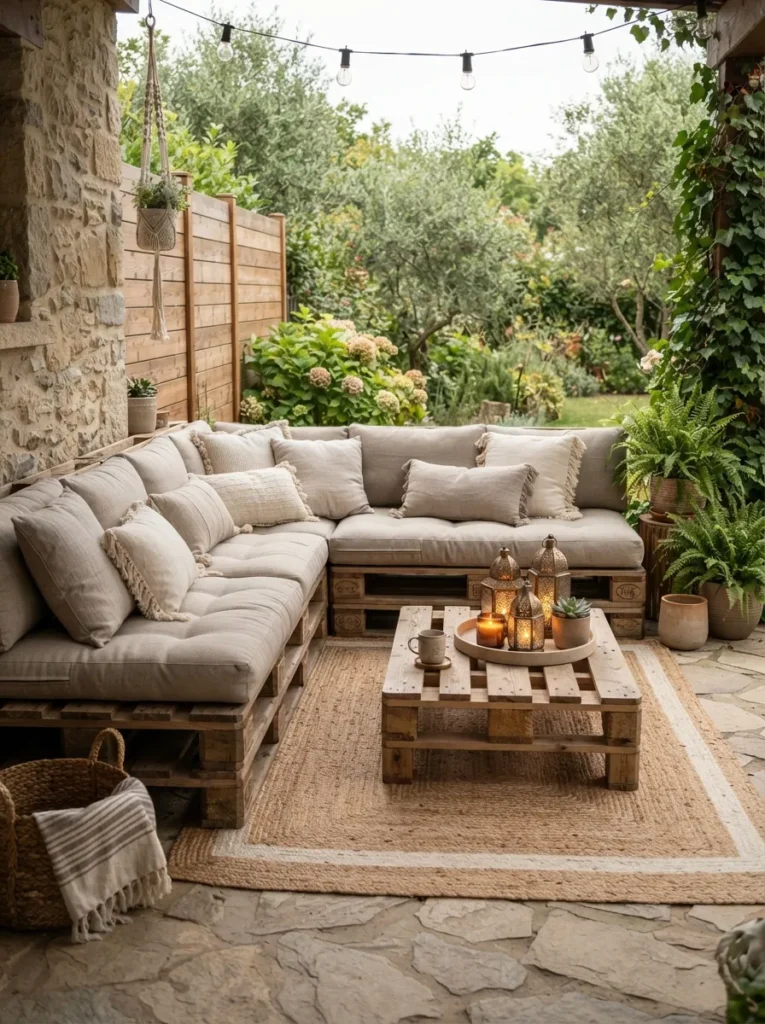
What it looks like: Two pallet daybeds joined at a right angle to wrap around a corner, framing one shared center table.
Why it works: An L-shape pulls seating into a single conversational cluster rather than two separate benches facing off it’s the layout principle behind why sectional sofas work indoors, applied outside.
How to copy it: Build two matching daybed sections at identical heights, bolt them together at the corner joint, then center a low table where both sections meet.
Best for: Larger patios hosting groups of four or more regularly.
11. Lantern Ledge Shelf
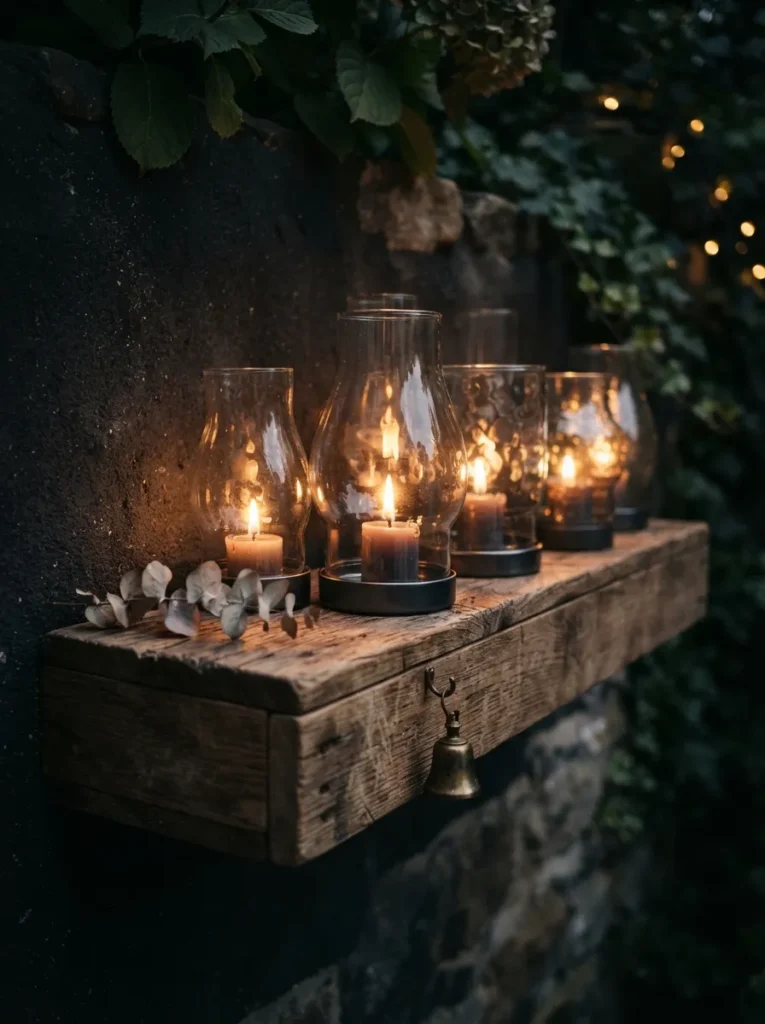
What it looks like: A single narrow board from a disassembled pallet, mounted as a floating ledge just below eye level, lined with lanterns.
Why it works: Light at seated eye level does more for ambiance than any overhead fixture it’s the same principle restaurants use with low pendant lighting, just adapted for a fence line.
How to copy it: Mount the board with two L-brackets at roughly 40 inches high, space lanterns evenly with at least six inches between each for airflow around open flames.
Best for: Patios used mainly in the evening for dinner or drinks.
Pro Tip: Use battery flicker candles on windy nights real flame lanterns tip over more easily than people expect on a narrow ledge.
12. Pallet Ladder Plant Stand
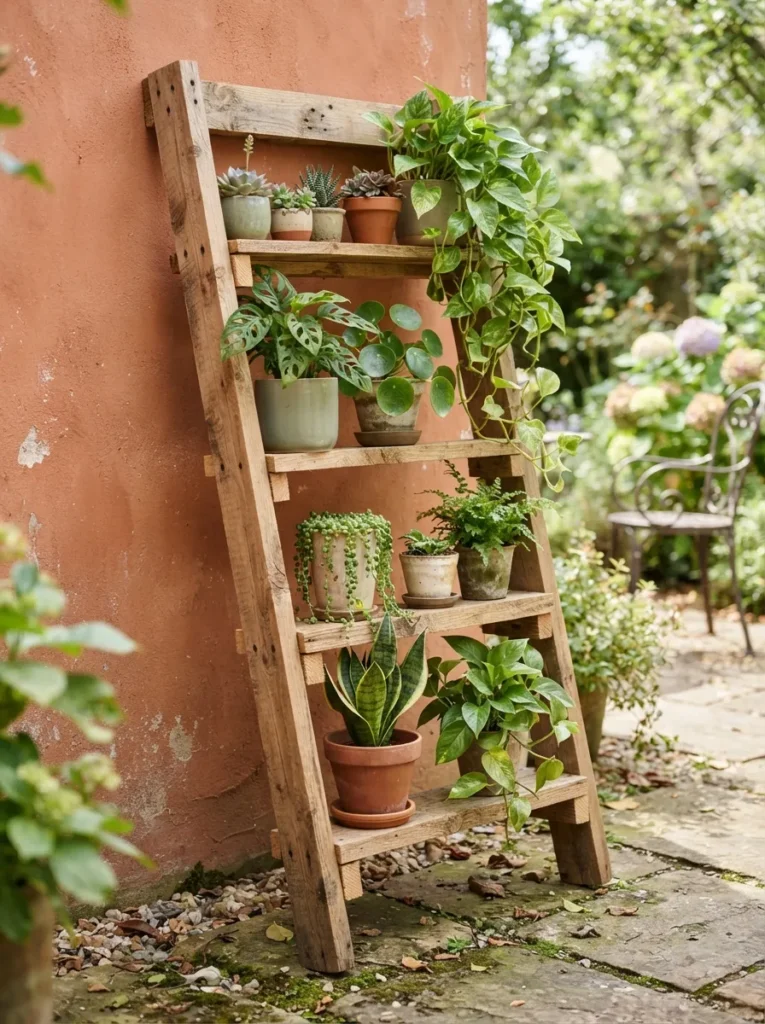
What it looks like: Pallet slats cut into shortening lengths and mounted as rungs on two angled side rails, leaned against a wall like a ladder.
Why it works: Staggered height does the visual work that a row of same-size pots can’t it draws the eye upward and makes a small plant collection read as intentional rather than cluttered.
How to copy it: Cut rungs in five decreasing lengths, space them 10 inches apart on two angled rails, and lean at roughly 15 degrees against a solid wall for stability.
Best for: Plant collectors running out of ground-level space.
Important: A leaning ladder shelf isn’t freestanding-safe most people skip anchoring it, and one strong gust is enough to tip it forward.
The next few ideas lean into color worth slowing down for.
13. Driftwood Blue-Grey Stain
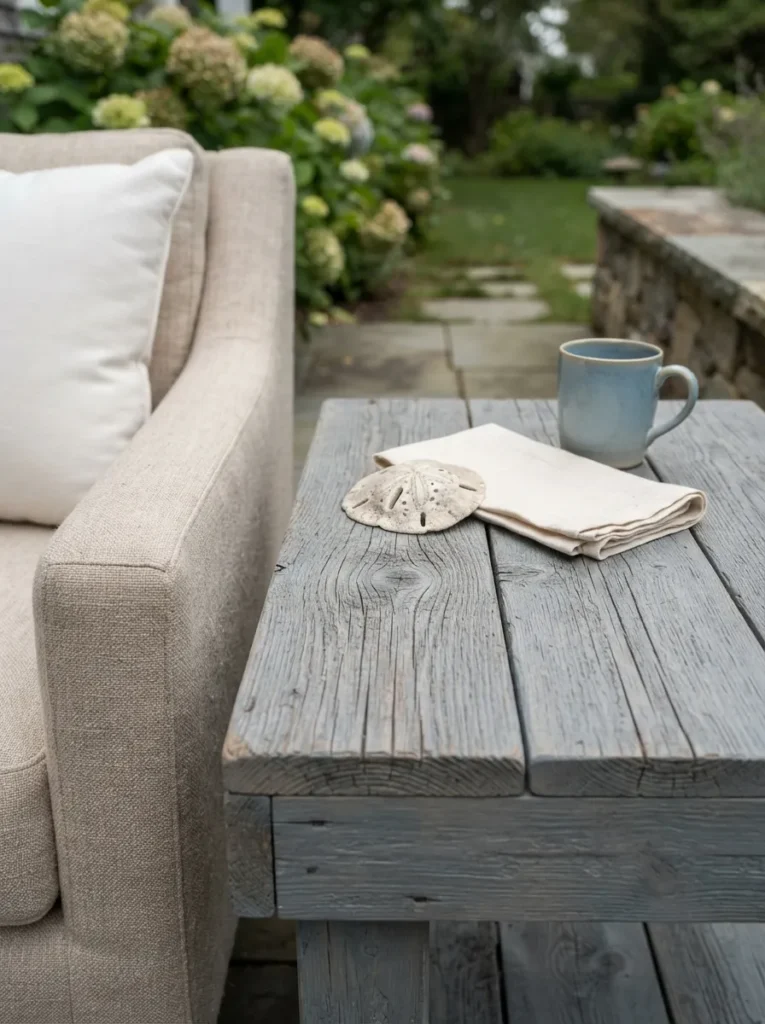
What it looks like: Pallet wood stained with a faint blue undertone rather than pure grey closer to sea glass than concrete.
Why it works: A cool undertone shifts the whole mood coastal rather than industrial, which matters because plain grey stain can read cold or unfinished without something to warm it up.
How to copy it: Mix a small amount of blue exterior stain into a base grey wash start with a 1:10 ratio and test on scrap wood before committing to a full piece.
Best for: Coastal-adjacent patios or anyone chasing a beach-house feel without literal nautical decor.
Quick Win: Test the exact ratio on a scrap slat first blue stain shifts noticeably once it dries, and what looks right wet is often too saturated once cured.
14. Pallet Coffee Table with Hairpin Legs
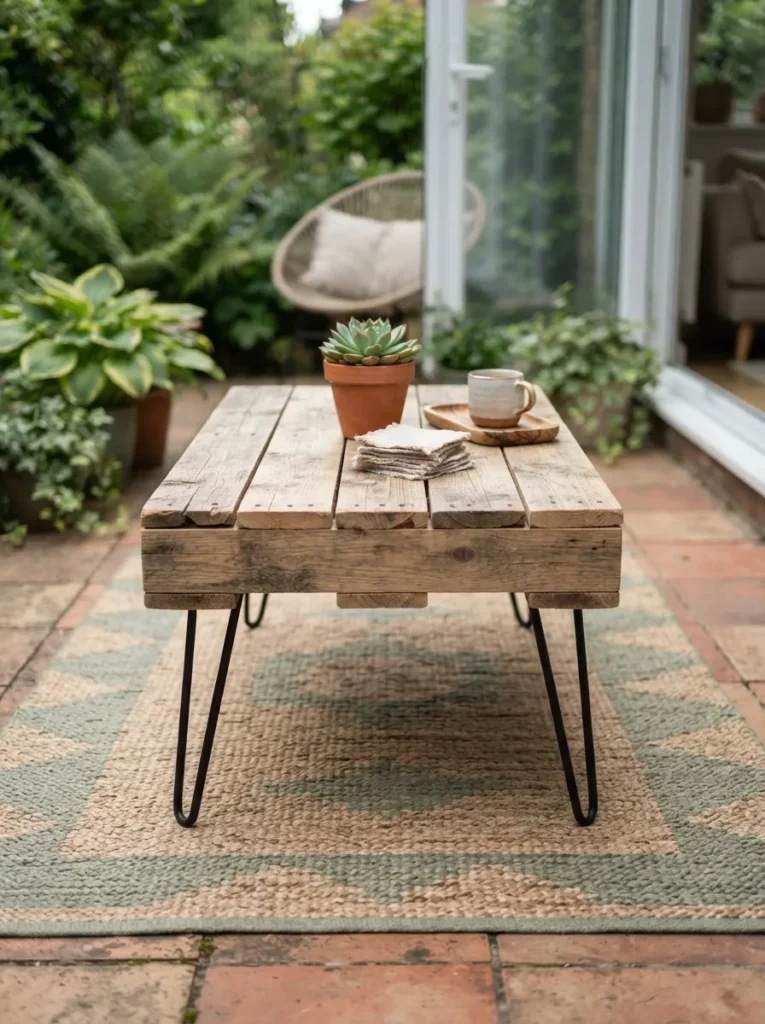
What it looks like: A single trimmed pallet top mounted on slim black hairpin legs instead of bulky wood legs.
Why it works: Thin metal legs create negative space underneath the tabletop, which keeps a small patio feeling open a boxy wood-legged table in the same footprint reads noticeably heavier.
How to copy it: Trim the pallet to a clean rectangle, sand thoroughly, then attach four 12-inch hairpin legs rated for at least 50 pounds each at the corners.
Best for: Small patios where every piece needs to visually take up less room than it does.
Shop This Look
| Product |
|---|
| Black metal hairpin table legs, 12-inch set |
| Exterior wood conditioner |
| Round linen coasters, weatherproof |
| Corner mounting brackets |
15. Compact Balcony Bench
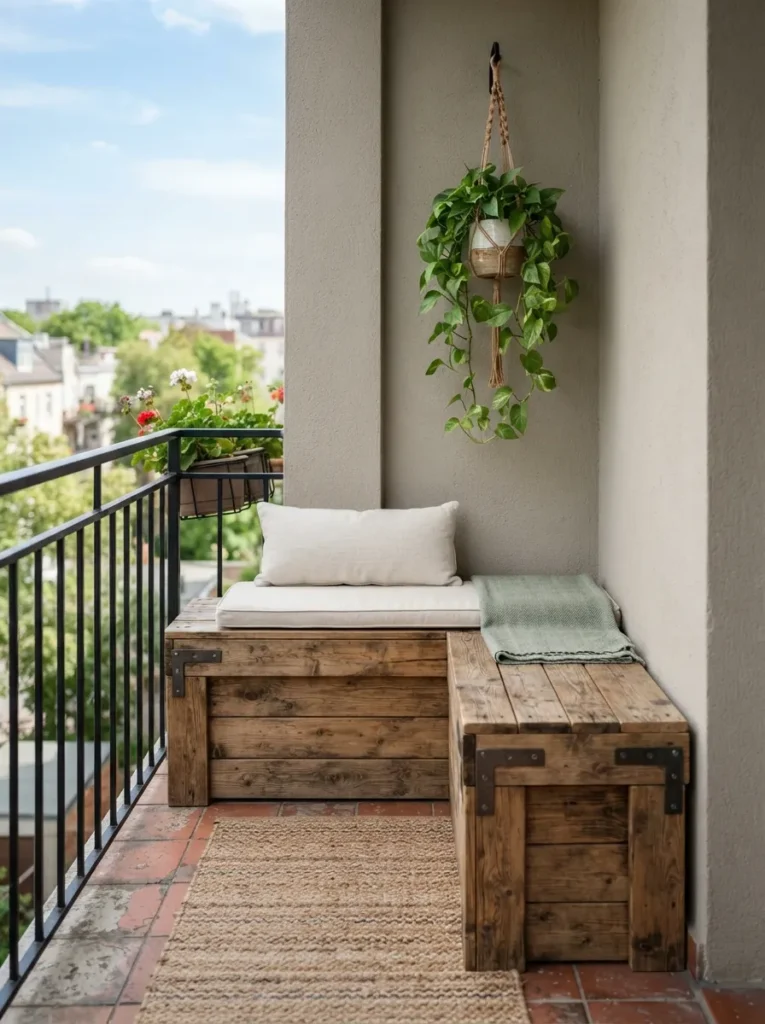
What it looks like: A single quarter-pallet section, trimmed narrow, fitted snugly into a balcony corner rather than floating in the middle of the space.
Why it works: Corner placement is the single biggest space-saver on a small balcony it frees the entire center floor for movement, which matters more than the bench itself in a tight footprint.
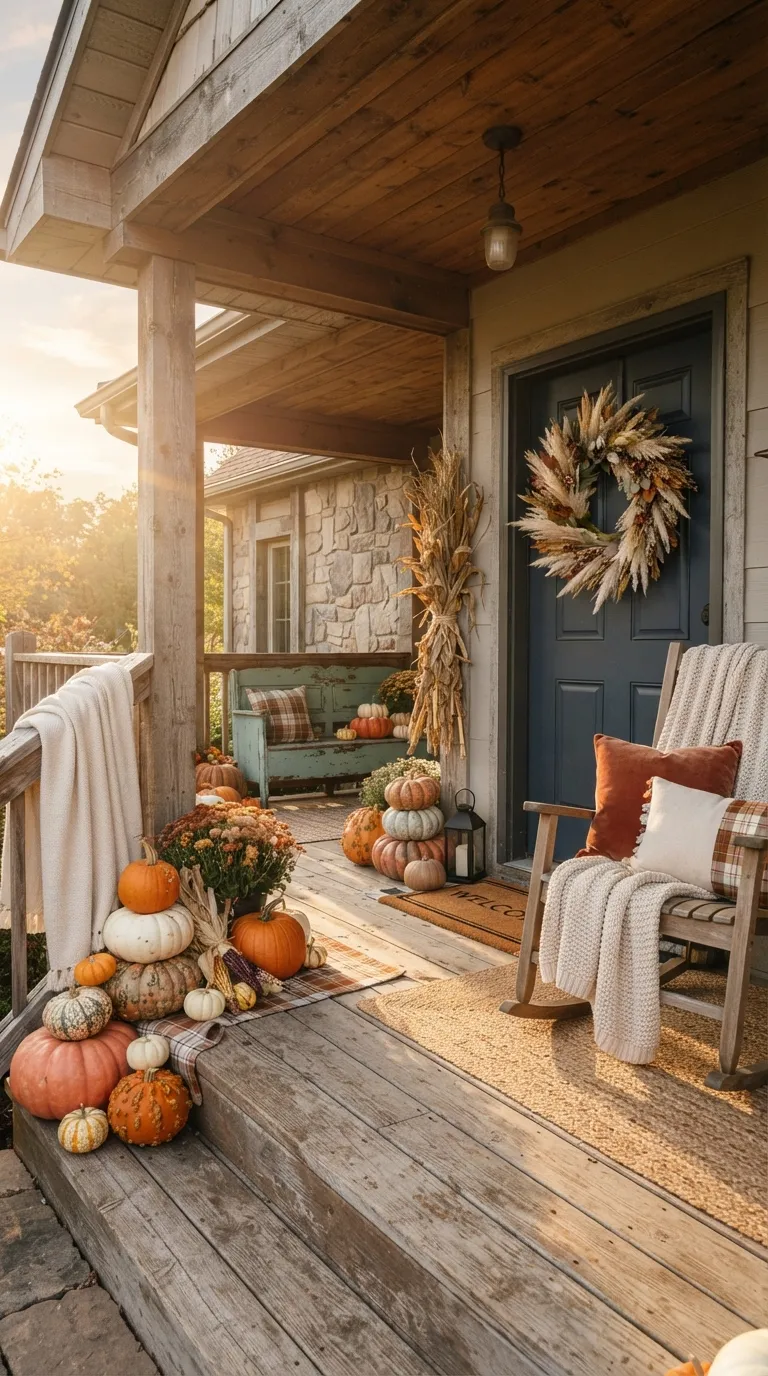
How to copy it: Measure the corner first, trim the pallet to roughly 20 inches deep, and mount a thin 3-inch cushion rather than a thick one to keep the scale proportional to the space. The same corner-first logic carries over nicely if you’re working through fall porch ideas for a tight front-entry space too.
Best for: Studio apartment balconies under 40 square feet.
Small-Space Tip: Keep the bench under waist height anything taller in a corner blocks sightlines and makes the balcony feel smaller than it is.
16. Pallet Privacy Screen
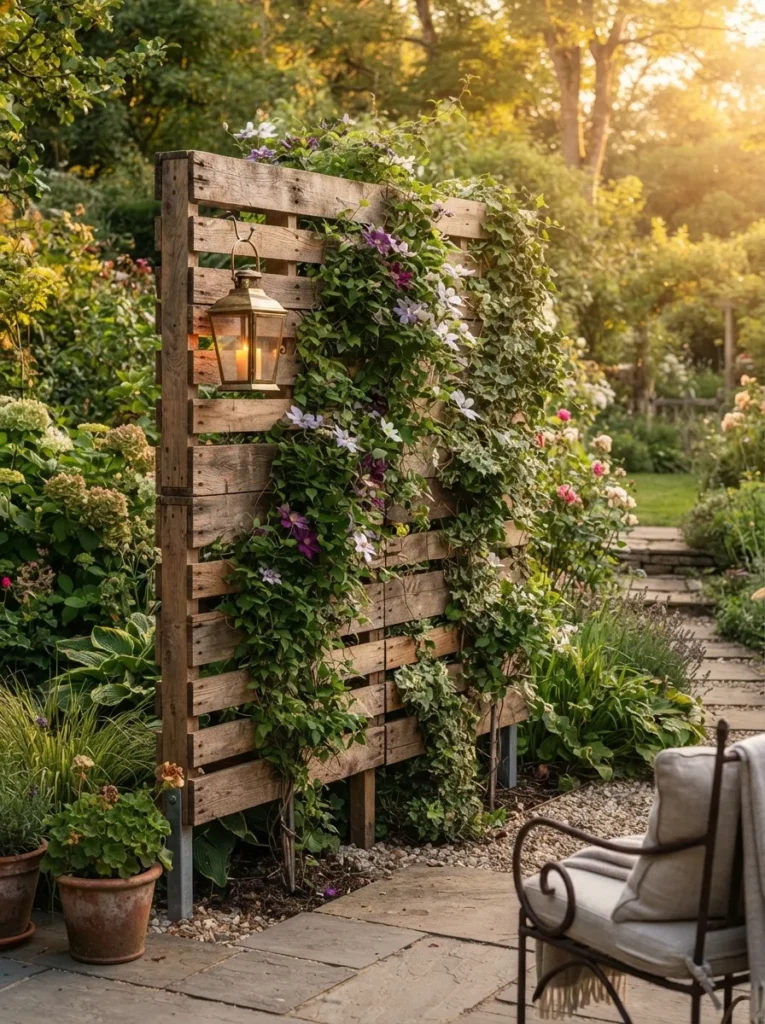
What it looks like: Two or three pallets braced upright side by side, forming a low wall along one edge of the patio.
Why it works: Screening a sightline from a neighbor’s window, a street, a shared fence does more for how private a patio feels than any amount of furniture arranging.
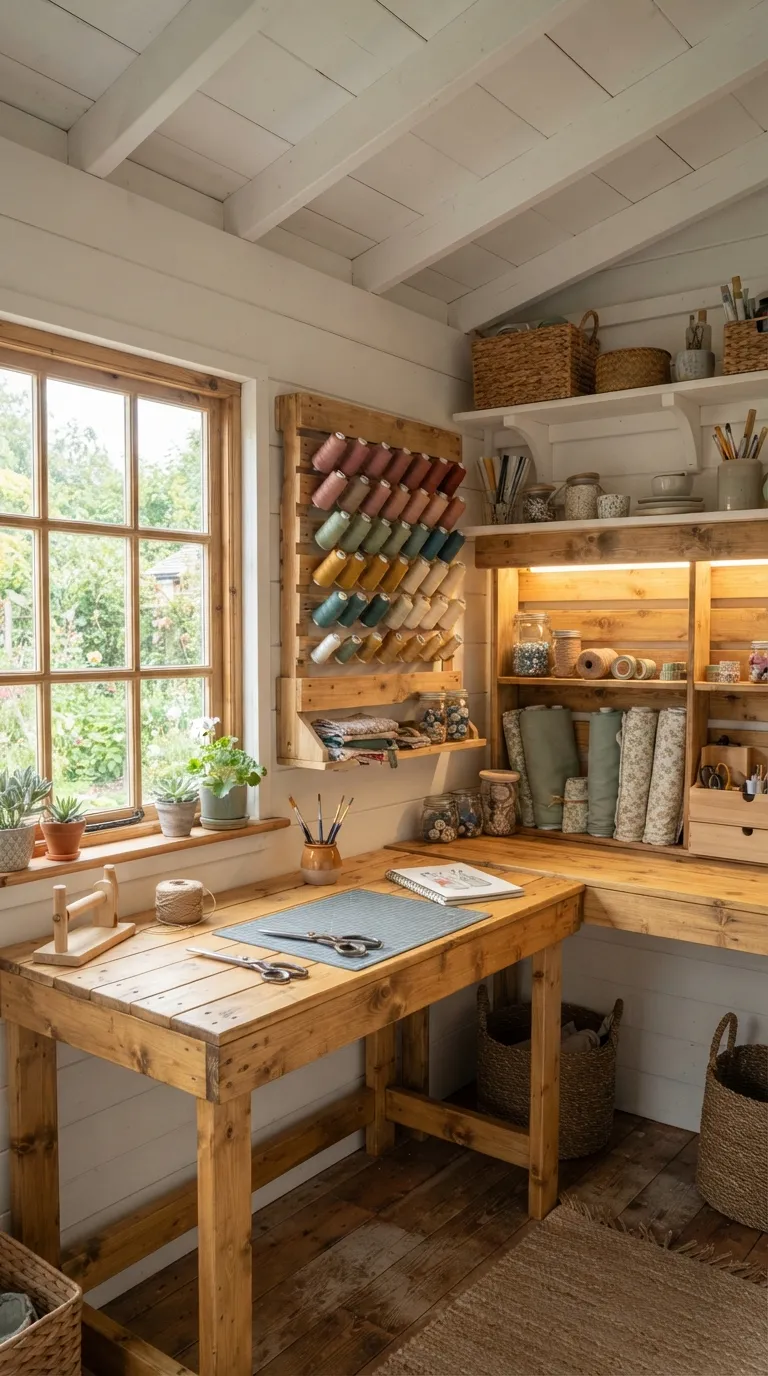
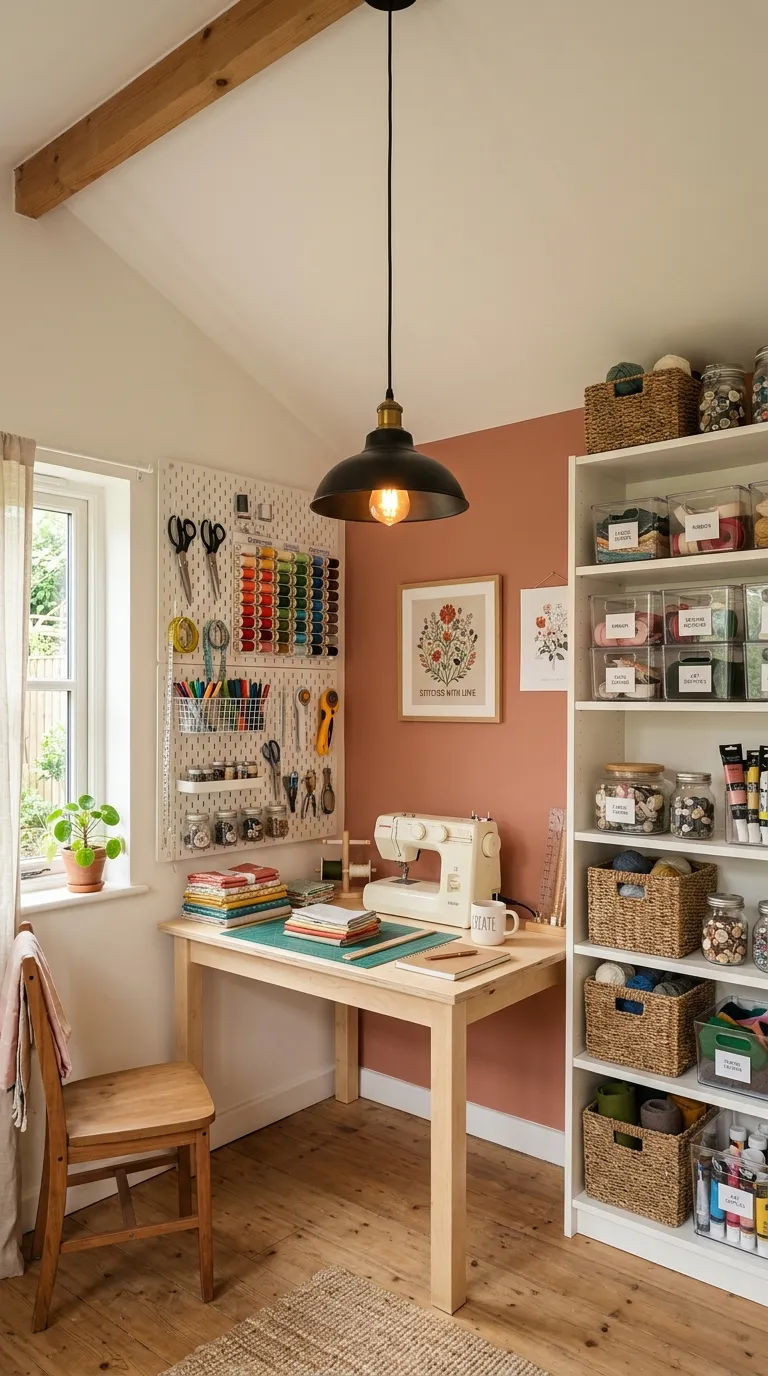
How to copy it: Brace each pallet with a 4×4 ground post sunk 18 inches deep, secure pallets to the posts with exterior screws, and let a climbing vine fill the gaps over one season. The same braced-panel approach is worth borrowing if you’re building out one of these small she shed craft room ideas and need a quick partition wall.
Best for: Patios that back directly onto a neighbor’s yard or a public sidewalk.
17. Solar-Inlay Slat Lighting
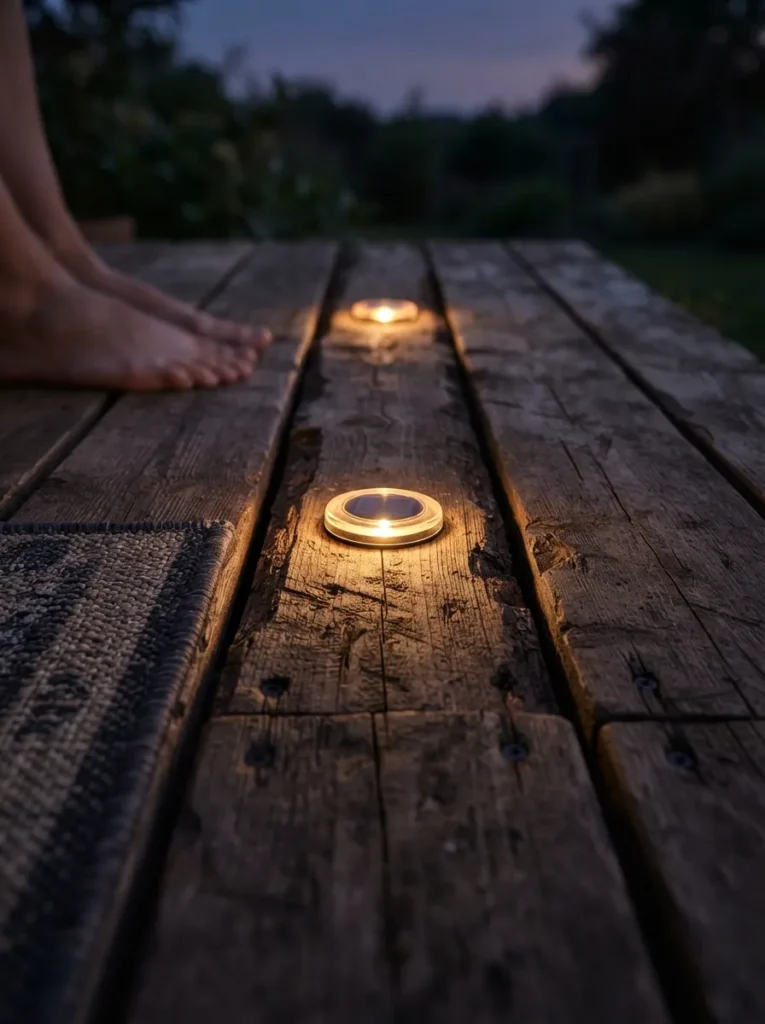
What it looks like: Small solar puck lights recessed directly into gaps between pallet deck boards, so the light source itself nearly disappears in daylight.
Why it works: Inlaid lighting marks the edges of a space without a single visible fixture the light does the work, not the hardware, which is exactly the kind of detail that separates a finished-looking build from an unfinished one.
How to copy it: Drill holes matching the puck light diameter along the deck perimeter, wire them in series if hardwired or space individually if solar, and seal the edges with exterior caulk.
Best for: Anyone with a raised pallet deck who wants definition without visible fixtures.
Important Note: Solar pucks need a full six hours of direct sun to run all evening shaded decks should wire a low-voltage system instead.
My Views:: Here’s something most guides won’t tell you pallet deck gaps widen by nearly a quarter inch after one summer of expansion and contraction. Plan puck light spacing for the gap size in humid weather, not the dry gap you’re measuring on install day, or the fixtures end up loose by August.
18. Pallet Fire-Pit Surround Bench
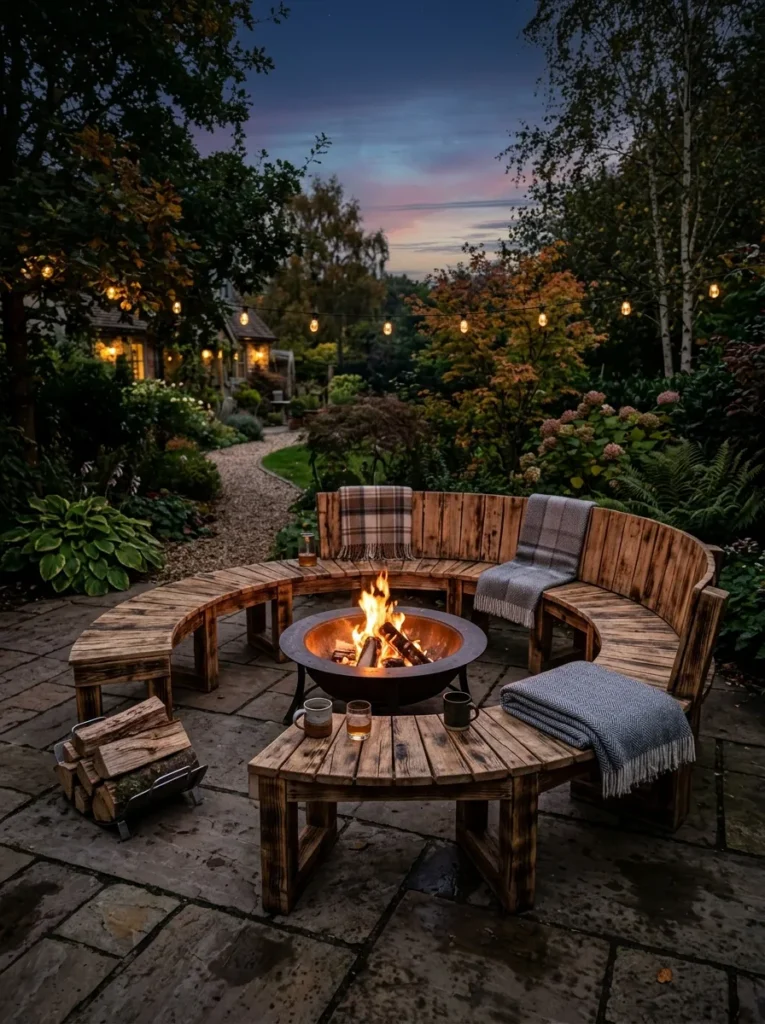
What it looks like: Curved pallet-wood bench segments arranged in a loose circle around a freestanding metal fire pit, set back at a safe distance.
Why it works: A circular layout puts every seat at equal distance from both the fire and each other it’s the same reason campfire circles have worked for centuries, just built with reclaimed lumber instead of logs.
How to copy it: Cut pallet boards into curved segments using a jigsaw template, mount them on a low frame, and keep the entire bench at least 3 feet from the fire pit’s outer edge.
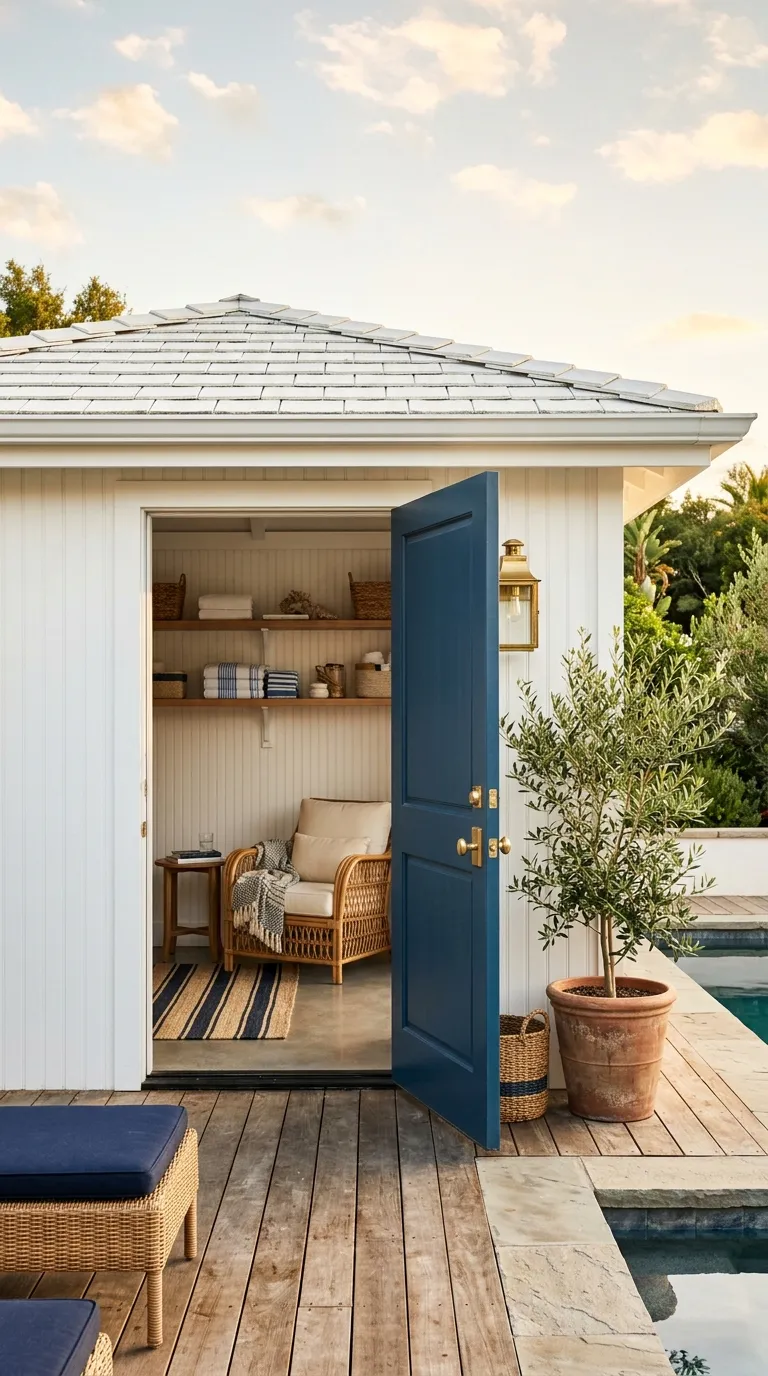
Best for: Larger backyards with room for a dedicated gathering zone the kind of full outdoor overhaul covered in this pool house makeover, if you’re planning the whole backyard at once.
Warning: Never build fire-pit seating from untreated pallet wood placed closer than the manufacturer’s clearance distance even sealed wood can scorch or ignite from radiant heat over a full evening, not just direct flame contact.
Shop This Look
| Product |
|---|
| Freestanding steel fire pit, 30-inch |
| Fire-resistant hearth pad |
| Wool outdoor blankets |
| Long-handled fire pit tool set |
| Spark screen cover |
19. Layered Rug + Pallet Deck Flooring
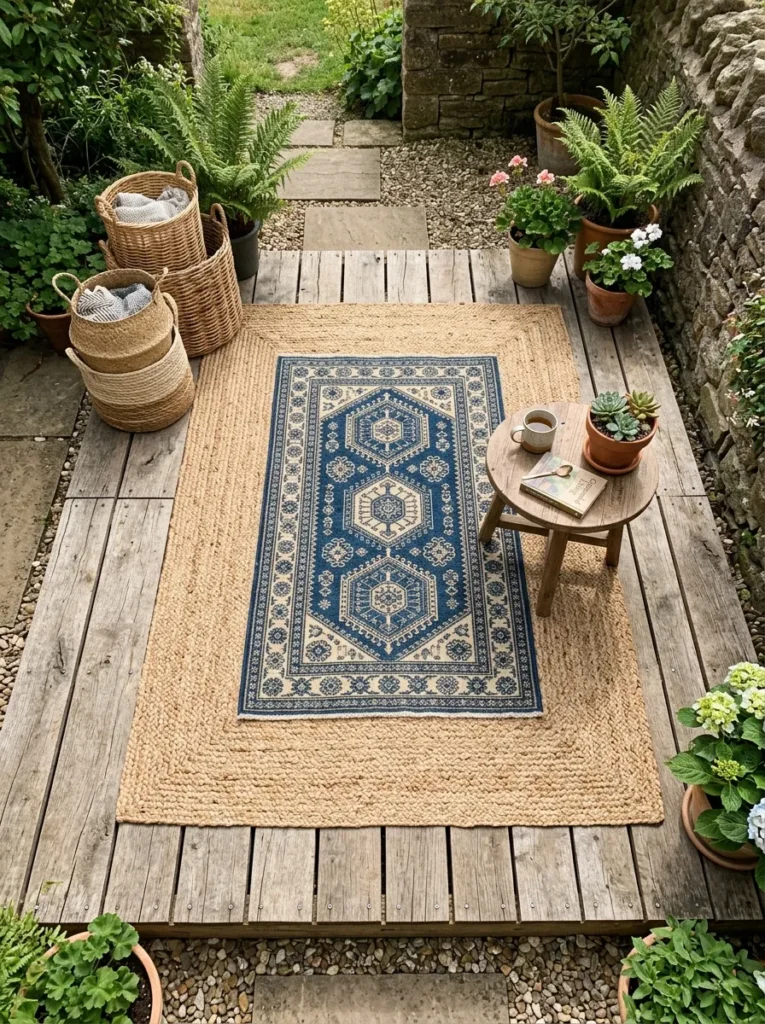
What it looks like: A full pallet deck floor with a natural jute rug as a base layer, topped by a smaller patterned rug positioned off-center.
Why it works: Layering rugs defines a seating zone within a larger deck without building any walls or dividers it’s a floor-plan trick that works because the eye reads rug edges as room boundaries.
How to copy it: Lay a large jute rug covering roughly 80% of the deck footprint, then center a smaller patterned rug over just the seating cluster to visually separate it from walkway areas.
Best for: Larger decks that need zoning between a dining area and a lounge area.
Quick Win: Use outdoor-rated polypropylene rugs, not natural jute, if the deck gets direct rain exposure actual jute molds within a season outdoors.
20. Sage-Green Painted Accent Slats
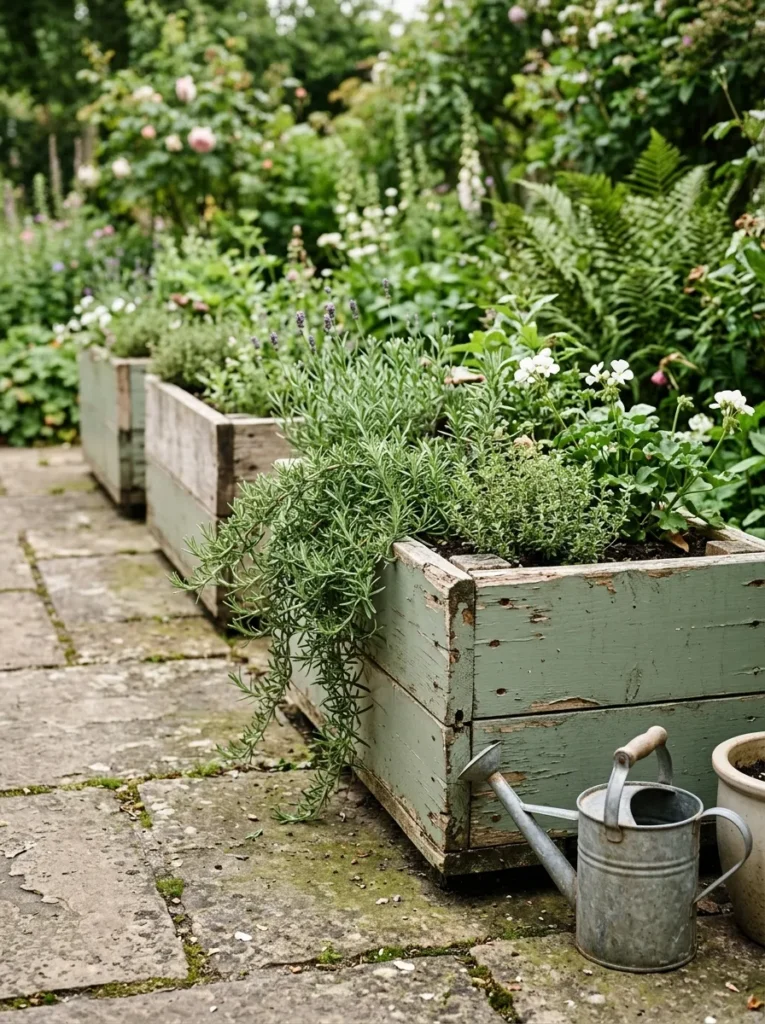
What it looks like: Select pallet pieces usually planters or a single accent bench painted a muted, chalky sage rather than left natural or grey-washed.
Why it works: A single painted color accent breaks up what can otherwise become a monotone wall of brown wood sage specifically sits close enough to garden greenery that it doesn’t compete with actual plants.
How to copy it: Choose one or two pieces only, never the whole set, and use a chalk-finish exterior paint that distresses naturally at the edges rather than a glossy finish that shows every scratch.
Best for: Anyone whose current setup feels visually flat or too uniformly brown.
Last one and it ties the whole layout together.
21. Macramé & Textile Layering
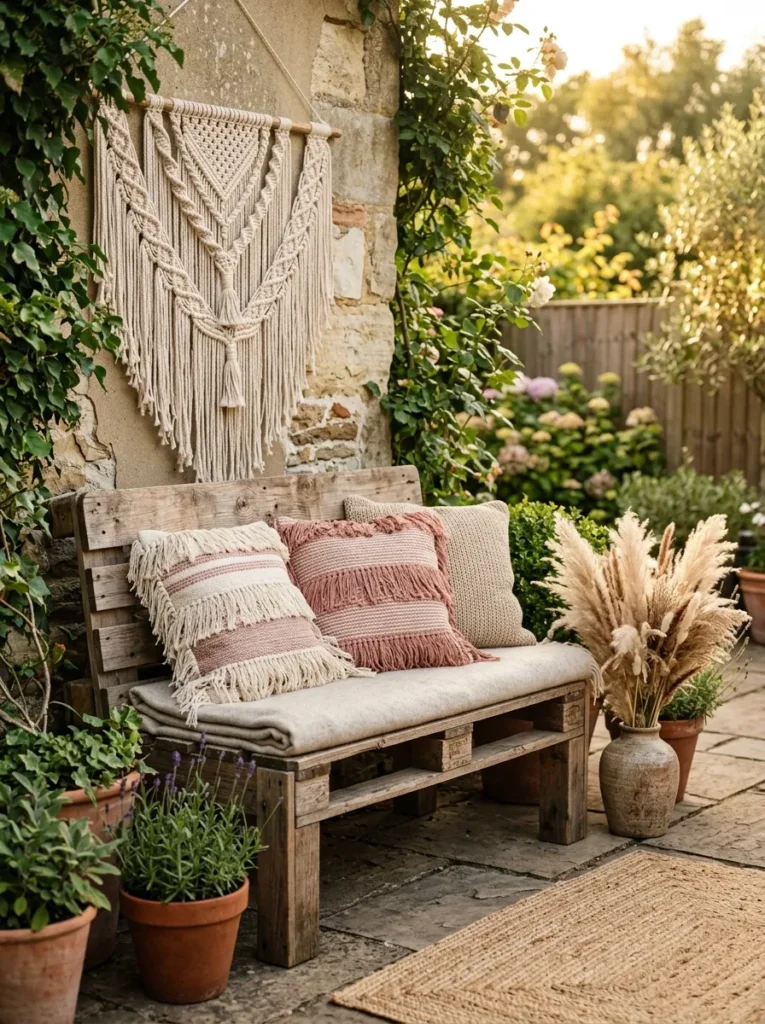
What it looks like: A macramé wall hanging mounted directly behind a pallet bench, paired with woven-texture cushions rather than plain fabric.
Why it works: Fiber texture is the one thing pallet wood can’t provide on its own the knotwork softens the visual line where hard wood edges meet open air, which is why the pairing shows up in nearly every finished garden patio style space.
How to copy it: Hang a macramé panel roughly two-thirds the width of the bench behind it, mounted at a height where the bottom fringe just clears the seat back. If you’d rather make it yourself, these crochet wall hangings use a similar knot logic and hold up fine outdoors when sealed.
Best for: The final styling pass on a space where all the structural pieces are already built.
Quick Win: Buy the macramé panel pre-made rather than knotting one a well-sized ready-made panel costs less than the cord alone for a DIY version of the same size.
How to Start Your Garden Patio Style Transformation
What I’ve found with real patios: start with the daybed or bench, not the planters. That one piece sets the wood tone every other build follows, and choosing it first a warm greige stain, say means you’re matching everything else to a decision that’s already made instead of guessing.
The most common fixable mistake is mixing stain tones without a plan one piece grey-washed, another left raw honey oak, a third painted sage, with no shared undertone connecting any of them. It reads as unfinished rather than eclectic. Pick one base tone before building piece two.
Three items under $50 that shift the whole space fast: a single chunky knit throw in oatmeal, a set of battery flicker candles for the lantern ledge, and one large terracotta pot planted with rosemary near the seating area.
A full transformation daybed, lighting, one accent piece realistically takes two solid weekends and somewhere between $150 and $400 depending on lumber cost in your area. A single weekend covers the daybed alone; the layered version with a privacy screen or fire-pit surround stretches closer to a season.
Ready to Create Your Dream Garden Patio Style Patio?
Twenty-one ideas, and they cover a lot more ground than “pallet furniture” usually gets credit for color washes, vertical growing space, lighting inlaid right into the floorboards, a full sectional layout. Nobody needs to build all of them at once, and honestly, most patios look better for the restraint of starting with just one or two. Pick the daybed or the coffee table this weekend and let the rest follow once you see how the wood tone settles in real light.
There’s something particular about the feeling this style gives back unpolished, sun-warmed, a little imperfect in exactly the way a good patio should be. Save the ones that fit your space now; the driftwood stain and the fire-pit bench tend to get pinned together more than any other pair in this list.
You Might Also Like
- 12 Small Balcony Garden Ideas That Make the Most of Every Inch
- 15 Coastal Patio Decorating Ideas for a Sun-Bleached Backyard
- 9 DIY Outdoor Lighting Ideas That Transform Any Patio After Dark