18 Pool House Makeover Ideas to Transform Your Backyard Escape
A pool house makeover isn’t about chasing a look it’s about turning a hot, cluttered storage shed into a space people actually want to hang out in. This guide walks through 18 practical ideas covering paint, flooring, lighting, storage, and furniture that make a real pool house work harder.
Most pool houses fail for the same boring reasons: peeling paint, soggy floors, and towels piled on every surface. Fix those first and the rest gets easier. There’s a particular kind of relief in walking into a pool house that’s dry, breezy, and organized instead of damp and chaotic that’s the target here, not a magazine spread.
Let’s get into the fixes that actually move the needle.
Quick Navigation
- Why a Pool House Makeover Makes Such a Difference
- 18 Pool House Makeover Ideas Worth Trying
- How to Start Your Pool House Transformation
- Ready to Create Your Dream Pool House?
Why a Pool House Makeover Makes Such a Difference
A pool house takes more abuse than almost any other structure on a property constant moisture, chlorine off-gassing, sun exposure, and wet feet tracking in daily. That’s why a pool house makeover isn’t cosmetic the way a bedroom refresh is; it’s functional first.
Mildew-resistant paint, water-tolerant flooring like polished concrete or composite decking, and open storage that lets towels actually dry all matter more than color coordination. Even a tiny 80-square-foot pool house benefits from tackling moisture control before anything else that’s the one move that prevents every other upgrade from failing early.
| Best starting point | Swap humidity-prone wall paint for a mildew-resistant finish |
| Biggest impact area | Flooring and towel storage |
| Budget to start | $150–$400 for a weekend refresh |
| Time to complete | One weekend for essentials, 4–6 weeks for a full overhaul |
18 Pool House Makeover Ideas Worth Trying
1. Repaint With a Mildew-Resistant Finish
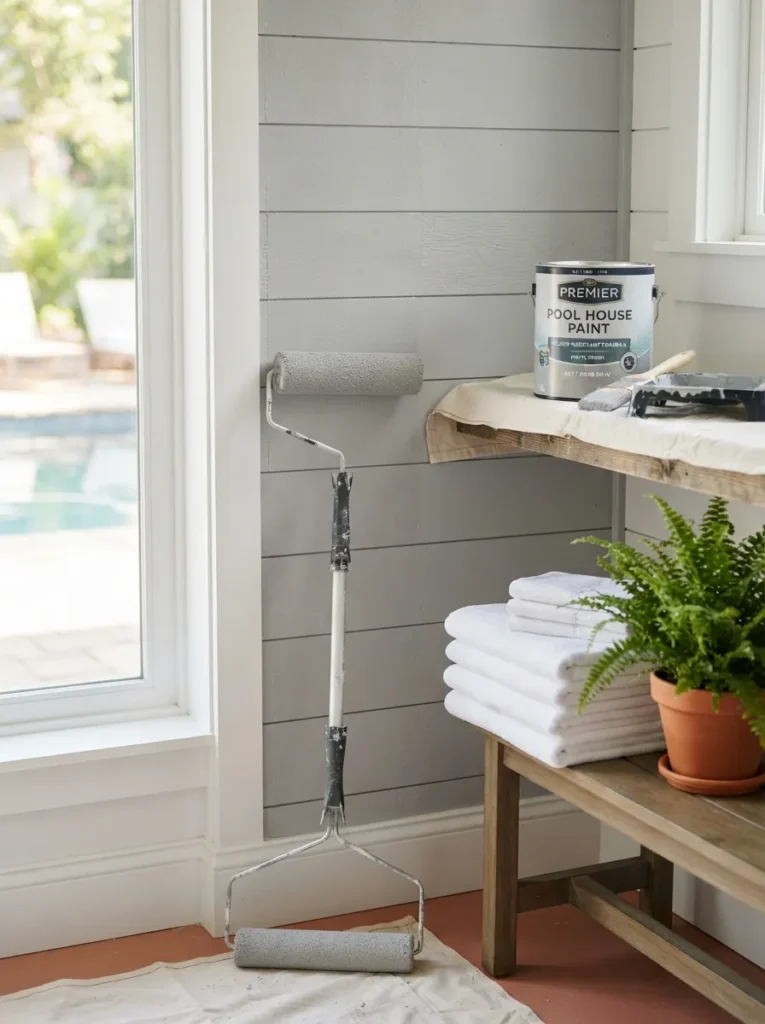
What it looks like: Clean, matte, and noticeably less blotchy near the door and window trim.
Why it works: Standard interior paint traps moisture and blisters within a year near pools a mildew-resistant, mold-inhibiting formula sheds humidity instead of absorbing it, which is basic chemistry most homeowners skip past.
How to copy it: Use a bathroom-and-kitchen-grade paint with a satin or semi-gloss finish, since flat paint holds moisture longer. Prime bare drywall first with a stain-blocking primer.
Best for: Anyone whose pool house already shows yellow staining or peeling near the baseboards.
Quick Win: A gallon of mildew-resistant paint runs about $45 and covers a small pool house in one coat if the old paint isn’t glossy.
2. Replace Flooring With Water-Tolerant Material
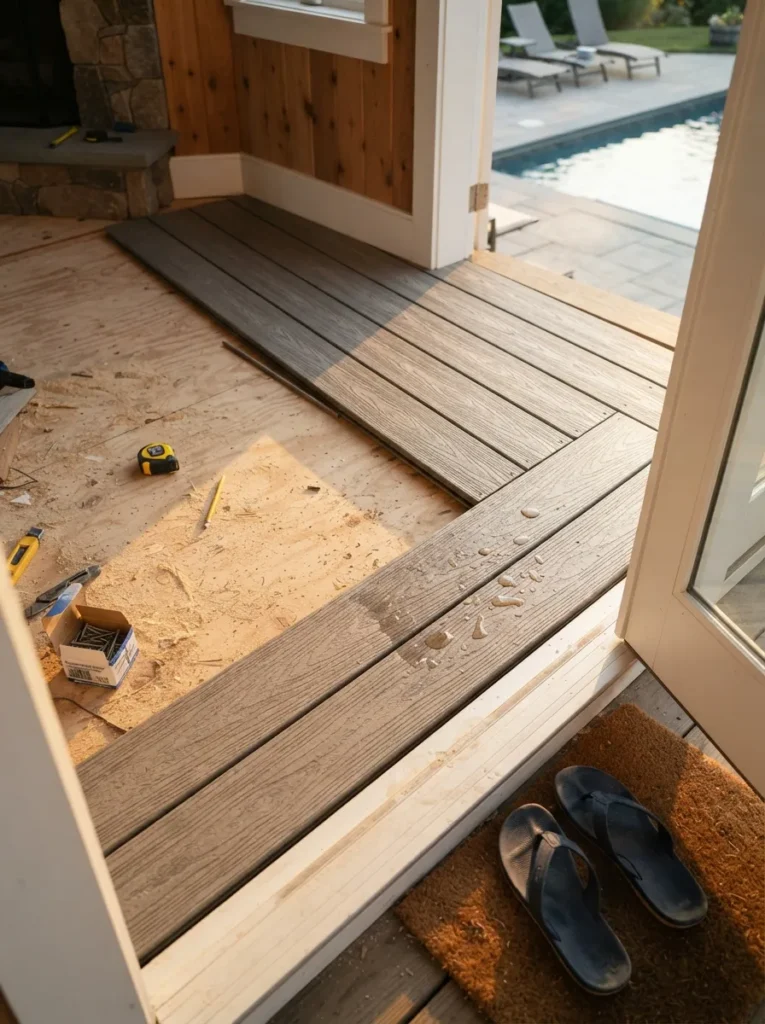
What it looks like: Flat, warm-toned planks that shed water instead of pooling it.
Why it works: Carpet and untreated wood absorb chlorinated water and stay damp for days, which is exactly what breeds mold underneath. Polished concrete, composite decking, or water-resistant vinyl plank drain and dry within hours instead.
How to copy it: Choose vinyl plank rated for wet areas, or seal existing concrete with a penetrating sealer rated for pool decks.
Best for: Anyone dealing with musty smells or warped flooring near the entrance.
Warning: Don’t install standard laminate flooring in a pool house even “water-resistant” laminate swells at the seams within a season once humidity gets trapped underneath.
The next fix is one most people overlook entirely and it costs almost nothing to test.
3. Swap in a Statement Pendant Light
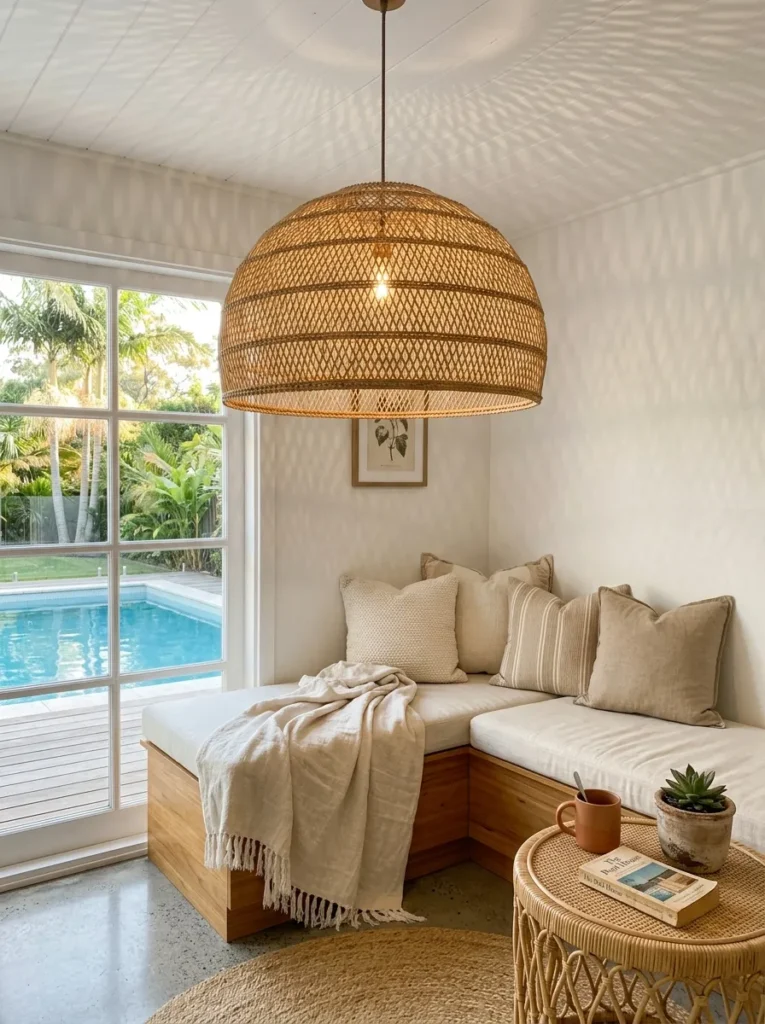
What it looks like: A single dappled-shadow fixture that makes the ceiling feel less like an afterthought.
Why it works: Most pool houses rely on one flat overhead bulb, which flattens the whole room visually. A woven or frosted-glass pendant adds texture and diffuses light instead of glaring straight down.
How to copy it: Hang the fixture at 6.5–7 feet from the floor so it clears foot traffic but still reads as intentional.
Best for: Anyone whose pool house currently has a bare bulb or builder-grade flush mount.
Styling Note: Pick a fixture rated for damp locations it’s a UL listing detail most people never check until the finish starts pitting.
4. Build a Storage Bench for Towels
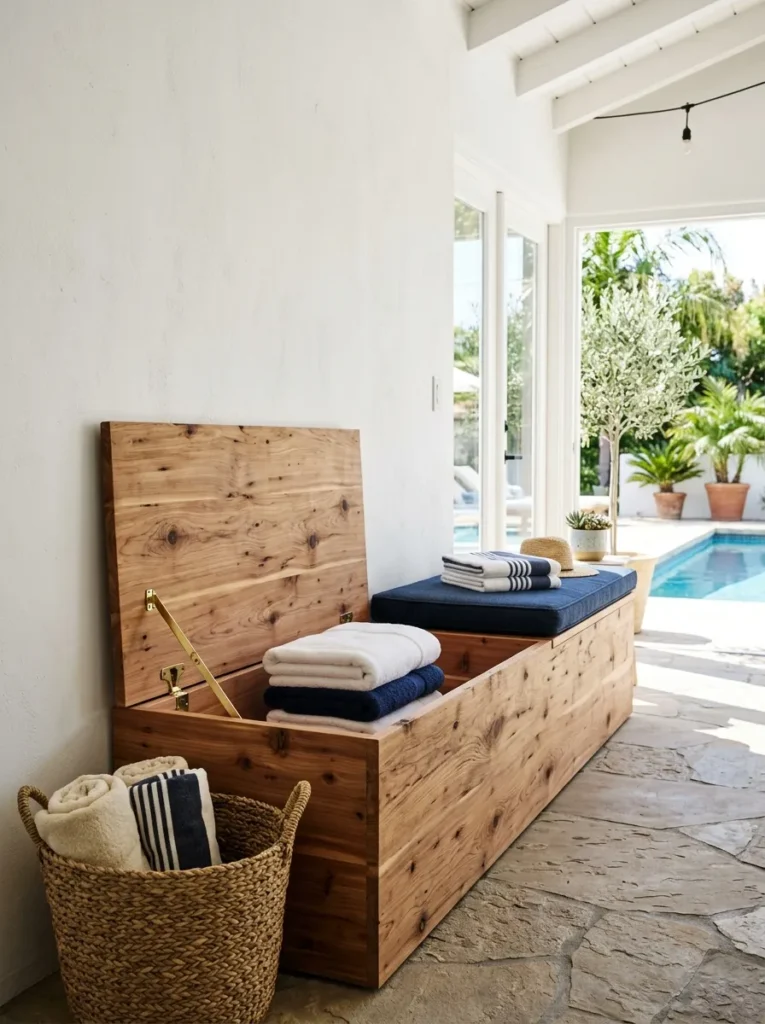
What it looks like: A low bench that doubles as seating and swallows the towel pile completely.
Why it works: Vertical clutter towels draped over chairs is the single biggest visual complaint about pool houses. A bench with lift-top storage removes it from sight while adding a place to sit and dry off.
How to copy it: Build it from cedar or marine-grade plywood so humidity doesn’t warp the joints over time.
Best for: Households with kids or frequent pool guests generating constant towel turnover.
✅ Weekend Storage Bench Checklist:
- [ ] Measure the wall length and decide bench depth (16–18 inches works for most towels)
- [ ] Choose cedar or marine-grade plywood, not standard pine
- [ ] Build the box frame and attach a piano hinge to the lid
- [ ] Seal all exposed wood with exterior-grade polyurethane before use
5. Layer an Outdoor-Grade Rug
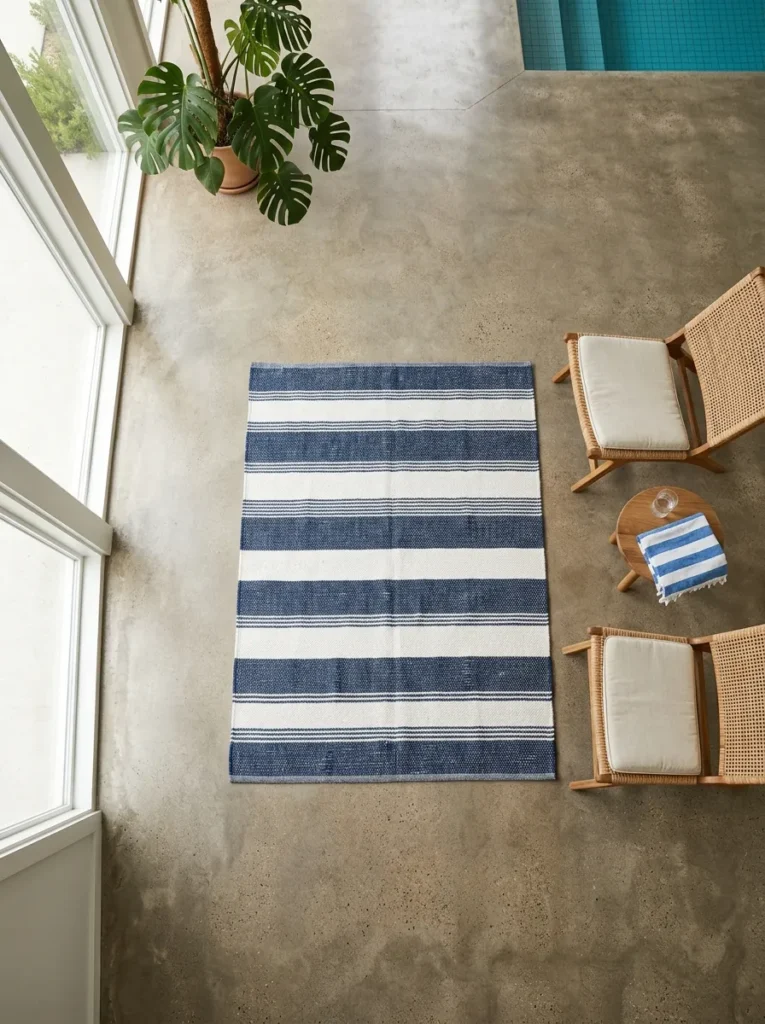
What it looks like: A softened floor plane that stops bare concrete from feeling like a garage.
Why it works: Rugs anchor a seating area and break up hard, echoey surfaces polypropylene specifically resists mildew and can be hosed off, unlike wool or jute.
How to copy it: Size the rug so all furniture legs sit on it, at minimum the front legs a rug too small makes furniture look like it’s floating.
Best for: Pool houses with bare concrete or tile that currently feels cold and utilitarian.
Budget Version: A 5×7 outdoor polypropylene rug runs $40–$70 and can be replaced yearly if it fades in direct sun.
6. Add a Poolside Bar Cart Nook
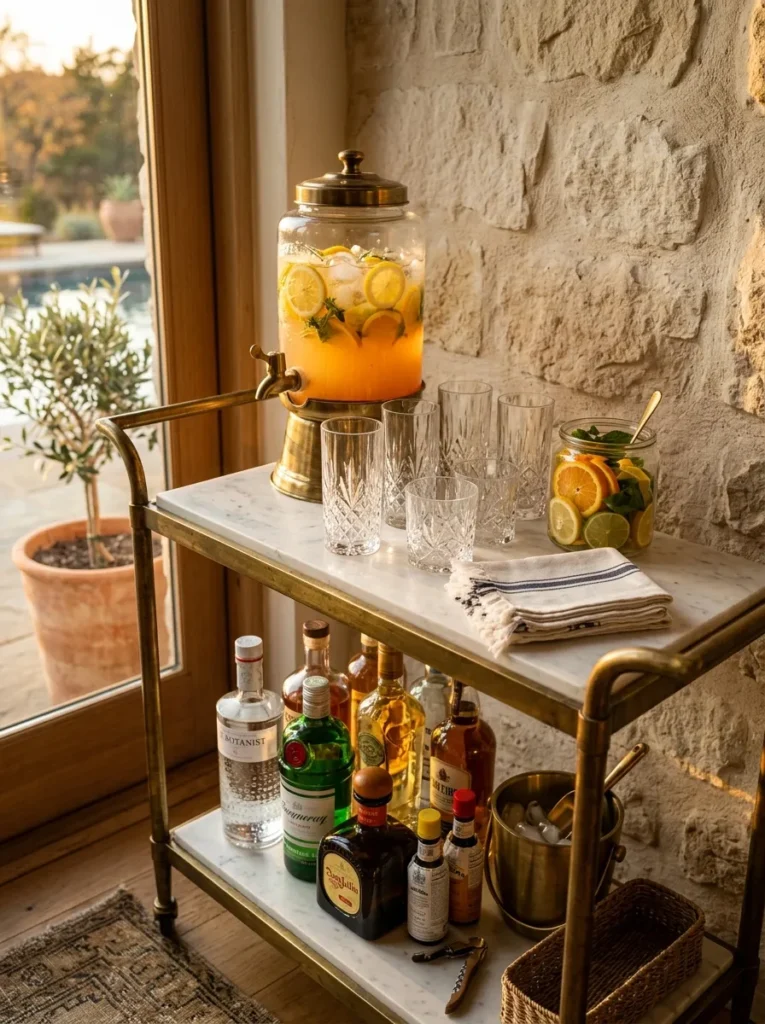
What it looks like: A compact corner that turns snack-and-drink runs into the house into a non-event.
Why it works: Constant back-and-forth trips inside are the top complaint from anyone who’s actually hosted a pool day a stocked cart with a drink dispenser and cups removes that friction entirely.
How to copy it: Use a rust-resistant metal cart, not wood, since condensation from cold drinks will warp untreated surfaces fast.
Best for: Households that host regularly or have kids constantly asking for snacks.
Pro Tip: Stock a small cooler on the cart’s bottom shelf instead of running a mini fridge it uses zero electricity and works during a power outage.
What You’ll Need:
| Product |
|---|
| Rust-resistant rolling bar cart |
| Insulated beverage dispenser with spigot |
| Stackable acrylic drinkware set |
| Small soft-sided cooler bag |
| Waterproof cart tray liner |
Up next: the storage idea that solves the “where do the toys even go” problem.
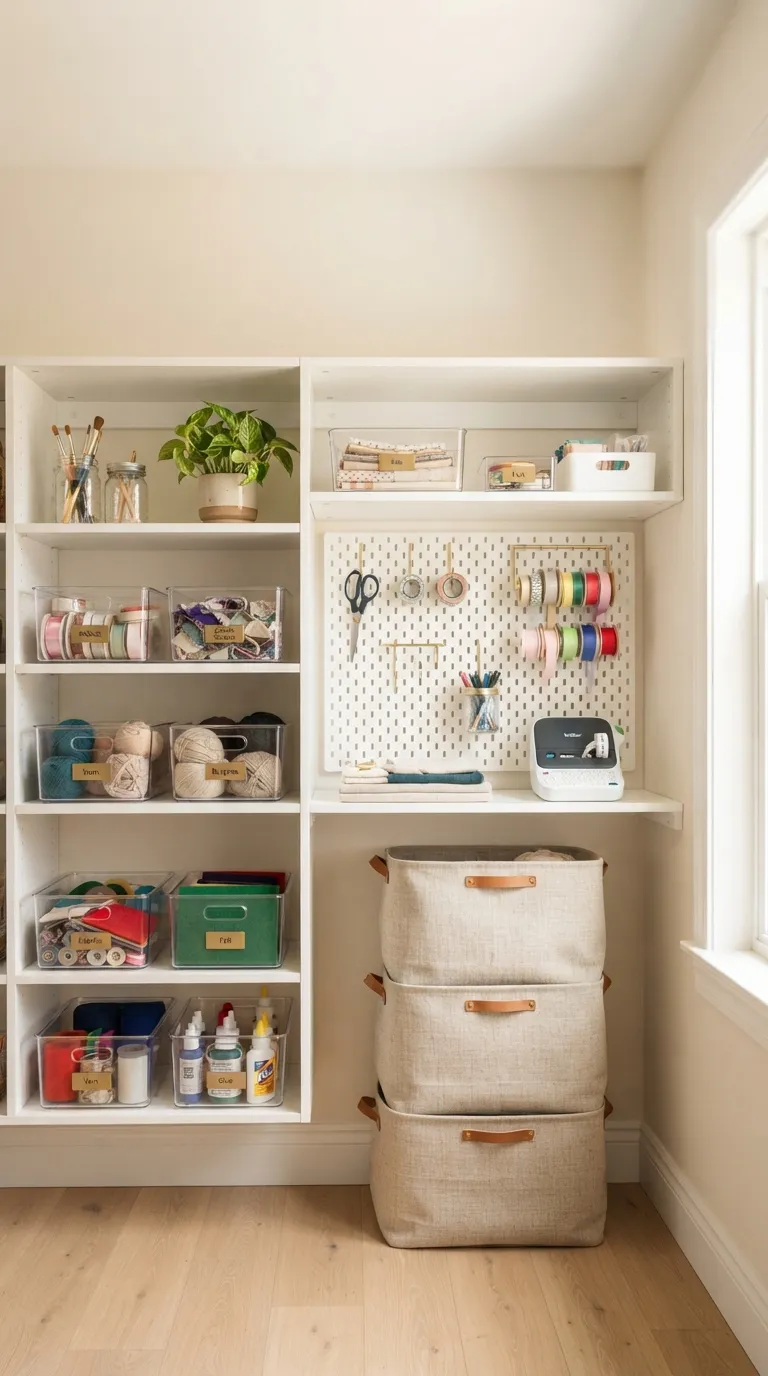
7. Install Open Shelving Instead of Cabinets
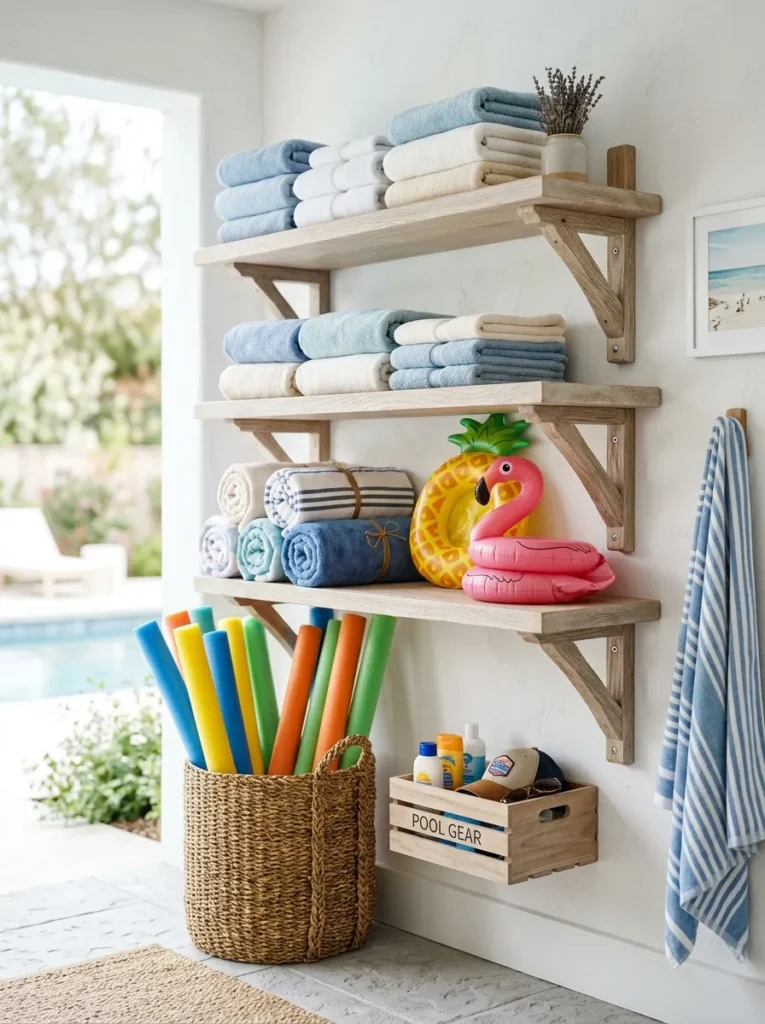
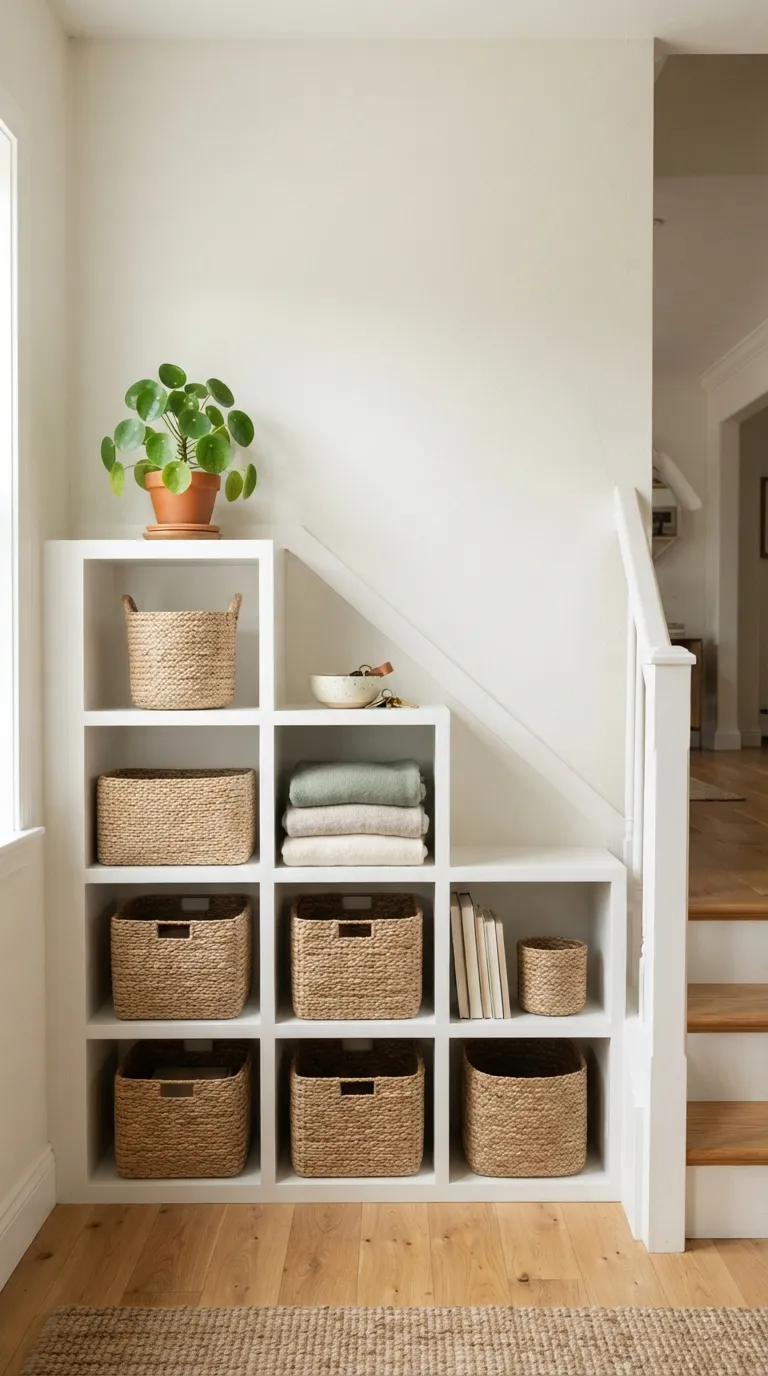
What it looks like: Airy, visible storage that lets damp items actually dry instead of trapping moisture behind a door.
Why it works: Closed cabinets near a pool trap humidity and go musty within a season. Open shelving lets air circulate around towels and floats, which matters more than it sounds.
How to copy it: Mount shelves at two heights low for kids’ items, higher for anything you don’t want reached constantly.
Best for: Small pool houses under 100 square feet where a full cabinet would eat too much floor space.
Small-Space Tip: Use the wall above the door it’s dead space in almost every pool house and holds an entire extra shelf of bins.
8. Upgrade to a Damp-Rated Ceiling Fan
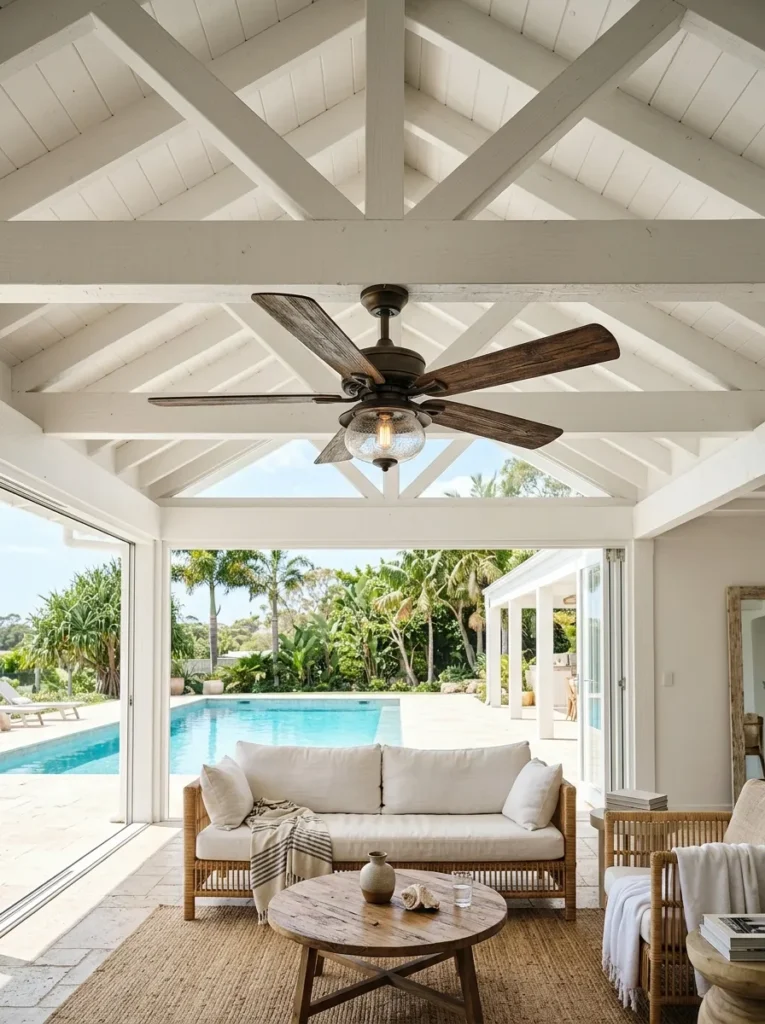
What it looks like: Slow-turning wide blades that move air without dominating the ceiling visually.
Why it works: Standard indoor fans corrode fast in humid, chlorinated air a damp-rated fan is built with sealed motor housing specifically to survive that environment, which matters more than the blade style.
How to copy it: Confirm the fan is rated “damp location,” not just “indoor/outdoor,” since damp-rated fans handle moisture without direct water exposure.
Best for: Pool houses that trap heat with no cross-breeze, especially ones without windows on opposite walls.
Mistake to Avoid: Installing a standard indoor ceiling fan here voids the warranty almost immediately and the motor typically fails within a year from humidity corrosion.
9. Refresh Furniture With Woven, Weather-Ready Pieces
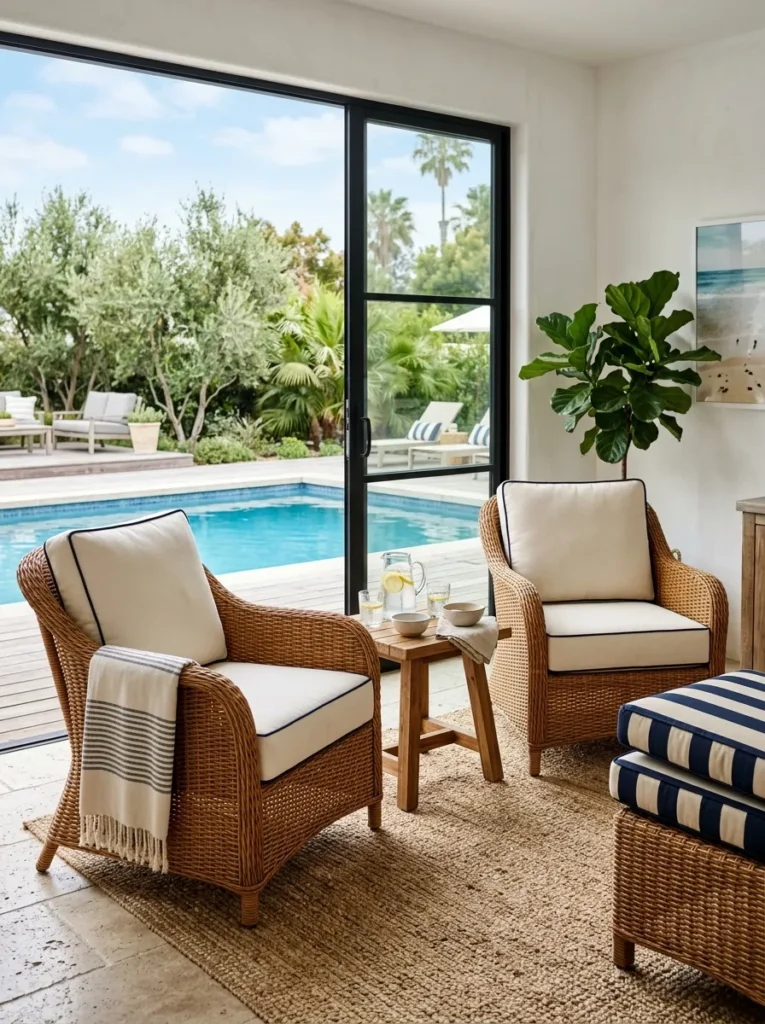
What it looks like: Relaxed, low-profile seating that doesn’t look precious next to wet swimsuits.
Why it works: Indoor upholstered furniture stains and molds fast in a pool house. Synthetic wicker with quick-dry foam cushions handles splashes and humidity without needing constant babying.
How to copy it: Look for cushions labeled “quick-dry” specifically regular outdoor foam still holds water for hours after a splash.
Best for: Anyone replacing furniture that’s already showing water rings or mildew spots.
Important: Most people assume “outdoor fabric” automatically means quick-dry solution-dyed acrylic resists fading but can still hold water inside dense foam unless it’s the open-cell type.
10. Add a Beadboard Accent Wall
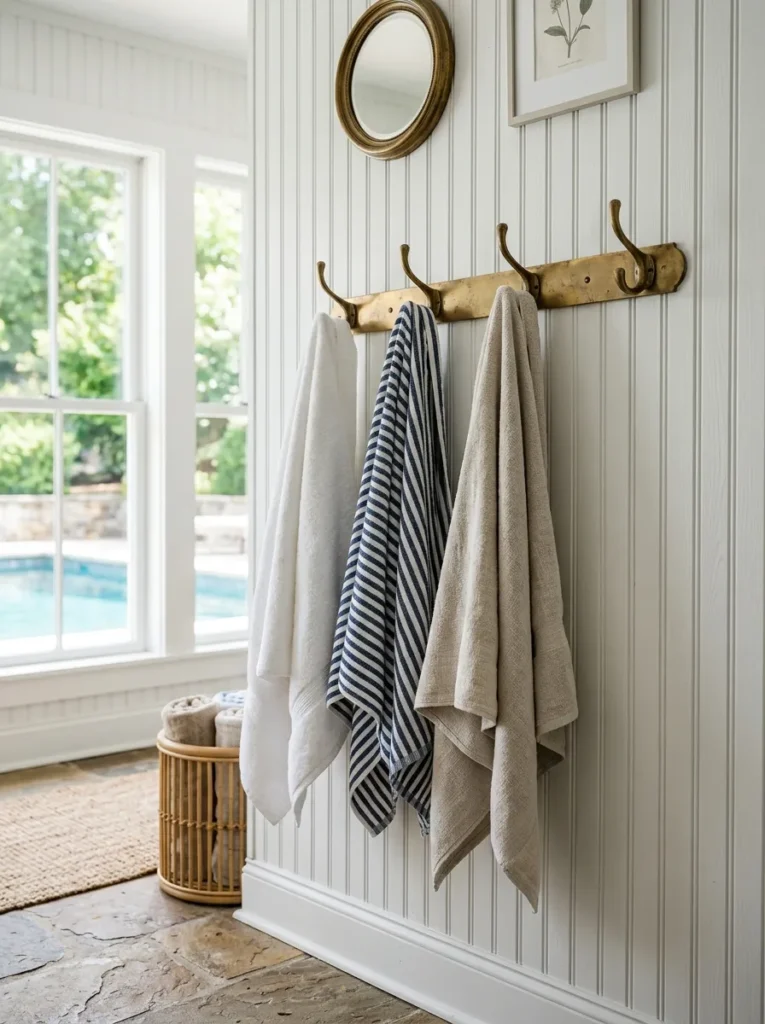
What it looks like: Crisp vertical grooves that read as finished instead of raw drywall.
Why it works: Beadboard is moisture-resistant PVC or treated wood, so it holds up where regular drywall would bubble and the texture adds visual interest without needing paint color to do the work.
How to copy it: Use PVC beadboard panels, not MDF, since MDF swells within months in a humid pool house.
Best for: Pool houses with damaged or water-stained drywall that needs full coverage, not just paint.
Budget Version: PVC beadboard panels run about $25 per 4×8 sheet enough to cover one full accent wall for under $75.
What You’ll Need:
| Product |
|---|
| PVC beadboard wall panels |
| Waterproof panel adhesive |
| Brass or matte black wall hooks (set of 3) |
| PVC trim molding |
This next one surprised even experienced decorators the first time they tried it.
11. Choose a Cabana Curtain Color Palette
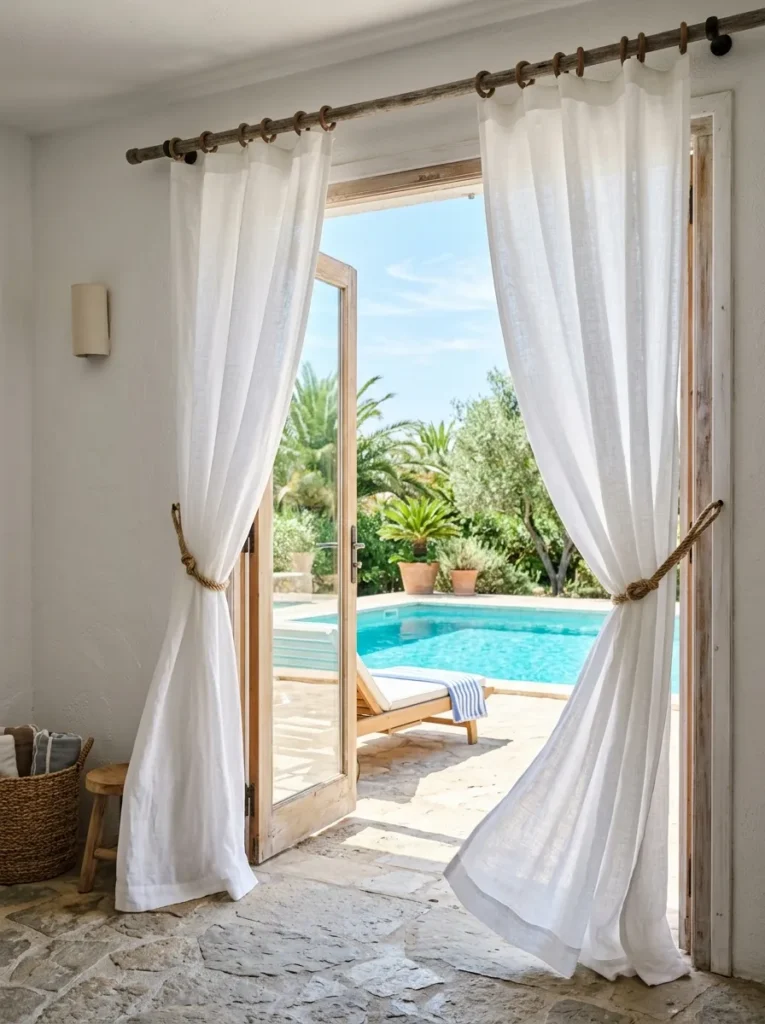
What it looks like: Soft white panels that move with the breeze instead of hanging stiff.
Why it works: Curtains soften hard architectural lines a doorway or window opening feels finished rather than raw. White or soft blue keeps the space feeling cooler visually even when it’s genuinely hot outside.
How to copy it: Choose solution-dyed acrylic outdoor fabric, not cotton linen, since real linen mildews within a single humid season.
Best for: Pool houses with an open-air design or large window openings that need softening.
Pro Tip: Add a rope tieback instead of a fabric one rope sheds water and dries faster after a storm blows curtains around.
12. Carve Out a Changing Nook
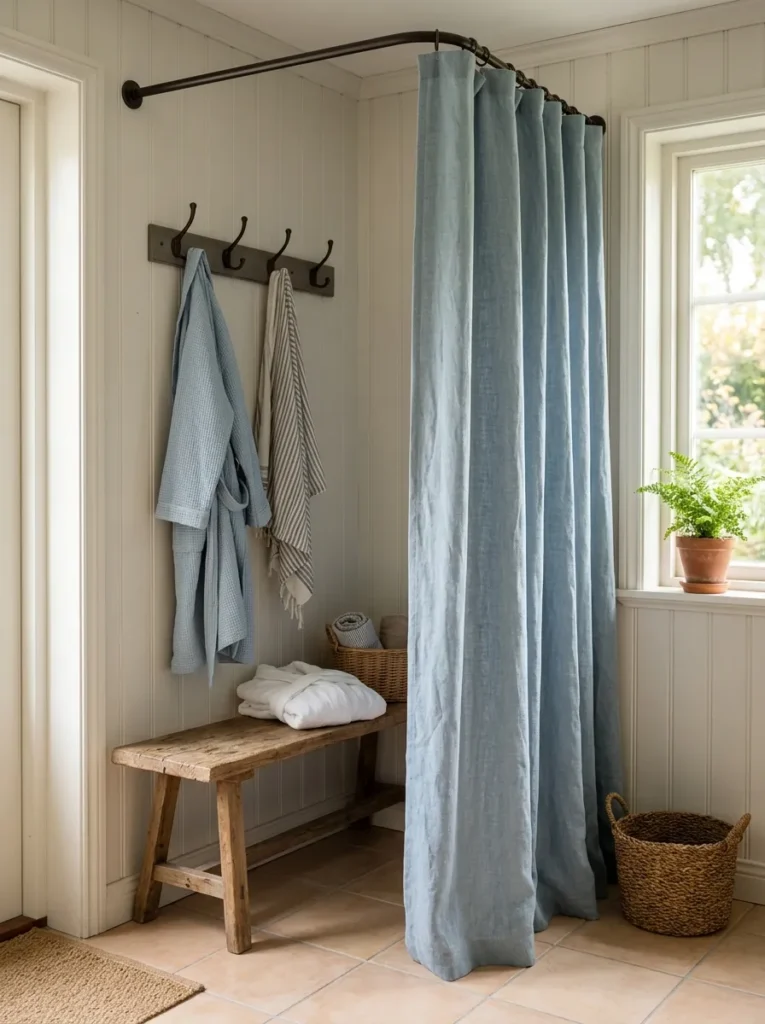
What it looks like: A curtained-off corner that gives just enough privacy without a full wall.
Why it works: Most pool houses are one open room, which means changing clothes happens awkwardly in the open. A simple ceiling-mounted curtain track creates a private zone without any construction.
How to copy it: Mount a curved shower curtain track in a corner so the curtain doesn’t drag on the floor when pulled closed.
Best for: Families with teenagers or guests who want privacy without a bathroom.
Small-Space Tip: A corner nook only needs about 3×3 feet to function don’t sacrifice more floor space than that.
13. Add a Mini Fridge Snack Station
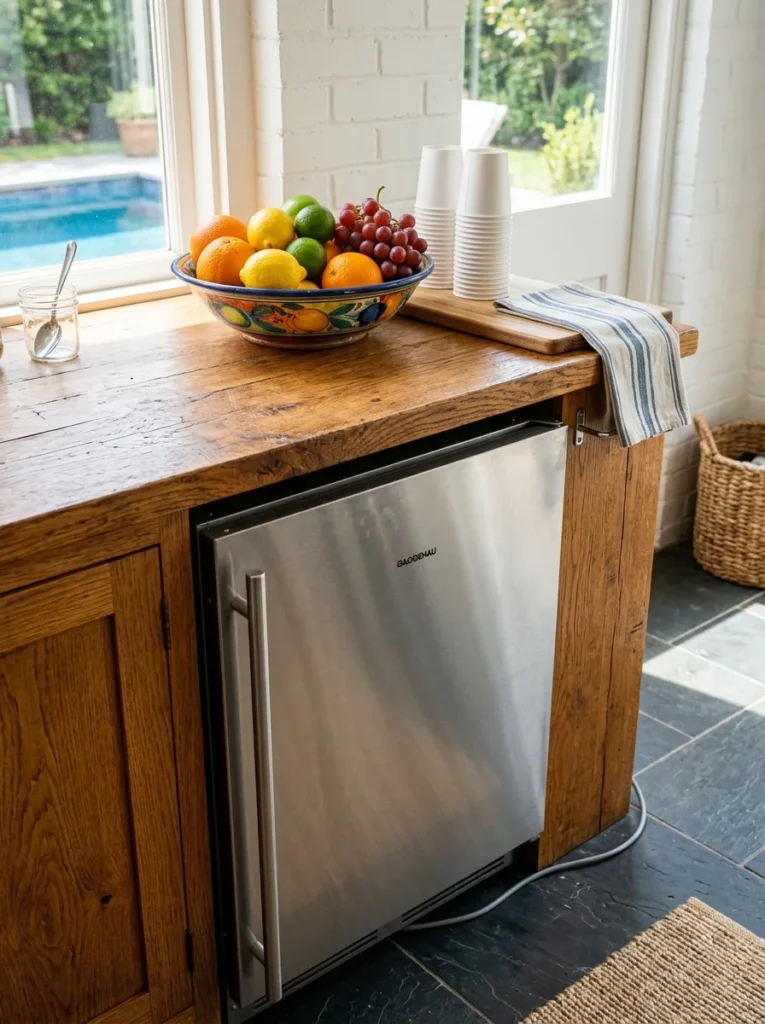
What it looks like: A compact, tucked-in appliance that doesn’t dominate the room visually.
Why it works: A mini fridge stocked with water and snacks stops the constant walk back into the main house small enough to fit under most counters at 18–20 inches wide.
How to copy it: Choose a fridge rated for outdoor or garage use if the pool house isn’t climate controlled, since standard fridges struggle above 90°F.
Best for: Larger households or anyone who hosts pool days often enough that trips inside add up fast.
Quick Win: Stock the top shelf with pre-filled reusable water bottles it cuts down on plastic waste and empties faster than cups.
What You’ll Need:
| Product |
|---|
| Compact outdoor-rated mini fridge |
| Reusable insulated water bottles |
| Small wire fruit basket |
| Under-counter power strip with surge protection |
The next fix is a lighting detail almost nobody thinks about until it’s too late.
14. Add Wall Mirrors to Bounce Light
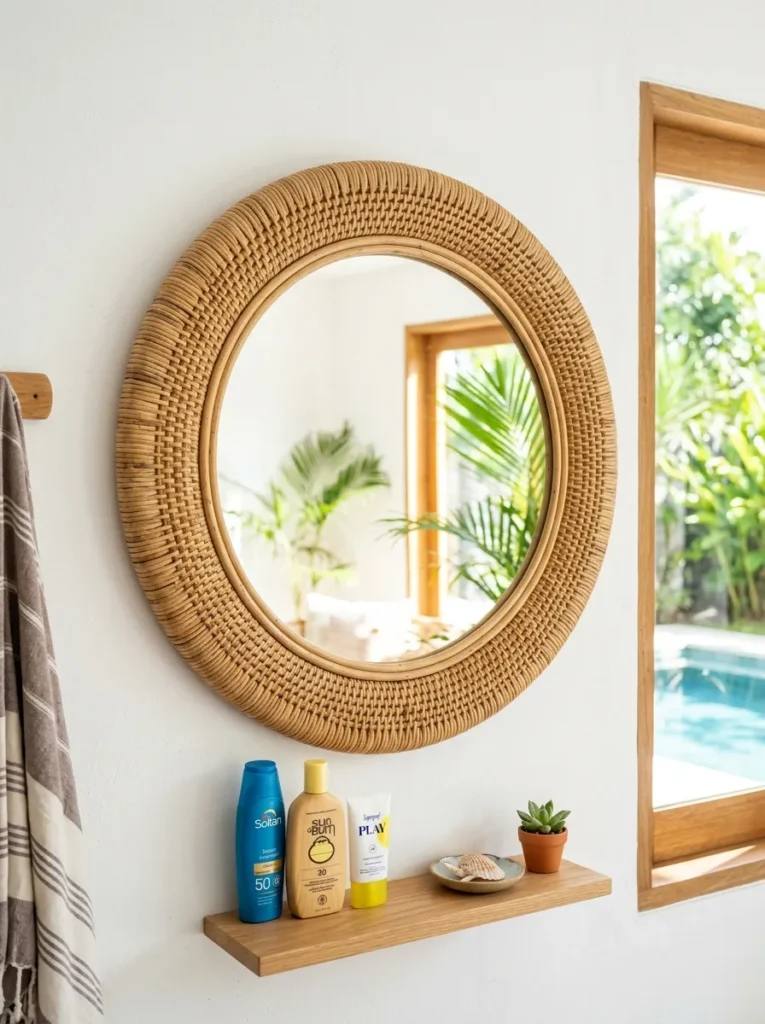
What it looks like: A single reflective accent that makes a small, windowless wall feel less flat.
Why it works: Many pool houses have one small window at most a mirror positioned opposite it bounces available daylight deeper into the room instead of relying on artificial light during the day.
How to copy it: Choose a moisture-sealed frame like rattan or powder-coated metal, since a standard wood frame will warp near humidity.
Best for: Pool houses with only one window or a dim interior corner.
Important: Most people hang mirrors at standard eye-level height, but in a pool house, positioning it to reflect the window directly matters more than centering it on the wall.
15. Add a Skylight or Solar Tube
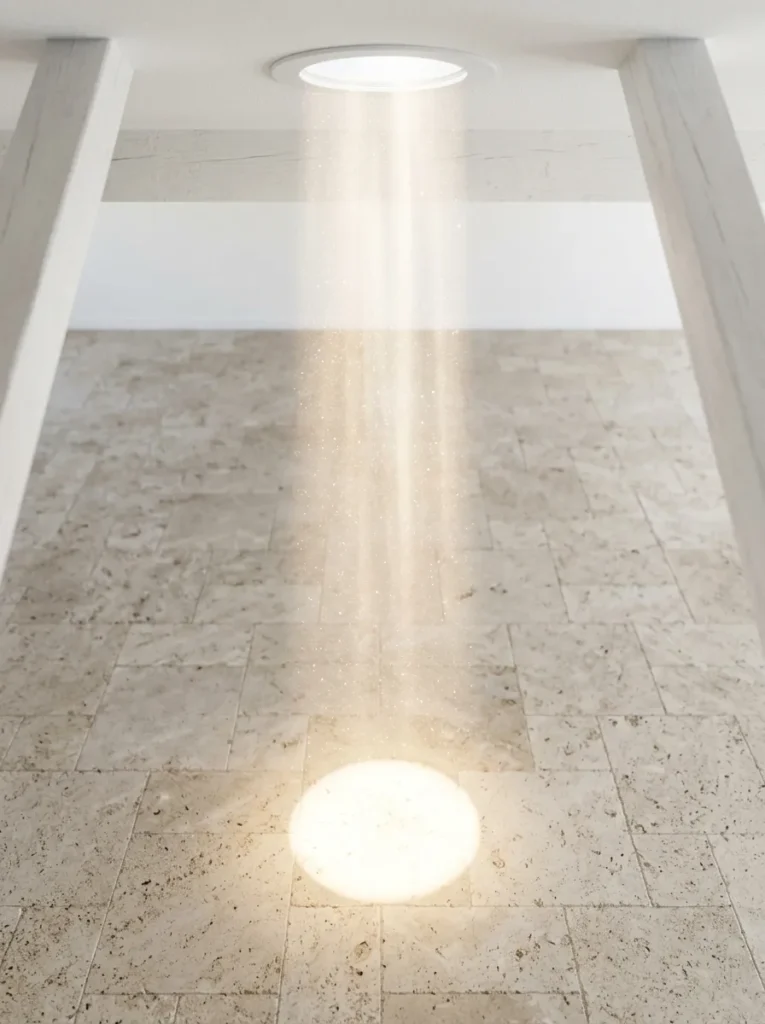
What it looks like: A single bright column of daylight that changes the whole feel of the room.
Why it works: Pool houses are often built with minimal windows to save on materials, leaving them dim even at midday a 10-inch solar tube adds real daylight without the cost or leak-risk of a full skylight.
How to copy it: Position it above the main seating area, not the storage side, so the light actually gets used.
Best for: Pool houses that feel cave-like during the day despite being outdoors.
Styling Note: Skip curtains or shades on a solar tube entirely the whole point is unobstructed daylight, and covering it defeats the upgrade.
In my experience: people install one solar tube and immediately wish they’d done two a single 10-inch tube lights about 100–200 square feet, which is smaller than most assume.
16. Retile the Outdoor Shower Wall
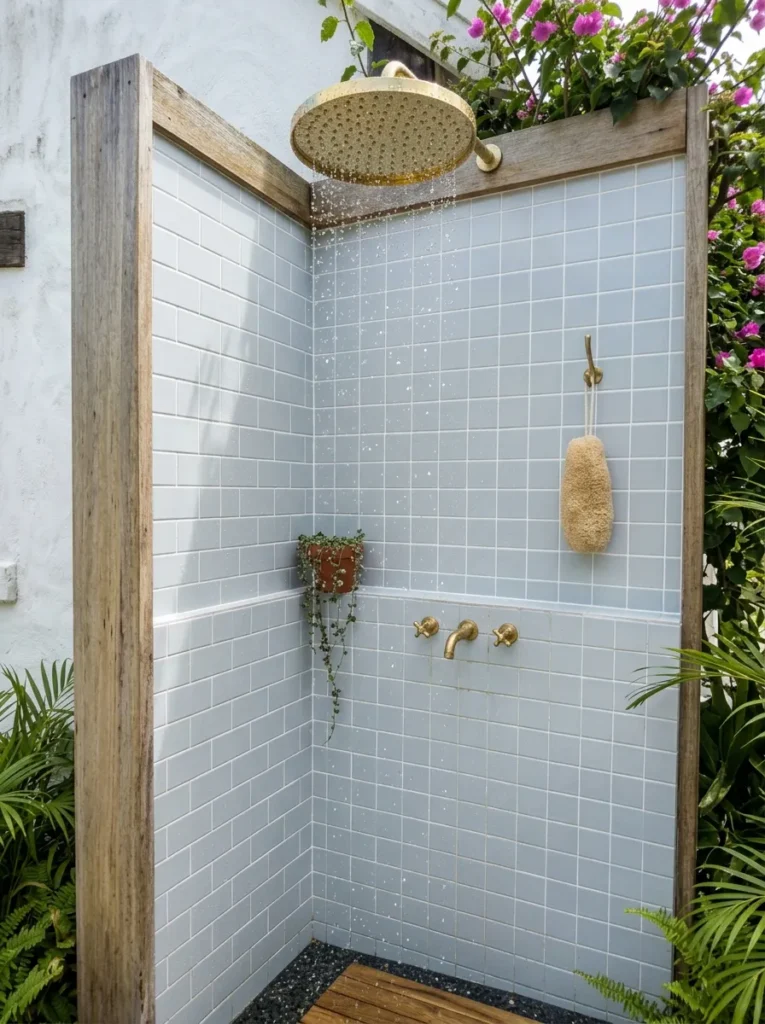
What it looks like: Clean tile lines replacing whatever cracked or stained surface was there before.
Why it works: Outdoor shower walls take the most direct water exposure on the whole property porcelain tile with epoxy grout resists staining and cracking far longer than standard cement grout, which discolors within a year.
How to copy it: Choose porcelain over natural stone here specifically, since natural stone is porous and stains from mineral deposits in pool water runoff.
Best for: Anyone with a cracked, stained, or moldy existing outdoor shower surround.
What You’ll Need:
| Product |
|---|
| Porcelain wall tile, wet-area rated |
| Epoxy-based tile grout |
| Teak wood shower mat |
| Rain-style outdoor showerhead |
17. Choose Multi-Use Furniture for Tight Layouts
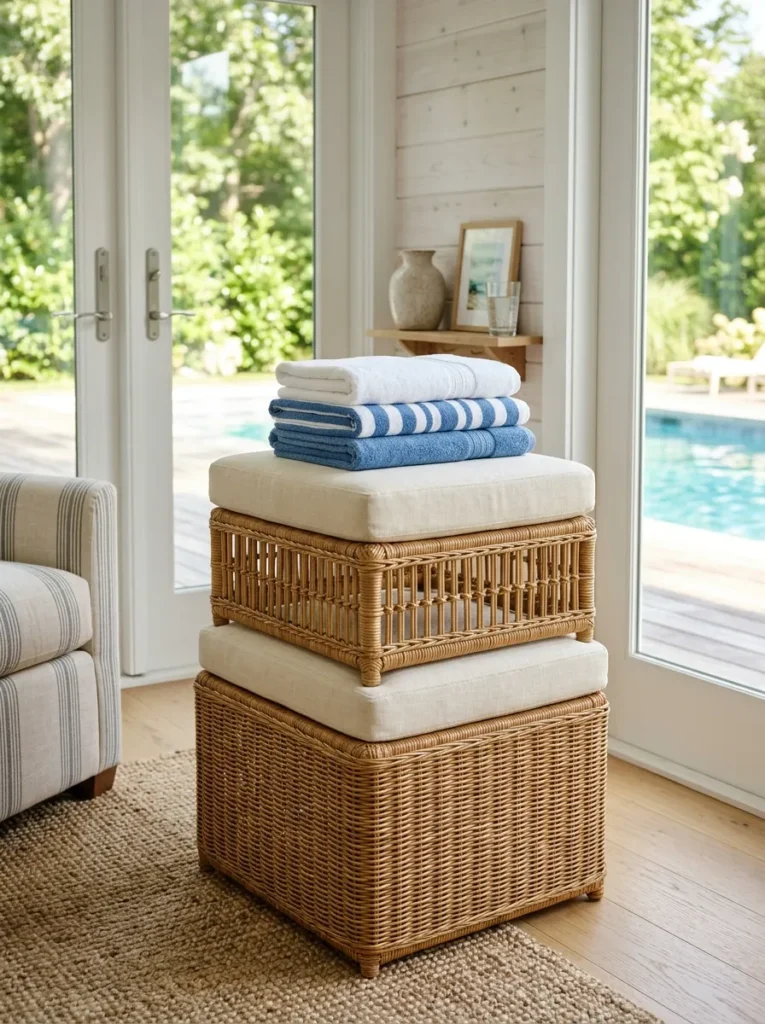
What it looks like: Compact pieces that quietly do two jobs instead of one.
Why it works: In a small pool house, every separate furniture piece eats floor space you don’t have. Nesting ottomans function as seating, a side table, or extra storage depending on the day.
How to copy it: Choose ottomans with a removable tray top so they convert from table to seat in seconds.
Best for: Pool houses under 100 square feet where every extra chair counts against walking space.
Small-Space Tip: Stack two nesting ottomans against a wall when not in use to reclaim floor space entirely.
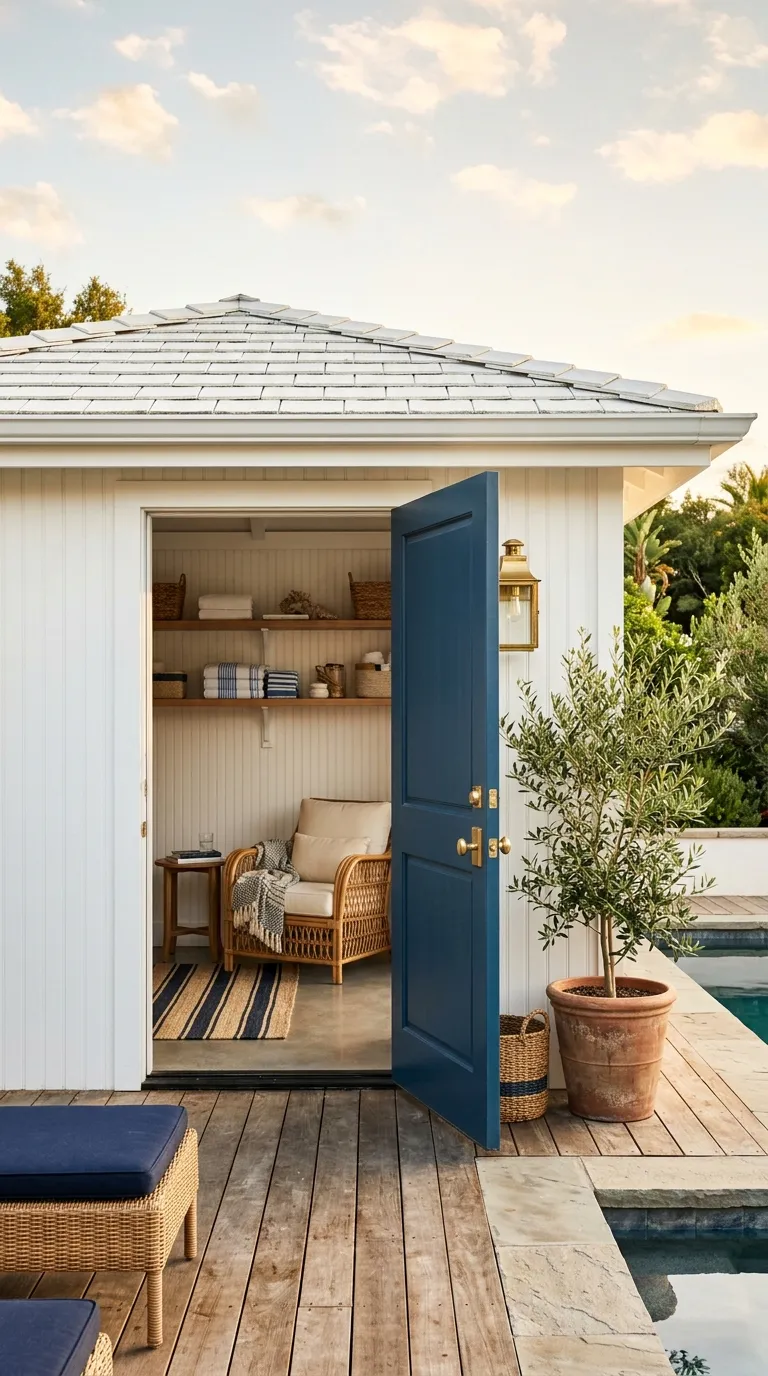
18. Paint the Door a Bold Accent Color
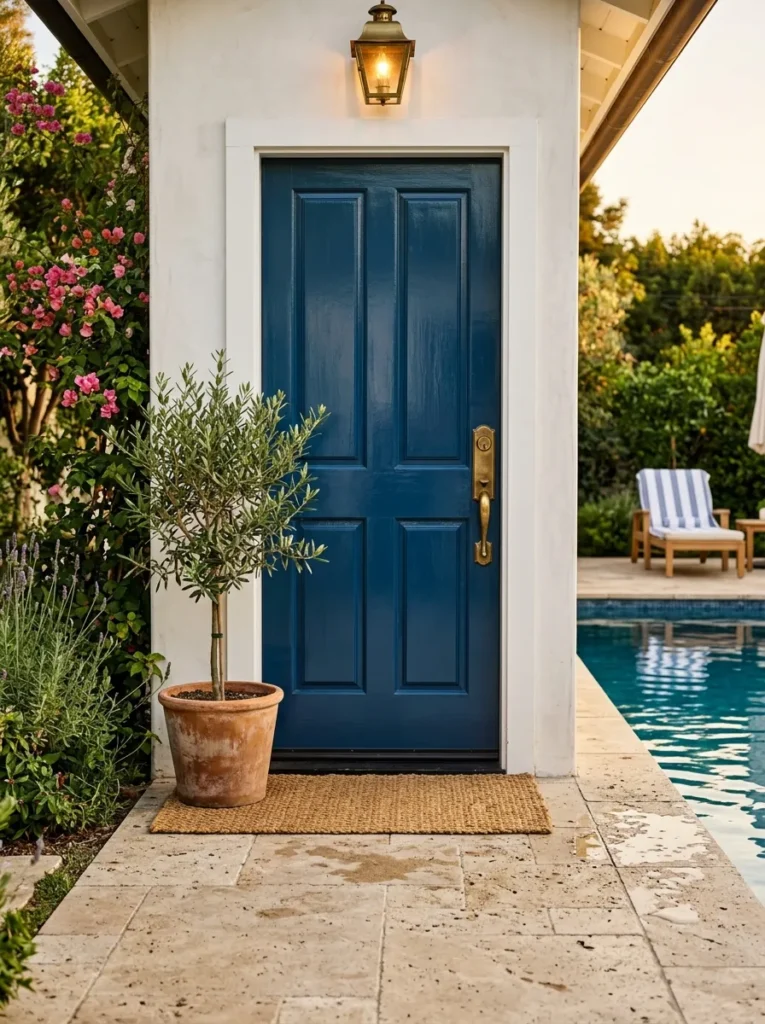
What it looks like: One saturated color that makes the whole structure feel intentional instead of overlooked.
Why it works: A pool house door usually goes unnoticed in white or beige a deep color like marine blue or forest green gives the whole structure a focal point visible from across the pool deck.
How to copy it: Use exterior door-and-trim paint in semi-gloss, since matte finishes chalk and fade faster in direct sun exposure.
Best for: Anyone who wants one high-impact change without touching the interior at all.
Styling Note: Match the door color to one accent already inside like the cushions or curtain trim so the exterior and interior feel connected.
How to Start Your Pool House Transformation
What I’ve found with real pool houses is that paint and flooring have to come before anything else decorating over active moisture problems just means redoing the work in a year. Start with a mildew-resistant wall paint and confirm the flooring actually sheds water; everything else builds on that foundation.
The most common mistake is over-decorating before fixing function hanging art and adding rugs while the room still traps humidity behind closed cabinets. Fix airflow and drainage first, decorate second.
Three items under $50 that create immediate impact: a set of three brass wall hooks for wet towels, a 5×7 outdoor polypropylene rug in a simple stripe, and a damp-rated LED flush mount to replace a bare bulb.
A full pool house overhaul realistically takes four to six weekends when tackled solo, spread across paint, flooring, and furniture. A starter refresh paint, rug, hooks, and lighting can be done in a single weekend for under $300. A full furniture and flooring overhaul runs closer to $1,500–$3,000 depending on square footage.
Ready to Create Your Dream Pool House?
Between fresh paint, water-tolerant flooring, smarter storage, and a few well-placed lighting swaps, these 18 ideas cover the structural fixes and the finishing touches both. Nobody needs to do all eighteen at once picking two or three that solve your biggest current headache is a completely legitimate way to start.
Today, that might just mean grabbing a gallon of mildew-resistant paint and testing it on one wall. A pool house that actually drains, breathes, and stores things properly stops feeling like a chore and starts feeling like the extra room it was always meant to be. Save this one for whichever weekend the flooring finally gives out.
Read Next
- 12 Small Backyard Storage Solutions for Tight Spaces
- 10 Outdoor Shower Ideas for Every Budget
- 15 Patio Furniture Ideas That Survive Real Weather