10 Easy DIY Planters for Seniors That Need No Heavy Lifting
Gardening shouldn’t cost you your back. This roundup covers 10 easy DIY planters for seniors, built around one rule: nothing here needs to be lifted, dragged, or wrestled into place once it’s full.
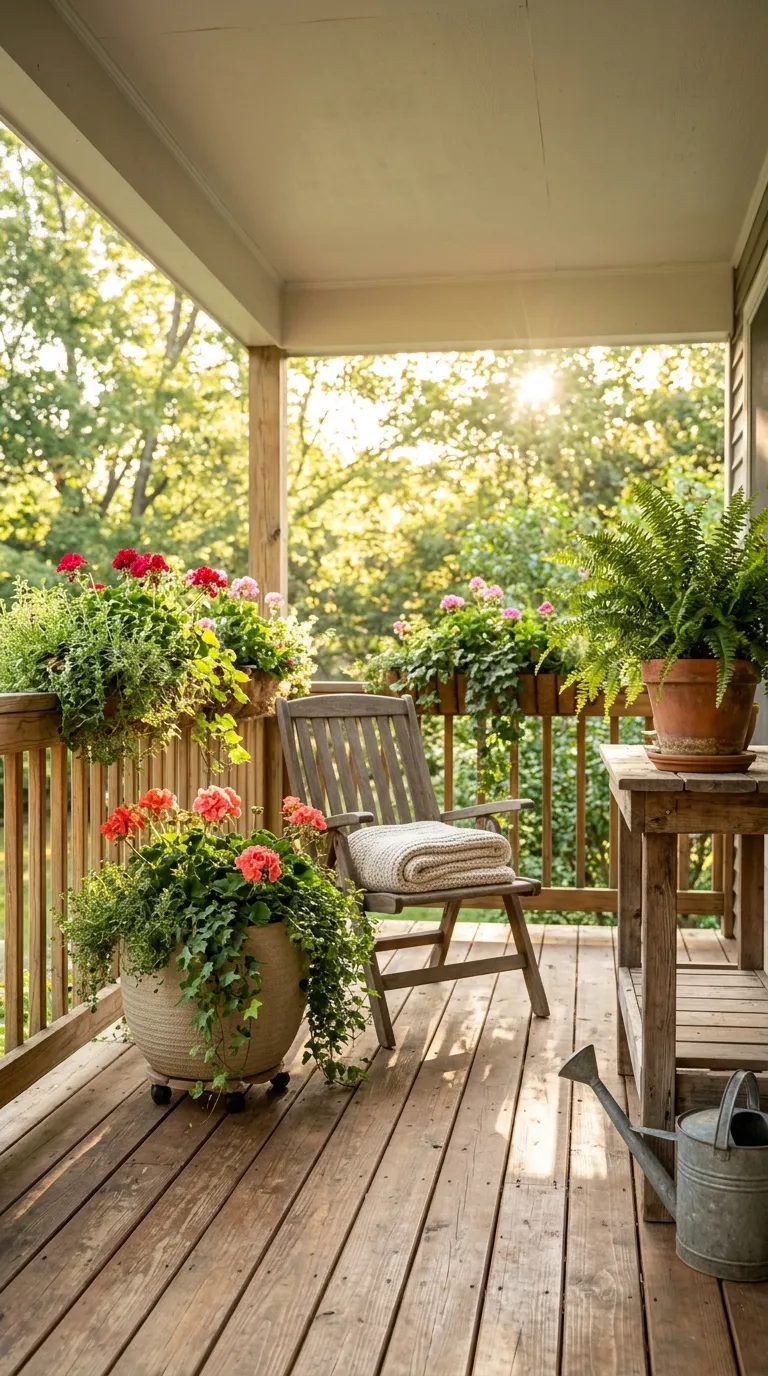
Picture a porch rail lined with trailing herbs at forearm height, a patio corner filled with color that rolls into place on its own wheels, window boxes that fill from the top with a scoop instead of a 40-pound bag. Every idea below trades brute strength for a smarter setup the kind that keeps you gardening for years, not just this season.
Quick Navigation
- Why DIY Planters for Seniors Make Such a Difference
- The Easiest Wins First
- How to Start Your No-Strain Planter Setup
- Ready to Start Gardening Without the Strain?
Why DIY Planters for Seniors Make Such a Difference
Senior-friendly planters aren’t a downgrade from traditional gardening they’re a redesign of it. Swap heavy ceramic and thick garden soil for lightweight resin, fabric, and self-watering systems, and the physical barriers mostly disappear.
The real prioritization is height and weight: get planters off the ground and reduce what you personally have to lift, and everything else drainage, watering schedule, plant choice becomes secondary. This works on the smallest apartment balcony as easily as a full backyard. Start with whichever single planter solves your biggest daily strain.
| Best starting point | A rail-mounted or wheeled planter that needs no bending |
| Biggest impact area | Anything currently at ground level or over 15 lbs when wet |
| Budget to start | Roughly $20–$60 per planter, approximate |
| Time to complete | A single afternoon for most setups |
The Easiest Wins First
1. Rail Planter Boxes That Put Gardening at Arm’s Reach
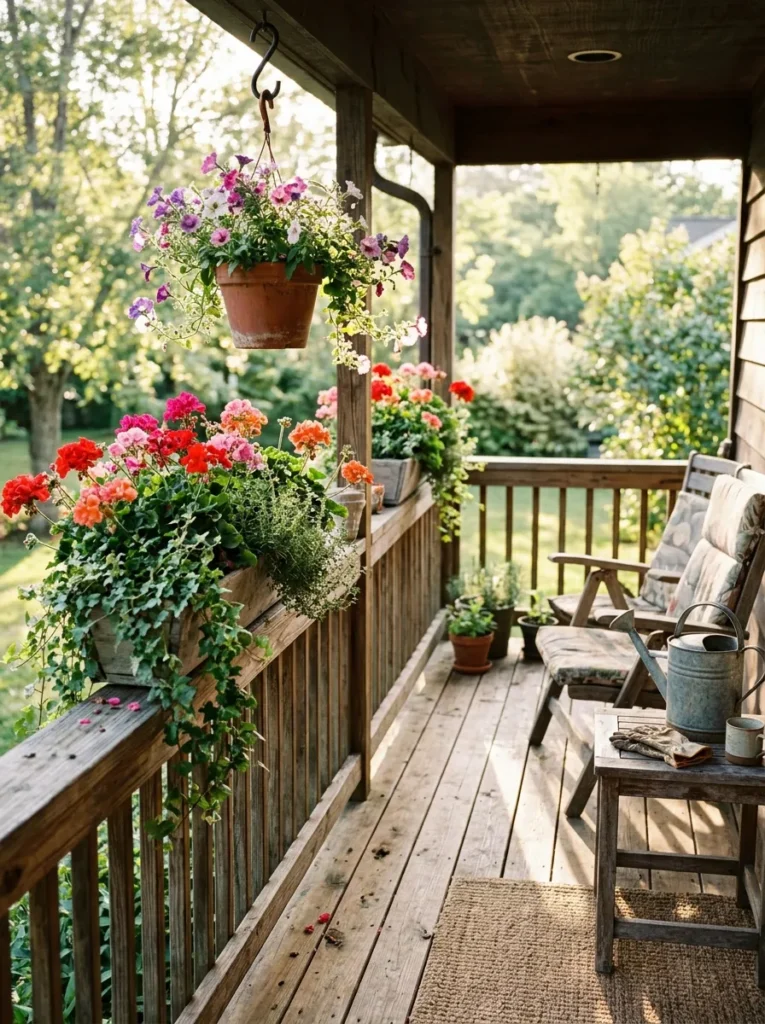
This one’s for anyone whose knees or back veto any planter under three feet tall. Rail-mounted boxes clip directly onto a porch, deck, or balcony railing, putting soil and roots at forearm height no crouching, no ground-level watering can refills.
The detail most people miss: choose boxes rated for at least 25 lbs of mounted weight, since wet potting mix alone can hit 8–10 lbs per gallon. Use a lightweight coco-coir mix instead of garden soil to cut that number by nearly half. Stick to trailing herbs or shallow-root annuals anything with roots under 6 inches keeps the box light and the bracket stress low.
If your railing is under 3.5 inches wide, measure before buying; most universal brackets won’t grip a narrower rail. For more ways to build seating and storage into the same outdoor space, this guide to pallet patio furniture pairs well with a rail-planter setup.
Small-Space Tip: Since the box mounts on existing railing, it uses zero floor space ideal for a narrow balcony where every square foot of deck matters.
2. Self-Watering Containers That Skip the Daily Watering Can
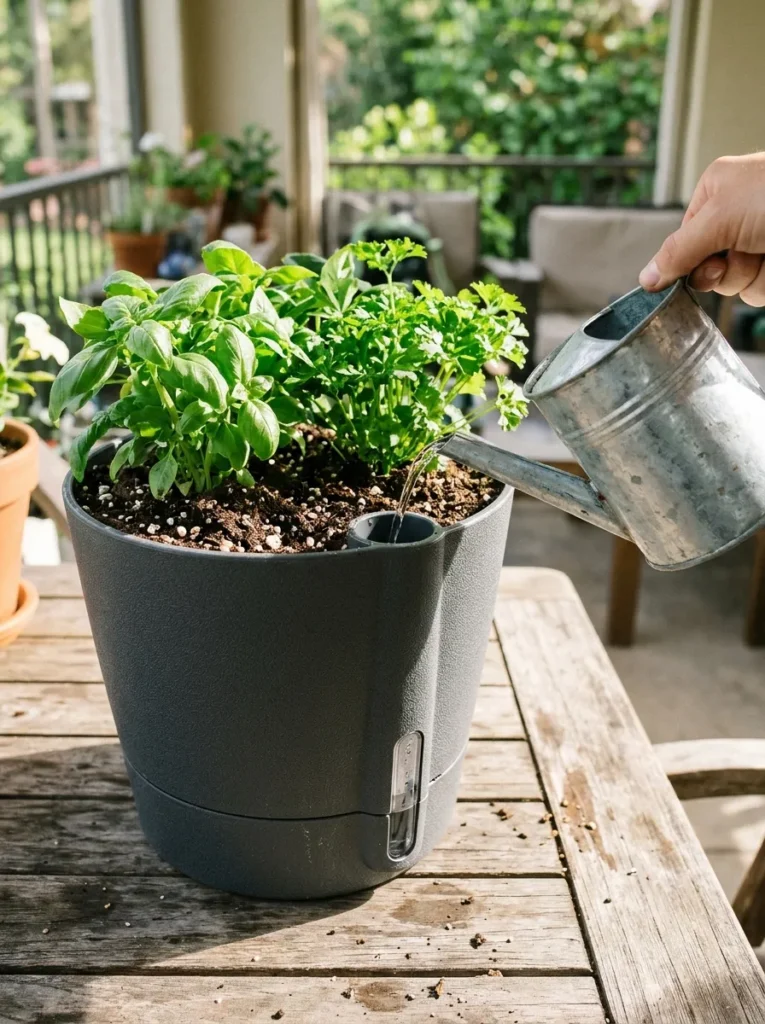
Most gardening advice stops at “choose a lighter pot” and ignores the real daily strain: hauling a full watering can back and forth. Self-watering containers solve that with a reservoir under the soil that wicks moisture upward for days at a time some hold enough for 10–14 days depending on plant size and heat.
Fill the reservoir through a side tube instead of watering from above, so you’re never lifting a full can over soil level. Look for a fill-line indicator window; without one, it’s easy to overfill and drown roots, which is the single most common failure with this system. Herbs, tomatoes, and leafy greens all do well here anything drought-sensitive benefits most.
✅ Setting Up a Self-Watering Container:
- [ ] Fit the water reservoir base and insert the wicking fabric or rope
- [ ] Add a lightweight potting mix, not garden soil, to avoid clogging the wick
- [ ] Fill the reservoir through the side tube until the indicator shows full
- [ ] Plant and water the soil surface once to settle roots
- [ ] Refill through the tube only, checking the indicator every 10–14 days
What You’ll Need
| Product |
|---|
| Self-watering planter with reservoir base and fill tube |
| Lightweight potting mix formulated for container gardens |
| Wicking cord or fabric replacement strips |
| Water level indicator float (if not built in) |
3. Rolling Caster-Base Planters You Never Have to Drag
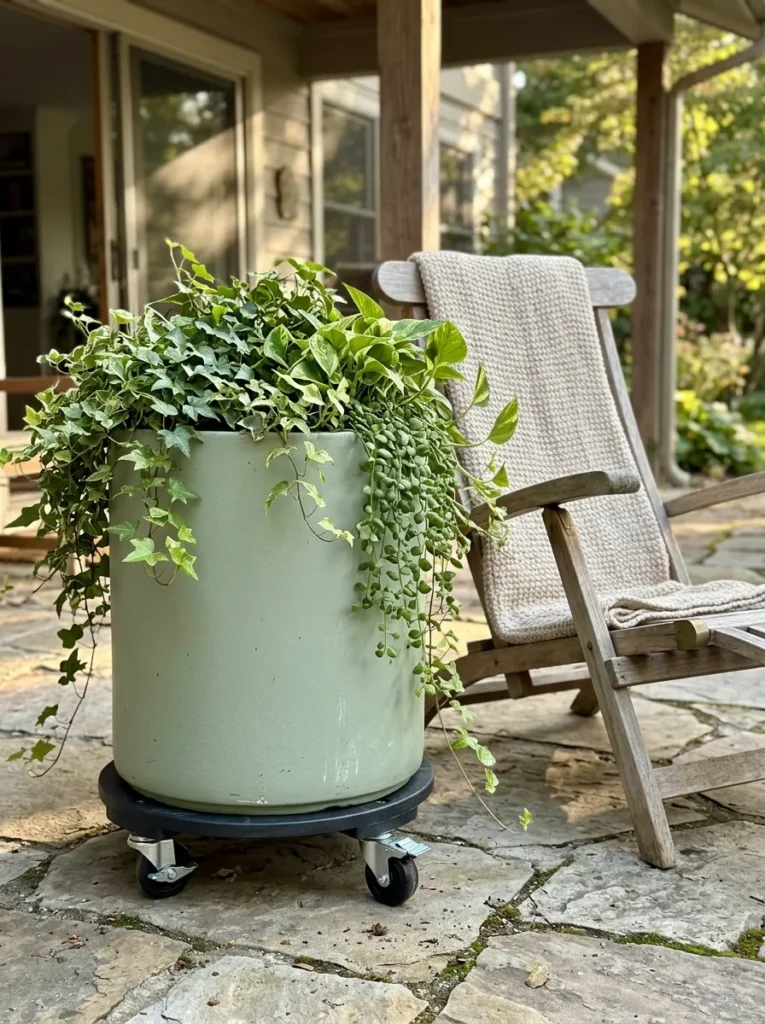
Set the planter on a wheeled base and moving it for sun, shade, or winter storage stops being a two-person job. Caster plant caddies typically hold 50–150 lbs, so even a large fiberglass planter can roll rather than get dragged across a patio.
The wheels matter more than people expect: swivel casters without a lock will drift on any slope over a few degrees, turning a rolling planter into a runaway one. Round bases spin in place for easy rotation toward sunlight without any lifting at all. This works best for statement plants a small tree, a hydrangea, anything you’d otherwise need help repositioning twice a year.
Pro Tip: Choose casters with a foot-lock, not just a swivel an unlocked base can roll several feet on a sloped deck or driveway.
What You’ll Need
| Product |
|---|
| Wheeled plant caddy or caster base rated for planter weight |
| Locking swivel casters |
| Fiberglass or resin planter to pair with the base |
Next up trades the wheels for something even lighter a planter that folds flat when it’s empty.
4. Fabric Grow Bags That Weigh Almost Nothing Empty

Soft-sided felt grow bags look almost like reusable shopping totes, and that’s the point. Empty, most weigh under a pound, and even filled with soil, the built-in handles mean you’re lifting with your arms and legs, not twisting your back to grip a rigid pot’s rim. Fabric’s breathability also air-prunes roots, so plants often grow healthier than in solid plastic.
The catch: fabric degrades faster in direct sun, typically lasting 3–5 seasons instead of the 10+ years you’d get from resin. Buy one size larger than you think you need fabric doesn’t hold shape as firmly as a rigid container, so shallow bags under 10 inches deep dry out fast in summer heat. If budget DIY is the priority throughout your space, this list of budget pallet furniture projects follows the same low-cost philosophy.
Budget Version: A set of five 10-gallon fabric grow bags typically runs under $30, making this the cheapest entry point on this list.
5. Vertical Wall-Pocket Planters That Skip the Ground Entirely
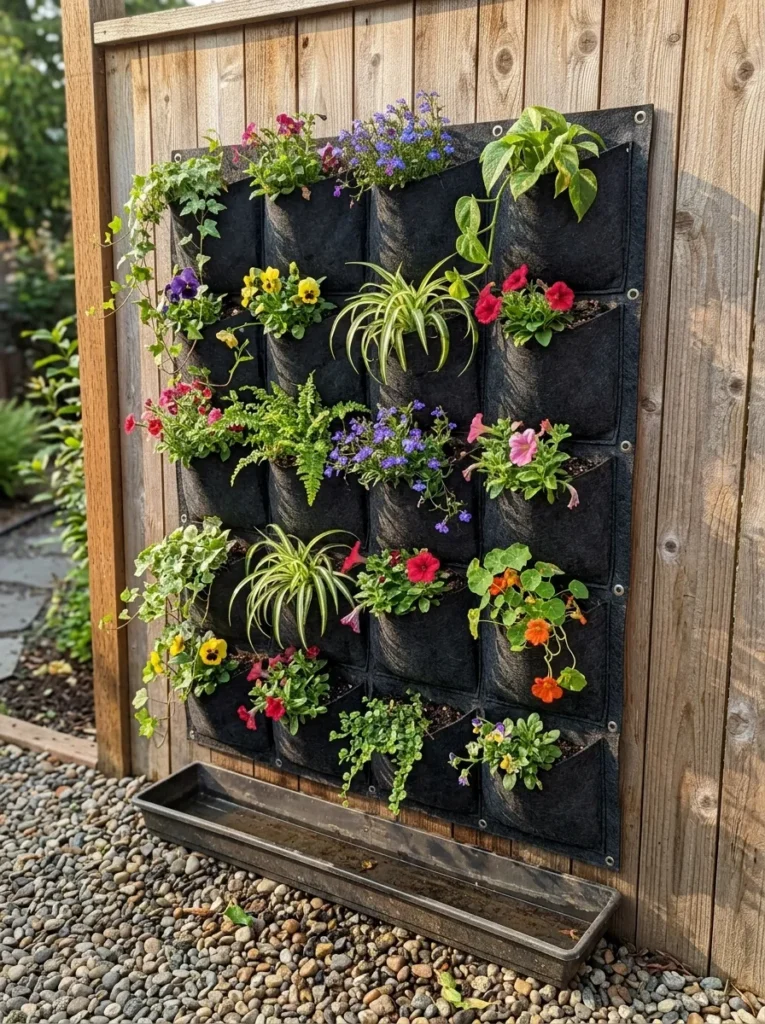
Vertical gardening works on one principle: growing space multiplies once you stop measuring it in square feet on the ground and start measuring it in wall height instead. Wall-pocket systems mount a grid of fabric or plastic pockets directly onto a fence or exterior wall, so planting, harvesting, and deadheading all happen at standing height, pocket by pocket, without a single bend.
Each pocket typically holds enough soil for one herb or small annual don’t crowd larger root vegetables in, since anything needing more than 6 inches of depth will outgrow the pocket within weeks. For a shelf-based alternative indoors, these plant shelf styling ideas are worth a look.
Important: Water runs straight through most pocket systems without a drip tray or gravel base underneath, expect staining on siding, decking, or pavers within a few months.
6. Counter-Height Plant Stands That End the Bending

Ground-level pots force the same motion every single time you tend them bending at the waist or dropping to a knee. A counter-height plant stand removes that step completely by putting the pot at roughly 30–34 inches, the same working height as a kitchen counter. Anything from a single side table to a multi-tier plant ladder works, as long as the top surface sits above knee height.
Weight capacity matters too: a slim metal stand might hold only 20 lbs per shelf, so check the rating before setting a large pot on top. This suits gardeners who spend most of their time on a patio or porch rather than a yard, since the stand needs a flat, stable surface underneath. If you’re rethinking other high-use surfaces for comfort, this look at kitchen islands designed for empty nesters follows the same standing-height logic indoors.
Styling Note: Group three stands at slightly different heights instead of one it reads as an intentional display rather than a single pot on a lonely pedestal.
What You’ll Need
| Product |
|---|
| Multi-tier plant stand or counter-height side table |
| Weather-resistant plant saucers to protect the surface |
| Small to medium lightweight pots sized for tabletop use |
The next idea swaps pots entirely for a material that weighs almost nothing even filled.
7. Lightweight Resin Pots That Look Like Stone Without the Weight
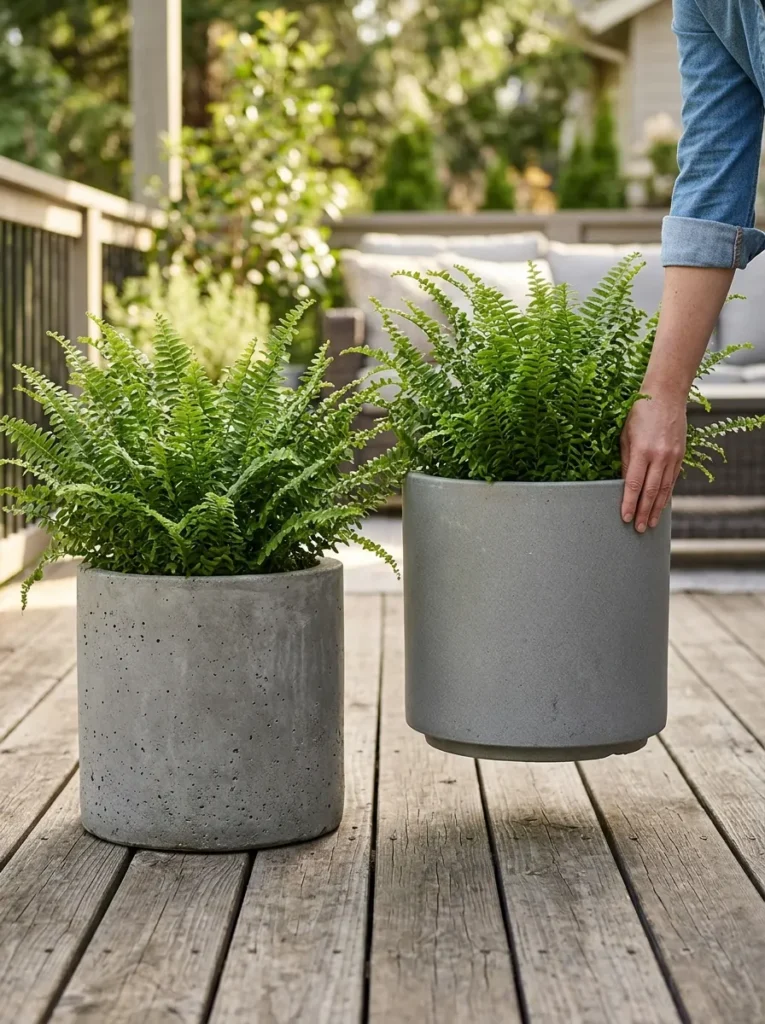
Swap concrete or stoneware for resin or fiberglass and the pot itself drops from 30–40 lbs empty to often under 5. Both materials are molded to mimic the exact look of stone, clay, or metal, so the visual trade-off is close to nothing while the weight difference is enormous.
The one detail worth checking before buying: not every resin pot comes with pre-drilled drainage holes, and drilling one yourself afterward means working through a curved surface with a masonry bit, not a wood bit.
Buy pre-drilled where possible, or ask the retailer directly. Fiberglass tends to hold up better in freeze-thaw climates than resin, which can go brittle below freezing after a few winters. For pairing lightweight pots with low-maintenance plants, these modern succulent planter ideas are a natural next step.
8. Hanging Pulley Planters You Lower Instead of Reach For

This one’s for anyone who loves hanging baskets but hates reaching overhead with a full watering can. A pulley-and-cleat system lowers the basket to chest height for watering or planting, then hoists it back up to lock on a cleat at arm’s reach no stepladder, no stretching.
Most kits use a simple rope-and-pulley or a retractable reel version; reels cost more but hold position without tying off a knot each time. Pick a basket size based on the ceiling hook’s rated weight, not the basket’s stated capacity many porch hooks are rated for only 25–35 lbs, well under what a fully watered 16-inch hanging basket can weigh.
Warning: A soil-filled 16-inch hanging basket can weigh 20–25 lbs once watered. Check your ceiling hook or eyebolt’s rated weight before hanging a hook rated for less than that can pull loose without warning.
What You’ll Need
| Product |
|---|
| Pulley-and-cleat hanging kit or retractable planter reel |
| Rated ceiling hook or eyebolt |
| Lightweight hanging basket with coco liner |
The counterintuitive part: heavier soil isn’t always the real problem oversized planters are. A 24-inch pot filled with potting mix can weigh 80+ lbs even with lightweight coir, simply because of volume. Sizing down to two 12-inch planters instead of one 24-inch planter cuts the per-lift weight by more than half while covering nearly the same planting area. Most gardening advice pushes bigger pots for a fuller look; for no-lift gardening, smaller and more numerous almost always wins.
9. Raised Trough Planters on Legs, Built to Standing Height
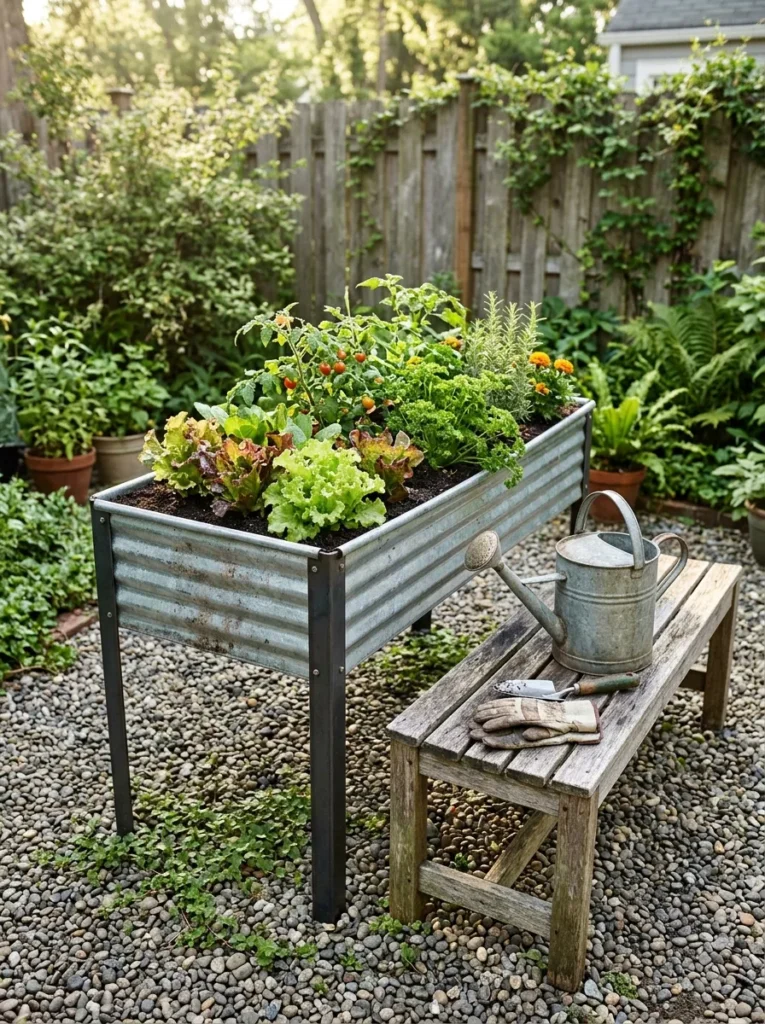
A raised bed only helps if it’s actually raised most off-the-shelf “raised garden beds” sit under 12 inches tall, which barely changes how far you bend. A true trough planter on legs puts the soil line around 28–32 inches, close to counter height, so weeding and planting happen standing upright instead of stooped.
Galvanized steel troughs heat up faster in direct sun than cedar, which can stress shallow-rooted plants in peak summer line steel troughs with a thin foam barrier if they sit in full sun most of the day. Legs should be rated for the full soil weight, not just the trough itself; a filled 3-foot trough can weigh over 150 lbs once watered. For more standing-height garden builds in a similar style, this farmhouse pallet furniture roundup is worth a look.
Quick Win: Pre-built trough kits with legs already attached skip the assembly step entirely look for ones described as “ready to plant” rather than “kit requires build.”
What You’ll Need
| Product |
|---|
| Galvanized steel or cedar trough planter with attached legs |
| Foam insulation liner (for steel troughs in full sun) |
| Raised-bed soil blend with perlite for lighter weight |
Last on the list skips soil bags altogether water is the only thing you’ll need to lift.
10. Top-Fill No-Dig Window Boxes That Skip the Soil Bag

Picture a window box that never needs a 20-lb bag of soil dumped and packed by hand. Instead, a compressed coir or peat pod expands right inside the box once you add water, and you top it off with a small scoop of potting mix instead of hauling a full bag. Coir pods typically expand to fill an 8–10 inch box with just a few cups of water, cutting the lifting down to almost nothing. This works especially well for anyone gardening from a second-floor window or balcony, where carrying full soil bags up stairs is its own separate problem. Replace the coir core once a year it breaks down and loses structure faster than standard potting mix.
How to Start Your No-Strain Planter Setup
The right first move is almost always your heaviest existing pot. Pick whichever container currently gives you the most trouble usually the biggest, ground-level one and replace it with a rolling caster base or a lightweight resin swap before touching anything else. That single change usually removes most of the daily strain, since one oversized pot is almost always doing most of the damage.
The most common fixable mistake is buying a lighter pot but keeping the same heavy garden soil. Potting mix packed with peat or compost can weigh nearly as much wet as the old ceramic pot did empty. Swap to a perlite-and-coir-based mix instead it holds moisture just as well at roughly half the weight per gallon.
Three inexpensive additions round out almost any setup: a bag of perlite to lighten existing soil (roughly $10–15), a set of locking casters to retrofit an existing planter base ($15–20), and a long-reach watering wand that removes the need to lift a can at all ($10–15).
A single planter swap is a weekend project, start to finish most take under an hour once the new container arrives. A full patio or porch overhaul, replacing four or five planters with lighter, height-adjusted versions, runs $150–$300 total and is realistic to finish over two or three weekends rather than one long push.
Ready to Start Gardening Without the Strain?
These 10 easy DIY planters for seniors cover a lot of ground rolling bases, self-watering reservoirs, wall-mounted pockets, and materials that weigh a fraction of what you’re used to lifting. None of them ask you to give up gardening; they just ask you to change how the weight gets moved.
Start small: pick one planter, the one causing you the most trouble right now, and swap it this weekend. The rest can follow at whatever pace feels comfortable. There’s a real difference between forcing your way through a heavy pot and stepping onto a porch that finally works with you instead of against you save your favorites here so you can come back to them one planter at a time.
Keep Exploring
- 12 No-Bend Garden Bed Ideas for Easy Backyard Gardening
- 10 Lightweight Patio Furniture Ideas for Aging in Place
- 15 Low-Maintenance Balcony Plants That Practically Care for Themselves