11 Calming Blue Bathroom Ideas for Seniors (Safe and Stylish)
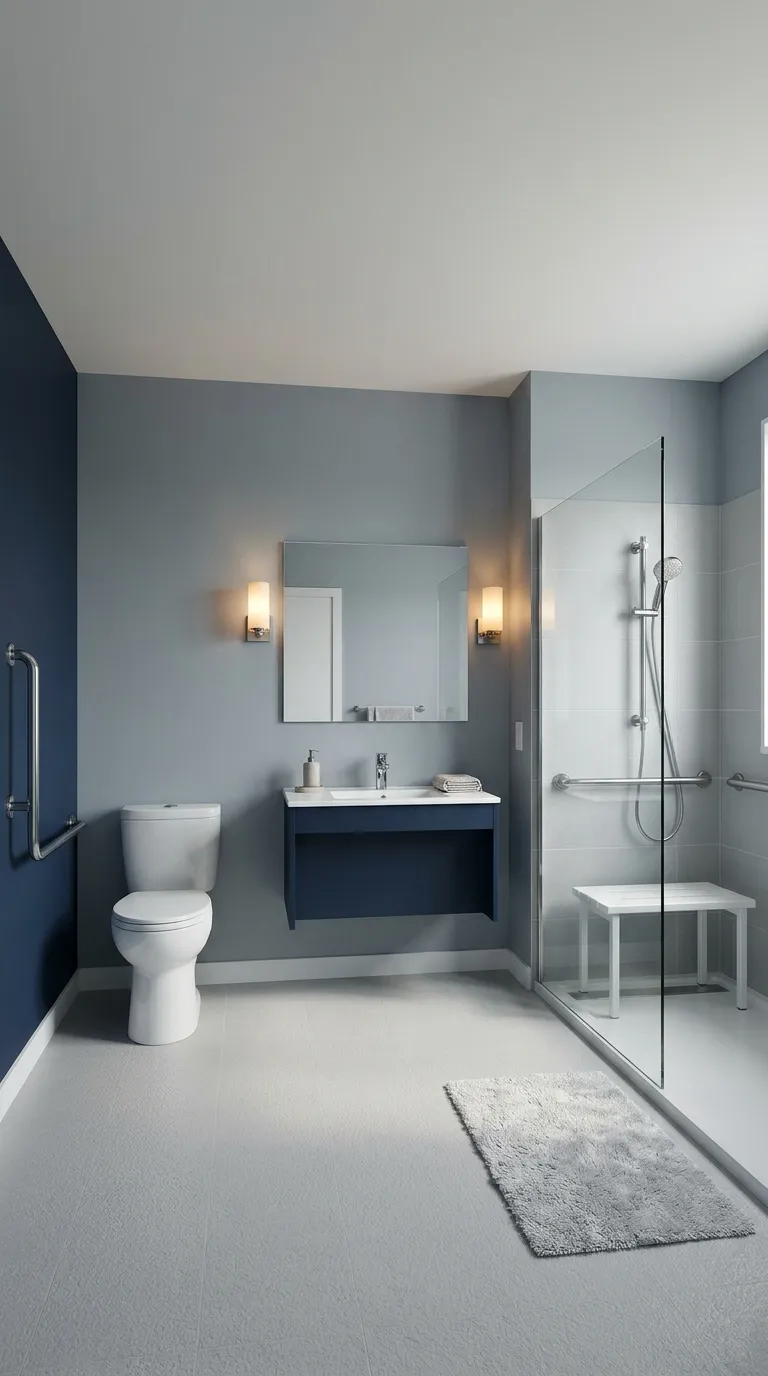
A calming blue bathroom for an older adult works when the blue handles the mood and the contrast handles the safety. These 11 calming blue bathroom ideas for seniors cover lighting, floors, walls, seating and hardware, so the room feels like a spa and behaves like a careful one.
Picture gray-blue walls that hold morning light without glare, a floor that grips underfoot, and a white toilet that stands out against deeper blue instead of fading into it. Warm light low on the wall. Edges you can see at a glance. Nothing in the room looks clinical. Soft on the eyes, firm underfoot.
In This Article
- Why Calming Blue Bathroom Ideas for Seniors Make Such a Difference
- The Ideas, Safest Wins First
- How to Start Your Calming Blue Bathroom Transformation
- Ready to Create Your Dream Calming Blue Bathroom for Seniors?
Why Calming Blue Bathroom Ideas for Seniors Make Such a Difference
Soft blue lowers visual intensity in a room where steam, hard surfaces and glare already crowd the eyes. Gray-leaning blues such as dusty slate and powder blue keep the space quiet, while a deeper navy or teal gives fixtures an edge to stand out against. Pair them with matte porcelain, satin paint and warm-white light. Small bathrooms benefit most: sort out lighting and floor traction before touching color.
Quick Reference
| Best starting point | Warm-white motion night lights on the bed-to-toilet path |
| Biggest impact area | Floor surface and shower entry |
| Budget to start | Roughly $50–$150 (approximate) |
| Time to complete | A weekend for the starter changes; months for tile or shower work |
The Ideas, Safest Wins First
1. Motion-Activated Warm Lights Low on the Wall, Not Overhead

A single overhead fixture, switched on at 2 a.m., is the usual setup and the usual problem. It glares first, then leaves the floor in shadow. Low, warm-white light flips that: put a motion-activated light at knee height or lower near the toilet, and another at the shower entry, since those are the two places where people step over or around something. Warm white also keeps gray-blue walls from turning icy after dark, which cool-white bulbs tend to do. Skip anything labeled “daylight” in this room. Most people skip this step and regret it the first night something goes wrong.
Get the Look
| Get the Look |
|---|
| Motion-sensing plug-in night light, warm white |
| Rechargeable stick-on motion strip light for under the vanity |
| Glow-in-the-dark light switch plate |
2. Matte, Textured Floor Tile in a Mid-Tone Blue-Gray
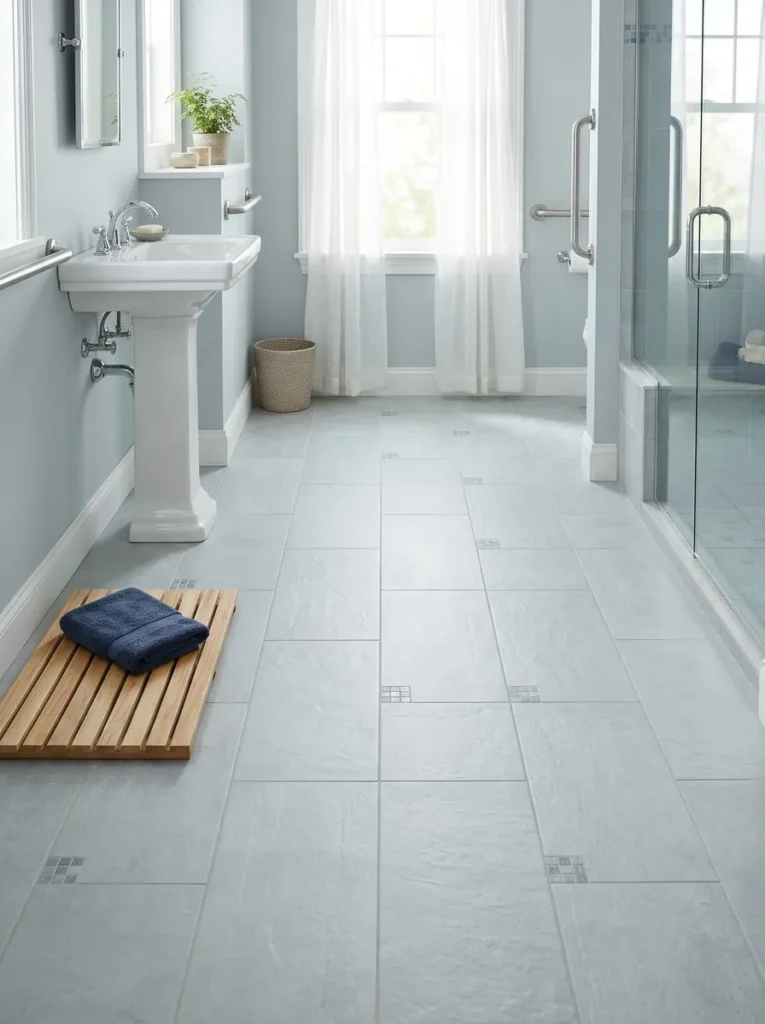
Grip comes from surface texture and grout lines, not color. A matte porcelain tile with a textured finish gives wet soles something to bite, and small formats such as mosaics add extra grout lines that increase traction. Ask the retailer for the tile’s wet slip-resistance (DCOF) rating; 0.42 is a commonly cited benchmark for wet interior floors, and the highest rating the style offers is the better choice for a shower floor. Go for a mid-tone blue-gray. Deep navy shows every water spot and film of soap, while white shows every footprint.
Warning: Showroom tile feels grippy when it’s dry. Take a sample home, wet it with soapy water, and test it with a damp foot while holding onto something sturdy before ordering a full run. Installed tile can’t be returned, and replacing a floor costs far more than a sample.
3. Gray-Blue Walls Under a Lighter Ceiling

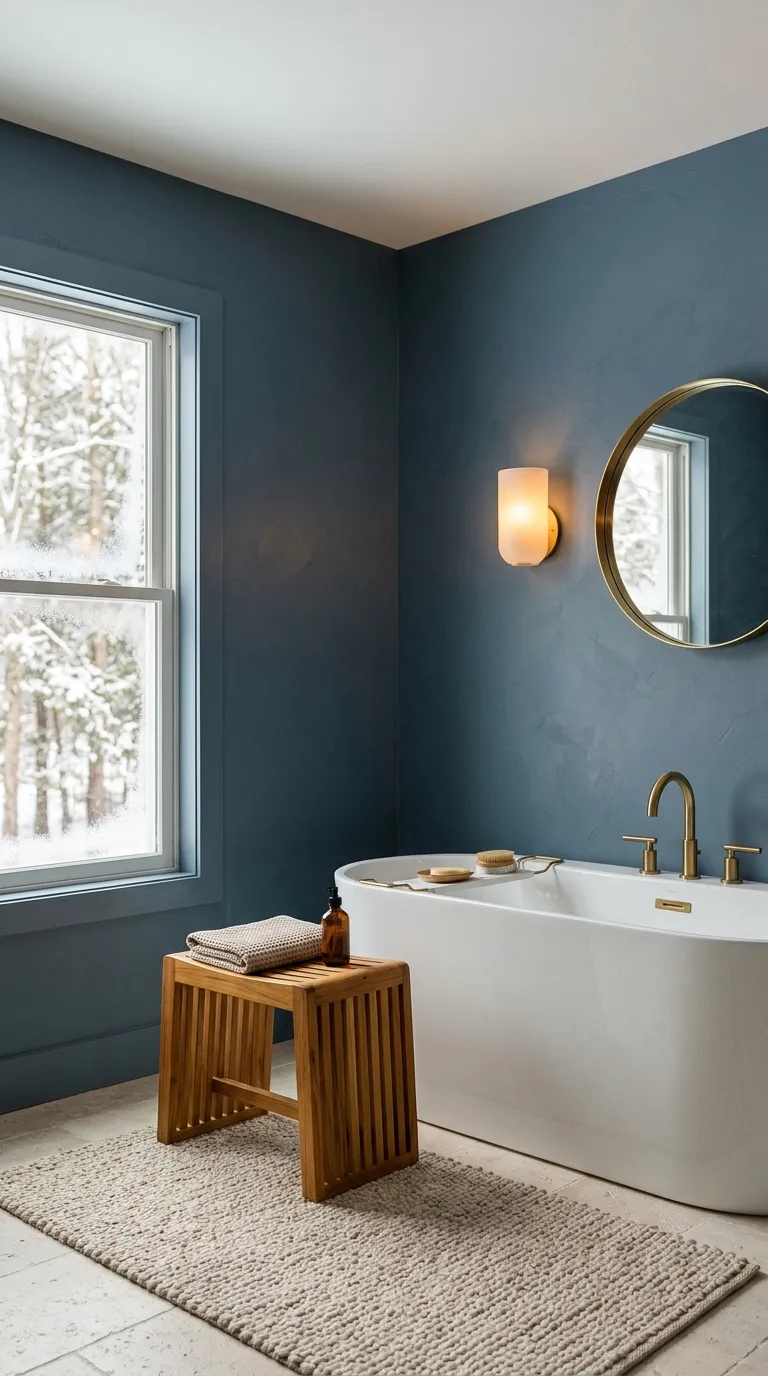
Misty slate-blue walls under a ceiling one or two shades lighter read hushed and open, even in a small room. Gray in the blue’s undertone keeps the color from looking cold or toy-like, and the lighter ceiling bounces light down instead of absorbing it. Go for satin or eggshell: flat paint stains under steam, and gloss throws glare off every light in the room. Avoid saturated cobalt or sky blue on all four walls, which feels loud in a space this size.
Pro Tip: Paint a roughly 2-foot sample board and tape it beside the toilet and vanity for a full day. Check it in morning light and again under the night lights. A blue that looks calm at noon can turn flat gray after dark.
Next up: a seat that turns the shower from something to endure into something to settle into, and the height to check before buying one.
4. A Shower Seat Sized for the Person Using It

Anyone who tires standing under running water, or feels a little unsteady on wet tile, gets the most from a shower seat. A seat height of about 17–19 inches is a common starting point, then adjust to the user’s knee height: too low makes standing up a strain, too high leaves feet dangling. Choose white or pale gray-blue so the seat contrasts with a deeper blue floor. A handheld shower head on a slide bar completes the setup, because a seated user needs the water to come to them. A backrest matters more than most people expect.
Budget Version: Aim to stay under $100 with a freestanding shower chair that has a backrest and adjustable legs, plus a handheld shower head on a slide bar. Skip the wall-mounted fold-down seat on a tight budget, since it needs solid wall reinforcement and usually a professional.
Get the Look
| Get the Look |
|---|
| Freestanding shower chair with backrest and adjustable legs |
| Handheld shower head with slide bar |
| Corner shower shelf at seated reach |
5. Grab Bars in a Finish That Contrasts With the Wall

Start by finding out what is behind the wall. A grab bar is only as strong as its anchor, so locate studs or confirm blocking behind the tile before choosing anything. Then set the main shower bar in the 33–36 inch range often cited in accessibility guidance, adjusting to the user’s height. Choose a textured grip and a finish that contrasts with the wall: matte white on gray-blue stands out, while polished chrome on glossy tile vanishes in glare. Towel bars and suction-cup rails are no substitute; neither is built to take a falling person’s weight.
✅ Grab Bar Install Checklist:
- [ ] Locate studs or confirm blocking behind the wall or tile
- [ ] Mark the height with the user standing beside the wall (33–36 inches as the starting range)
- [ ] Pick a textured grip in a finish that contrasts with the wall
- [ ] Anchor into studs or blocking, using a qualified installer if tile must be drilled
- [ ] Test with a firm pull before anyone relies on it
Get the Look
| Get the Look |
|---|
| Textured-grip grab bar in a contrasting finish |
| Wall-mounted towel ring within easy reach of the shower exit |
| Wall-mounted soap dispenser |
6. A Low-Threshold Shower Instead of a Tub Wall

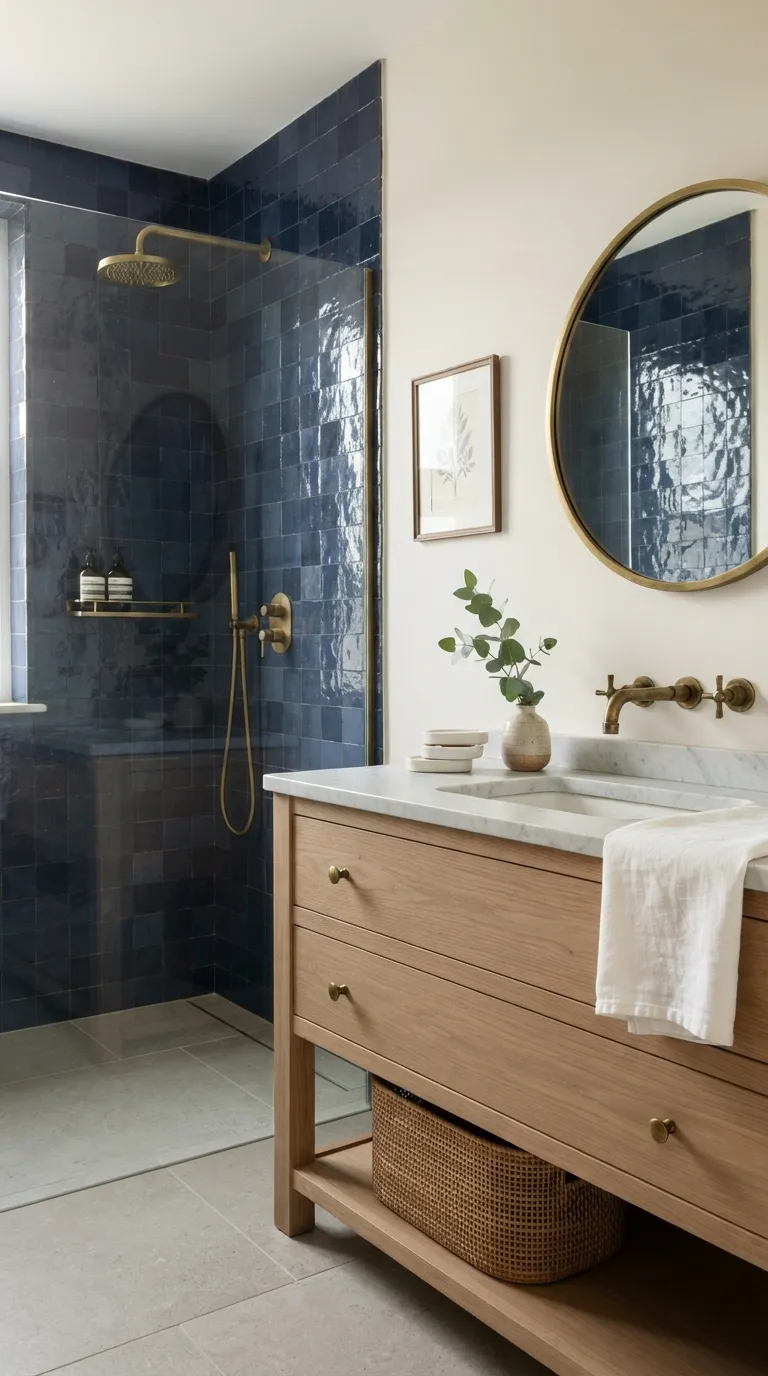
Most bathrooms ask older adults to lift a leg over a tub wall while wet. That is the default, and a risky one. Replace it with a low-threshold shower, or a curbless one where the budget allows, and tile the shower floor in the same blue-gray as the bathroom floor so the room reads as one continuous space. A frameless glass panel keeps the blue visible and the entry clear; a curtain with a weighted hem is the cheaper route. A wide opening also leaves space for a walker or a helper.
Important: “Curbless” is not just a removed lip. The floor has to slope toward the drain and the waterproofing must hold at the edge, which makes this a contractor job rather than a weekend one. Get quotes from licensed professionals before demolishing a tub.
Coming next: the one wall in the room where a deeper blue does more safety work than any piece of hardware.
7. Deep Blue Behind a White Toilet

A white toilet against a deep blue wall looks crisp, and the bowl’s outline stays clear even to tired or aging eyes. Paint the wall behind the toilet two or three shades darker than the rest of the room, then choose a seat color that differs from both the bowl and the floor. White on white on pale gray is how toilets end up blending into the room. Navy or mid-blue carries the contrast without a single clinical-looking sticker or strip.
Styling Note: Keep the roll holder and any hooks a different tone from the accent wall, such as white or brushed brass. Matching hardware disappears into the paint.
8. Lighting Beside the Mirror, Not Above It

Light from above carves shadows under the brow and chin; light from both sides evens out the face. For a bathroom mirror, that means flanking it with sconces at around eye level, roughly 60 inches to the center for a standing adult and lower for someone who sits to groom. Frosted or opal shades and low-glare warm-white bulbs matter more than the fixture style, because bare bulbs reflect in both the mirror and glossy tile. A wide, plain mirror in a white or pale blue frame leaves room to adjust for height.
Pro Tip: Put the vanity light on a large paddle dimmer. Stiff or swollen fingers handle a broad rocker more easily than a small toggle, and a lower setting is gentler on eyes in the morning.
Get the Look
| Get the Look |
|---|
| Pair of frosted-glass wall sconces |
| Low-glare warm-white vanity bulbs |
| Wide, plain mirror with a white or pale blue frame |
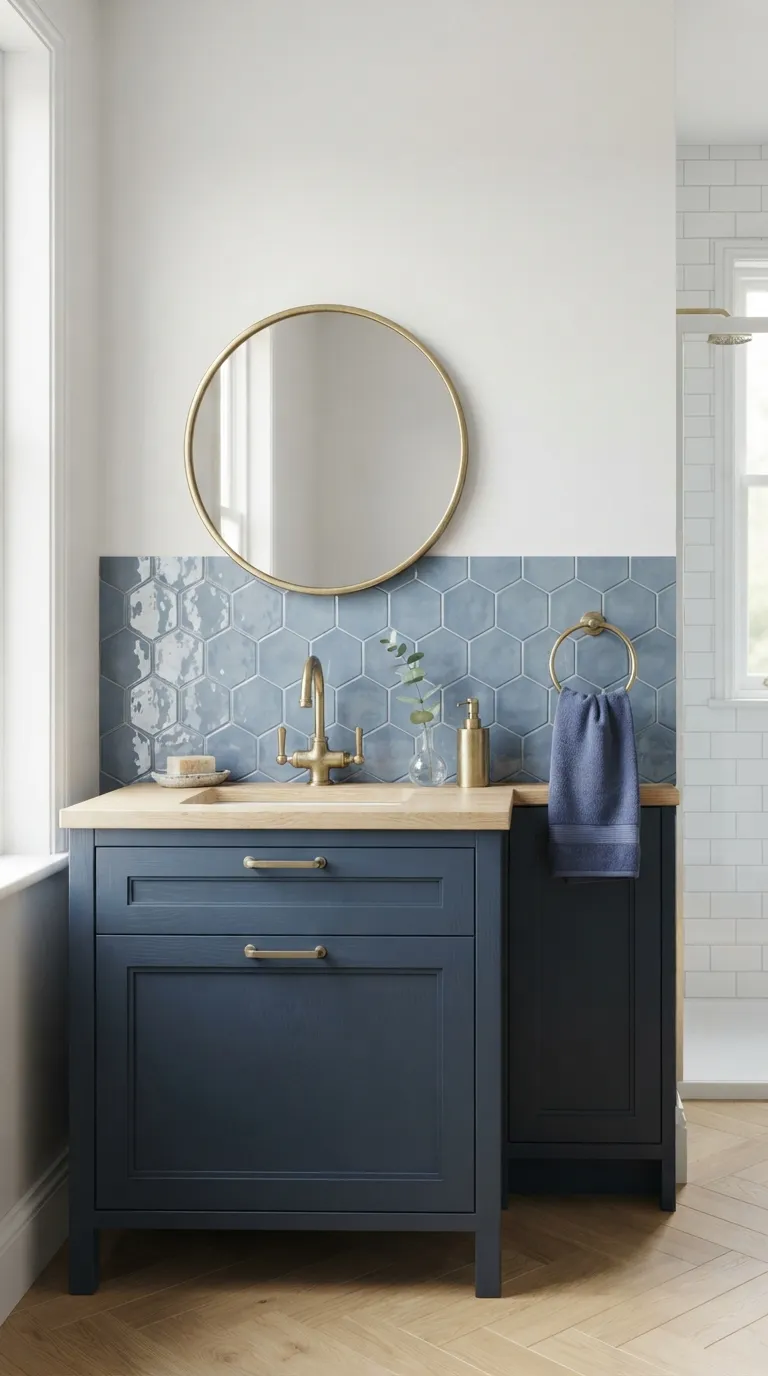
9. A Wall-Hung Navy Vanity With Open Space Underneath
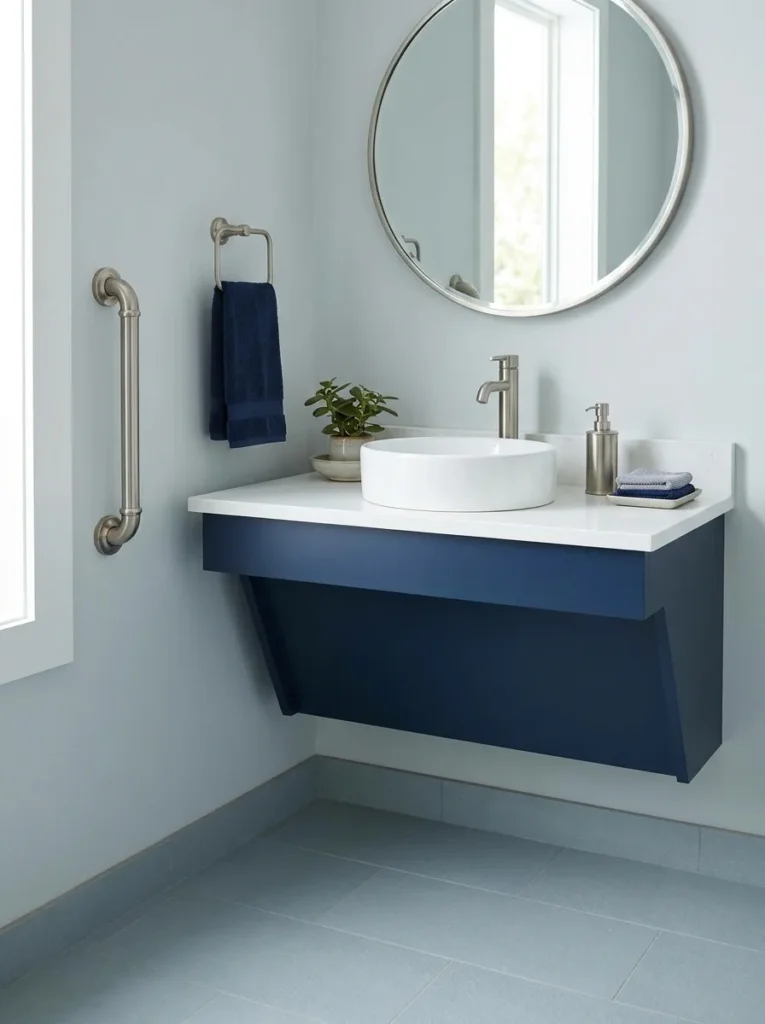
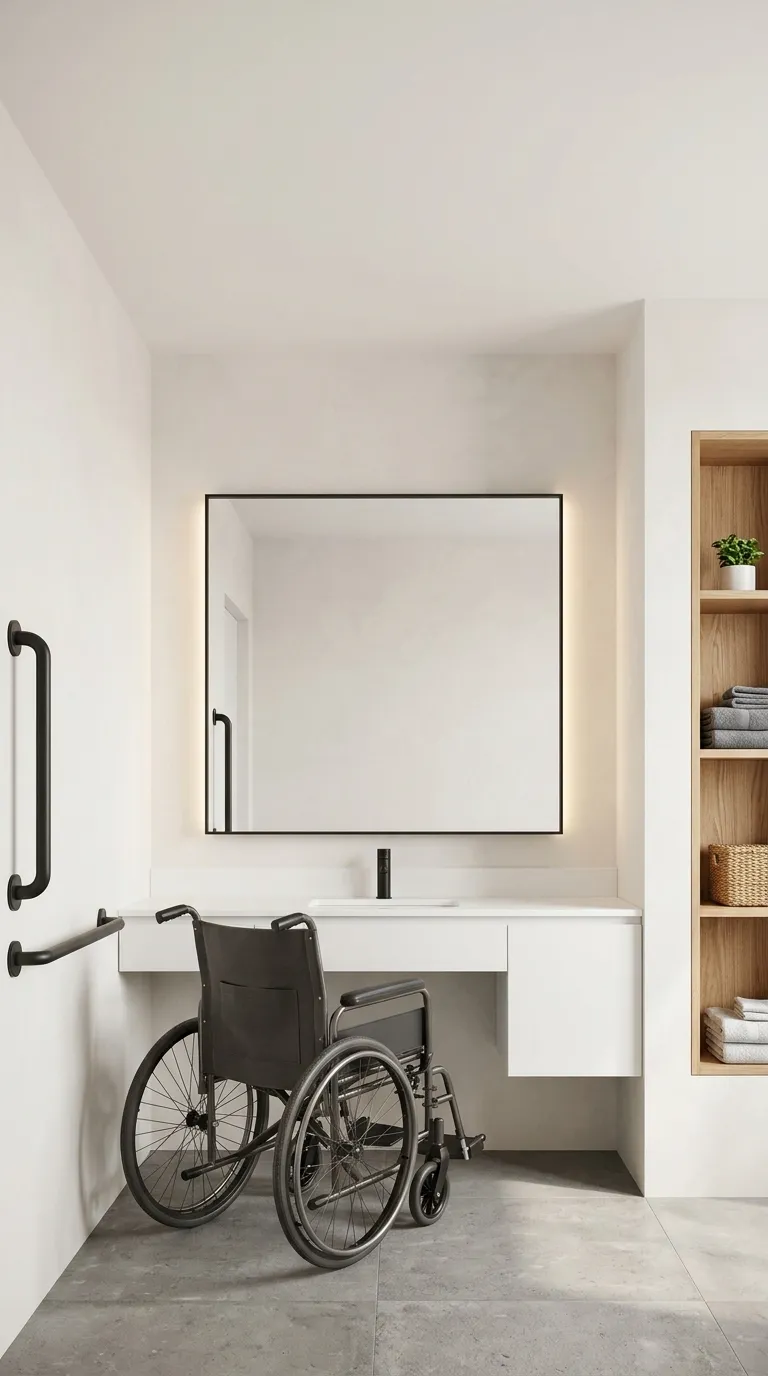
For anyone who sits to wash up or walks with a frame, a wall-hung vanity gives knee room and a floor with nothing to bump. Choose a navy unit with the space underneath left open or fitted with removable doors, and wrap the exposed hot-water pipes with insulating covers so legs never touch them. Add a single-lever faucet, which works with a wrist or forearm, and D-shaped pulls that fit a whole hand instead of pinched fingers. Wall-hung units need solid blocking behind the drywall, so confirm that before ordering.
Small-Space Tip: In a tight bathroom, look for a slim-depth wall-hung vanity. Every inch of depth saved becomes turning room for a walker, and the visible floor beneath makes the room read larger.
Get the Look
| Get the Look |
|---|
| Wall-hung navy vanity with open space below |
| Single-lever faucet |
| D-shaped cabinet pulls |
Up next: why the open shelf above the toilet, nearly everyone’s default, asks for the one movement that unbalances most people.
10. Open Baskets and Hooks in the 24-to-48-Inch Reach Zone

Start by standing in the room and noting where a hand lands naturally without bending or stretching. Everything used daily, such as towels, soap, a toothbrush and a glasses case, should sit between about 24 and 48 inches off the floor. Use open baskets in pale and mid-tone blues so each person’s items are findable at a glance, and keep heavier backups like multipack toilet paper low and lighter ones higher. Nothing lives on the floor in front of the toilet or tub.
Important: The shelf above the toilet is the default storage spot, yet it forces a reach up and over the tank, the very motion that tips a balance. Reserve it for things used rarely, if at all.
11. Half-Height Blue Tile With Painted Wall Above
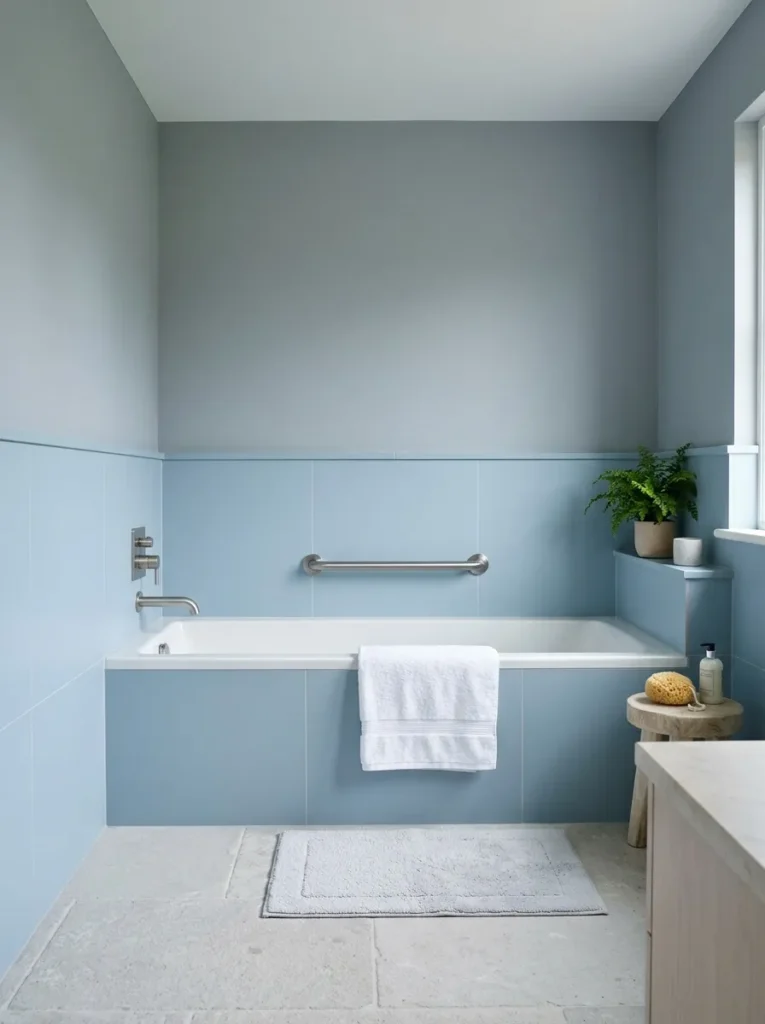
Soft blue tile wrapping the lower part of the walls, with gray-blue paint above, looks tailored, like a deliberate band of color rather than a wall of tile. The tile takes splashes and scrubbing; the paint above stays soft. Choose large-format tiles, since fewer grout lines mean less to clean and less for mildew to hold onto, then cap the tile at about 36 inches, roughly counter height, with a slim trim. Keep grab bars on a flat tile field instead of across the trim edge, where fixings are harder to place cleanly. Floors want small tiles; walls want big ones.
How to Start Your Calming Blue Bathroom Transformation
Start here: a warm-white, motion-sensing plug-in night light beside the toilet. Little cost, seconds to install, and it shows how much of the bathroom disappears at night. Everything else, paint and tile included, becomes easier to judge once the floor is visible after dark.
The most common beginner error is adding a loose blue bath mat for comfort and color. Corners curl, walkers catch, and wet backing slides on tile. Remove it. If a mat is unavoidable, pick one that is thin, has a backing made for bathroom floors, and replace it when the edges lift.
Three items worth buying first, as a rough guideline each in the under-$50 range: a set of three blue cotton-rope baskets for the reach zone, a soft-close toilet seat in navy or mid-blue for contrast, and quick-dry waffle-weave towels in two blues. None needs a tool.
A starter refresh of night lighting, baskets, towels and a contrasting seat fits into a weekend at roughly $50–$150 (approximate). Adding paint, vanity sconces, a shower chair and grab bars stretches across a few weekends and roughly $300–$1,200 in materials, before any professional labor. Tile, a low-threshold shower and a wall-hung vanity belong on a months-long plan with contractor quotes, and costs vary widely by region and scope.
Ready to Create Your Dream Calming Blue Bathroom for Seniors?
These 11 calming blue bathroom ideas for seniors cover color, materials and layout, including gray-blue walls, textured floors and a low-threshold shower, plus the small hardware decisions that decide whether a room is easy to use. Nothing needs to happen all at once; one change at a time still counts as a transformation. Tonight, plug a warm-white night light in between the bed and the toilet and see what the floor looks like in the dark. Finished, the room should feel like a quiet morning: soft light, firm footing, nothing to second-guess. Save the ideas you like to a Pinterest board so the plan is ready when you are.
Keep Exploring
- 9 Safe Walk-In Shower Ideas for Seniors That Still Feel Like a Spa
- 10 Calming Blue Bedroom Ideas for Restful Sleep
- 12 Hallway Lighting Ideas for Safer Nighttime Walks