20 Fall Porch Ideas That Turn Your Entryway Into the Season’s Best Room
A fall porch is really just permission permission to layer texture, deepen your color palette, and let a space that usually just gets walked through become somewhere you actually want to sit. This guide walks through 20 fall porch ideas, from color and lighting to furniture and layout, so you can pick the ones that fit your space and your weekend.
There’s a particular kind of quiet that settles over a porch once the pumpkins are out and the light turns gold around 5pm. Warmth. Texture. That specific rustle of dried leaves against wood. Autumn asks for depth rust, cream, weathered wood, a little bit of imperfection. Let’s build it.
Jump To
- Zone Your Porch Like a Living Room
- Lean Into a Terracotta & Rust Palette
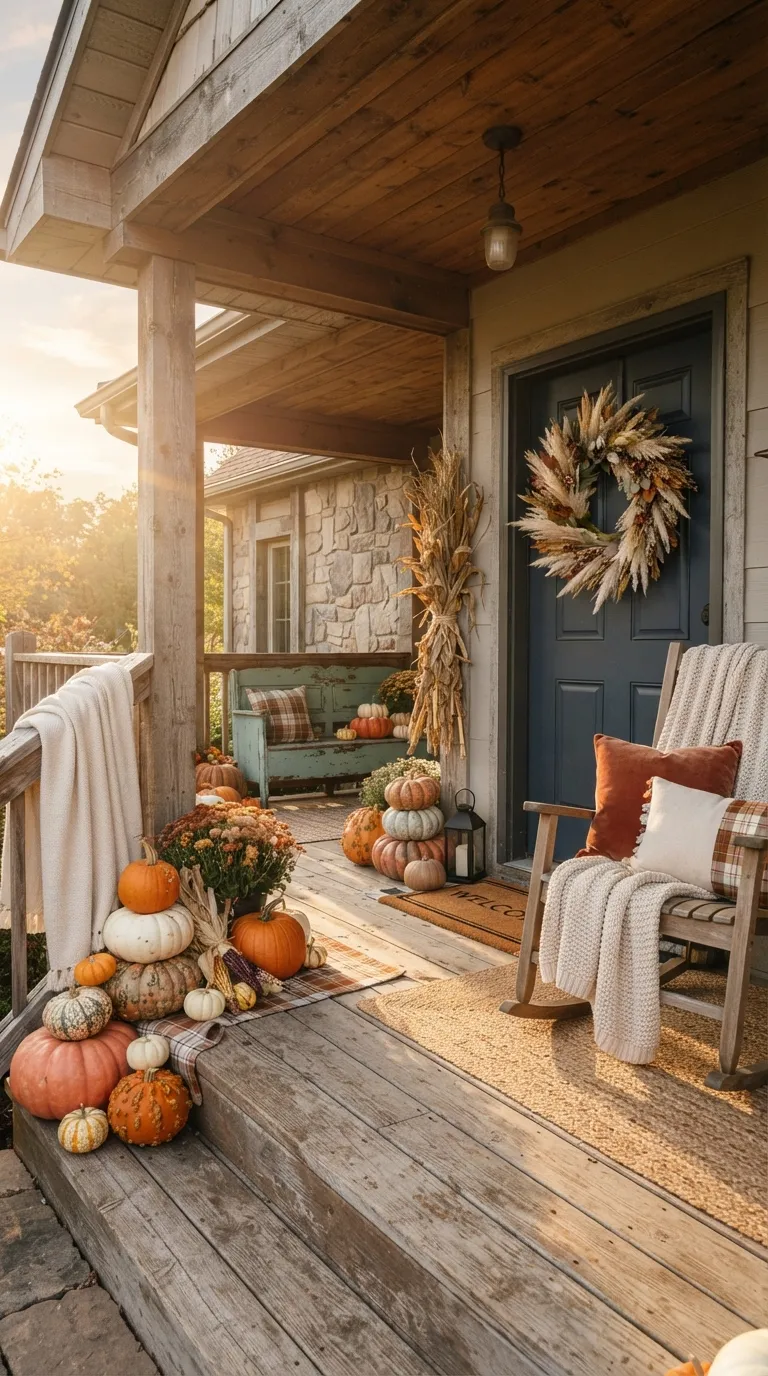
- Flank the Door With Dried Corn Stalks
- Build a Pumpkin Display With Height
- String Warm Amber Lights Along the Eaves
- Bring in Wooden Rocking Chairs
- Layer Two Jute Doormats
- Paint the Front Door a Pumpkin-Rust Shade
- Add a Vertical Ladder Shelf
- Swap in Flameless Candle Lanterns
- Hang a Dried Floral Wreath
- Set Up a Bistro Table for Two
- Use Wood Crates as Plant Stands
- Add Sage Green & Cream Accents
- Layer Throw Blankets Over the Rail
- Line the Steps With Pathway Lanterns
- Style a Seasonal Tablescape
- Add a Vintage Bench With Cushions
- Hang Planters Instead of Using Floor Pots
- Mix Metal Finishes on Purpose
Why Fall Porch Decorating Works So Well
Fall porch styling pulls from the same instinct as farmhouse and cottage design natural materials, warm undertones, texture over polish. Think unfinished pine, galvanized metal, chunky knit throws, and a palette built from warm greige, terracotta, dusty sage, and burnt cream.
It’s having a moment right now because people want their homes to feel lived-in, not staged. Small porches actually benefit most a tight footprint forces intentional choices instead of clutter, so start with one anchor piece (a chair, a wreath, a door color) before adding layers.
| Element | Warm & Rustic | Layered & Textural |
|---|---|---|
| Philosophy | Nothing matches perfectly — pieces feel gathered, not bought as a set | Depth comes from repetition, not variety |
| Materials | Unfinished wood, galvanized metal, dried botanicals | Jute, wool, aged brass |
| Color palette | Terracotta, rust, warm greige | Sage, cream, charcoal |
The 20 Fall Porch Ideas
1. Zone Your Porch Like a Living Room
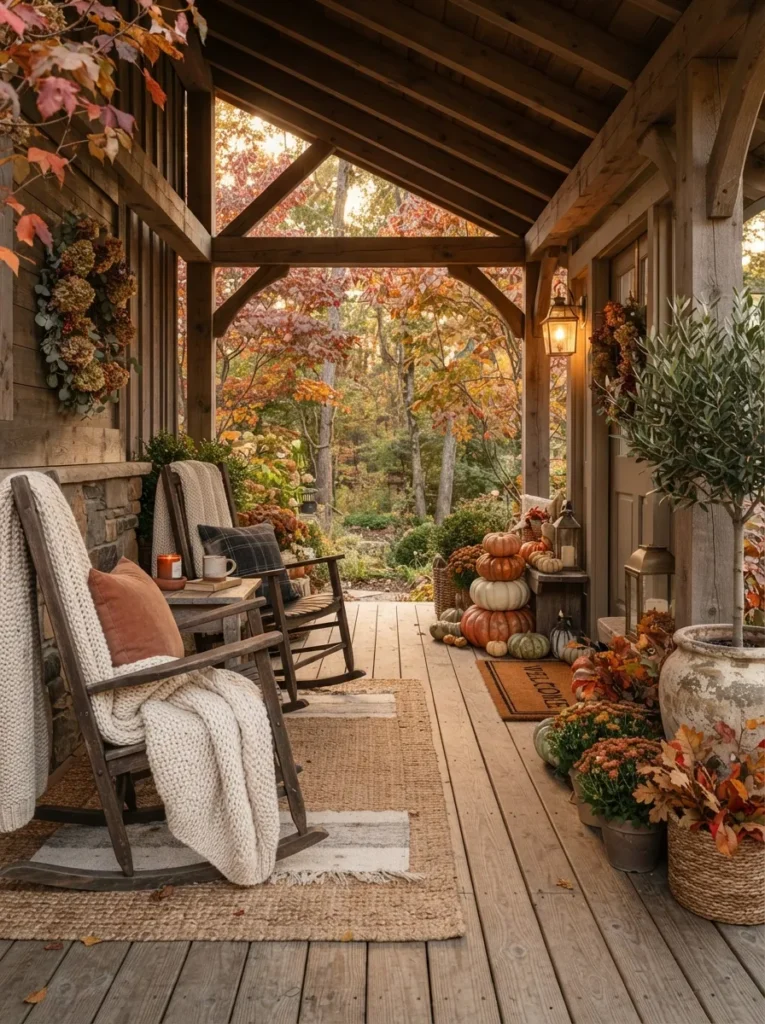
What it looks like: A porch that reads as three purposeful zones sit, display, walk instead of one long stretch of furniture pushed against the wall.
Why it works: Zoning uses proportion and negative space the way an indoor living room does. Leaving clear floor between seating and the front door keeps traffic flow obvious and the space from feeling cramped.
How to copy it: Anchor a seating zone with an outdoor rug roughly 5×7, keep a 3-foot clear path to the door, and dedicate one corner purely to plants or a display table nothing multitasking.
Best for: Anyone with a full-depth porch who currently has furniture scattered with no clear function.
Pro Tip: Measure your clear walking path before buying furniture 36 inches is the minimum for the door to swing and guests to pass comfortably.
2. Lean Into a Terracotta & Rust Palette
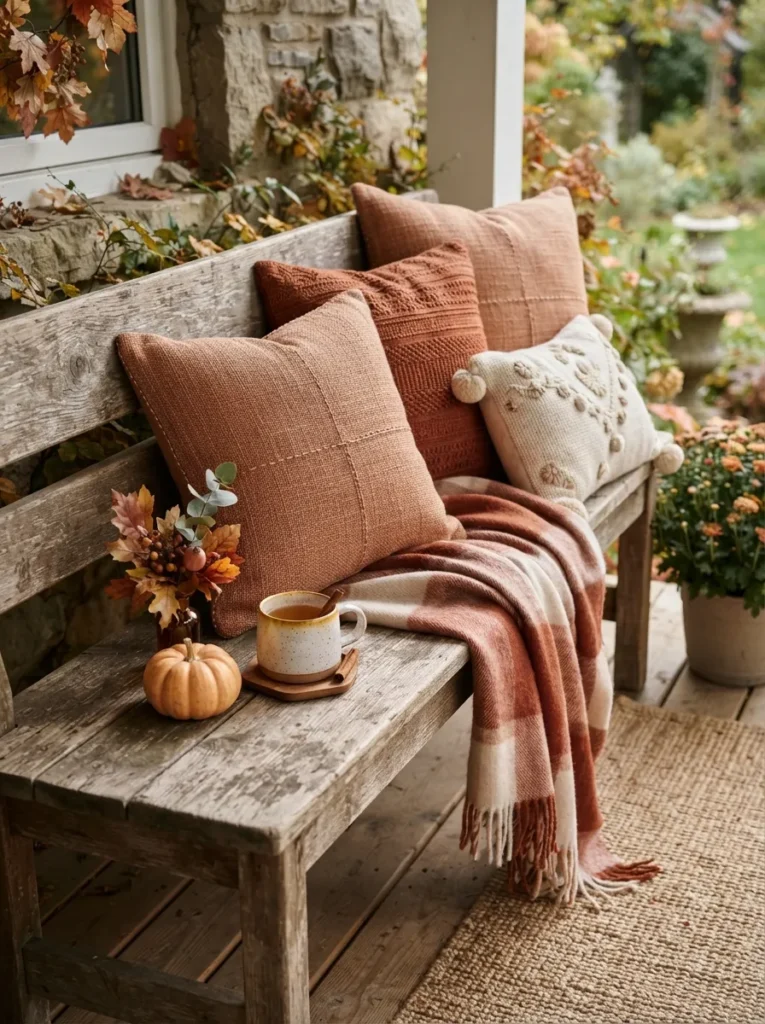
What it looks like: A bench or chair set with three or four pillows in overlapping shades of clay and rust never one flat matching color.
Why it works: This uses color layering rather than color matching, which reads as intentional rather than store-bought-as-a-set. Warm undertones also photograph beautifully in low autumn light.
How to copy it: Mix one solid terracotta pillow, one rust stripe, and one cream textured pillow odd numbers and mixed patterns always beat a matched pair.
Best for: Renters and budget decorators who want a big visual shift without touching paint or furniture.
Get the Look
| Product |
|---|
| Terracotta outdoor throw pillow, 18×18 water-resistant cover |
| Rust and cream striped lumbar pillow |
| Burnt sienna woven outdoor cushion cover |
| Cream boucle indoor-outdoor accent pillow |
| Rust-toned braided seat cushion |
3. Flank the Door With Dried Corn Stalks
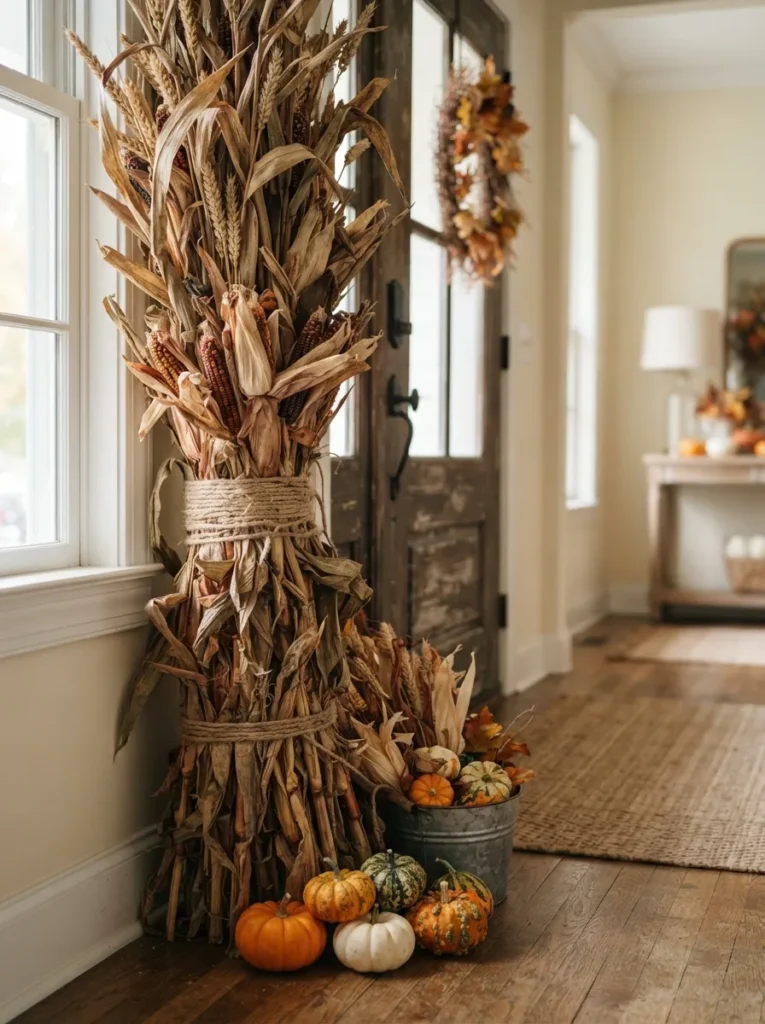
What it looks like: Tall, slightly uneven bundles that lean rather than stand perfectly straight the imperfection is the point.
Why it works: Height and texture contrast do the work here. Corn stalks add vertical scale a flat door display can’t, and rough husk texture contrasts against a smooth painted door.
How to copy it: Bundle 4-6 stalks per side, tie with natural jute twine at two points, and set them in a bucket weighted with sand so wind doesn’t tip them.
Best for: People with a covered entry who want maximum visual impact for under $30.
Quick Win: Skip the specialty store many grocery chains sell decorative corn stalk bundles in the same aisle as pumpkins each September.
The next idea is one most people skip because they think it’s too much work it’s not.
4. Build a Pumpkin Display With Height
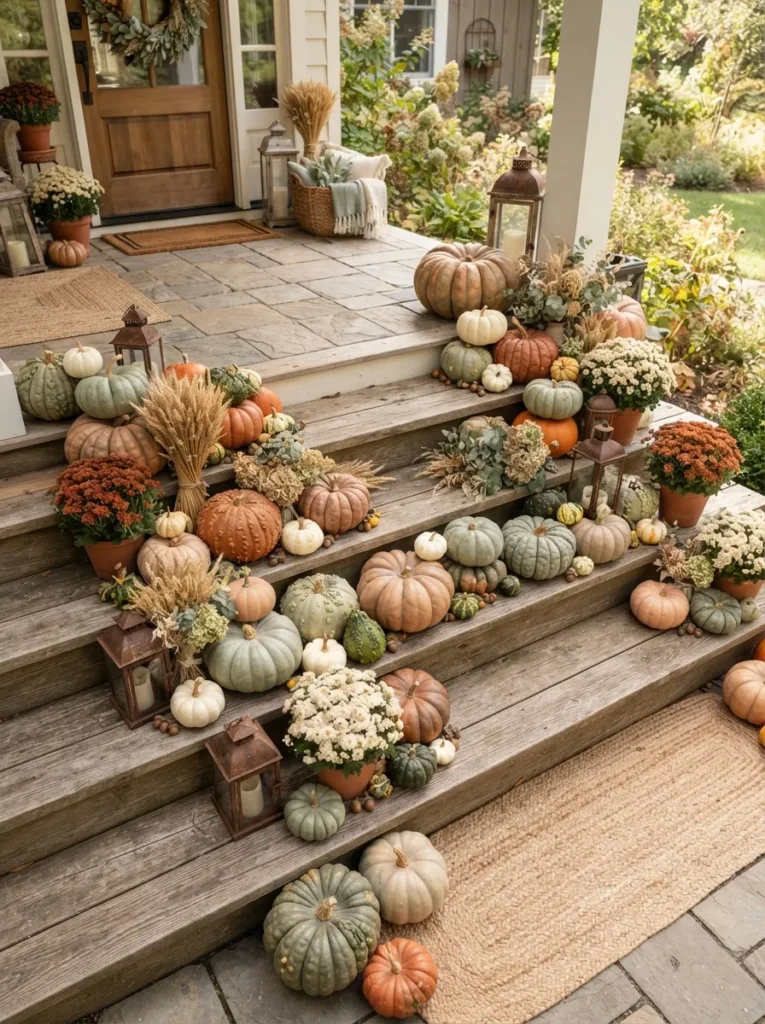
What it looks like: Pumpkins grouped by size in odd numbers, largest at the base and smallest tucked near the top step never lined up in a single flat row.
Why it works: This is basic visual weight distribution. A single row of same-size pumpkins reads flat; varying height creates a focal point your eye naturally travels up.
How to copy it: Use one large pumpkin as the anchor, two medium, and three small mix matte white and ridged orange varieties for texture contrast, not just color.
Best for: Beginners who want an easy, temporary display that doesn’t commit to anything permanent.
Important: Real pumpkins soften within 4-6 weeks outdoors in humid climates if you want the display to last through Thanksgiving, mix in faux pumpkins for the pieces at the base.
5. String Warm Amber Lights Along the Eaves
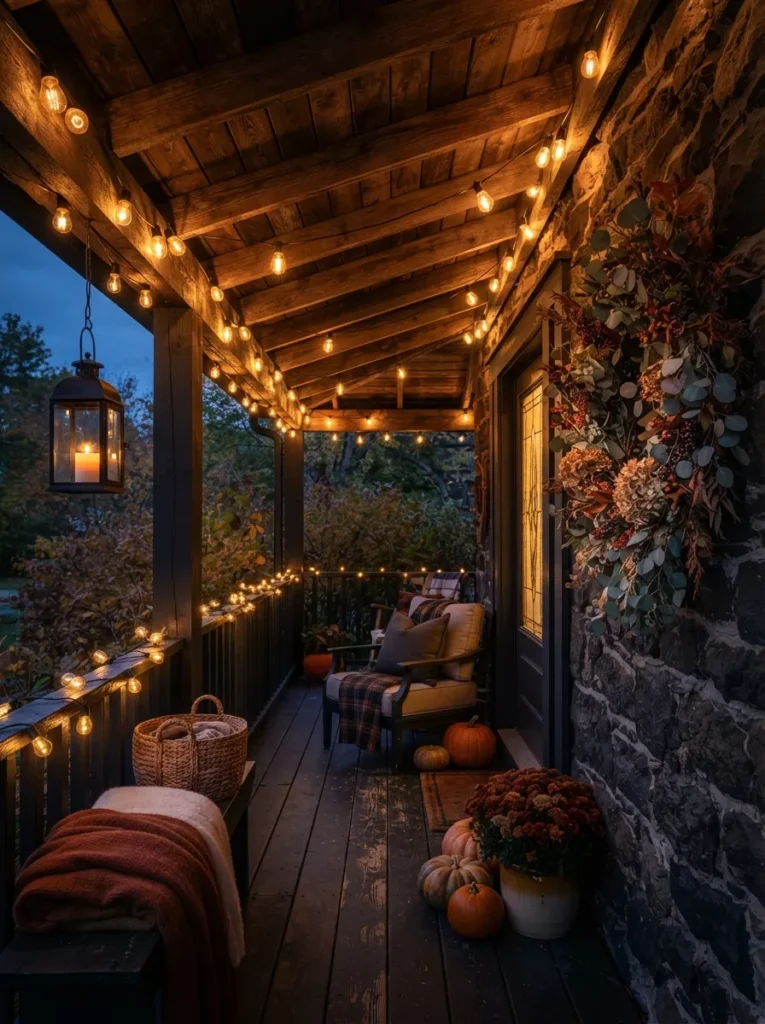
What it looks like: A soft amber glow tracing the roofline, warm rather than white-bright the porch equivalent of candlelight.
Why it works: Color temperature matters more than most people think. Amber-toned bulbs (around 2200K) read as cozy; cool white bulbs (5000K+) feel commercial and clash with an autumn palette.
How to copy it: Choose warm-white or amber LED string lights labeled “outdoor rated,” and drape loosely rather than pulling taut the slight sag reads more natural.
Best for: Anyone who uses their porch in the evening, especially in cooler climates where fall nights get dark early.
Warning: Never run standard indoor string lights outdoors, even under a covered porch moisture exposure on non-rated cords is a real fire and shock hazard. Confirm “outdoor rated” on the packaging before hanging anything.
Up next: the furniture piece that quietly does more work than anything else on this list.
6. Bring in Wooden Rocking Chairs
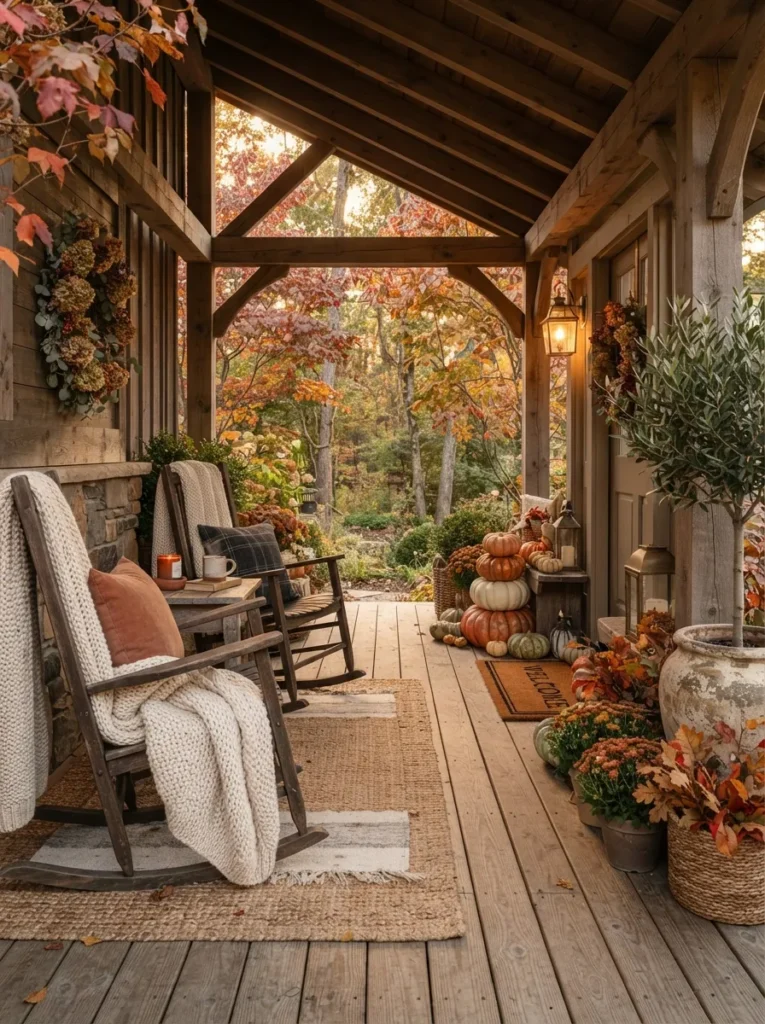
What it looks like: Two chairs angled slightly toward each other rather than lined up side by side inviting conversation, not just seating.
Why it works: Angling furniture toward a shared point creates a sense of gathering even with just two pieces. Unfinished or lightly stained oak also holds up better against seasonal humidity than painted finishes.
How to copy it: Choose chairs in raw or lightly oiled wood rather than painted white, and set a small side table between them for a drink or a book.
Best for: Homeowners with a permanent porch setup who want furniture that lasts multiple seasons.
Get the Look
| Product |
|---|
| Unfinished solid wood porch rocking chair |
| Small round wood side table, weather-treated |
| Wool blend throw blanket, rust plaid |
| Ceramic outdoor mug set |
| Braided jute seat cushion |
7. Layer Two Jute Doormats
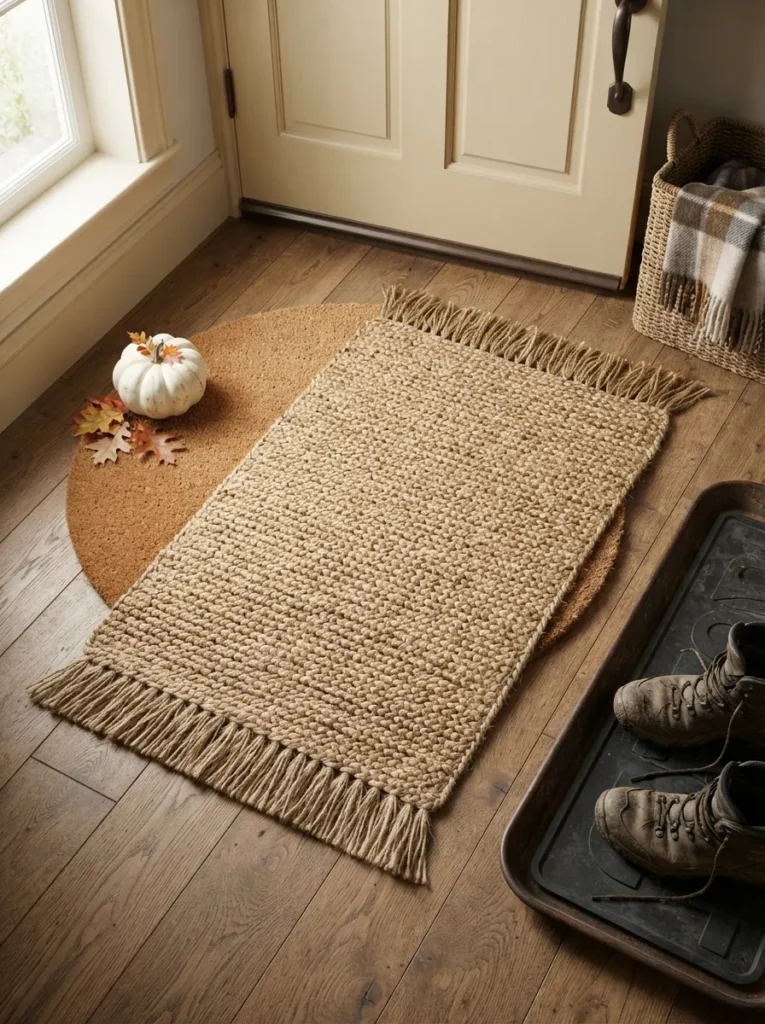
What it looks like: A larger woven mat as the base with a smaller, differently shaped mat centered on top layered like a rug in a living room.
Why it works: This borrows directly from interior rug-layering, using scale contrast to add depth to a flat entryway most people never think about styling.
How to copy it: Choose a plain rectangular jute mat as your base and a round or scalloped-edge mat in a contrasting weave to layer on top keep both in natural fiber tones.
Best for: Small-space decorators this trick adds visual richness without taking up any additional floor space.
Small-Space Tip: If your entry is narrow, choose a base mat no wider than your door frame plus 4 inches on each side, so it doesn’t visually shrink the walkway.
8. Paint the Front Door a Pumpkin-Rust Shade
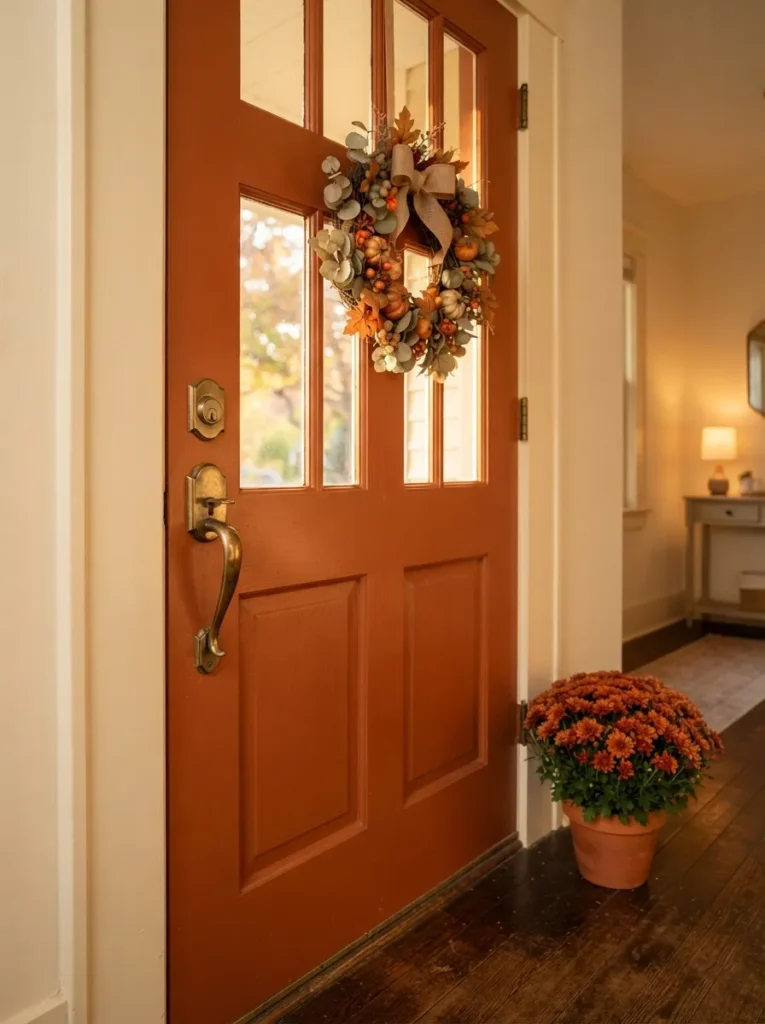
What it looks like: A door color deep and warm enough to read as a design choice from the street, not just “orange.”
Why it works: This is a color-blocking technique one saturated color against a neutral house exterior creates a focal point stronger than any accessory could. Brass or aged bronze hardware pulls warmth into the metal tones too.
How to copy it: Look for paint names in the “burnt pumpkin” or “spiced clay” family with a satin finish satin holds up better to weather than matte and reflects just enough light to look intentional, not flat.
Best for: Homeowners ready for a semi-permanent change with high visual payoff.
Important: Most people assume any exterior paint works on a door but doors need a paint rated for high-traffic exterior surfaces, not just weather-resistant wall paint, or you’ll see chipping at the hinge and handle within a year.
This next one surprised even experienced decorators the first time they tried it.
9. Add a Vertical Ladder Shelf
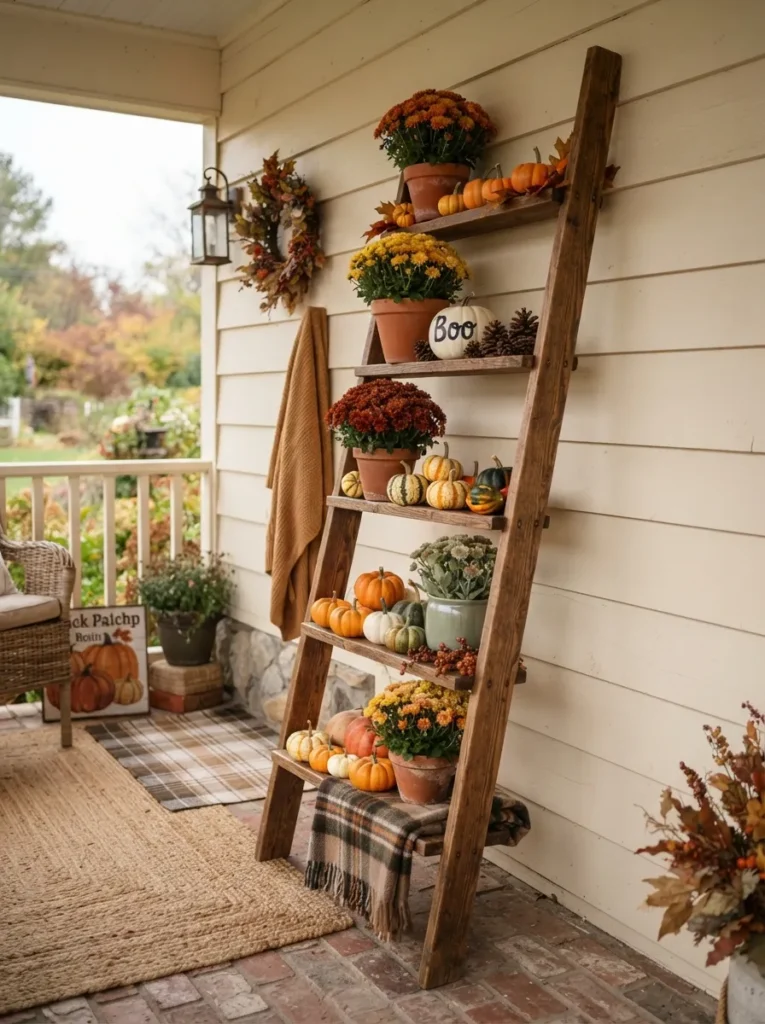
What it looks like: A leaning ladder shelf that turns a narrow strip of wall into three display levels instead of one crowded table.
Why it works: This solves a specific proportion problem small porches run out of floor space fast, but walls are almost always underused. Building vertically adds display area without adding footprint.
How to copy it: Choose a ladder shelf no deeper than 12 inches so it doesn’t intrude on walking space, and vary what sits on each rung a plant, then a pumpkin, then a lantern.
Best for: Small-space decorators and apartment or condo porches with limited square footage.
10. Swap in Flameless Candle Lanterns
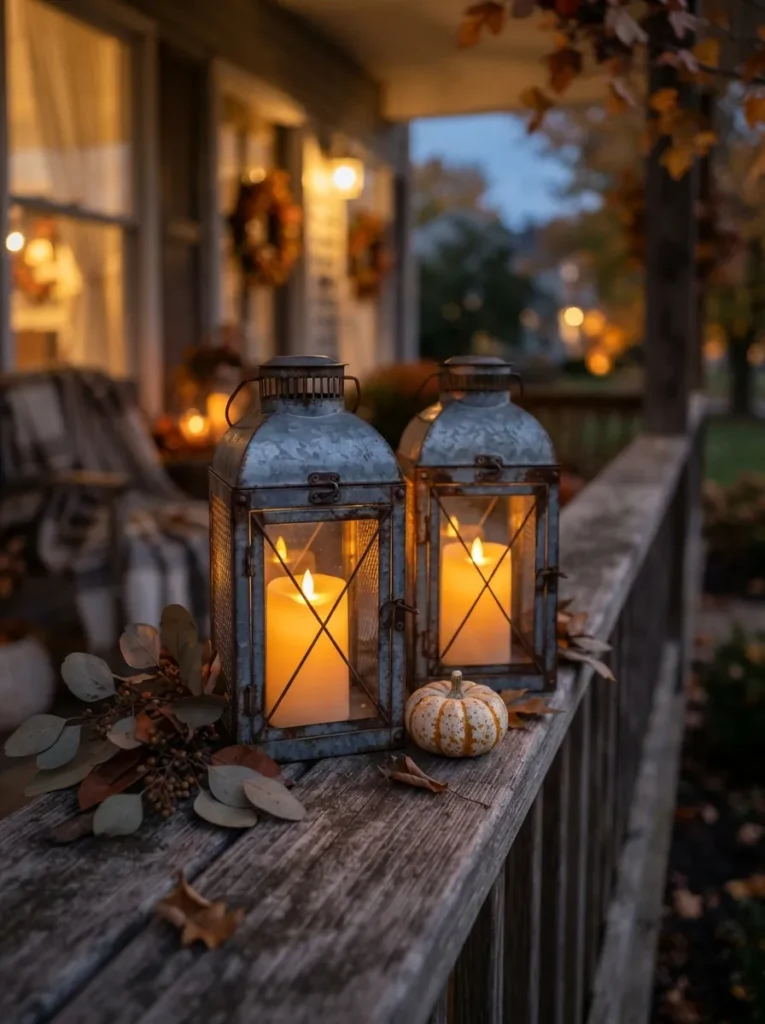
What it looks like: Lantern silhouettes glowing softly along the railing, the flicker visible but no open flame in sight.
Why it works: Flameless candles solve the safety issue real flame poses near dried florals and fabric, while still giving the flicker effect that makes candlelight feel different from a steady bulb.
How to copy it: Choose flameless candles with a moving-wick LED effect rather than a static glow the realistic flicker is what sells the look at night.
Best for: Households with kids, pets, or dried decor nearby where open flame is a real risk.
Mistake to Avoid: Cheap flameless candles often cast a flat, unmoving light that reads as obviously fake in photos spend slightly more for one with a genuine flicker function.
The next idea costs almost nothing but changes the whole feel of the entrance.
11. Hang a Dried Floral Wreath
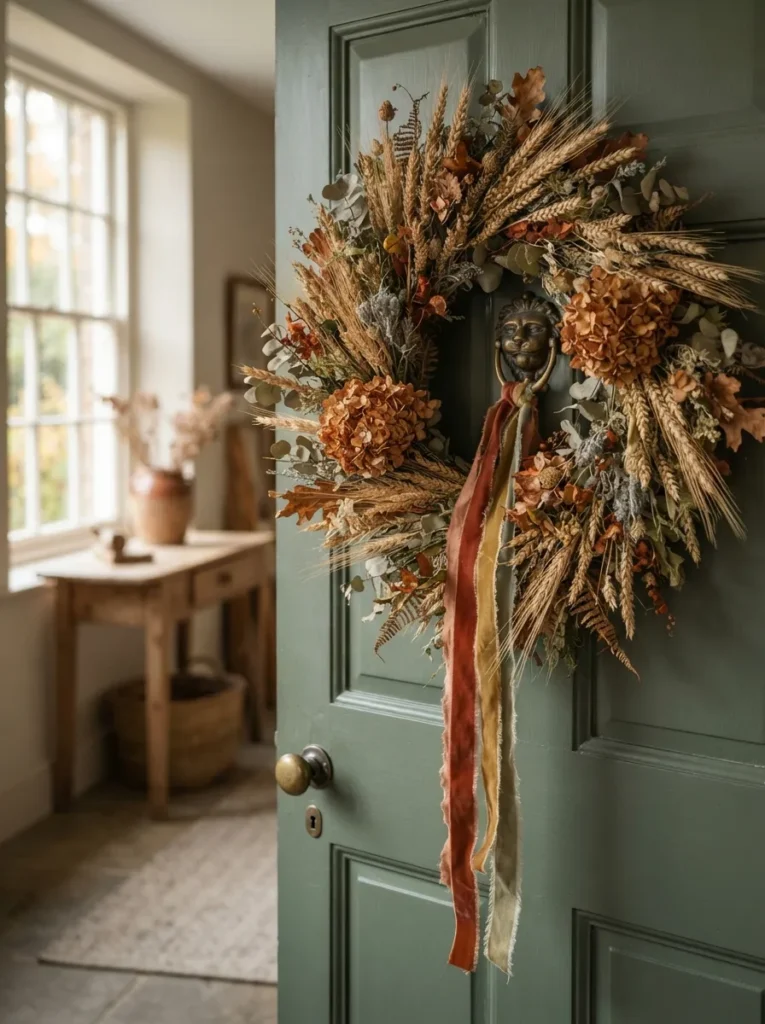
What it looks like: A loosely shaped wreath of dried grasses, wheat, and faded florals asymmetrical rather than a tight, perfect circle.
Why it works: Dried, muted tones create tonal harmony with a rust or greige door instead of competing with bright fresh florals, which fade fast anyway and clash with fall’s more muted palette.
How to copy it: Choose a wreath with varied textures dried wheat, pampas, and one or two faded floral accents and hang it slightly off-center on the door for a more natural look.
Best for: Anyone who wants a single high-impact piece without committing to a full porch overhaul.
Get the Look
| Product |
|---|
| Dried wheat and pampas grass wreath, 18-20 inch |
| Rust velvet wired ribbon |
| Brass wreath hanger, over-the-door style |
| Faded dried floral stem bundle |
| Natural raffia bow accent |
Pro Tip: Store your wreath in a paper bag (not plastic) between seasons plastic traps humidity and causes dried florals to mold.
12. Set Up a Bistro Table for Two
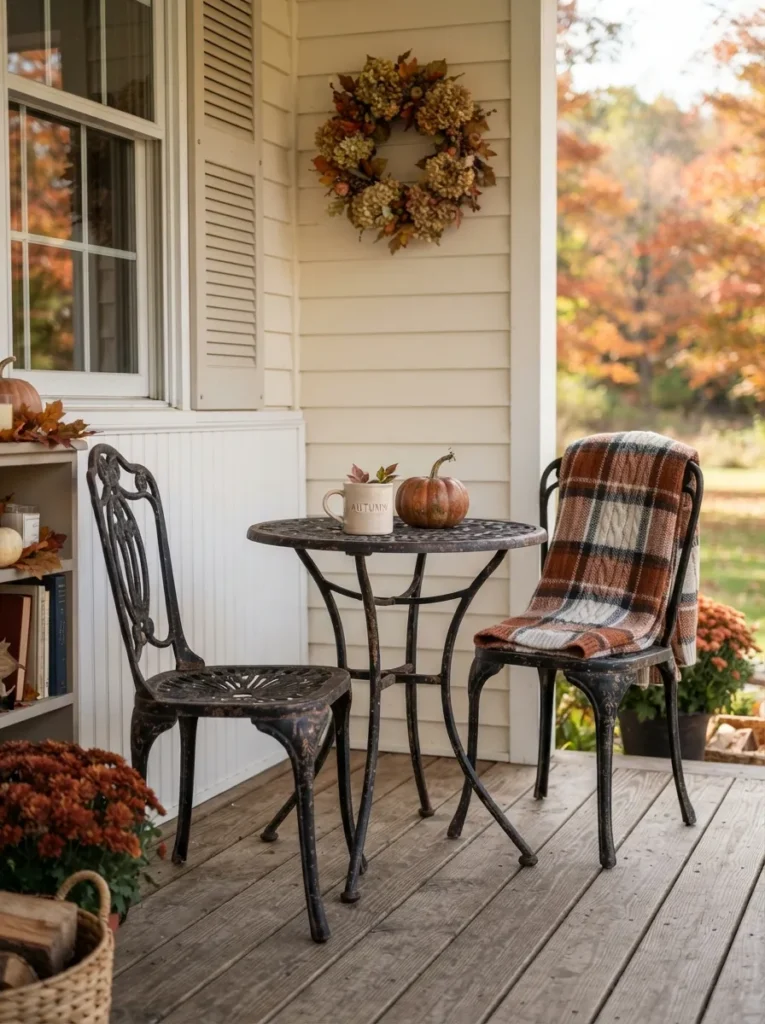
What it looks like: A compact two-top table tucked into a corner, set as if someone just stepped away from their coffee.
Why it works: Styling furniture “in use” a mug left out, a blanket half-folded creates the lived-in feeling that separates a real home from a showroom display.
How to copy it: Choose a table no larger than 24 inches in diameter for a small porch, and always style it with one object slightly out of place rather than perfectly centered.
Best for: Homeowners with a porch corner currently sitting empty or used for storage.
Budget Version: A secondhand metal side table paired with two folding café chairs from a hardware store costs a fraction of a matched bistro set and photographs just as well once styled.
After this one, the harder-working ideas start the ones that need a little more planning but pay off longer.
13. Use Wood Crates as Plant Stands
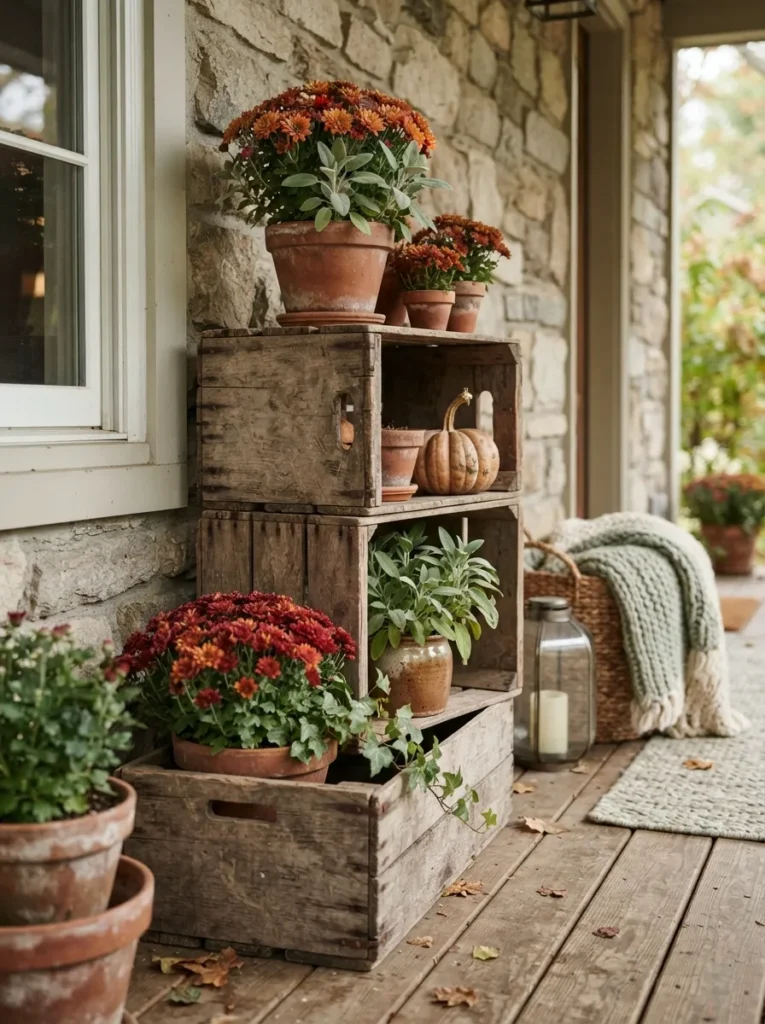
What it looks like: Two or three mismatched crates stacked at different heights, each holding a single potted plant or pumpkin rather than a crowd of items.
Why it works: Mismatched, reclaimed materials read as gathered-over-time, which is the whole point of a rustic autumn palette polish is the enemy of this look.
How to copy it: Source crates in slightly different sizes and stains, stack no more than three high for stability, and give each level exactly one object so it doesn’t turn into clutter.
Best for: DIY-minded decorators who enjoy sourcing secondhand or reclaimed pieces.
Quick Win: Old produce crates from a local orchard or farm stand often cost less than $10 each and already have the weathered look this idea needs.
14. Add Sage Green & Cream Accents
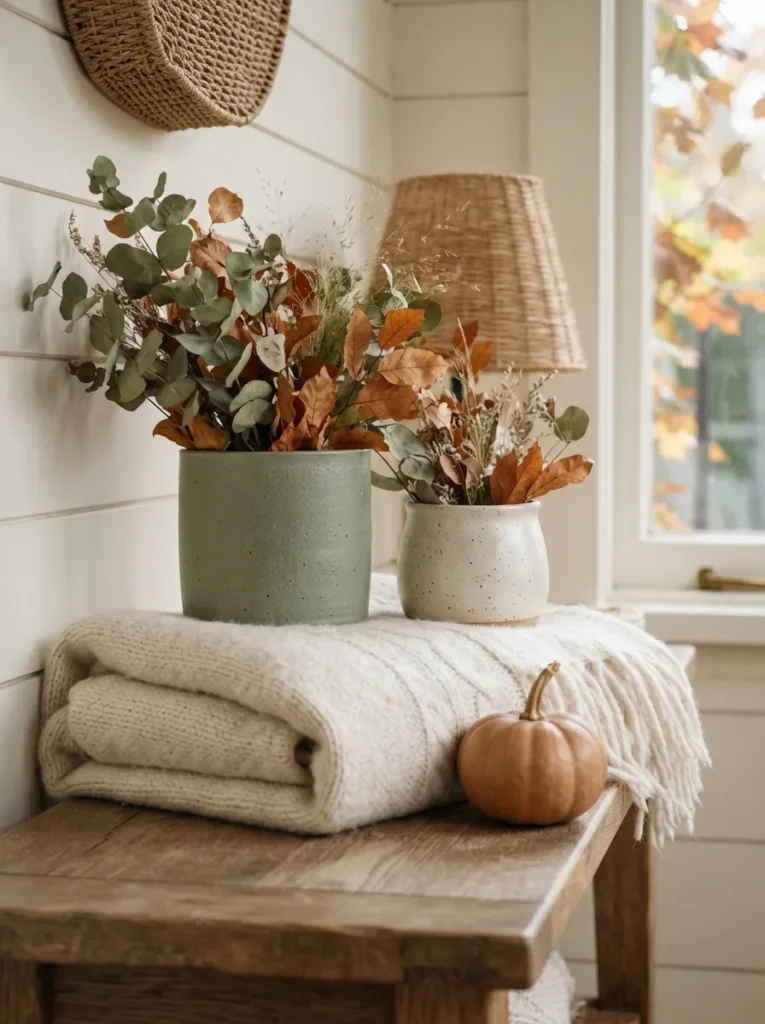
What it looks like: A cooler, quieter counterpoint to the typical orange-and-rust fall palette sage and cream instead of pumpkin and clay.
Why it works: Color contrast within a season keeps a fall porch from feeling like a Halloween display. Sage against cream reads as sophisticated autumn rather than costume-store seasonal.
How to copy it: Choose one or two sage ceramic planters, a cream woven throw, and let the rust tones elsewhere on the porch stay minimal this palette works best when it’s the dominant note, not an accent.
Best for: People who find traditional orange-heavy fall decor too matchy or seasonal-specific.
Important: Most people assume sage green only pairs with farmhouse style, but it reads just as well against warm wood tones in a traditional or transitional porch the undertone match matters more than the overall style label.
One more idea before the real designer notes this one’s a favorite among small-space decorators.
15. Layer Throw Blankets Over the Rail

What it looks like: Blankets draped with intentional folds not perfectly flat, not bunched so the texture reads even from a distance.
Why it works: Texture layering adds visual warmth the way a knit throw does indoors on a sofa. A bare railing is often the most overlooked surface on a porch.
How to copy it: Fold one blanket in thirds and drape it over, then loosely bunch a second in a contrasting texture nearby never fold both identically.
Best for: Anyone wanting an easy seasonal refresh they can swap out again in winter.
Styling Note: Choose one chunky knit and one flat-woven blanket rather than two of the same texture the contrast is what makes it look styled instead of just left there.
16. Line the Steps With Pathway Lanterns
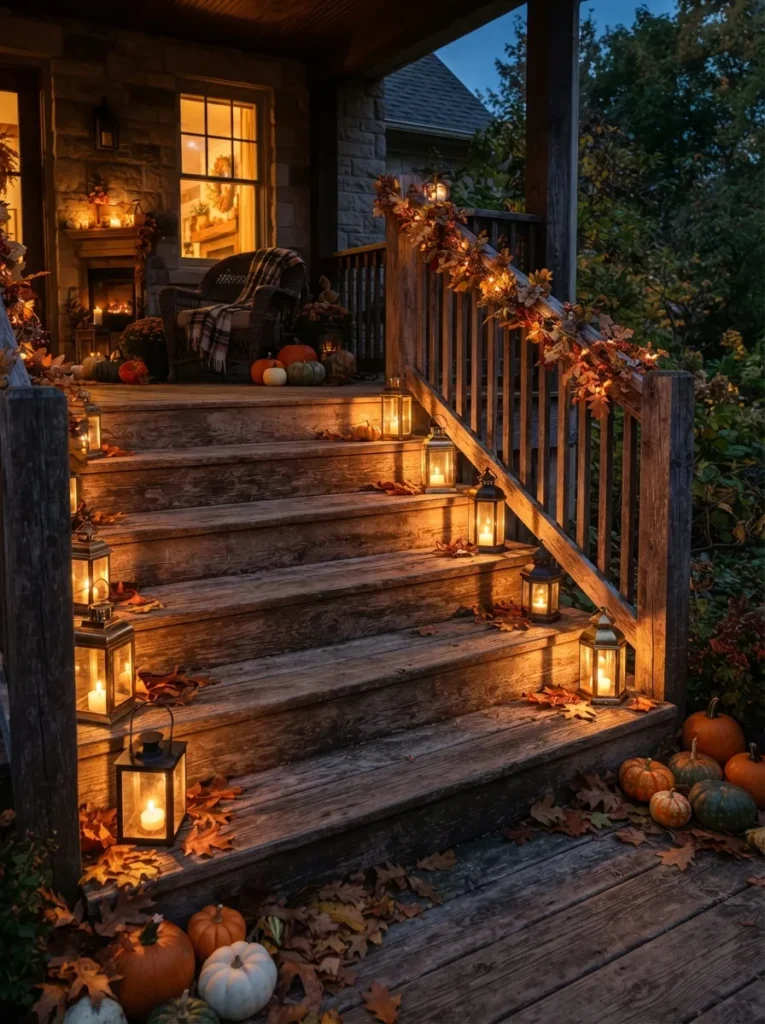
What it looks like: A small lantern set on alternating steps, guiding the eye and guests up toward the door at dusk.
Why it works: This uses repetition and rhythm the way a lit pathway does in landscape design, extending the porch’s warmth beyond just the entry itself.
How to copy it: Place a lantern every other step rather than every step, which reads as more intentional and avoids looking cluttered on narrower stairs.
Best for: Homes with more than three exterior steps leading to the porch.
Last stretch here’s what most guides skip entirely.
My Views:
Here’s something most guides won’t tell you: people consistently under-scale their porch rugs. A 3×5 rug under a full seating arrangement looks like an afterthought go at least 5×7, even on a modest 8×10 porch, so all the furniture legs actually sit on it. The rug is what visually “grounds” the whole zone; too small and every other styling choice above it reads as floating.
17. Style a Seasonal Tablescape
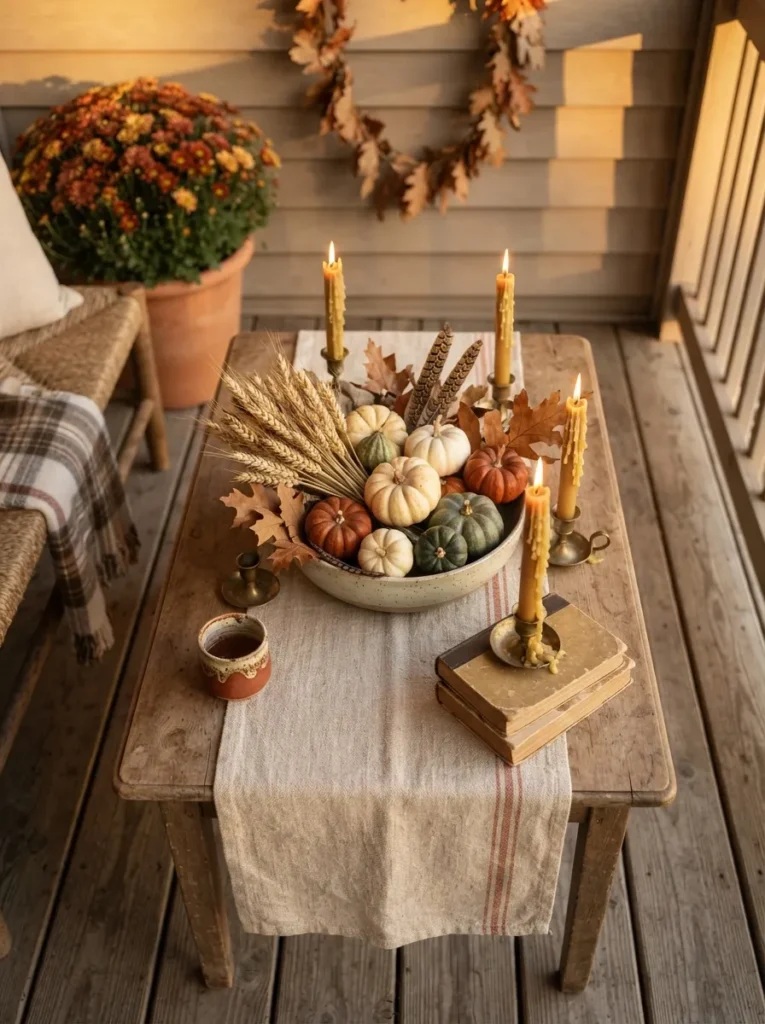
What it looks like: A small table with a runner, a low centerpiece, and one or two supporting objects styled with the same care as an indoor dining table.
Why it works: This applies tablescaping principles varied height, a runner to define the surface, odd-numbered groupings to a spot most people never bother styling.
How to copy it: Build from the base up: runner first, then a low candle or bowl centerpiece, then two or three small supporting pieces at varying heights around it.
Best for: Anyone hosting fall gatherings or wanting their porch photo-ready for the season.
✅ Fall Tablescape Checklist:
- [ ] Lay a linen or burlap table runner along the table’s length
- [ ] Place one low centerpiece (candle bowl or short vase) in the center
- [ ] Add 2-3 small pumpkins or gourds at varying heights around it
- [ ] Tuck in one textural element dried wheat or eucalyptus sprigs
- [ ] Step back and remove one item if it feels crowded
18. Add a Vintage Bench With Cushions
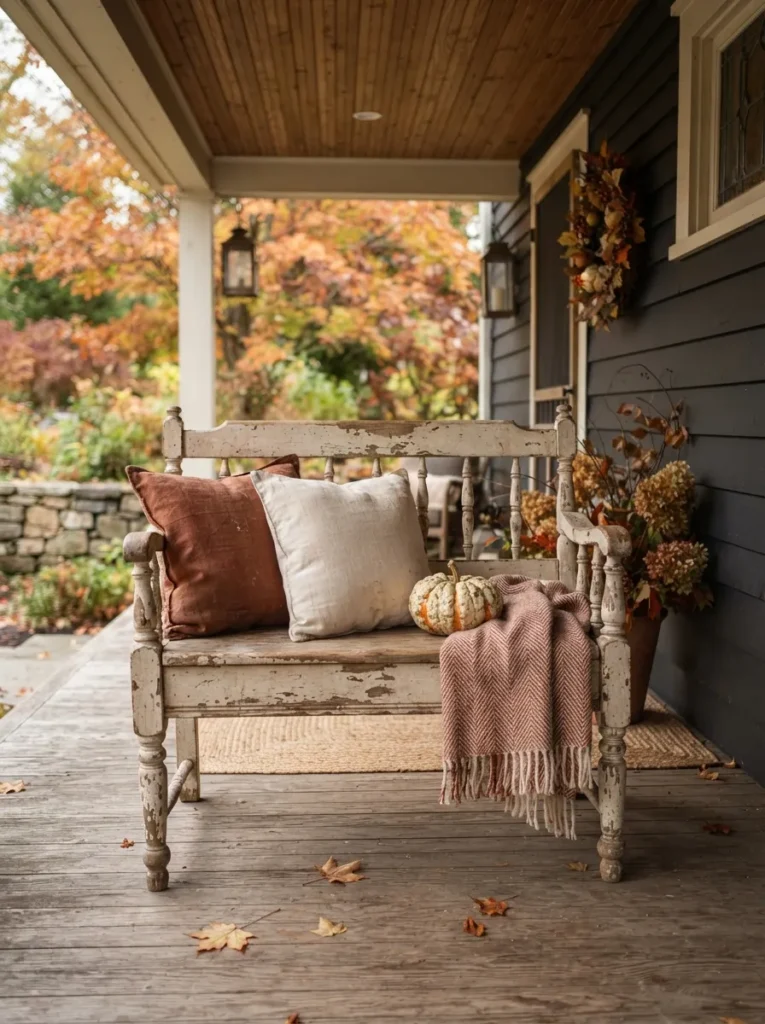
What it looks like: A bench with visible age chipped paint, worn edges dressed up with fresh cushions rather than replaced with something new.
Why it works: Contrast between an aged base and fresh textiles is a classic design principle: new fabric makes old wood look intentional rather than neglected.
How to copy it: Look for a secondhand bench with character (paint loss is fine, structural damage is not), and dress it with two cushions in a color that contrasts its finish.
Best for: People who enjoy vintage or thrifted sourcing and want a one-of-a-kind statement piece.
Get the Look
| Product |
|---|
| Vintage-style weathered wood bench, indoor-outdoor |
| Rust and cream outdoor bench cushion set |
| Chunky knit throw, oatmeal cream |
| Small ceramic pumpkin accent |
| Galvanized metal accent tray |
One more idea before we wrap up this one’s perfect if your porch is tight on space.
19. Hang Planters Instead of Using Floor Pots
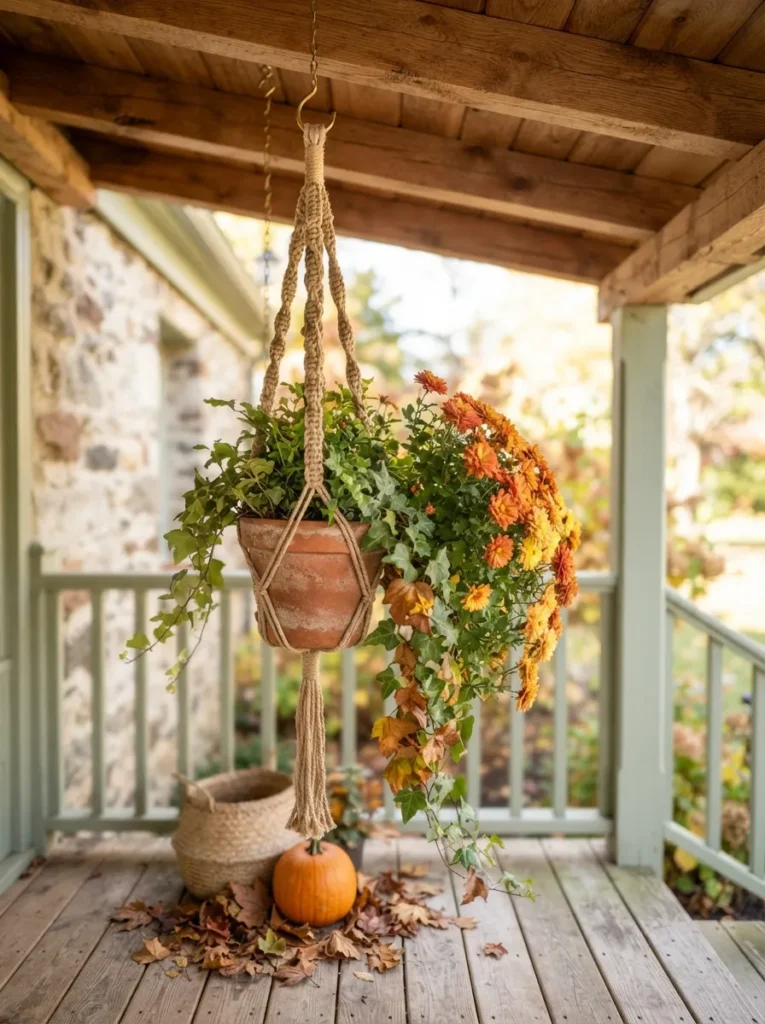
What it looks like: Greenery suspended overhead rather than crowding the floor, freeing up walking space while still adding a botanical layer.
Why it works: This is a straightforward small-space solution moving plants vertically frees floor square footage without sacrificing the greenery a porch needs to feel alive.
How to copy it: Hang planters at varying heights (not all at the same level) using a hook rated for outdoor weight, and mix trailing greenery with one seasonal mum for color.
Best for: Small or narrow porches where floor pots would block walking space.
20. Mix Metal Finishes on Purpose
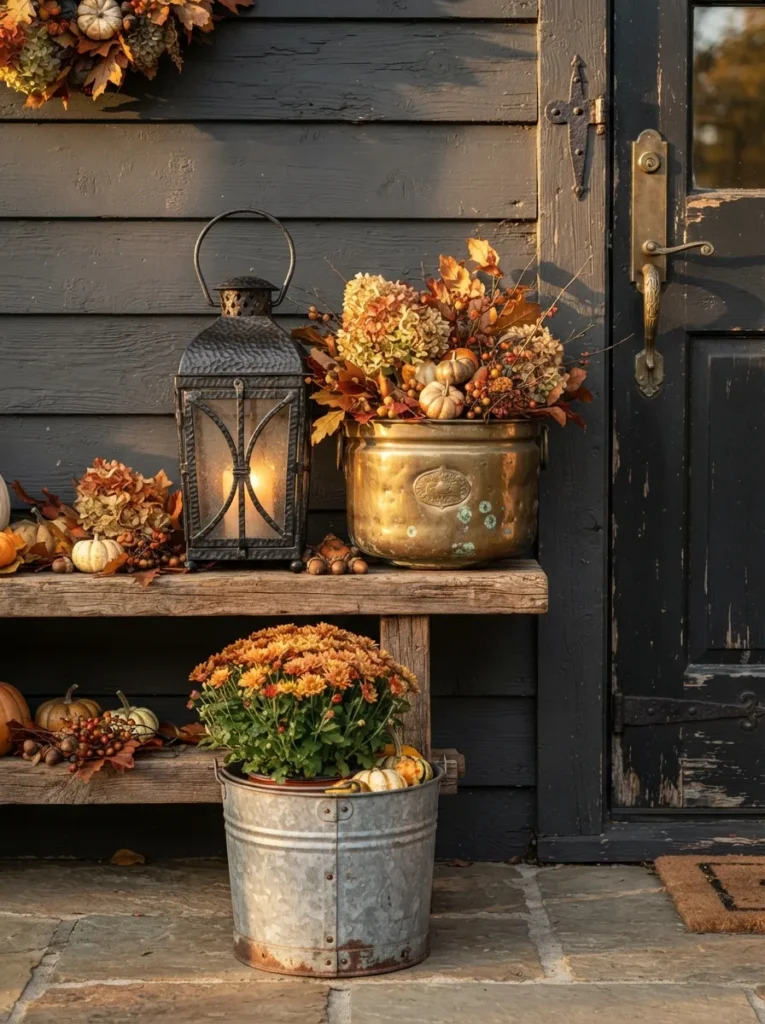
What it looks like: Black iron, aged brass, and galvanized metal all appearing together across a lantern, a planter, and the door hardware no single “matching metal” rule.
Why it works: Mixing metals is a deliberate design principle, not an accident it prevents a space from feeling like a catalog set and adds the same tonal richness as mixing wood stains.
How to copy it: Pick one dominant metal (black iron works well as a base) and let two supporting metals brass and galvanized show up in smaller doses like hardware or lantern trim.
Best for: Confident decorators ready to move past a strictly matched, single-finish look.
Pro Tip: If mixing metals feels risky, start small swap just your door hardware to a different finish than your porch light fixture and see how it reads before committing further.
How to Start Your Fall Porch Transformation
What I’ve found with real porches is that people always want to start with pumpkins, but the door is the actual anchor. A fresh coat of paint in a warm rust or a well-chosen wreath does more for the overall look than any amount of pumpkin styling, because it’s the one element visible from the street and up close.
The most common fixable mistake is over-decorating the floor and ignoring the walls and railing a porch with eight pumpkins crowding the steps but a bare railing and blank wall space feels cluttered instead of cozy. Move a third of that floor styling up onto a shelf, the railing, or the door.
Three items under $50 that make an immediate difference: a dried wheat and pampas wreath under $35, a set of two rust-toned outdoor throw pillow covers under $30, and a bundle of warm-white outdoor string lights under $25.
A full transformation realistically takes one weekend if you’re working with existing furniture budget $150-300 for a solid refresh with new textiles, a wreath, and lighting. A full furniture overhaul with new seating runs closer to $500-800 and is worth spreading across two or three weekends rather than rushing.
Ready to Create Your Dream Fall Porch?
Twenty ideas is a lot to take in at once color changes, new textures, a different layout, a handful of lighting tricks so don’t feel like you need all of them by this weekend. Pick one anchor (the door, the wreath, the lighting) and build outward from there over the next few weeks.
Today, the easiest concrete step is hanging one dried wreath or stringing one set of warm lights both take under 20 minutes.
Done well, a fall porch should feel like the first warm exhale of the season, the kind of space that makes you want to sit down with a mug before you even get through the front door. When it’s ready, snap a photo in that late-afternoon golden light it’s the moment this whole palette was built for.