12 Exterior Paint Colors for First-Time Homeowners Who Are Afraid to Pick Wrong
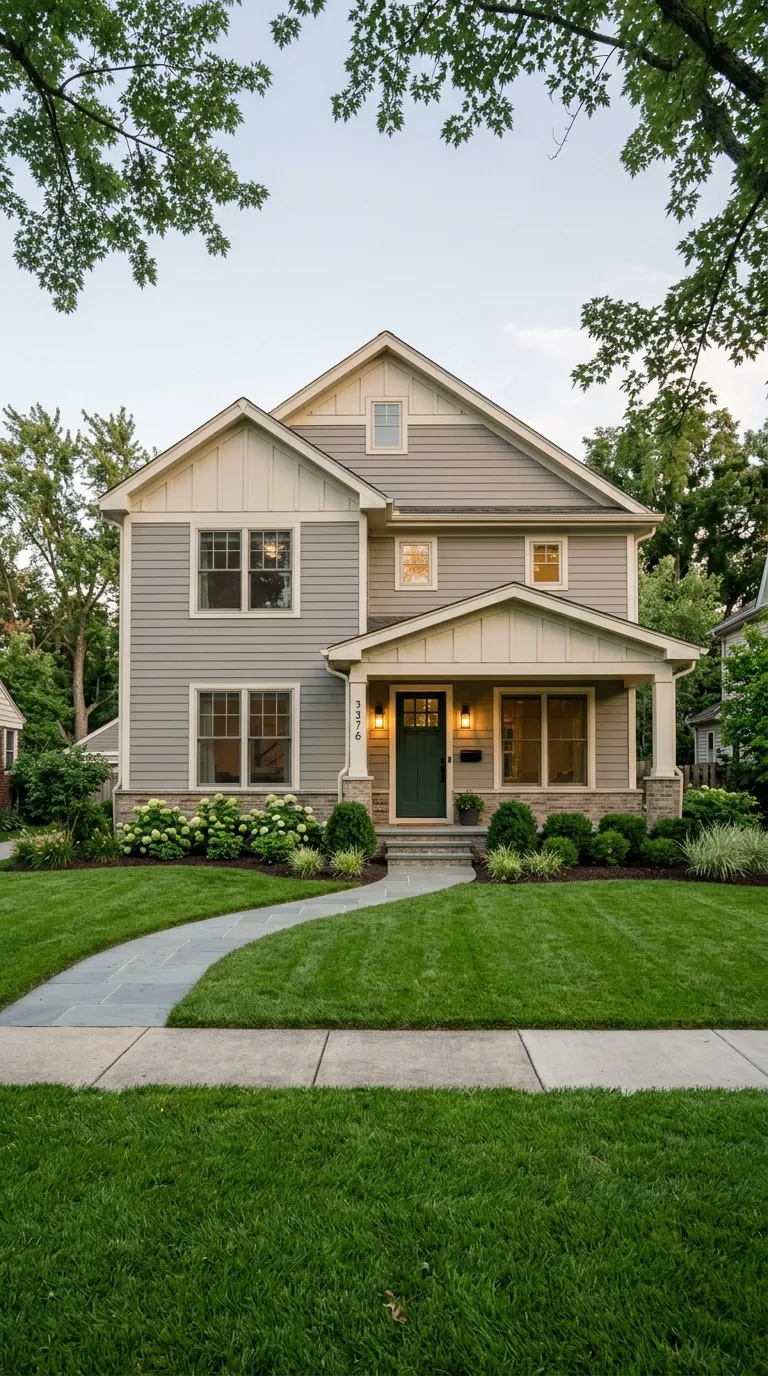
Choosing exterior paint gets easier the moment you stop picking one color and start picking a tested system: body, trim, door, hardware. These 12 exterior paint colors for first-time homeowners who are afraid to pick wrong each come with the one detail that keeps it from going sideways, whether that’s an undertone, a sheen, or a roofline.
Picture the house at five in the evening: siding holding warm light, trim crisp without glare, a door color that makes you slow down at the curb. Nothing shouting. That’s what a settled palette feels like from the driveway, and it starts with samples, not gallons.
Jump To
- Why Exterior Paint Colors for First-Time Homeowners Make Such a Difference
- The Colors, Safest Bets First
- How to Start Your Exterior Paint Transformation
- Ready to Create Your Dream Home Exterior?
Why Exterior Paint Colors for First-Time Homeowners Make Such a Difference
Exterior paint changes how a house reads from the street faster than almost any other project, and it costs far less than replacing siding or a roof. Body color does the heavy lifting; trim, door, and hardware finish the frame.
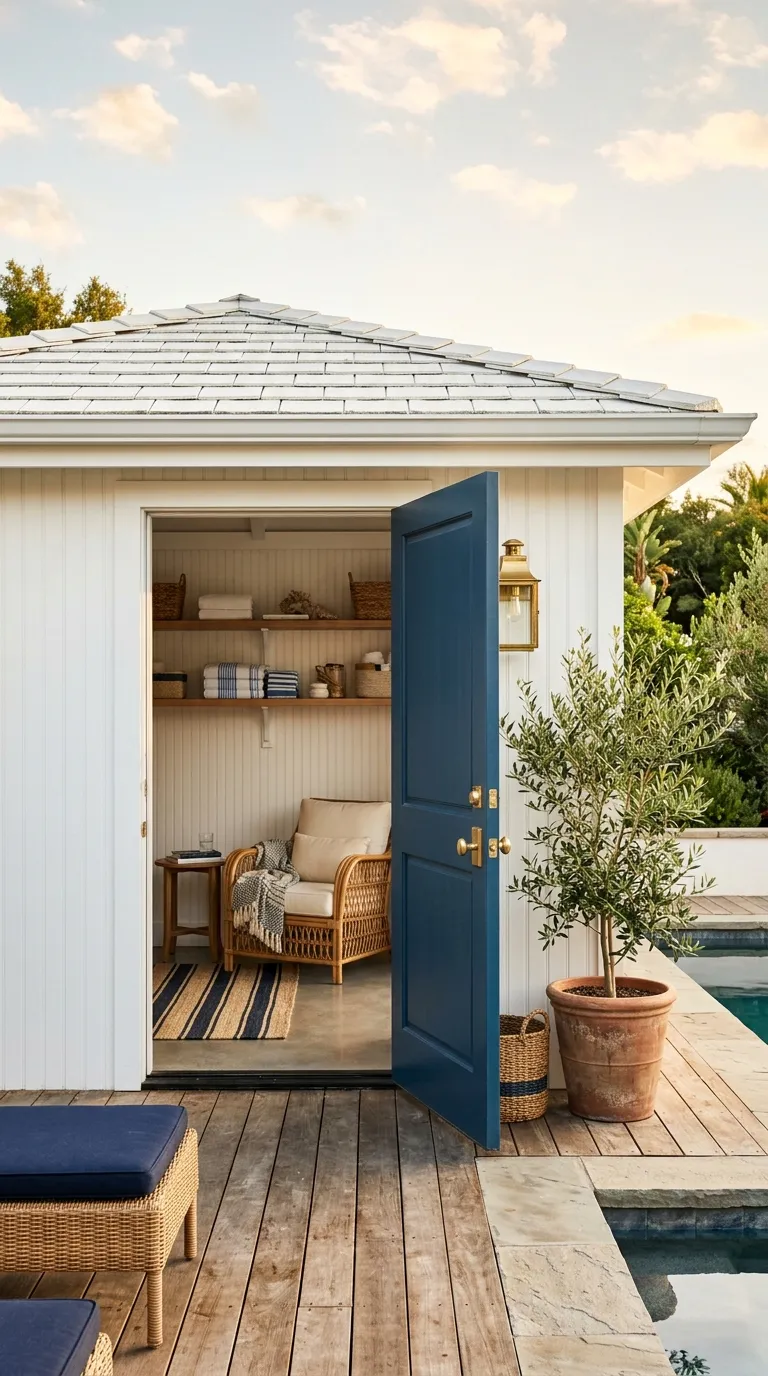
Warm whites, greige, sage, navy, charcoal, and black accents cover most first projects, usually in a low-luster finish on siding and satin or semi-gloss on trim. Small houses can carry nearly everything here. Prioritize the door and trim first: smallest surfaces, cheapest mistakes, easiest to redo.
Quick Reference
| Best starting point | Front door color, tested on a board first |
| Biggest impact area | Front door and trim |
| Budget to start | Roughly $40–$120 (approximate) |
| Time to complete | One weekend for door and trim |
The Colors, Safest Bets First
1. Deep Forest Green Front Door on a Neutral House
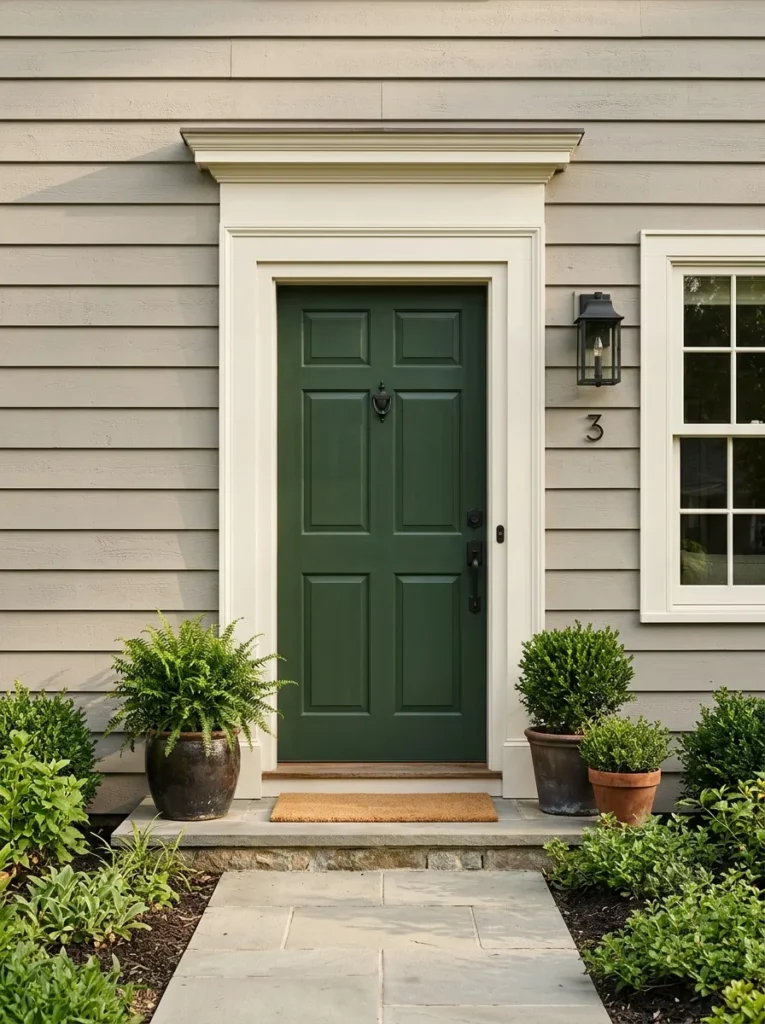
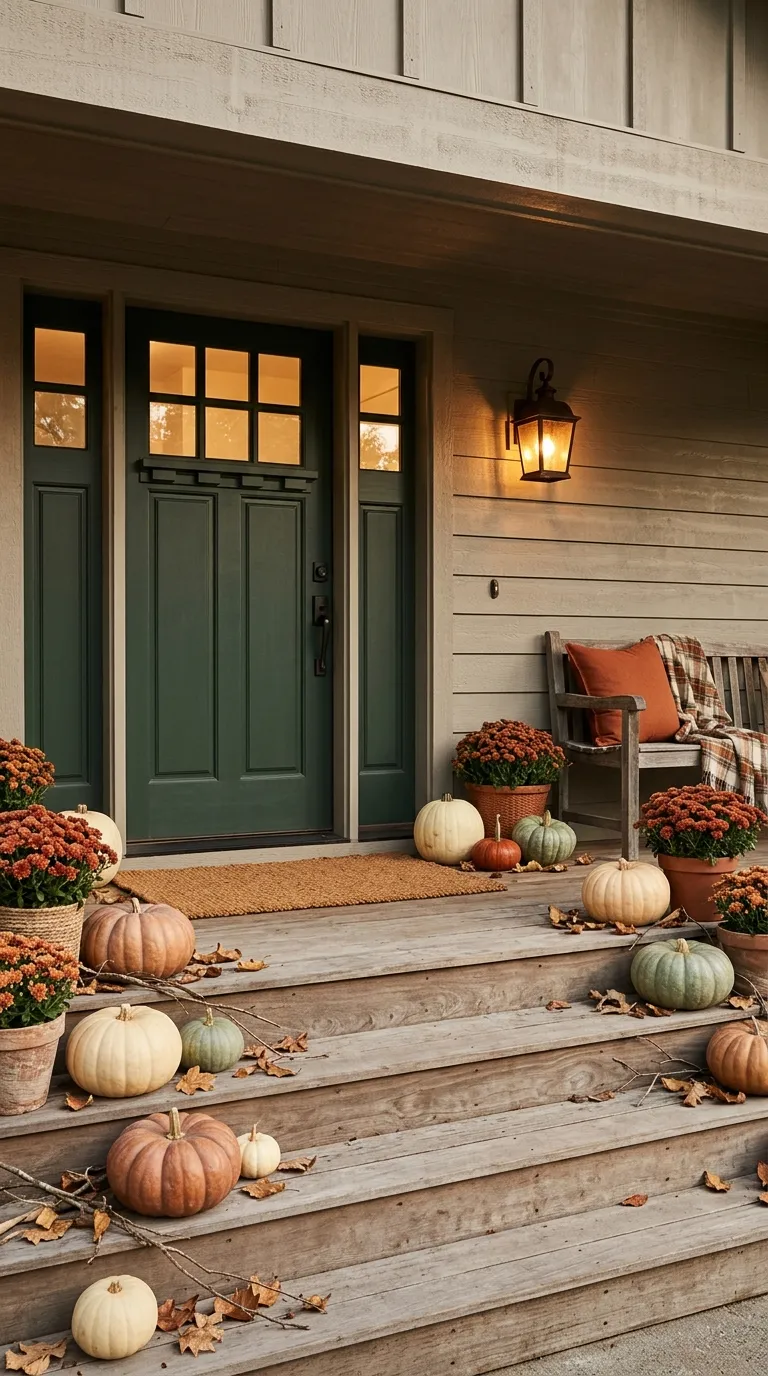
Paint only the door and the risk shrinks to one quart and an afternoon. That’s why this is the safest place to start for anyone whose nerves are winning. Pick a green with a black or gray base rather than a yellow one; on gray, greige, or white siding it reads nearly neutral yet still deliberate.
Sand, prime bare wood, then brush two thin coats of satin or semi-gloss. Steel and fiberglass doors need paint labeled for them, and that matters more than the shade. Expect a green in shade to look darker than the chip promised.
Pro Tip: Tape a painted sample board (2 feet square) to the door for a full day. Deep greens shift more than any other door color between morning sun and late shade.
2. Warm Off-White Trim in Satin Instead of Builder White

Builder white is the default nobody chose, and beside aging siding it starts reading cold or dirty. Swap it for a warm off-white with a cream lean. Satin is the smart sheen: semi-gloss exposes every dent and old caulk line, while satin forgives them.
Carry the same color across window casings, fascia, and soffits so the edges read as one frame instead of four separate decisions. Whites shift toward whatever sits beside them, so hold your sample against the actual siding, not a chip on a fan deck.
Styling Note: Paint the garage door the trim color instead of the body color. A big flat door recedes, and the front door stops having competition.
3. Black Accents: House Numbers, Door Handleset, and Mailbox
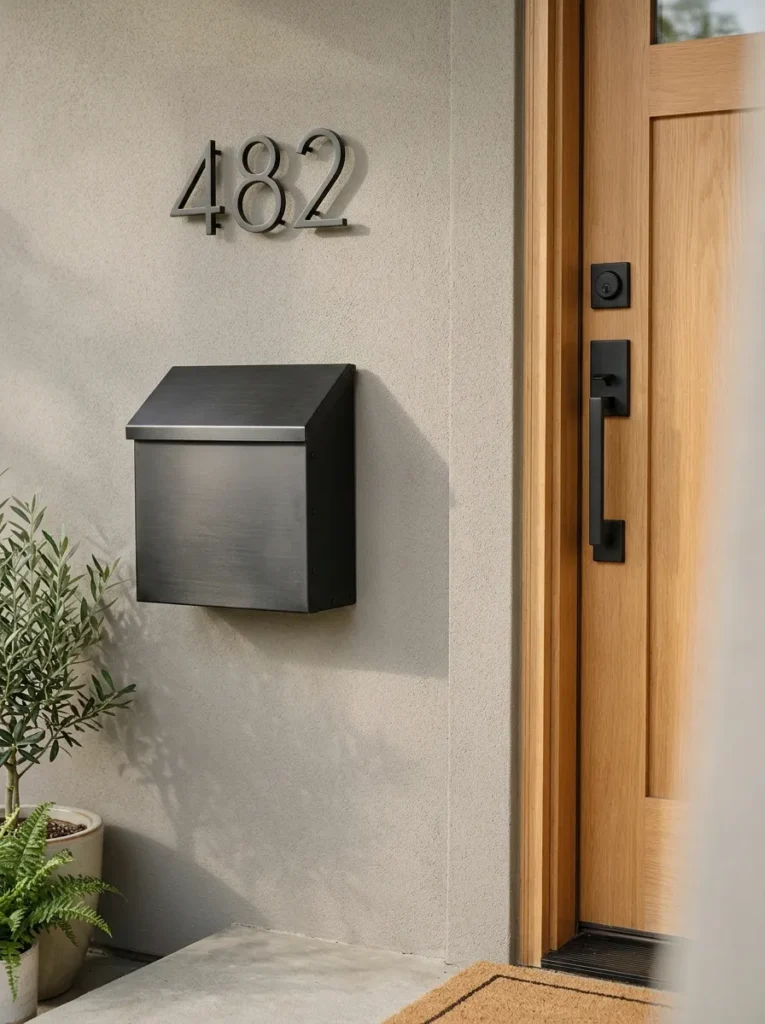
Start by choosing one black and repeating it in three places: house numbers, door handleset, mailbox. Repetition makes the color read as planned rather than scattered. Matte black looks like ink on a pale house and suits nearly every body color in this list. Match the finish as well as the shade, since matte beside glossy looks like two different blacks. Check local address-number rules before buying numbers; some areas set a minimum size for legibility from the street.
Important: “Black” is not one color. Warm blacks lean brown, cool blacks lean blue, and mixing them on one façade shows immediately. Buy all three pieces in the same finish, ideally from one product line.
Get the Look
| Product |
|---|
| Matte black house numbers |
| Matte black entry door handleset |
| Matte black wall-mounted mailbox |
Idea 4 has a free step that prevents the most expensive mistake on this list: greige changes personality the moment it meets your roof.
4. Greige Siding, Tested Against the Roof First
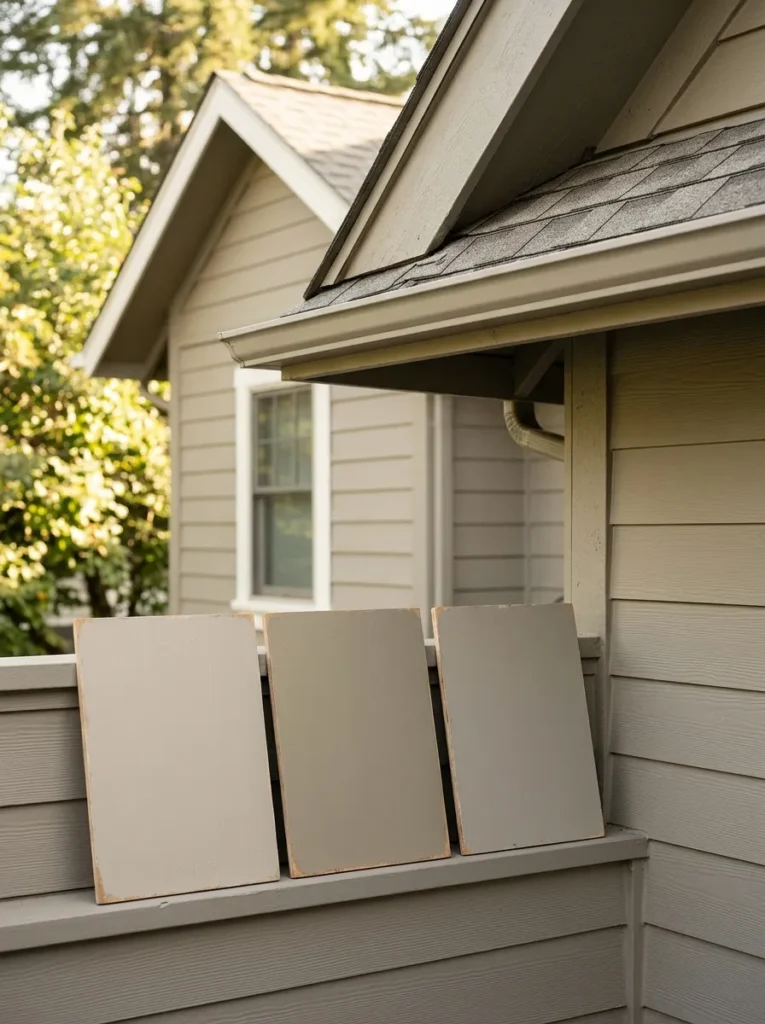
Greige comes in green-leaning, purple-leaning, and warm-beige versions, and the roof decides which one works. Brown or tan shingles pair with warmer greige; charcoal or black shingles handle cooler ones.
Roof, brick, and foundation stone are fixed, so the siding has to adapt to them, not the other way around. Most people skip this comparison and regret it in June, when full sun hits the finished wall. Two colors can look identical on a chip and split apart in daylight.
✅ Sample Test Before You Buy Gallons:
- [ ] Paint two coats on boards at least 2 feet square in two or three finalist colors
- [ ] Prop each board against the roofline, the brick or stone, and the foundation
- [ ] View them in morning, midday, and dusk light over three days
- [ ] Hold the winner beside your trim color and door before committing
5. Warm Cream Body for a Shady, North-Facing House

Picture a house that sits in shade most of the day. Gray goes flat and slightly blue there, while a warm cream keeps a glow the light can’t supply on its own.
North-facing walls get cooler, indirect light, so choose a cream with a yellow or red lean rather than a green one. Shady lots also grow moss and mildew, and a cream a step darker than near-white usually hides streaking longer.
Pro Tip: Sample the sunny and shaded walls of the same house separately. One color can read as two on a single house, and the shaded wall is the one that decides.
6. Navy Body with a 60-30-10 Split
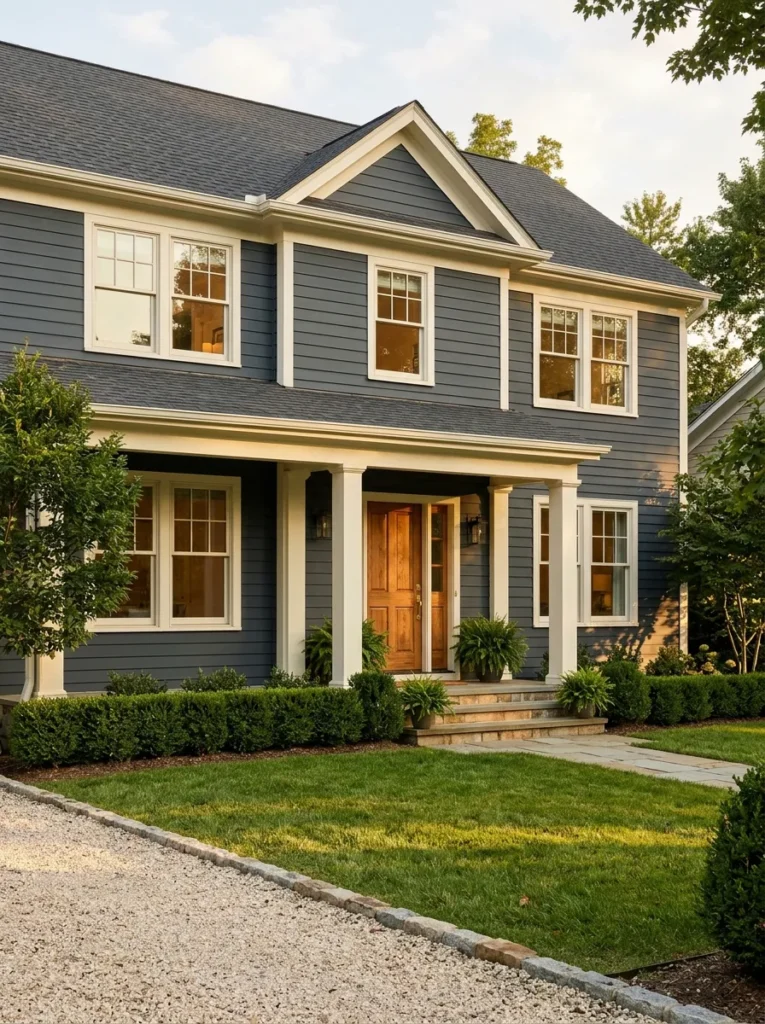
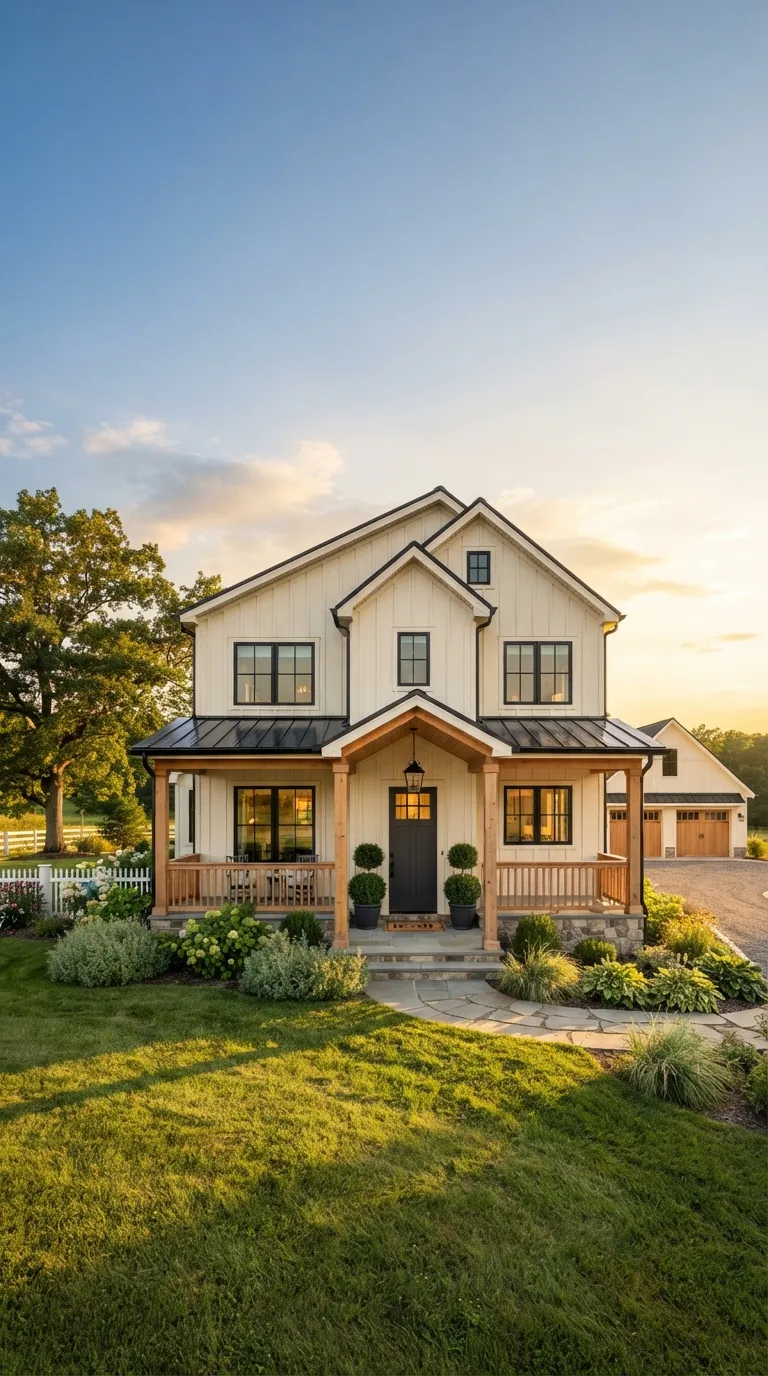
Give navy roughly 60 percent of the surface, warm white trim about 30 percent, and keep the last 10 percent for the door and hardware in a wood tone or warm metal. That split is a common design guideline, not a law, but it keeps a dark body from overwhelming the house.
Ask the paint counter about the right base for deep colors; they tend to need more coats and can show fading sooner in strong sun, so buy a quality exterior line. Pick a navy with a gray lean over a pure royal-leaning blue if the street is mostly brick and neutrals.
Idea 7 gets its warmth from wood, not paint, and that changes which gray you should buy.
7. Warm Gray Body with a Wood Door and Bench
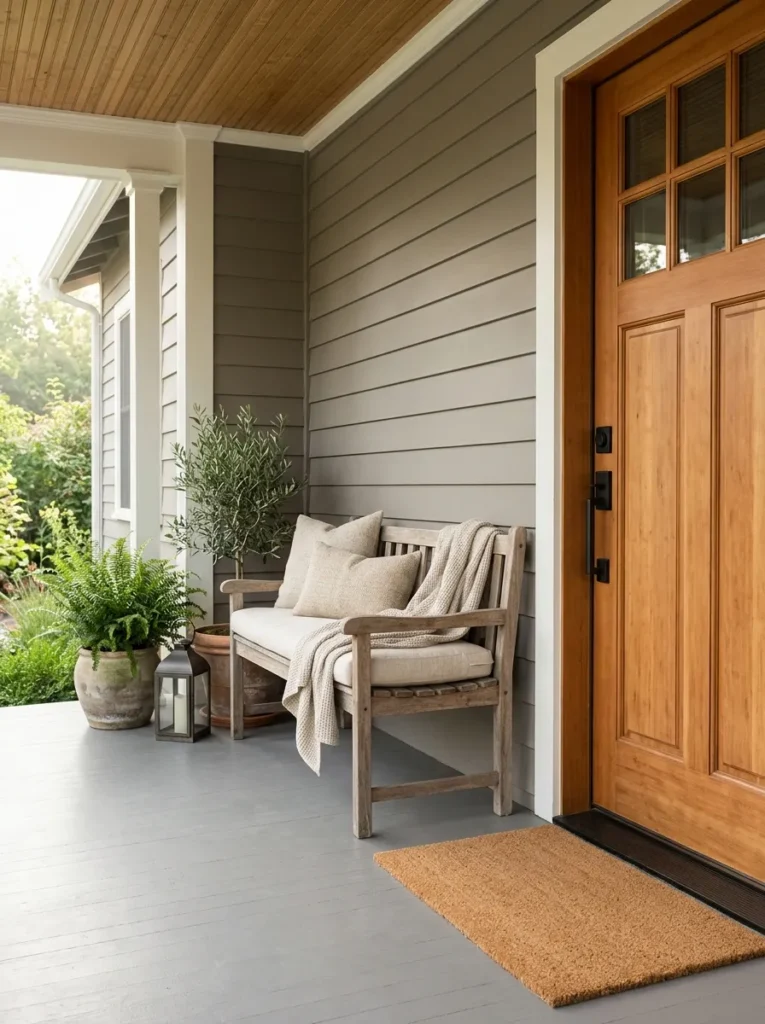
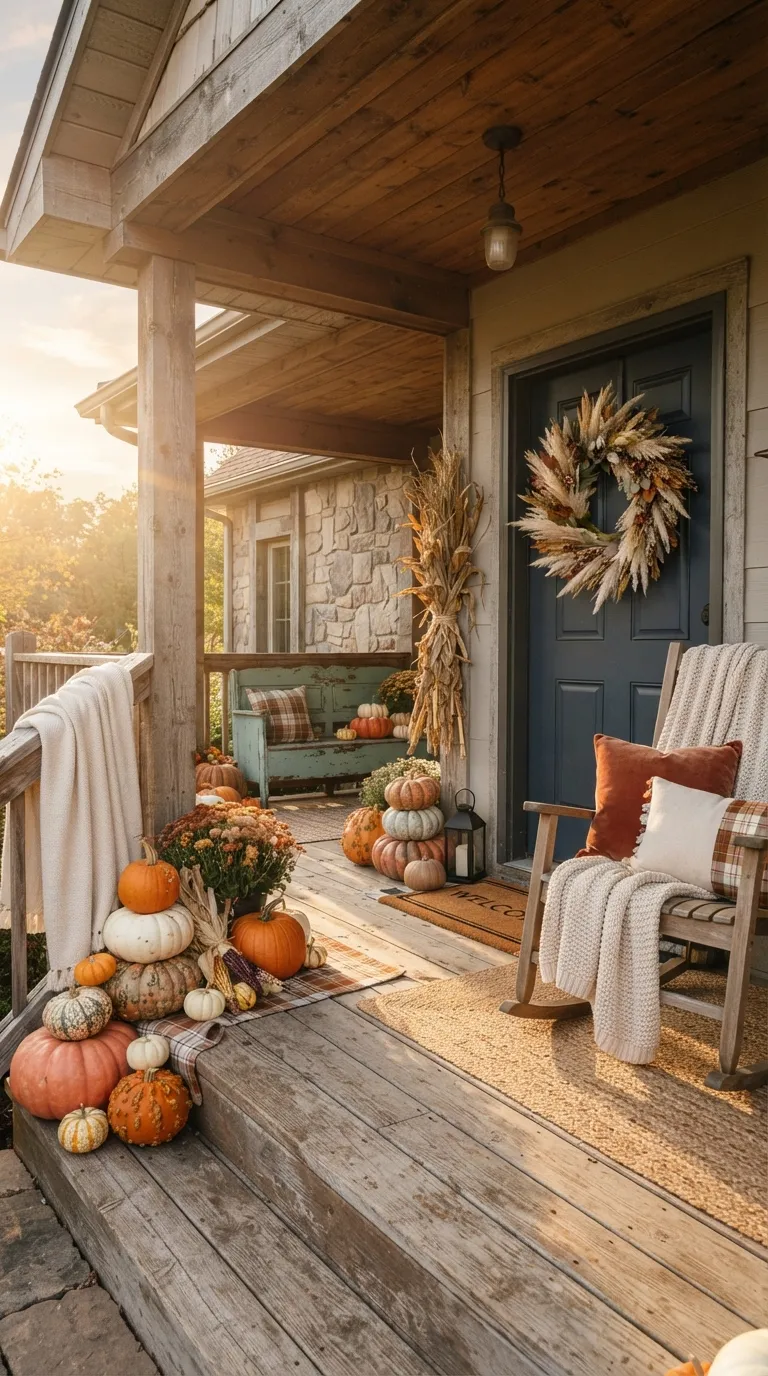
This is for homeowners who don’t trust paint alone to make a house feel warm. Here the wood does the warming: a medium-tone door and bench against warm gray siding. That means the gray should carry a faint beige lean, otherwise wood and paint fight each other.
Most outdoor woods weather toward silver unless sealed; against gray siding that can be a deliberate choice, so decide it on purpose. Skip a bench wider than the space beside the door, and leave room for the door to swing fully open.
Important: “Warm gray” on the chip isn’t guaranteed to stay warm outdoors. Some read faintly purple at dusk, so check your sample at that hour before buying.
Get the Look
| Product |
|---|
| Outdoor wooden bench |
| Outdoor-rated seat cushion in a neutral tone |
| Natural-fiber doormat |
8. Sage Green Siding That Borrows From the Landscape
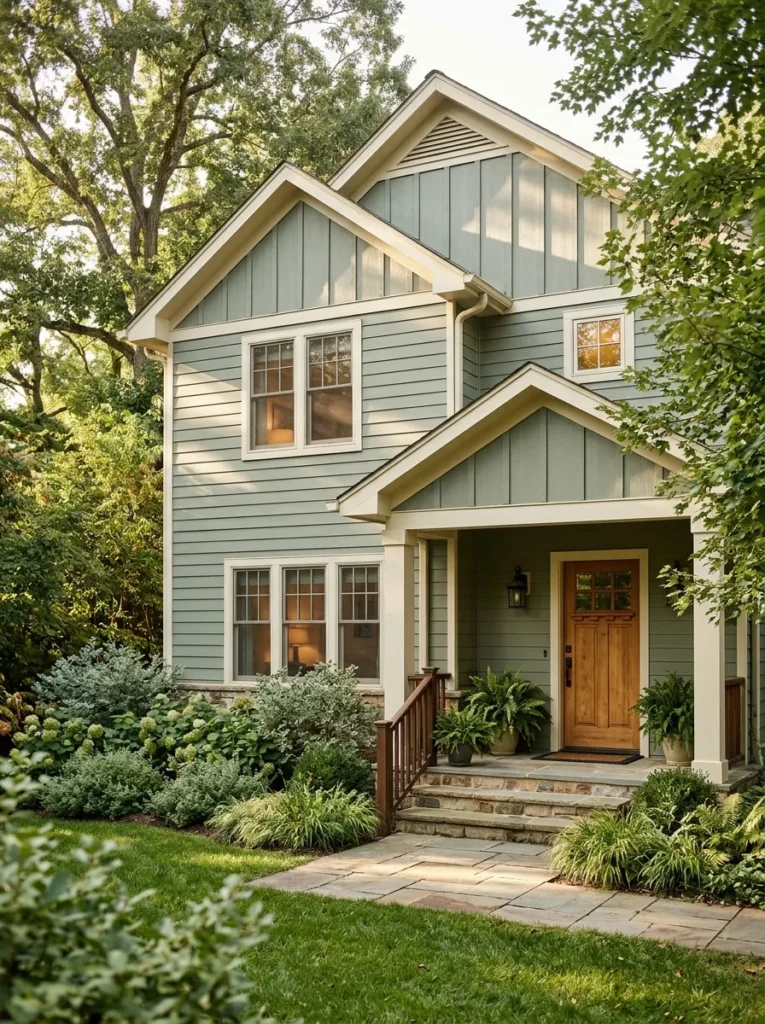
Sage works on a house because it sits closer to dusty leaf tones than to saturated green, so the walls settle into the landscaping instead of competing with it. Choose one with real gray in it.
Bright lawn grass makes a yellow-leaning sage look sickly, while a gray-leaning one stays composed. Low contrast with surrounding foliage means a quieter street presence, which suits anyone who wants to blend in. Pair it with warm off-white trim; stark white can make sage look muddy.
Mistake to Avoid: Choosing sage from a chip under indoor light. Outdoors it can jump toward minty or gray, so test on the actual wall.
9. Soft White Painted Brick, Done Right

Painting brick is the one decision here that’s hard to undo, so it belongs after the reversible ones. Brick’s own pink and orange undertones can show through thin coats, which is why soft white over brick often needs primer plus two finish coats.
Choose a white with a slight cream or gray lean; pure white looks stark against mortar lines. Use masonry-rated products so moisture can move through the wall. Limewash and mineral paints are worth asking about if you prefer a softer, chalkier surface.
Warning: A non-breathable coating on brick can trap moisture and lead to peeling. Buy paint and primer made for masonry, and repair cracked mortar first.
Idea 10 breaks the usual small-house advice: the smaller the house, the less contrast you want between body and trim.
10. Soft Blue-Gray for a Small or Narrow House

Low contrast is the trick on a small house. A soft blue-gray body with trim only a step or two lighter lets the facade read as one calm mass; sharp white trim chops it into pieces and makes the house feel smaller. Choose a blue-gray with enough gray that it doesn’t turn baby blue in full sun. Extend the body color up into the gable so no contrasting band interrupts the line.
Small-Space Tip: Paint gutters and downspouts the color of the wall behind them so they vanish instead of adding vertical stripes.
11. Haint Blue Porch Ceiling

Paint the porch ceiling a pale blue with a hint of green, a Southern porch tradition, and the ceiling reads like a patch of sky. Keep it soft and low in saturation; a strong blue overhead feels heavy.
Prime bare or stained wood first, and use a flat finish, which hides seams and small imperfections best. Ceilings catch light bounced up from the floor and walls, so the color glows more on a shaded porch than it would on a sunny wall.
Pro Tip: Hold your painted 2-foot sample board overhead, not against a wall. Colors read differently when they sit above you.
12. Charcoal Body with Warm-Bulb Lanterns
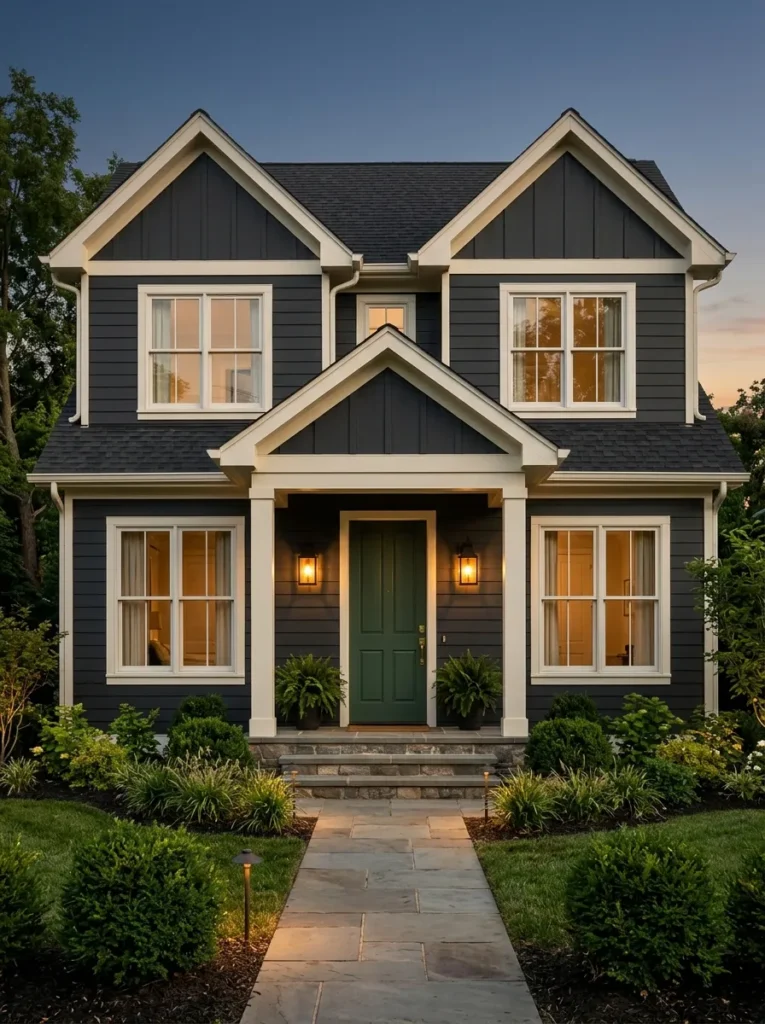
For homeowners ready to commit, charcoal is the boldest option here: it reads soft gray in sun and nearly black in shade. Nighttime is where it pays off, because dark walls fade back and let warm lighting take over.
Use lanterns with warm-toned bulbs at the entry and garage, plus a couple of low uplights to graze textured siding so it doesn’t vanish into a flat void. Check the siding manufacturer’s guidance first: dark colors on vinyl can warp unless the paint is formulated for it.
Get the Look
| Product |
|---|
| Black outdoor wall lantern |
| Outdoor uplight (spotlight) |
| Outdoor path lights |
How to Start Your Exterior Paint Transformation
Start here: the front door, in a deep green with a black base, tested on a board taped to the door for a full day. It’s the smallest surface with the biggest visual return, and it shows you fast whether your light pulls greens warm or cool. Every other choice gets easier once one anchor color is real.
One mistake breaks more paint jobs than any other: choosing the body color in isolation. Roof, brick, stone, and driveway don’t change, and their undertones will fight a color picked from a chip. Sample on 2-foot boards beside those fixed elements and watch them over three days, as in idea 4.
Three items under $50: large peel-and-stick paint sample sheets for testing without extra pots, a door kick plate in the same finish as your hardware, and a pair of small outdoor planters. Prices vary, but each typically sits in the low tens of dollars.
Plan on one afternoon for the door, one weekend for door and trim, and several weekends for a full DIY repaint, or roughly one to two weeks if a crew does it, with weather setting the schedule. A starter budget of roughly $40–$120 (approximate) covers door and trim paint plus samples. A full-house repaint varies widely by size, prep, and region, and hired work commonly runs into the thousands of dollars.
Ready to Create Your Dream Home Exterior?
Twelve ideas cover the ground: a green door, warm trim, black hardware, greige tested against the roof, cream for shade, a navy split, wood against gray, sage, painted brick, a small-house blue-gray, a haint blue ceiling, and a charcoal night look.
Exterior paint colors for first-time homeowners don’t have to be decided all at once, and painting the door alone counts as a real start. Today, paint one 2-foot board and tape it where the light is hardest on it. You’ll pull into the driveway and feel settled instead of doubtful. Save the ideas that caught your eye to a Pinterest board so your samples have a shortlist.
Keep Exploring
- 10 Front Door Colors That Work With Almost Any Siding
- 15 Curb Appeal Ideas for Small Front Porches
- 9 Landscaping Ideas That Make Your Exterior Paint Color Stand Out