18 Tan Sofa Living Room Ideas Under $500 (Sofa Included)
A tan sofa goes with almost everything, which is why so many tan sofa living rooms end up looking pleasantly forgettable. These 18 tan sofa living room ideas under $500, sofa included, run on one rule: tan is a quiet base, so spend what’s left on the contrast it lacks.
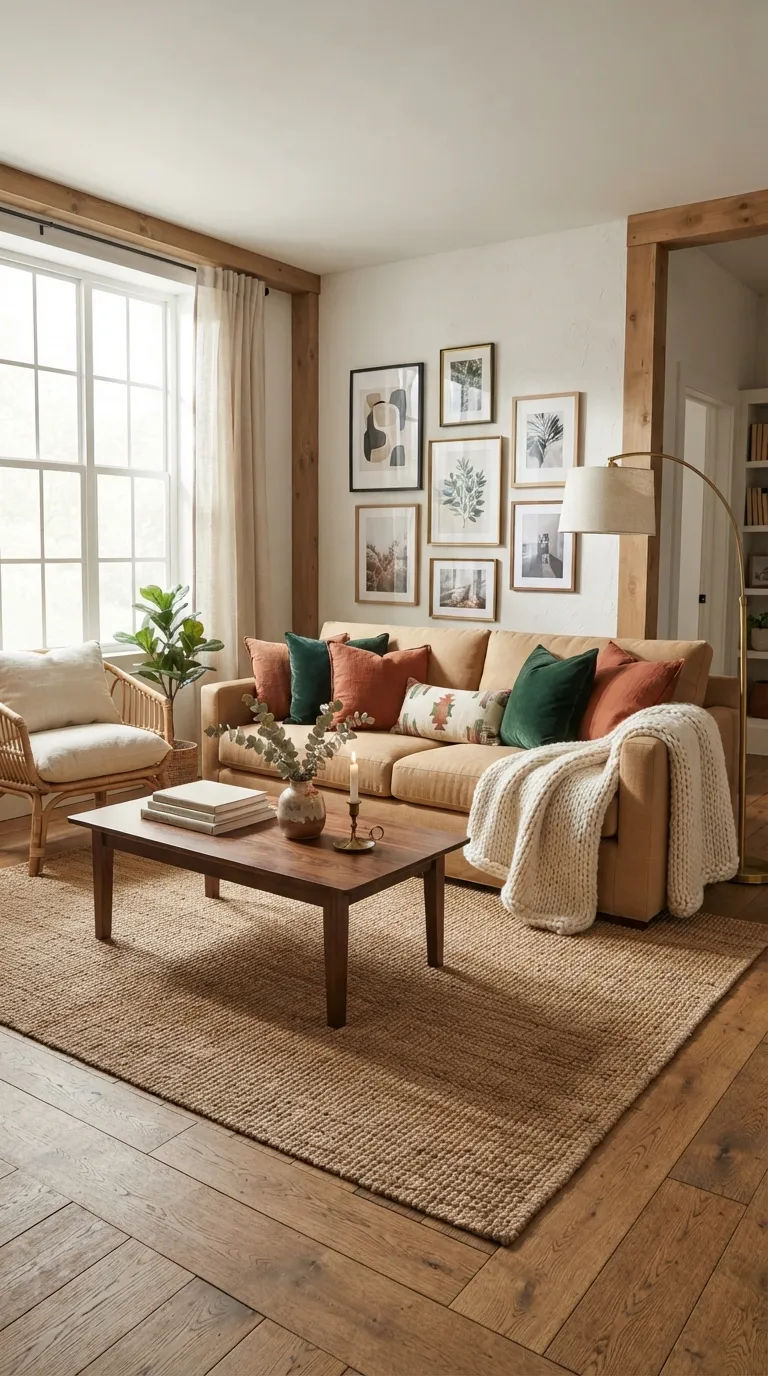
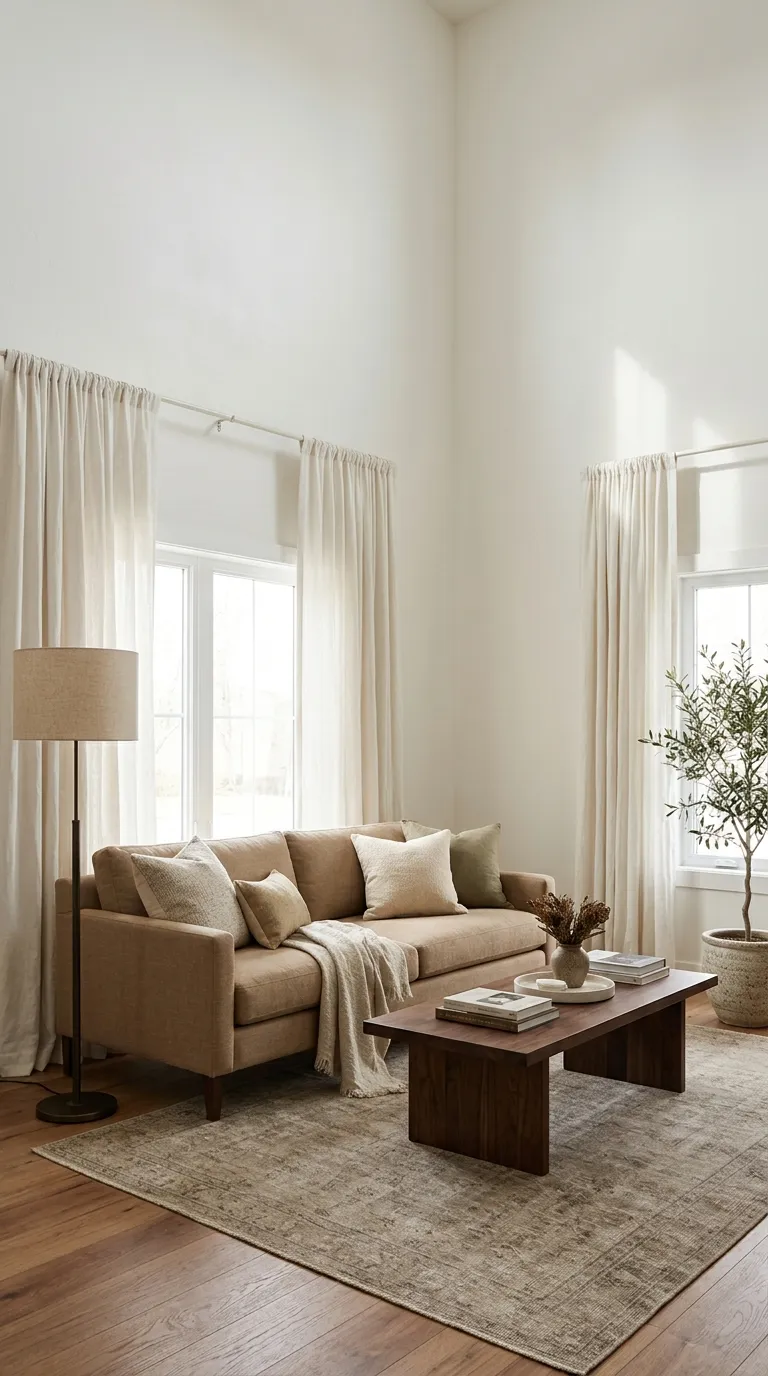
Picture oatmeal linen against dark walnut, a lamp pooling amber light on a chunky knit, curtains that let afternoon sun settle on the cushions instead of bouncing off them. Everything feels warm, a little weighty, and settled rather than staged. A budget room can read as chosen instead of assembled, and the difference is mostly shadow and texture.
Jump To
- Why a Tan Sofa Living Room Under $500 Makes Such a Difference
- Eighteen Ways to Give Tan What It’s Missing, Biggest Problems First
- Wall undertone check
- Dark coffee table anchor
- Front legs on the rug
- Three textures, not three colors
- Warm lamp at shoulder height
- Two pillow sizes plus one shape
- One accent color, three times
- Slim arms, low back
- Fabric or faux leather
- Floated sofa with a console
- High, wide curtains
- One oversized artwork
- Mirror facing the window
- Muted flat-weave rug
- Curved thrifted chair
- One tall plant
- Deeper wall behind the sofa
- Dark tapered legs
- How to Start Your Tan Sofa Living Room Transformation
- Frequently Asked Questions
- Ready to Create Your Dream Tan Sofa Living Room?
Why a Tan Sofa Living Room Under $500 Makes Such a Difference
Tan runs from pale oatmeal and sand to camel and toffee, and what suits it depends on which end yours sits. Warm tans pair with deep olive, ink blue, and dark walnut; paler ones lean on texture more than color.
Budget sofas in this shade are easy to find, which makes it a sensible first purchase, and it suits small rooms when the arms are slim. Start with what surrounds the sofa, because contrast does more than a pricier cushion.
Quick Reference
| Factor | Answer |
|---|---|
| Best starting point | Match wall undertone to the sofa, then add one dark piece |
| Biggest impact area | The floor, lamp, and wall zone around the sofa |
| Budget to start | About $100–$250 beyond the sofa (approximate) |
| Time to complete | A weekend for most ideas; paint adds a day |
Eighteen Ways to Give Tan What It’s Missing, Biggest Problems First
1. Check the Wall Undertone Against the Sofa Before You Buy Paint
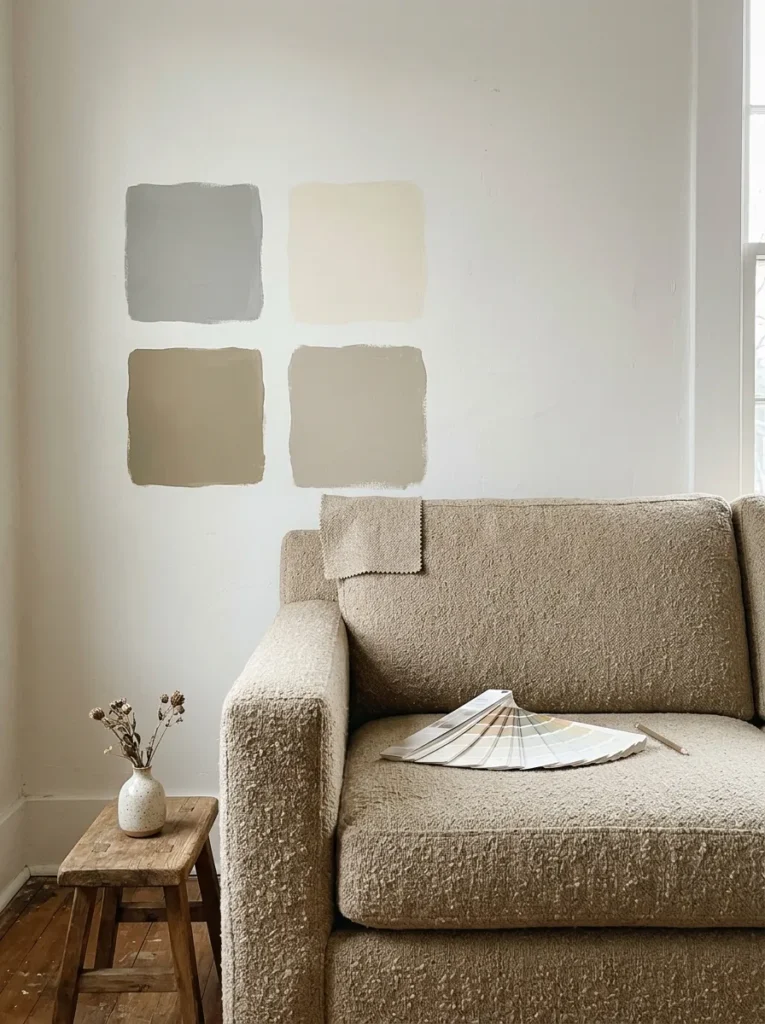
Cool gray walls turn a warm tan sofa muddy, and the sofa gets blamed for it. Tan sits on a yellow, pink, or green base, and paint reacts to that base before it reacts to the shade.
Request a fabric swatch (or hold a cushion cover up), set it beside two or three paint samples, and judge them in morning light and again under a lamp. Warm white or soft greige settles most pairs. Skipping this test is the likeliest reason a new tan sofa room looks off.
Warning: Buy a sample pot, not a gallon, and paint a patch about two feet square. Small chips lie, and tinted paint is often non-returnable.
2. Anchor the Sofa With One Dark Wood Coffee Table
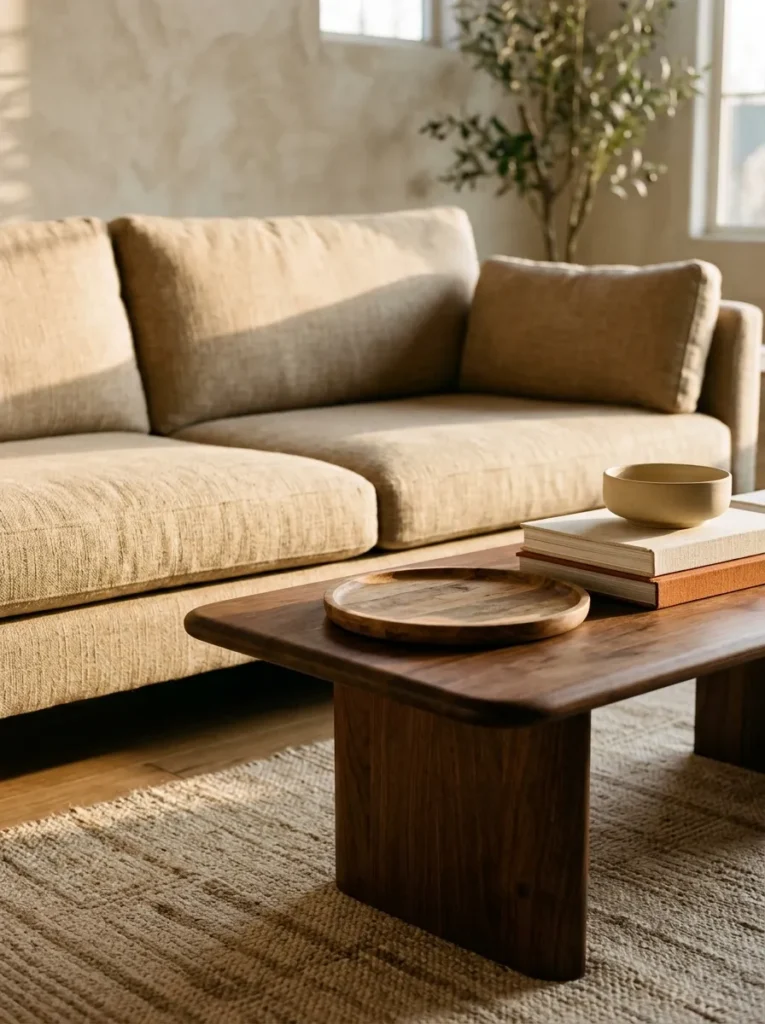
Tan reads soft, and soft shapes need a counterweight to look intentional. A coffee table in dark walnut or espresso stain supplies it at floor level, where the eye lands first. Keep the top about two-thirds the length of the sofa, and set it roughly 16 inches from the sofa front: close enough to reach a mug, far enough to walk through.
Rounded corners suit tight rooms. A thin dark veneer looks identical to solid wood from the sofa, so buy by color and proportion.
Styling Note: Group tabletop items in odd numbers (a tray, a short stack of books, one low bowl) and leave the center clear for real use.
Shop This Look
| Product | What to look for |
|---|---|
| Dark walnut-finish coffee table | Top about two-thirds of the sofa’s length; softened corners; matte finish so the color reads deep |
| Round wooden tray | Raised edge; wide enough to corral items; a mid-brown that separates from the darker table |
| Oversized coffee-table books | Cloth covers or muted spines in cream, black, or rust |
3. Put the Sofa’s Front Legs on the Rug, Not Beside It
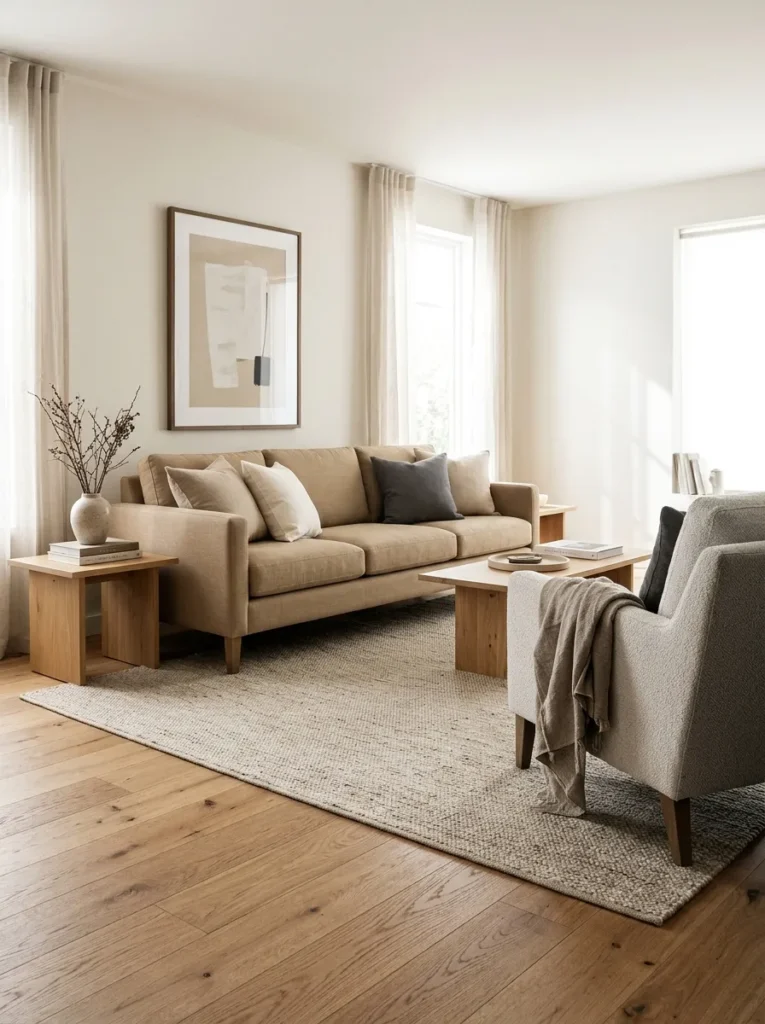
Size the rug before you place the sofa. The front legs of the sofa, and of any chair facing it, should rest on the rug, which ties the seating into one zone. A 5×8 does this in a small room; in a larger one, an 8×10 is the safer size.
Rugs that float mid-floor with every leg off leave the furniture looking like islands. Mark the outline with painter’s tape for a day before ordering.
Pro Tip: Let the rug extend at least 6 inches past each end of the sofa. Flush edges look like a doormat.
Idea 4 swaps color for something flat tan is short on, and a thrifted blanket can supply it.
4. Layer Three Textures Instead of Three Colors
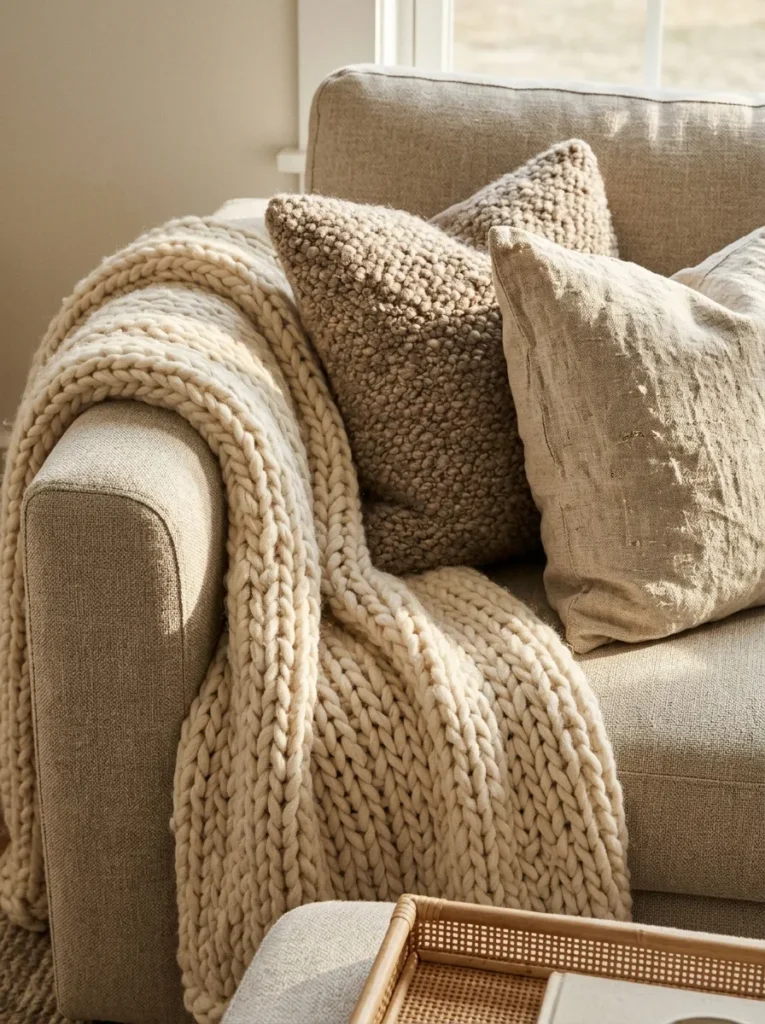
Picture an oatmeal sofa with a chunky cream knit over the arm, a nubby cushion, and a linen pillow with a visible weave. Nothing contrasts in color, yet the sofa looks deeper, because texture throws small shadows and flat fabric doesn’t.
Mix one smooth, one nubby, and one open-weave surface. Put the heaviest knit near the arm closest to the door, where the eye lands first. Acrylic knits cost less than wool and read much the same from across a room.
Quick Win: Squint at the sofa from the doorway. If the textures blur into one, swap the smoothest piece for something coarser.
5. Put a Warm Lamp at Shoulder Height Beside the Sofa
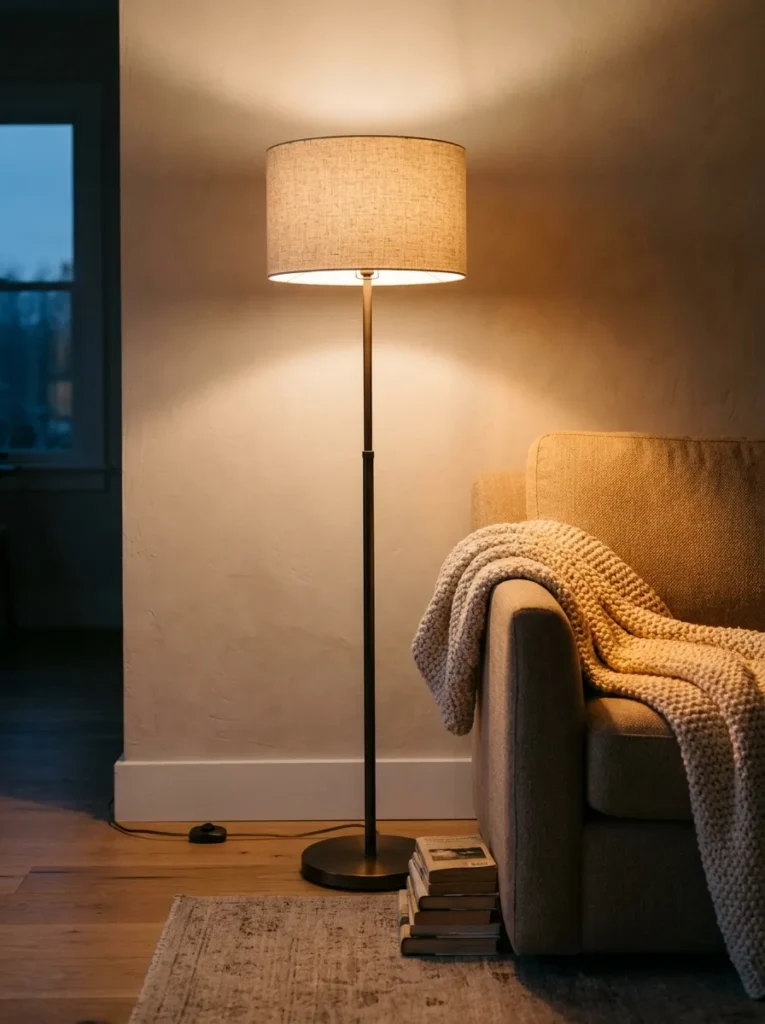
Anyone who reads or watches TV in the evening knows one overhead light is the problem. A floor lamp beside the sofa arm, with the bottom of the shade near seated eye level, lights the page without glare and warms the tan.
Choose bulbs labeled 2700K, since cooler 4000K-plus bulbs push tan toward gray-green. Match the bulb to the lamp’s maximum wattage label (LED equivalents sit far below it), and route the cord along the wall, not across the walkway.
Important: Color temperature, not brightness, decides how tan looks at night. Look for 2700K on the box; “soft white” alone can mean different things.
Shop This Look
| Product | What to look for |
|---|---|
| Floor lamp with fabric drum shade | Shade bottom near seated eye level; weighted base; switch reachable from the sofa |
| Warm-white dimmable LED bulb | Labeled 2700K and dimmable; correct socket type for the lamp |
| Inline cord dimmer | Rated for LED loads; matches the bulb’s dimmable rating |
6. Use Two Pillow Sizes and One Different Shape, Not Five Matching Squares
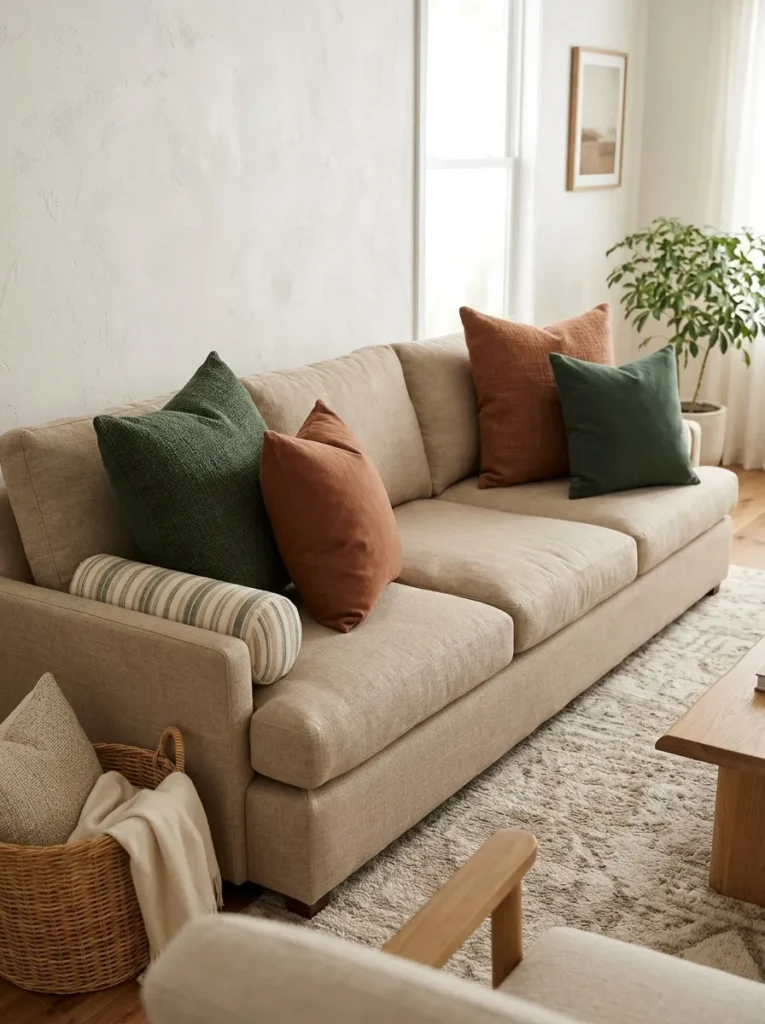
Five identical squares in a row is how a catalog sofa looks. Use two sizes (18 and 20 inches work) plus one lumbar or bolster for a different silhouette, set unevenly at the ends. Keep two of the three darker than the sofa and give one a texture.
Buy inserts about 2 inches larger than the cover; a pillow that fills its cover looks plump rather than slack.
Mistake to Avoid: Pillows parked in the middle of the seat cut usable width. On a 72-inch sofa, keep them at the ends and store extras in a basket.
Shop This Look
| Product | What to look for |
|---|---|
| Zippered pillow covers in two deep tones | 18- and 20-inch sizes; one textured weave, one smooth; darker than the sofa |
| Pillow inserts | Sized 2 inches larger than the covers; firm fill that holds shape |
| Lumbar or bolster pillow | A different silhouette from the squares; solid or muted stripe |
Next up is a color rule that works because it limits you to exactly three appearances.
7. Repeat One Accent Color Three Times at Different Heights
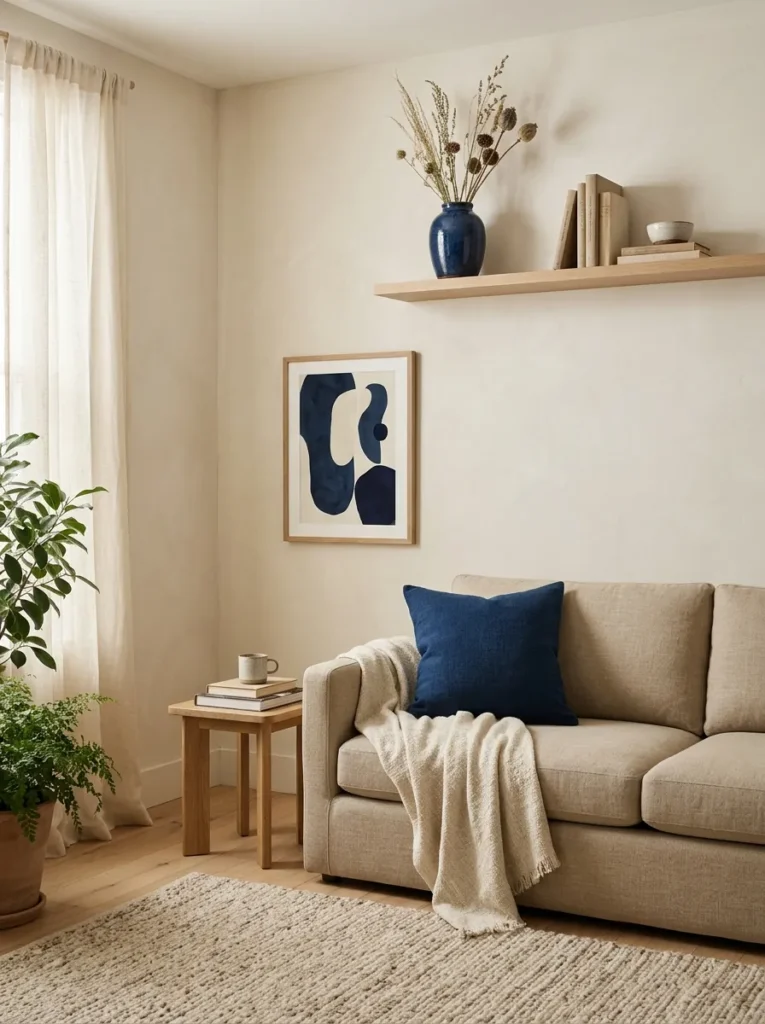
Pick one deep tone: forest green or ink blue against a cool-leaning tan, rust or olive against a warm one. Place it low (a pillow), at eye level (art or a throw), and high (a vase on a shelf, or a curtain edge).
Repeating a color at three heights pulls the eye up and across the room, which one bright pillow can’t do. A fourth appearance starts competing with the sofa instead of framing it.
Quick Win: Photograph the room and switch the photo to black-and-white. If the three accent pieces read as the same dark gray, the repetition is working.
8. Choose Slim Arms and a Low Back for a Compact Living Room
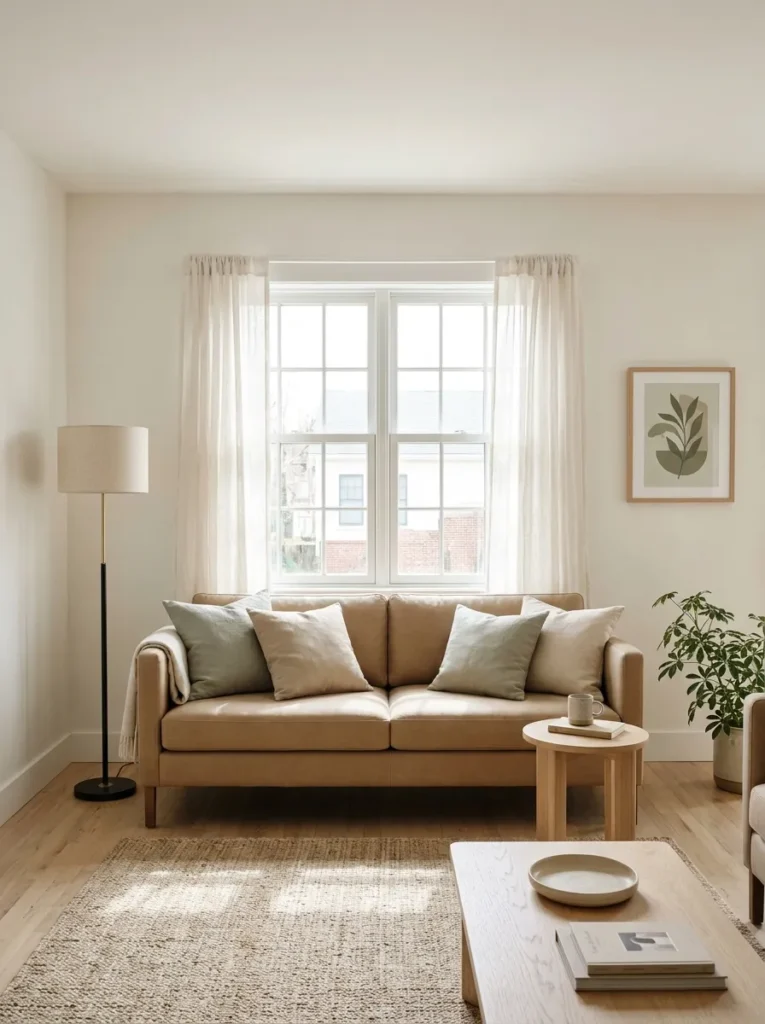
Arm style decides how much floor a sofa swallows, which matters most for renters in small apartments. A track arm or slim roll arm gives up far less width to padding than a deep roll arm, so a 72-inch sofa seats closer to its advertised length.
A back that sits below the window sill lets daylight pass behind it, and that makes the room feel wider. Compare listed seat width, not just overall width, before choosing between two models.
Important: Overall width is not seat width. Two 72-inch sofas can leave noticeably different amounts of usable seat once the arms are subtracted.
9. Decide Between Fabric and Faux Leather by How You Live, Not by the Photo
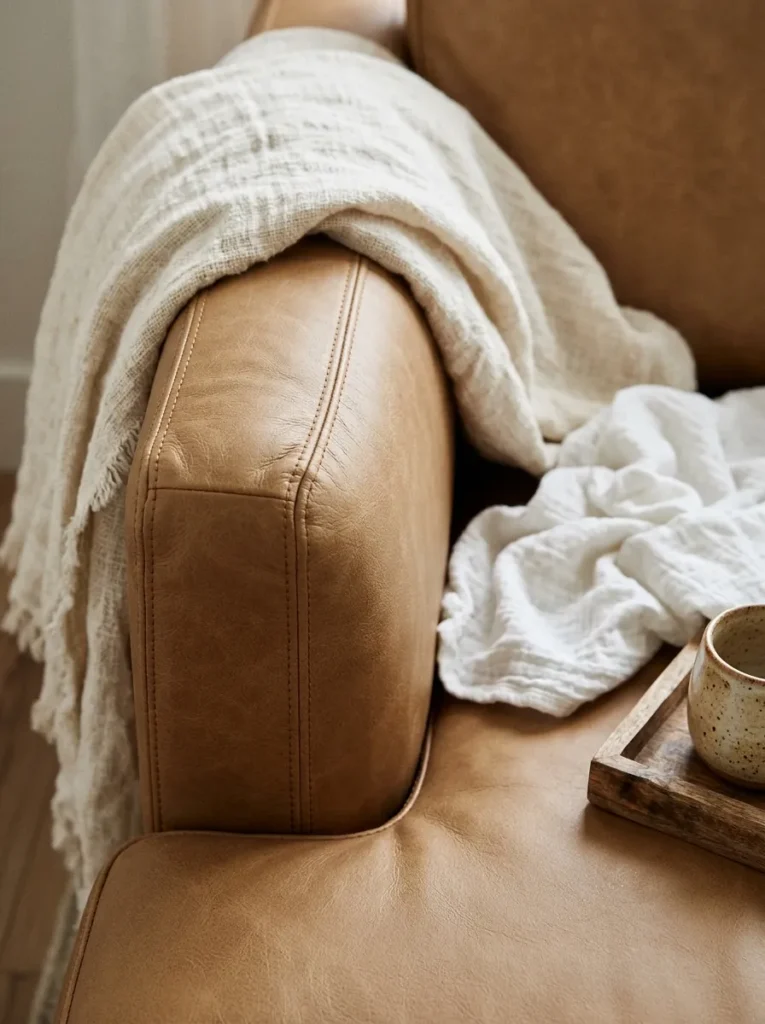
Tan comes as linen-look fabric and camel faux leather, and the two behave differently after a year. Fabric feels warm in winter and hides dust, but stains soak in; faux leather wipes clean, though coated surfaces can crack along seams and arms with heavy use.
Homes with young kids lean toward wipeable surfaces or washable covers, while low-traffic rooms suit fabric. Read the listing for a removable cover or performance-fabric label before the color.
Warning: Small tears in coated faux leather can’t be mended invisibly, while a pulled thread in fabric can be tucked back. With cats or dogs, a tight-weave fabric is the lower-risk buy.
Idea 10 handles what to do when the sofa has no wall to lean on.
10. Float the Sofa and Back It With a Narrow Console
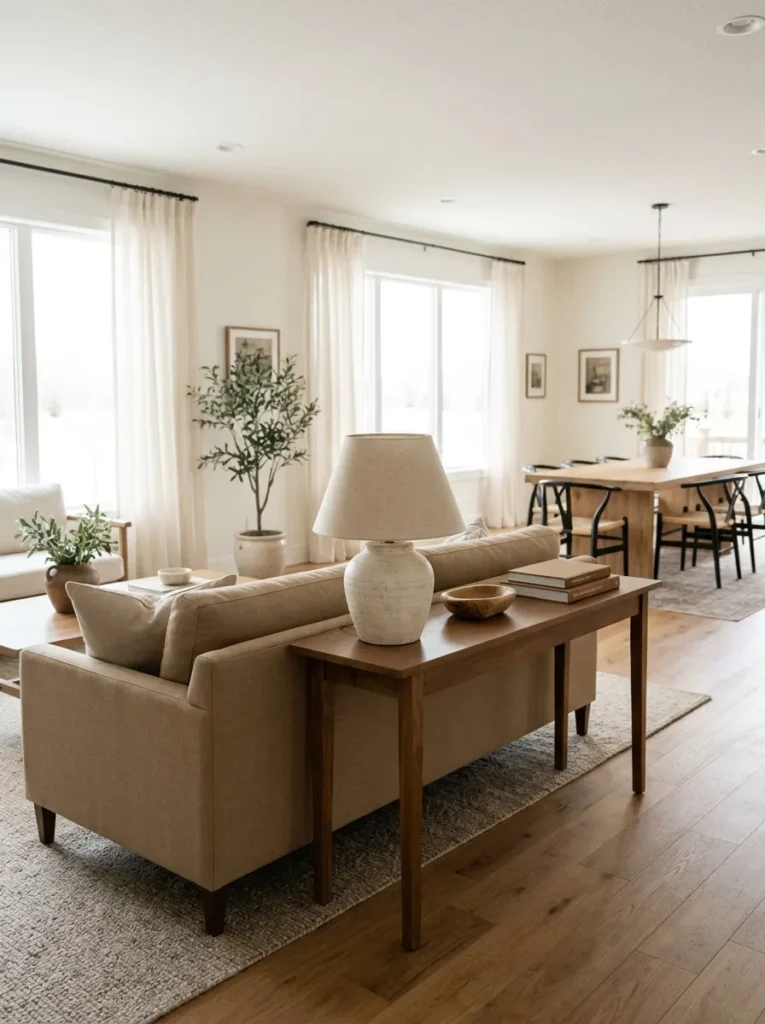
Pull the sofa off the wall and run a narrow console behind it. That turns an open-plan room into two zones without a partition: the sofa faces the seating area, and the console becomes the boundary.
Choose a console about 10 to 14 inches deep, and leave 30 to 36 inches of walking space behind it. Check the sofa’s back panel too, since some budget models have a visible frame there that a console hides.
Budget Version: A slim hall table or narrow sideboard from a secondhand marketplace does the job; look for a flat, sturdy top near sofa-back height.
11. Hang Curtains High and Wide to Let More Window Light Reach the Tan
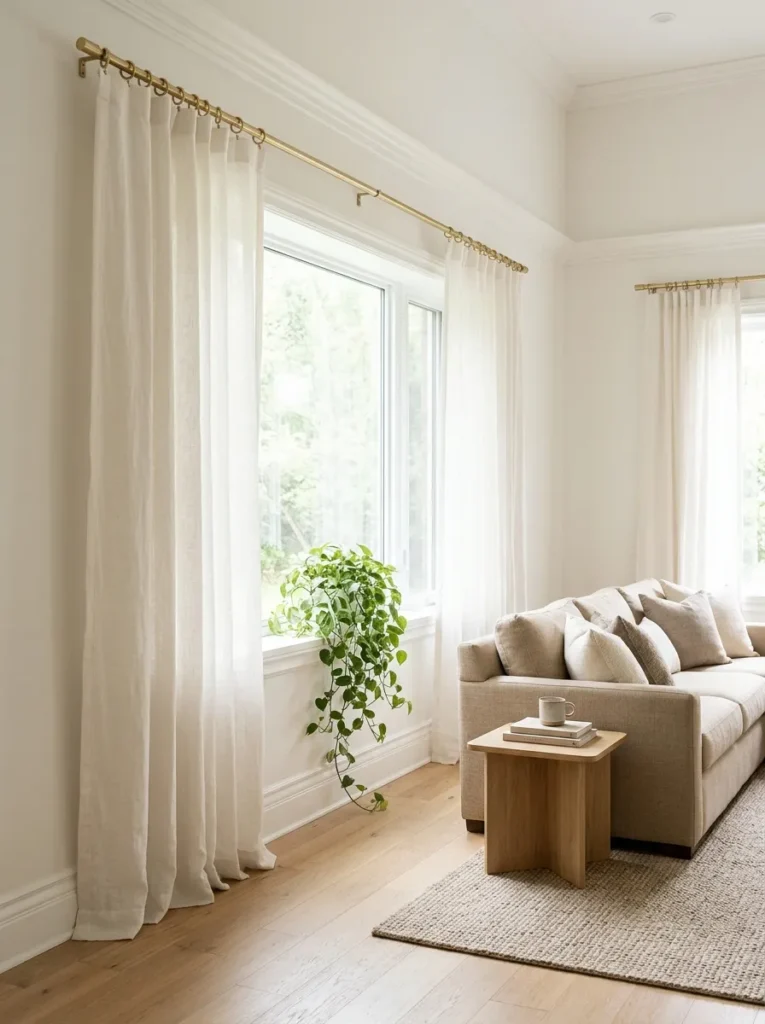
Curtains hung at the frame eat into the glass; hung higher and wider, they stack beside the window and leave it clear. Tan glows in filtered daylight, so choose off-white linen-look panels that soften light without blocking it.
Mount the rod 4 to 6 inches above the frame and extend it 8 to 12 inches past each side. Heavy panels pull hard on rod brackets, so screw brackets into studs or use anchors rated well above the combined weight of rod and curtains.
✅ CHECKLIST — Hanging curtains high and wide:
- [ ] Measure the window frame and mark rod ends 8 to 12 inches past each side
- [ ] Mark bracket height 4 to 6 inches above the frame and locate studs, or choose rated anchors
- [ ] Mount and level the brackets, then set the rod
- [ ] Hang the panels and steam out fold lines before judging the length
Shop This Look
| Product | What to look for |
|---|---|
| Linen-look curtain panels | Light-filtering off-white or warm white; long enough to reach the floor |
| Adjustable curtain rod | Extends 8 to 12 inches past each side; rated for the panels’ weight |
| Curtain ring clips | Finish matched to the rod; slides freely along it |
12. Hang One Oversized Piece Over the Sofa Instead of a Cluster of Small Frames
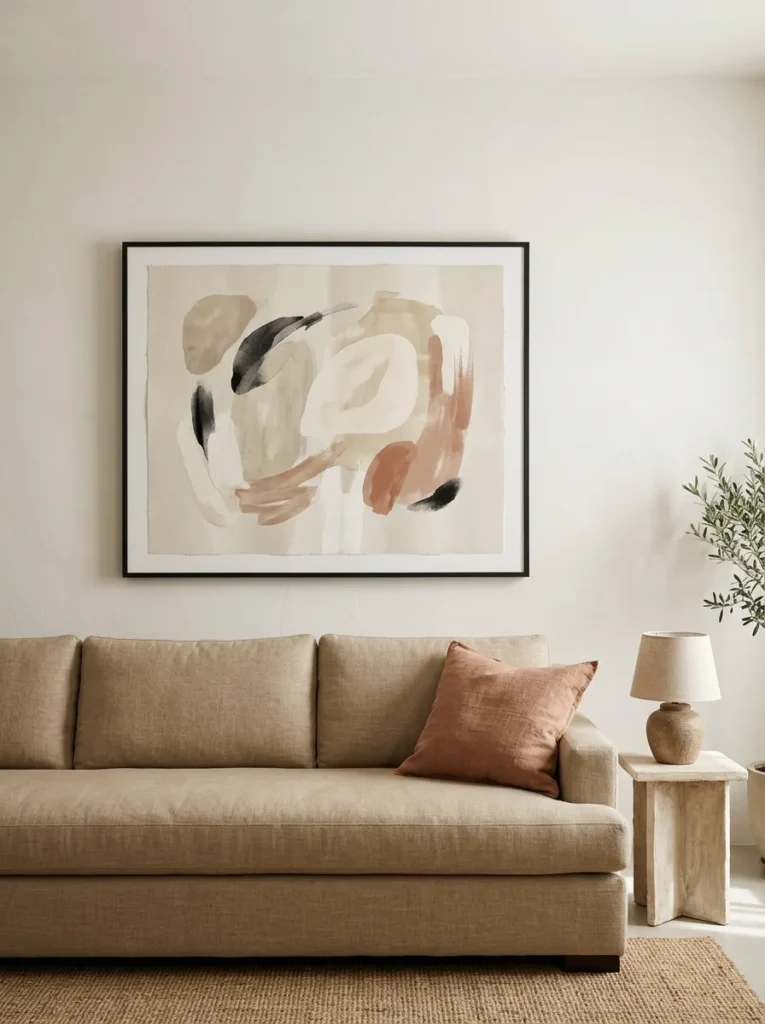
Scale does what quantity can’t. One large piece, or a tight pair, reads as a decision where six small frames read as a collection. Art over a sofa feels grounded at about two-thirds to three-quarters of the sofa’s width, with its bottom edge 6 to 8 inches above the back cushions.
Renters can use adhesive strips, but check that their rating exceeds the frame’s weight; heavy pieces over seating belong in studs or rated anchors.
Pro Tip: Cut kraft paper to the art’s size and tape it to the wall for a day. Proportion shows up before any hole does.
Idea 13 depends on where a mirror stands in relation to the window, not on how large the mirror is.
13. Face a Large Mirror Toward the Window, Not the Sofa
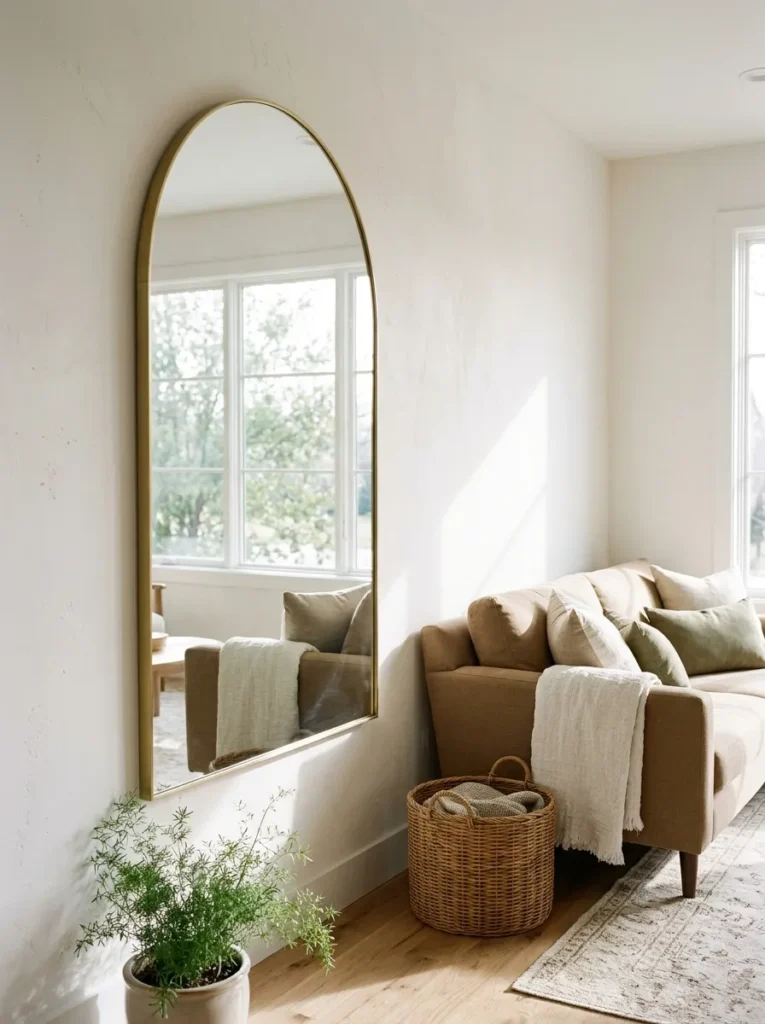
Rooms with one window and a dark far corner gain the most. A mirror opposite the window reflects the view and pushes daylight deep into the room, while one aimed straight at the sofa mostly doubles the furniture.
If the window faces a brick wall, angle the mirror to catch the glass itself. Large mirrors are heavy, so mount them into studs with hardware rated above their weight, or lean a floor mirror and secure it with a safety strap.
Important: A mirror reflects only what it faces. Stand beside the window and check what appears in it before committing; a reflection of a bare wall adds no light.
14. Choose a Flat-Weave Rug With a Muted Pattern Over a Plain Beige One
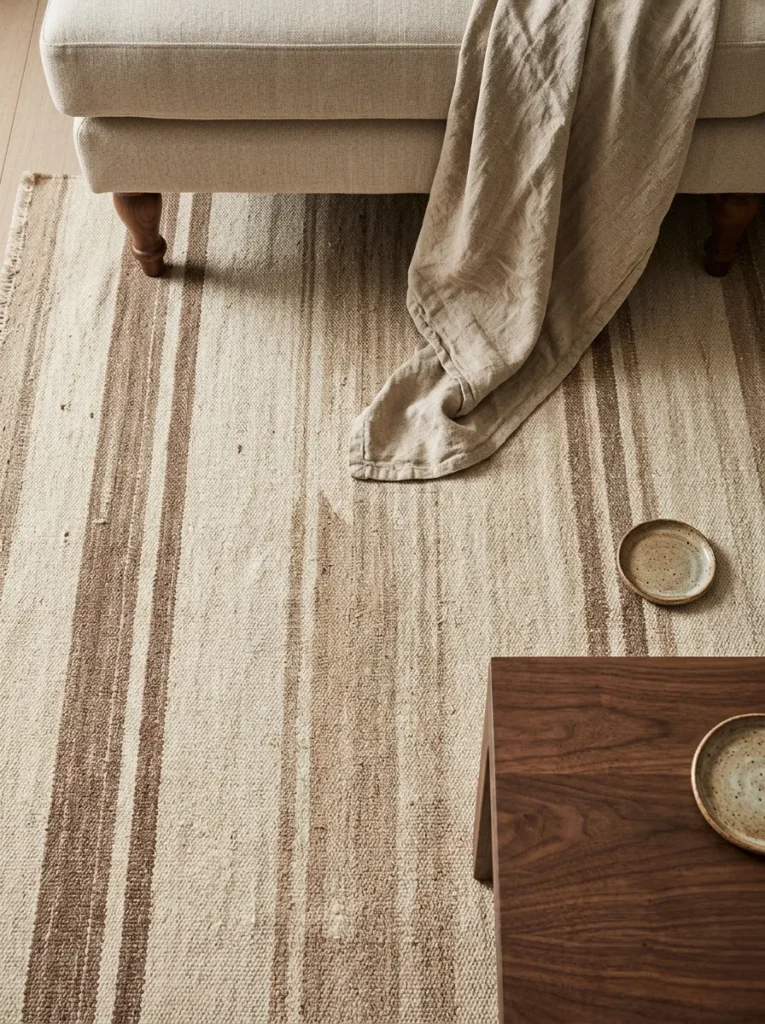
A plain beige rug under a tan sofa merges both into one blob. A flat-weave with a small-scale stripe or faded geometric in cream and mid-brown breaks the field into parts, and it hides crumbs and tracked-in dirt far better than a solid.
Flat weaves also vacuum easily, whereas shag traps debris. Pick a pattern that repeats a tone from the sofa plus one darker shade.
Styling Note: Run stripes lengthwise toward the room’s longest view. Stripes across the width shorten the room.
15. Add a Thrifted Accent Chair With Curved Lines
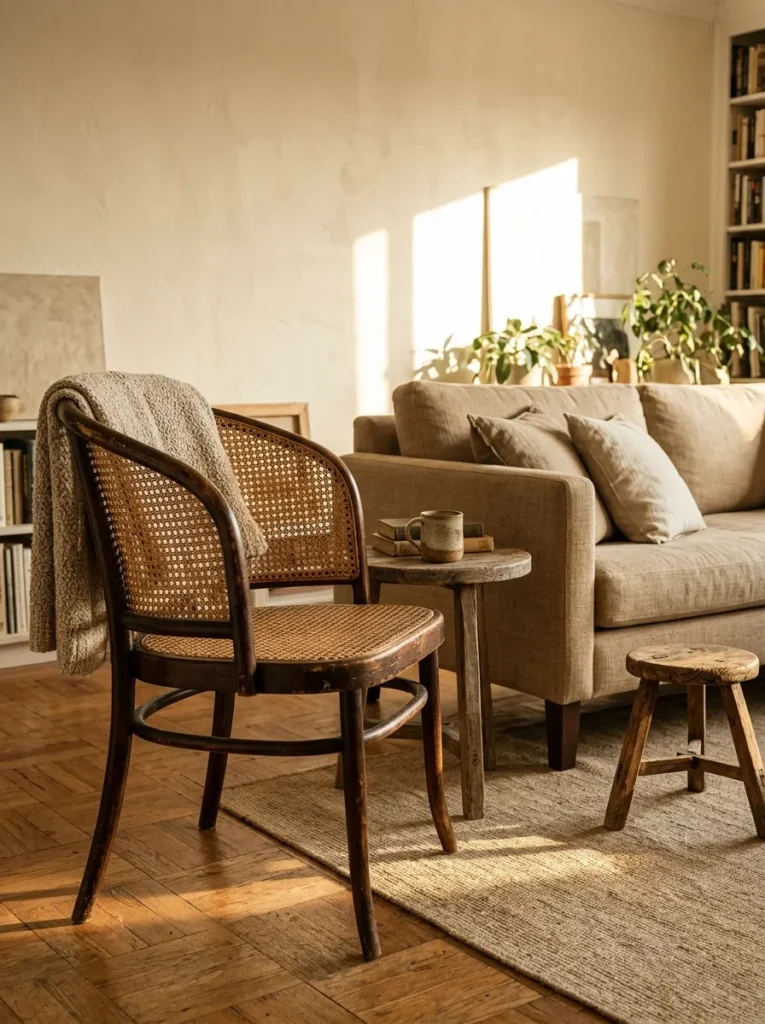
A boxy tan sofa looks sharper beside one piece with curves: a barrel back, rounded arms, a bentwood frame. A secondhand chair in dark wood or black adds contrast and a new silhouette in one move, and tired upholstery is fixable as long as the frame is sound.
Angle the chair toward the sofa, keeping the two within about 8 feet of each other so conversation stays easy.
Warning: Lift one front corner of a secondhand chair and wiggle the frame. A loose joint or creaking leg is a rebuild, not a bargain, and a musty smell usually lives in the foam.
Idea 16 is the only one here that grows, and where you place it matters more than what you spend.
16. Stand One Tall Plant at the Sofa’s End
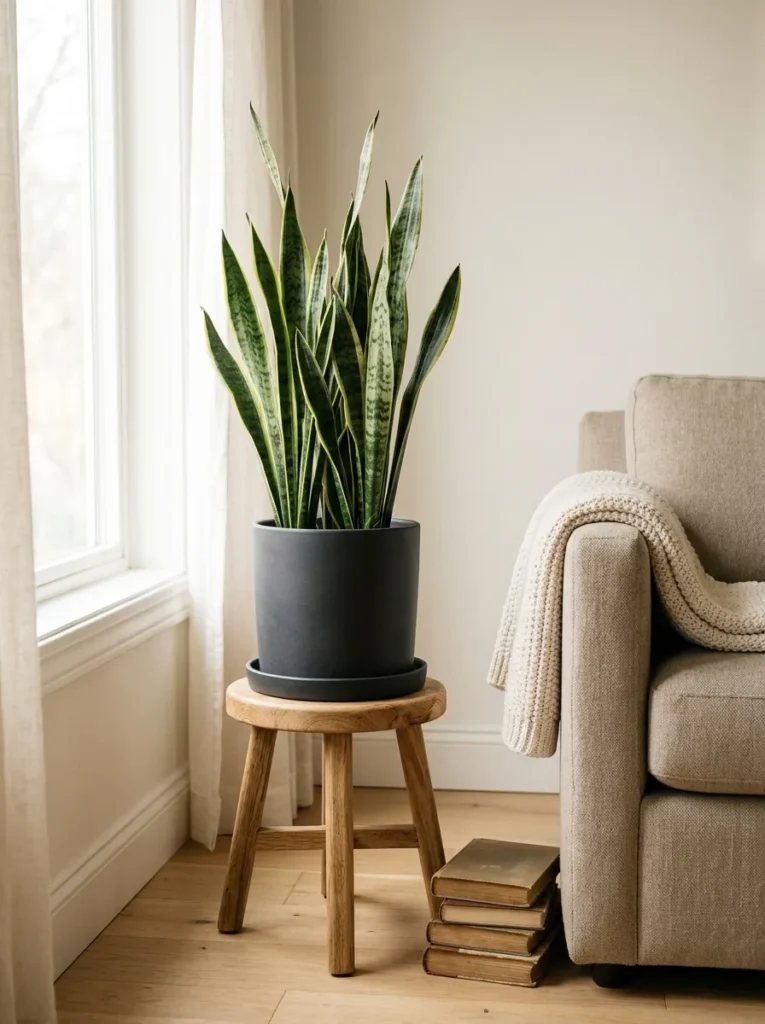
Set one plant, roughly 3 to 5 feet tall, beside the sofa arm in a pot darker than the sofa. Its upright line fills the dead wall between sofa and window and adds the only living color in a neutral room.
Choose by light: a snake plant tolerates dim corners, while a rubber plant wants bright indirect light. A good faux plant works in a truly dark spot. Use a waterproof saucer and keep watering cans clear of the upholstery.
Small-Space Tip: Pick a narrow, upright plant over a bushy one, and raise it on a low stool so its leaves sit at arm height without taking more floor.
My Observation
Easy to get backwards: a tan that looks “just right” under shop lighting can go gray in a north-facing room, because daylight from the north runs cooler in the Northern Hemisphere. When choosing a swatch, favor the one that looks half a step too warm, and judge it beside the window you’ll actually sit next to.
17. Paint the Wall Behind the Sofa Two Shades Deeper
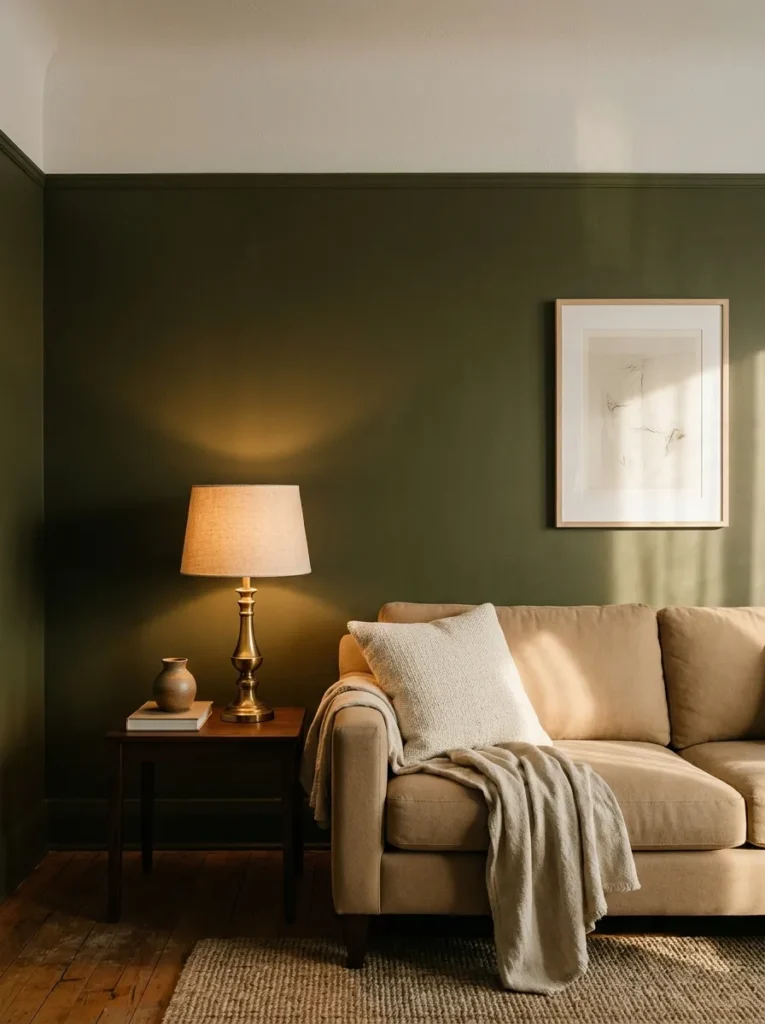
Value contrast, light against dark, does more work than hue. A deep olive, warm taupe, or ink blue wall pushes a tan sofa forward, and painting only the wall behind it keeps the job small.
Aim for a color at least two steps deeper than the sofa on a paint strip. Renters can get the same effect with removable peel-and-stick wallpaper in a solid deep tone.
Pro Tip: Hold the sofa swatch against the painted patch under lamplight. If the pair looks muddy at night, step one shade lighter.
18. Swap Stubby Sofa Feet for Dark Tapered Legs
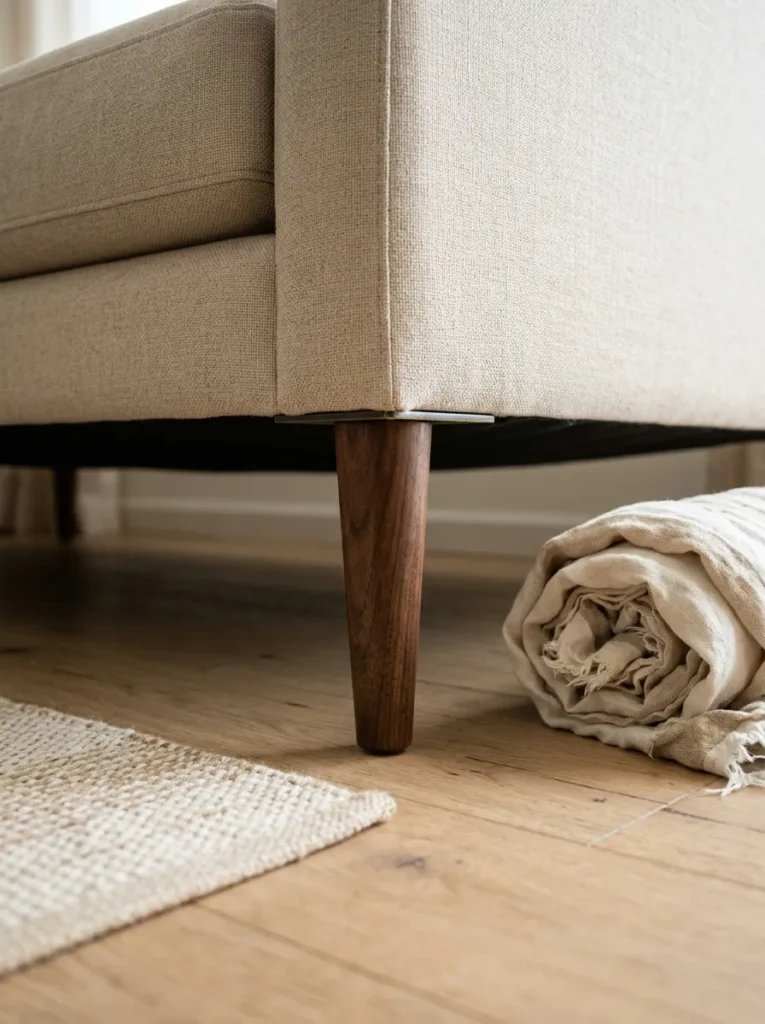
Many budget sofas ship with plastic or short feet that make the base look heavy and sink the tan into the floor. If the listing mentions threaded or bolt-on legs, replacing them with dark tapered wood or black metal ones lifts the base, shows floor underneath, and adds a dark line where the sofa needs it.
Since legs carry the whole load, match the thread or mounting plate exactly and choose a set rated for the sofa’s weight.
Mistake to Avoid: Measure the existing thread or bolt pattern before ordering. A leg that almost fits will wobble under weight.
How to Start Your Tan Sofa Living Room Transformation
Start here: the wall and the floor around the sofa. Match the wall’s undertone to the fabric first, then put one dark piece, such as a walnut-finish coffee table, on the rug. Because tan makes no noise of its own, the first dollar after the sofa should buy something dark, textured, or tall.
Matching everything is the beginner error worth avoiding. Tan sofa, beige rug, cream walls, and pale wood look calm in a listing and flat in a room. Fix it by making sure every sightline contains one item darker than the sofa.
For three items that typically stay under $50 (approximate), try a chunky knit throw, a matte black picture frame, and a lidded woven basket for spare pillows and blankets. Each adds the texture, darkness, or tidiness a bare tan sofa lacks.
Plan a weekend for the first round: rug, lamp, and pillows. Paint takes a second weekend. A starter budget is about $100 to $250 beyond the sofa, assuming the sofa lands near $250 to $400, and a thrifted chair or new curtains stretch over months rather than days.
Frequently Asked Questions
How much of a $500 budget should go to the sofa?
Roughly $250 to $400 is a workable range, which leaves about $100 to $250 for a rug, lamp, and pillows. These are approximate guidelines, and prices vary by retailer and season. If you plan to repaint or replace the legs, aim toward the lower end of the sofa range so the styling budget doesn’t run dry.
What wall colors go with a tan sofa?
Warm white and soft greige are the safest choices, because they share tan’s warm undertone. For more drama, deep olive or ink blue behind the sofa creates contrast without clashing. Always compare a paint sample against a fabric swatch in your own light, since undertones shift between morning and evening.
Can renters use these ideas?
Yes, most of them. Lamps, rugs, pillows, curtains, and chairs leave no marks, and adhesive strips or removable wallpaper cover the wall ideas. Skip anything that needs drilling unless your lease allows it, and check the weight rating on adhesive hooks before hanging a heavy frame or mirror.
How do I clean a tan fabric sofa?
Start with the care tag: W means water-based cleaners are fine, S means solvent only, WS allows either, and X means vacuum only. Blot spills rather than rubbing, and test any cleaner on a hidden spot first. Washable slipcovers make the job easier if the model offers them.
Ready to Create Your Dream Tan Sofa Living Room?
These 18 tan sofa living room ideas under $500 cover paint, lamps, mirrors, rugs, and even sofa legs, but they share one logic: give a quiet sofa something to push against, and the room starts to look chosen.
Start small. A single dark table or a warmer bulb already shifts the mood. Today, hold a fabric swatch against a paint sample and see which way your walls lean. Soon the room will feel steady, warm, and easy to sit in. Save the ideas that suit your light and budget to a Pinterest board so you can return to them one weekend at a time.
Keep Exploring
- 15 Small Living Room Ideas With a Beige Sofa on a Budget
- 14 Tan and Walnut Bedroom Ideas That Feel Warm, Not Flat
- 10 Rug Ideas for Neutral Living Rooms That Add Real Contrast